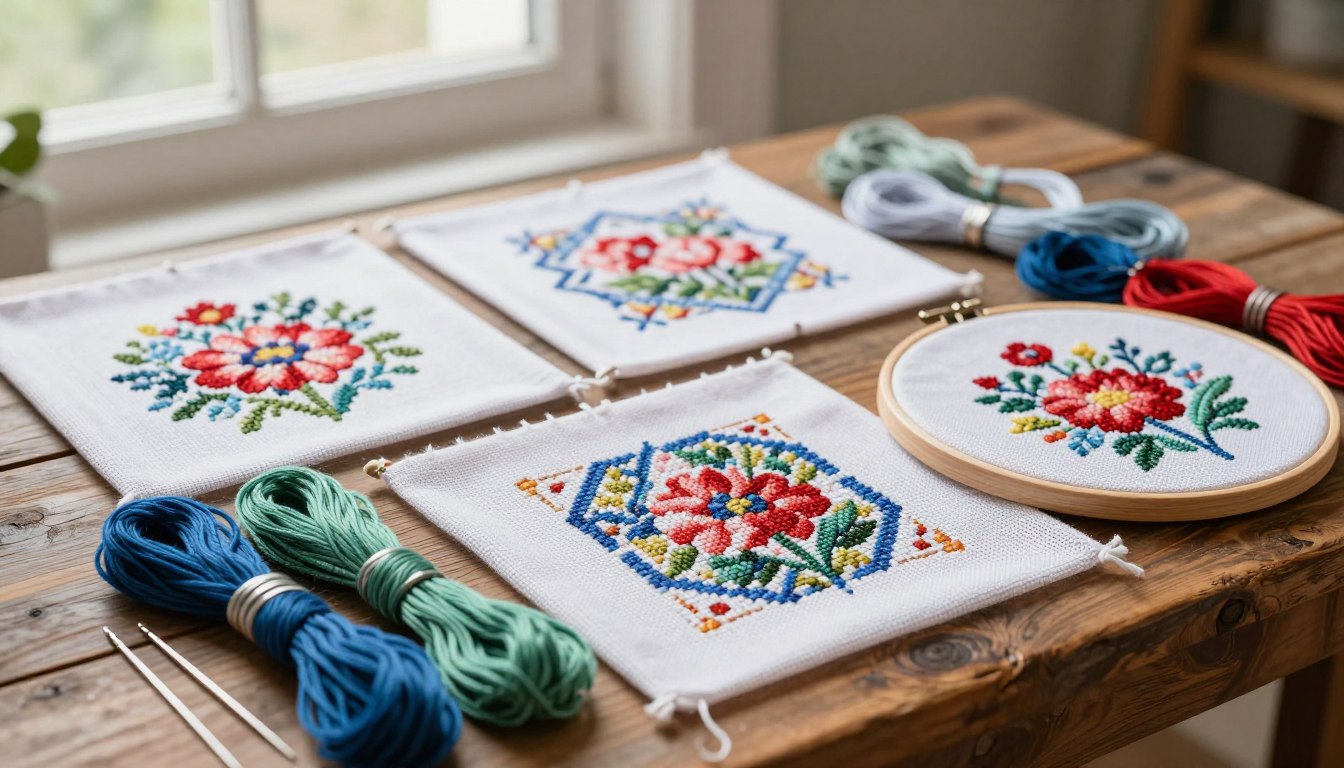
You’ve decided to take up cross stitch, and you’re eager to create beautiful pieces. To achieve a refined look, it’s essential to master various techniques. Start by selecting quality materials and preparing your thread properly.
As a beginner, understanding the basics of embroidery hacks can make a big difference in your projects. By refining your skills, you’ll be able to create intricate designs. These designs will showcase your craftsmanship.
Key Takeaways
- Selecting quality materials is crucial for a refined look.
- Proper thread preparation is essential for smooth stitching.
- Understanding basic embroidery hacks can improve your cross stitch skills.
- Refining your techniques will help you create intricate designs.
- Practicing regularly will enhance your overall craftsmanship.
The Fundamentals of Refined Needlework
To improve your cross-stitch, you need to know the basics. This includes using quality materials, handling threads right, and choosing the best tools.
Selecting Quality Materials for Superior Results
Picking the right materials is key to great cross-stitch projects. DMC floss is a top pick for its bright colors and lasting quality. When picking cross-stitch fabric, think about the count and type that fits your project best. Aida cloth and evenweave linen are favorites for their stitch quality and ease.
Proper Thread Preparation and Handling
Getting your thread ready right is vital for even stitches. Start by separating the floss strands as your pattern needs. Then, gently pull them to avoid tangles. Taking care with your thread helps avoid knots and twists, making your stitches smooth and even.
Essential Tools for Precision Work
The right tools make cross-stitch better. You’ll need a quality needle, sharp scissors for floss, and a magnifying glass or lamp for close work. A counted cross stitch hoop or frame helps keep your work tight and even.
By mastering these basics, you’ll create stunning cross-stitch pieces. They’ll show off your skill and care in every stitch.
Mastering CROSS STITCH Consistency and Tension
Consistency and tension are key to making beautiful cross-stitch pieces. Getting these right can take your work from good to great. We’ll look at ways to improve consistency and tension in your stitching.
The Railroad Technique for Flat, Even Stitches
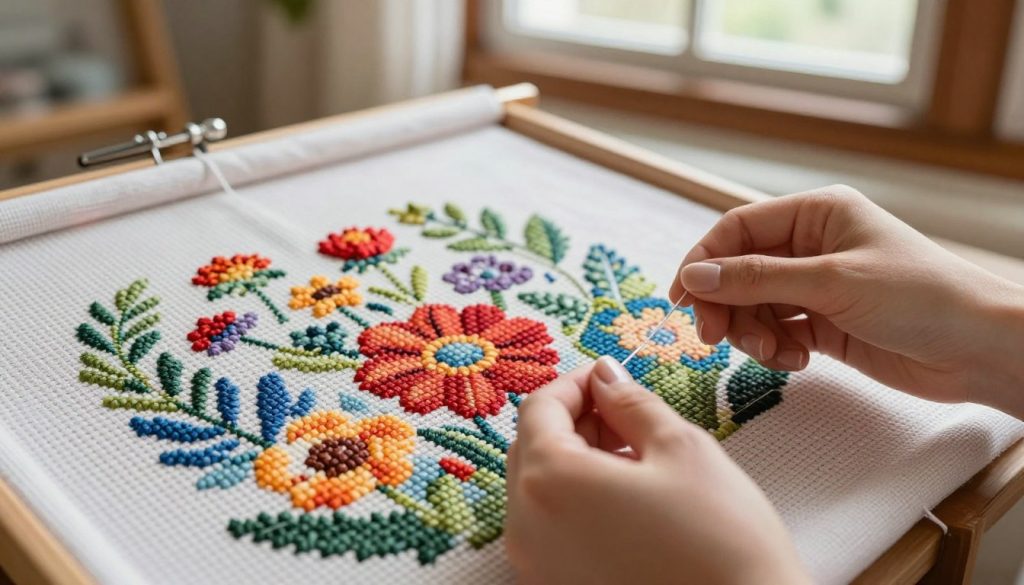
The railroad technique helps you stitch flat and even by focusing on one thread at a time. It means stitching in the same direction to avoid fabric twists. This method ensures your stitches are flat and evenly spaced, giving your work a professional look.
Maintaining Uniform Stitch Direction
Stitching in the same direction is vital for a smooth, polished finish. Always stitch from top to bottom or left to right. This keeps your work even and prevents distortion.
Techniques for Perfect Corners and Diagonal Lines
Corners and diagonal lines can be tricky in cross-stitch. But, there are ways to get them right. For corners, use a steady stitch pattern and count your stitches carefully for sharp turns. For diagonals, mix full and fractional stitches for smooth curves. Remember, patience is key when working on these parts.
| Technique | Description | Benefit |
|---|---|---|
| Railroad Technique | Stitching on a single thread at a time | Flat, even stitches |
| Uniform Stitch Direction | Stitching in the same direction | Cohesive, polished look |
| Fractional Stitches | Using a combination of full and fractional stitches | Smooth, even curves on diagonal lines |
Elevating Your Work with Backstitching Techniques
Make your cross-stitch projects look better by using backstitching techniques. Backstitching is key to adding depth and detail. It makes your work look more interesting and sophisticated.
Learning backstitching helps you create detailed designs. It’s great for outlining, adding textures, and small details. This makes your cross-stitch projects unique.
When and How to Use Backstitching Effectively
Use backstitching wisely to enhance your designs. It’s best for outlining and adding contrast. Choose the right thread color and keep tension even for smooth lines.
Creating Depth and Definition with Varied Line Weights
Changing line weights in backstitching adds depth. Using different thread weights or strands creates varied lines. This technique is great for detailed work and subtle transitions.
Specialty Backstitch Variations for Different Effects
Try special backstitch variations for unique textures. Techniques like double backstitch or twisted backstitch offer different looks. They add complexity and sophistication to your designs.
Fabric Selection and Preparation Secrets
To get professional-looking results in your cross stitch, knowing about fabric selection and preparation is crucial. The fabric you pick is the base of your project. It affects how your finished piece looks and lasts.
Choosing the Ideal Fabric Count
Choose a fabric count that fits your cross stitch pattern’s complexity. Higher counts mean more detailed and intricate projects. Beginners might start with 14 or 16 count fabrics. More skilled stitchers might go for higher counts for complex designs.
Gridding Methods
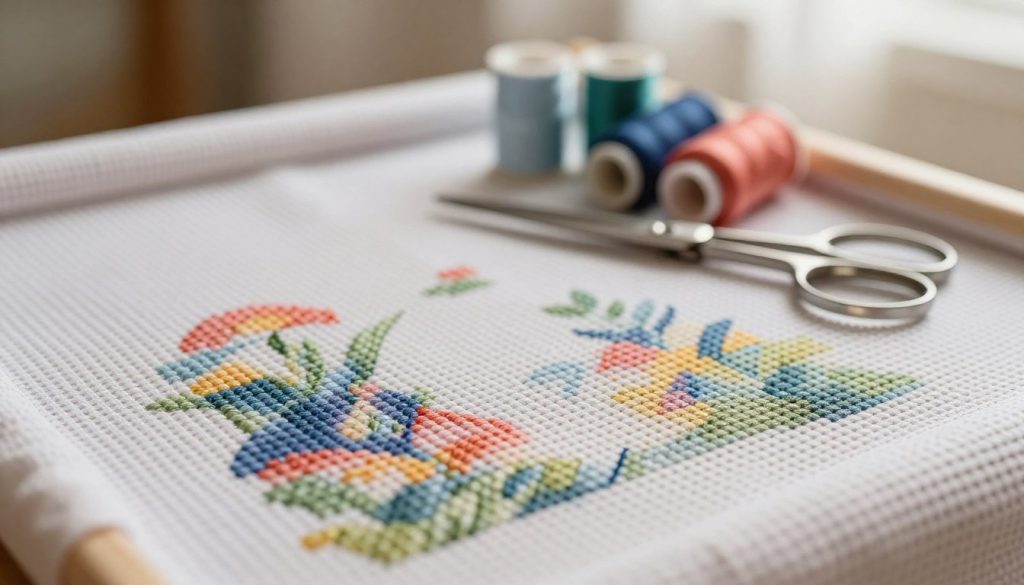
Gridding your fabric is key for perfect pattern placement. You can mark it with a ruler and fabric pen, or use a disappearing ink pen. For big projects, threading a contrasting thread through the fabric makes a grid.
Fabric Washing and Preparation
Washing and preparing your fabric before starting is important. Pre-washing removes sizing and impurities. This ensures your project lies flat and doesn’t shrink.
It’s also a chance to check if your threads will stay colorfast. By carefully choosing and preparing your fabric, you’ll make a beautiful cross stitch piece. It will be something you’ll treasure for years.
Advanced Techniques for Sophisticated Projects
To make your cross-stitch projects more complex, you need to learn advanced techniques. These methods will help you create detailed designs that show off your skills.
Blending Threads for Subtle Color Transitions
Blending threads is a fancy way to mix colors in your cross-stitch. It makes your designs look more realistic. For example, it’s great for skies, leaves, or skin tones.
To blend threads, pick two colors that are almost the same. Thread your needle with both and stitch together. This way, the colors will mix as you go.
Incorporating Specialty Stitches for Texture
Adding specialty stitches can make your cross-stitch more interesting. These stitches can create unique textures and patterns.
French Knots and Colonial Knots
French knots and colonial knots are great for adding decoration. French knots make small dots, perfect for details. Colonial knots are bigger and add texture.
Long-Armed Cross Stitches and Satin Stitches
Long-armed cross stitches and satin stitches can also enhance your designs. Long-armed stitches cover more space with fewer stitches. Satin stitches are flat and smooth, great for solid colors.
Beading and Metallic Thread Integration
Beading and using metallic threads can make your cross-stitch look fancy. Beads add sparkle and details. Metallic threads give a shiny effect.
| Specialty Stitch | Description | Use |
|---|---|---|
| French Knots | Small, raised dots | Details, texture |
| Colonial Knots | Larger, textured knots | Added dimension |
| Long-Armed Cross Stitches | Covers more area with fewer stitches | Backgrounds, large areas |
| Satin Stitches | Smooth, flat stitches | Filling large areas with solid color |
Fractional Stitches for Smoother Curves and Details
Fractional stitches help you get smoother curves and details. They let you create more detailed designs. This is especially useful for small details like facial features.
Conclusion: Bringing Refinement to Your Cross Stitch Journey
Remember, getting better at cross stitch takes time and effort. Use the tips and tricks from this article to make your projects look amazing. You’ll show off your skills in needlework.
Try out different patterns and stitches to make your work more interesting. For beginners, using good materials and preparing threads well is key. This helps you get professional-looking results.
As you get better, you’ll learn secrets that make your work even better. Keep practicing, and you’ll be able to do complex designs. Your work will show off your unique style.
 English