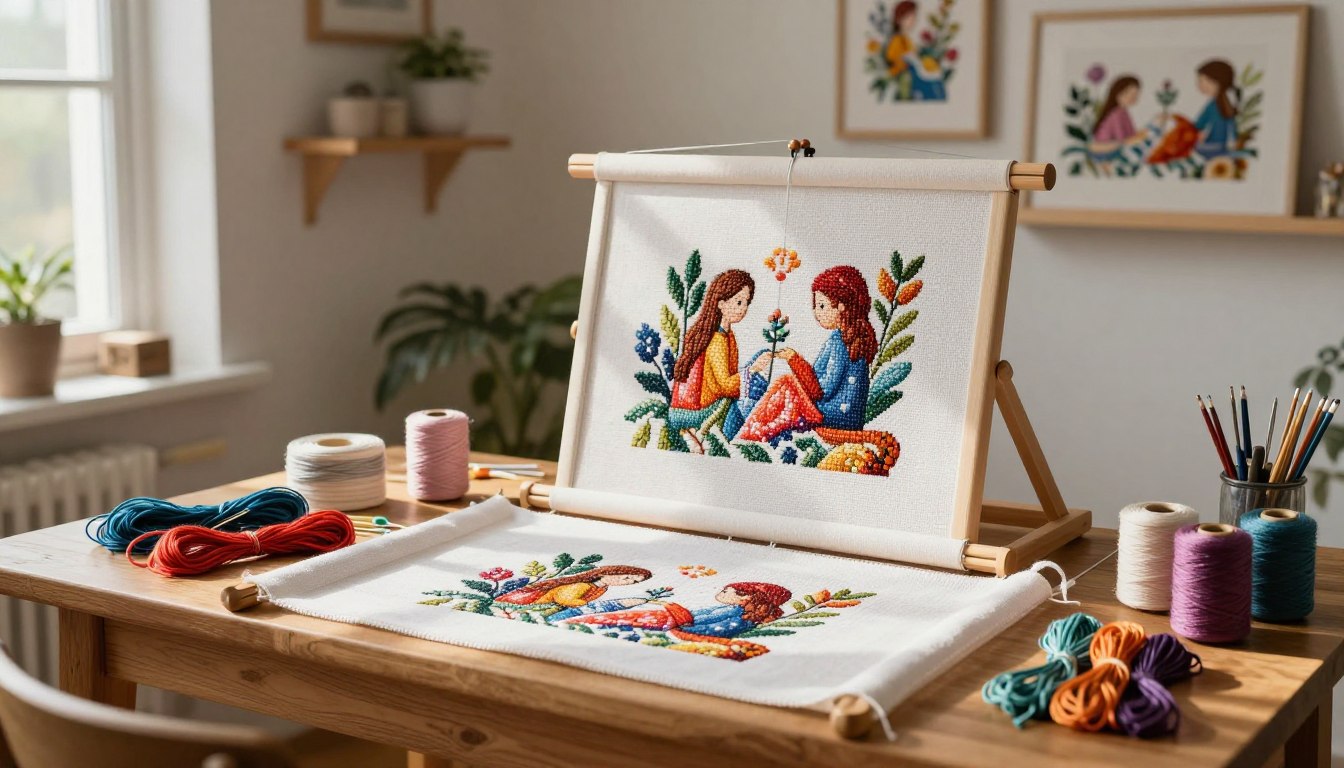
You’ve probably heard that cross stitch is a meditative craft that helps you relax and be creative. As you dive into this traditional needlework, you’ll see it rewards careful, intentional effort. By focusing on detailed patterns and exact stitches, you can relax and show your artistic side.
Engaging in this therapeutic hobby brings many benefits, like lowering stress and boosting your sense of achievement. Whether you’re new to it or have been stitching for years, you’ll love the embroidery inspiration from making something beautiful and meaningful.
Key Takeaways
- Discover the therapeutic benefits of cross stitch
- Learn tips and techniques for improving your skills
- Find inspiration for your next embroidery project
- Understand the importance of careful, intentional work
- Explore the creative possibilities of needlework
The Meditative Nature of Cross Stitch
When you dive into cross stitch, you’ll find it’s calming and helps you relax. It’s not just a hobby but also a way to unwind. Many people enjoy it for its soothing effects.
How Cross Stitch Promotes Mindfulness
Cross stitch keeps you in the moment, making it great for mindfulness. You focus on the pattern, needle, and thread. This focus helps you stay calm and centered.
The Psychological Benefits of Slow Crafting
The slow pace of cross stitch calms your mind. It’s a way to practice patience and lower stress. You’ll feel proud of what you’ve made.
Creating Space for Intentional Practice
To enjoy cross stitch’s calmness, create a good space. Make your area comfy, light, and free from distractions. Use calming colors for your projects. This helps you dive deep into the craft.
| Benefits of Cross Stitch | Description |
|---|---|
| Mindfulness | Promotes focus on the present moment, reducing distractions |
| Slow Crafting | Encourages patience and reduces stress through deliberate stitching |
| Intentional Practice | Creates a conducive environment for relaxation and focus |
Essential CROSS STITCH Tools and Materials
Getting the right tools and materials is key for a fun cross stitch journey. You’ll need to pick the right fabric, thread, and needles for your project.
Selecting the Right Fabric and Counts
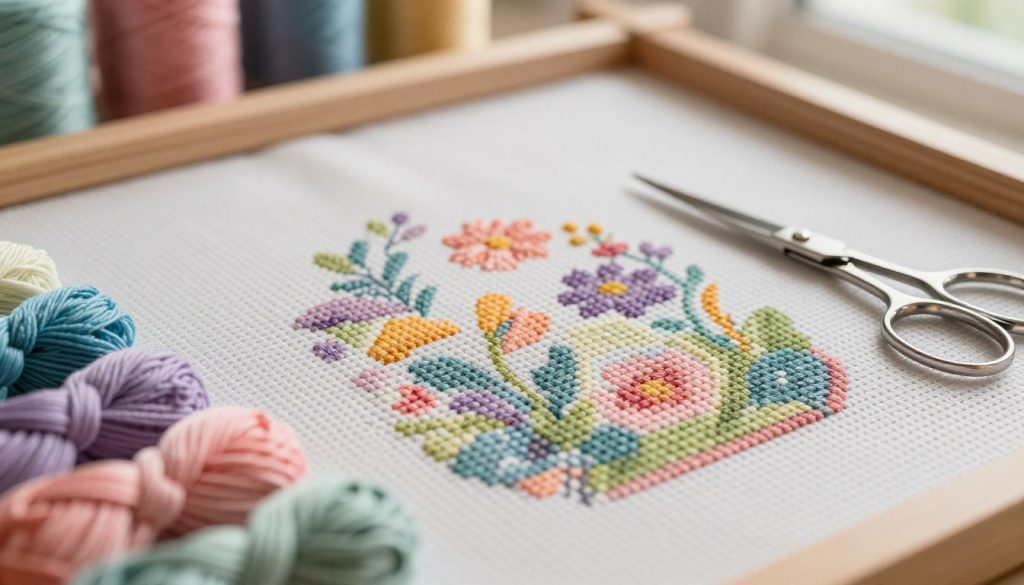
Choosing the right fabric is crucial for your cross stitch project. Aida cloth and even-weave fabrics are favorites among stitchers. Aida cloth is great for beginners because it has a clear grid pattern.
Even-weave fabrics are better for complex designs. The fabric count, or stitches per inch, should match your design’s detail and your stitching style.
Choosing Quality DMC Floss and Needles
DMC floss is a top choice for cross stitch embroidery floss. It comes in many colors and is of high quality. For needles, choose tapestry needles with blunt tips to avoid damaging the fabric threads.
The right needle size depends on the fabric count and the floss thickness.
Pattern Selection for Beginners
Beginners should start with simple patterns. Look for counted cross stitch patterns, which have a grid for stitches. Many craft stores have beginner kits with everything you need.
Organization Systems for Materials
Keeping your materials organized is important for smooth stitching. Use thread organizers or small containers for your DMC floss. A project bag can hold your fabric, needles, and patterns.
Good cross stitch organization saves time and reduces stress.
Getting Started: Basic Cross Stitch Techniques
Starting with cross stitch means learning the basics. These skills are the foundation of this traditional craft. They help you make beautiful, detailed designs.
Preparing Your Fabric
Before stitching, prepare your fabric right. Know the fabric type and how to grid it for accuracy.
Gridding Methods for Accuracy
Gridding your fabric is key for even stitches and accurate designs. You can use a pre-printed grid or draw one with a pen or pencil.
Creating Your First Stitches
With your fabric ready, start stitching. The basic stitch is the full cross stitch, making an “X” on your fabric.
The Standard Cross Stitch Method
To stitch a standard cross stitch, start at one corner, go down at the opposite corner, up at the next, and down again. This makes a neat “X” that’s the base of your design.
Reading and Following Patterns
Patterns guide you in making a stunning design. They show where to place each stitch. Learning to read these patterns is key for success.
Developing Consistent Tension
Keeping your stitches even is crucial for a professional look. It makes sure your design looks smooth and doesn’t distort. Practice keeping your tension steady as you stitch.
| Technique | Description | Tips |
|---|---|---|
| Gridding | Creating a grid on your fabric for accuracy | Use a water-soluble pen or pencil |
| Full Cross Stitch | Making an “X” on your fabric | Keep your tension consistent |
| Backstitching | Outlining your design with a backstitch | Use a contrasting thread color |
Planning and Executing Projects with Intention
Starting a new embroidery project is more than just picking a pattern and materials. It’s about planning and intention. As you explore cross stitch, having a clear plan is key to making your cross stitch ideas real.
Setting Up a Comfortable Workspace
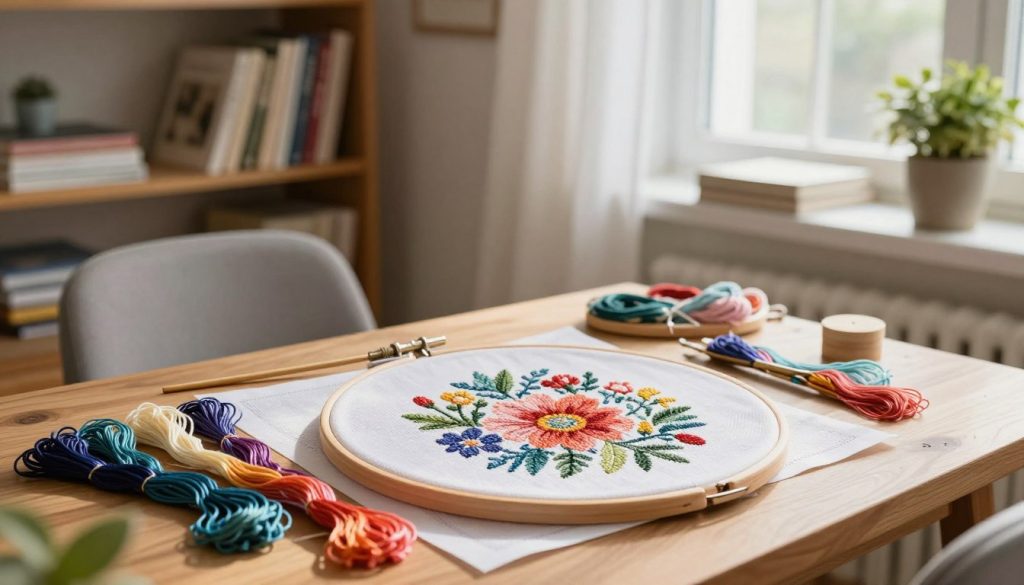
First, make a comfy workspace. It should be well-lit and free from distractions. A tidy space boosts focus and gives you embroidery inspiration as you stitch.
Creating a Project Timeline
Make a timeline for your project. It helps you stay on track and manage time well. Break your project into smaller tasks and set times for stitching. This way, you can work steadily on your cross stitch projects without feeling stressed.
Tracking Progress Methodically
Keeping track of your progress is key to staying motivated. Use a journal or digital tool to log your progress. Note the dates and how much you’ve done. This tracking gives you cross stitch tips and insights into your pace, helping with future projects.
Maintaining Focus Through Complex Patterns
Complex patterns can be tough, but you can stay focused. Break the pattern into smaller parts. Work on one part at a time and take breaks to avoid getting tired. This method ensures you stitch with precision and care, leading to a great finish.
By using these tips and adding intention to your planning, you’ll enjoy stitching more. You’ll find more joy and satisfaction in your cross stitch projects.
Troubleshooting Common Cross Stitch Mistakes
Whether you’re new to cross stitch or have been doing it for years, knowing how to fix mistakes is key. You might run into a few common problems while working on your projects. These can be frustrating to solve.
Preventing and Fixing Tension Issues
Tension problems can make your stitches too tight or too loose. This can mess up how your work looks. To avoid this, keep your floss tension even by pulling it gently to the right tightness. If your tension is off, you can adjust it as you go or start over.
Dealing with Knots and Tangles
Knots and tangles can be a real pain. To avoid them, use a needle threader and keep your floss tidy. If a knot pops up, try to work it out with your needle. If it’s too hard, you might need to cut it out.
Correcting Counting Errors
Counting mistakes can mess up your stitches. Always double-check your count, and use a magnifying glass if you need to. If you spot a mistake, start over from that point.
When and How to Frog (Remove) Stitches
Frogging means taking out stitches to fix a mistake. To do this, carefully cut out the wrong stitches. Then, thread your needle again and start over. It takes time, but it makes your work look professional.
| Common Mistakes | Prevention Tips | Correction Methods |
|---|---|---|
| Tension Issues | Maintain consistent tension | Adjust as you go or frog your work |
| Knots and Tangles | Use a needle threader, keep floss organized | Gently work out knots or cut them out |
| Counting Errors | Double-check count regularly | Frog work back to the error and re-stitch |
Conclusion: The Lasting Rewards of Cross Stitch
Exploring cross stitch has shown you a craft that values careful work. It offers a unique cross stitch therapy, helping you relax and show your creativity. With the right tools and materials, your embroidery projects can come alive, filled with embroidery inspiration from intricate patterns.
Whether you’re new or experienced, the joy of creating something beautiful is key. This article’s techniques and tips will help you master cross stitch for beginners and discover needlework secrets to improve your stitching.
As you keep stitching, you’ll see cross stitch’s benefits go beyond just stitching. You’ll feel a sense of community, pride in your creations, and the craft’s therapeutic value. These make cross stitch a rewarding and enriching hobby.
 English