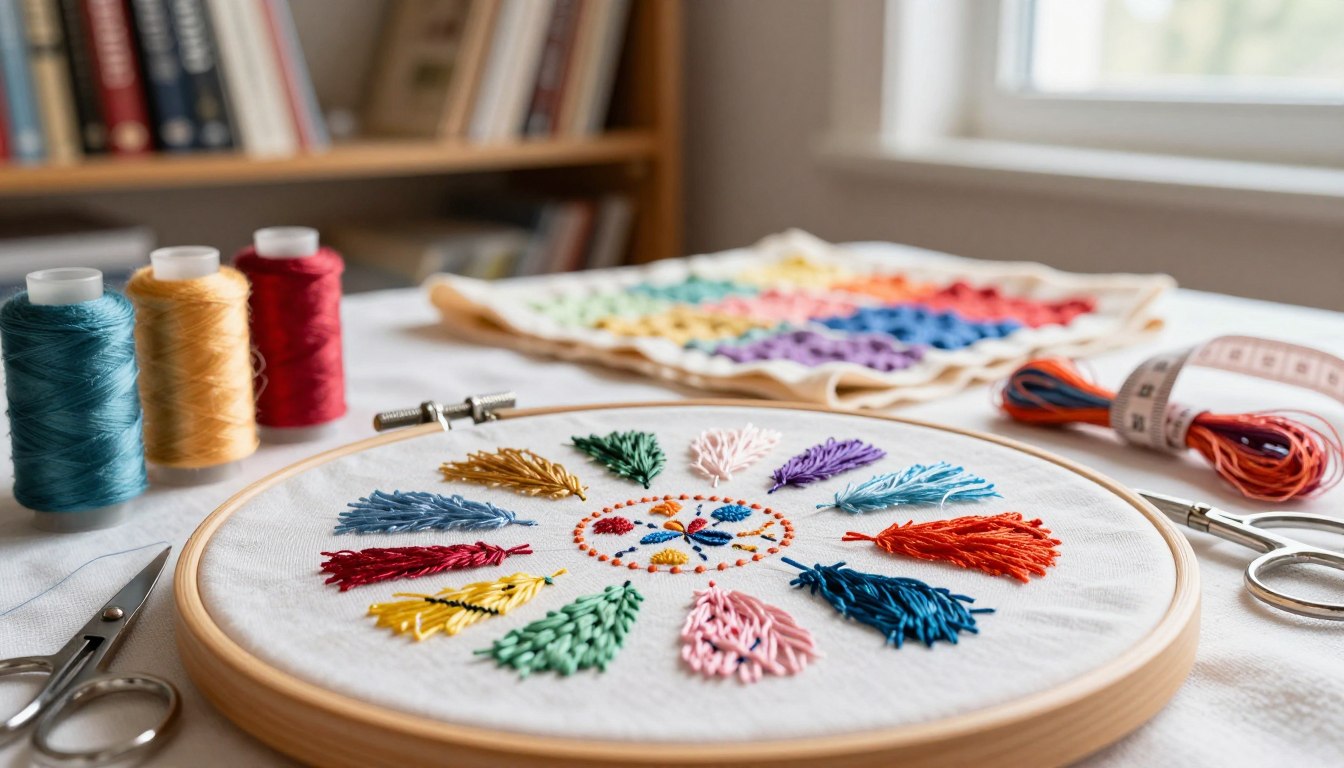
When you work on an embroidery project, you might not think about how your stitches affect the end result. Consistent stitches are key to getting a professional look.
Whether you’re new to cross stitch or have been doing it for years, keeping your stitches even is important. It makes a big difference in how your project looks. This is true whether you’re using cross stitch patterns or making your own designs.
By focusing on consistent stitching techniques, you can make your embroidery projects look even better. Paying attention to tension, thread color, and needle size helps a lot. These details all add up to a polished finish.
Key Takeaways
- Consistent stitches are essential for a professional finish.
- Uniform tension and thread color improve overall quality.
- Paying attention to needle size enhances stitch consistency.
- Following cross stitch tips can help beginners achieve better results.
- Embroidery hacks can simplify the stitching process.
The Foundation of Beautiful Needlework
In needlework, a solid foundation in stitch consistency is key. It doesn’t matter if you’re new or have lots of experience. Knowing how to keep stitches consistent is vital for top-notch projects.
Why Stitch Consistency Matters in Embroidery
Stitch consistency is important because it shapes your project’s look. If stitches are not even, your work might look messy. But, even stitches make your project look clean and neat.
In cross stitch, uneven tension can make the fabric pucker. This can mess up your design.
How Inconsistency Affects Your Final Piece
Stitching mistakes can really mess up your project. For example, if the tension is off, the fabric might warp. Also, stitching in the wrong direction can blur your design.
To avoid these cross stitch mistakes, start with good habits. This will help you avoid common problems.
| Effect of Inconsistency | Result on Final Piece | Tip for Improvement |
|---|---|---|
| Uneven Tension | Distorted or puckered fabric | Use a hoop or frame to maintain even tension |
| Incorrect Stitch Direction | Blurry or distorted design | Pay attention to stitch direction and use guides if needed |
| Inconsistent Stitch Length | Uneven texture and appearance | Practice maintaining consistent stitch length |
Understanding the need for consistent stitches can improve your needlework. It helps you achieve professional-looking results. For more embroidery hacks and needlework secrets, check out resources for cross stitch for beginners.
Common CROSS STITCH Consistency Issues to Avoid
To make a stunning cross stitch piece, knowing common issues is key. These issues can ruin your work if not caught early. By avoiding them, you ensure your piece looks amazing.
Tension Problems and Their Visual Effects
Tension problems make your stitches too tight or too loose. This can make your fabric puckered or distorted. To fix this, keep your stitches even.
Choosing the right needle and thread helps too. Pick a needle that fits your cross stitch fabric well.
Directional Inconsistencies in Counted Cross Stitch
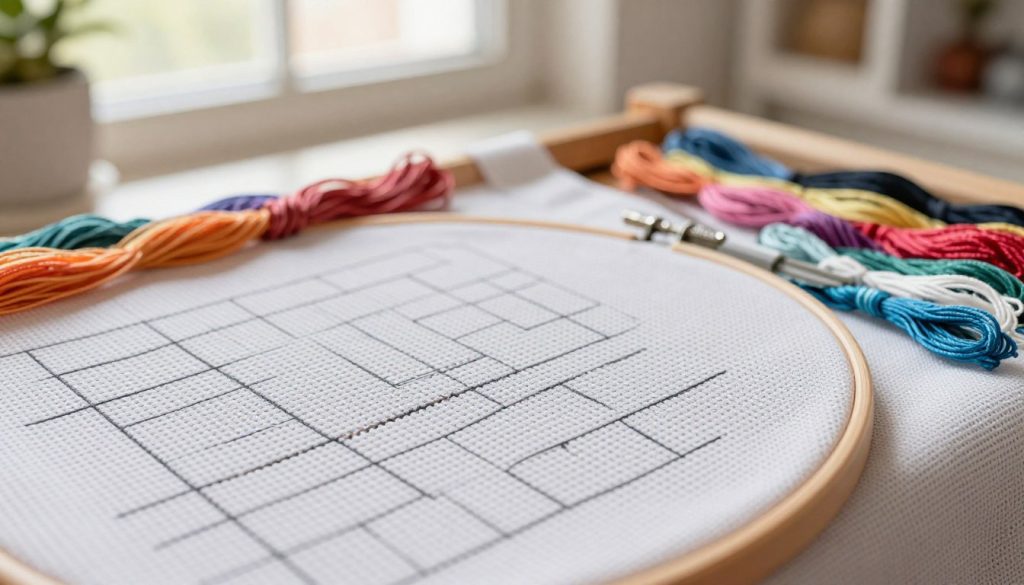
Stitches that go in different directions can ruin your work. In counted cross stitch, it’s important to keep all stitches in the same direction. Use cross stitch gridding to help guide your stitches.
Size Variations and Their Impact on Pattern Clarity
Size variations can mess up your pattern’s clarity. Use the right thread count and needle size to avoid this. Also, pay attention to your stitching technique to keep the pattern clear.
By knowing these common issues and how to avoid them, you can make a stunning cross stitch piece. It will show off your skills beautifully.
Essential Tools for Achieving Perfect Stitch Consistency
Getting perfect stitch consistency is easier with the right tools and knowledge. To make beautiful cross stitch projects, you need the right equipment. This equipment helps you work with precision and uniformity.
Selecting the Right Needles and DMC Floss
Choosing the right needles and floss is key for consistent stitches. DMC floss is a favorite among cross stitch fans for its quality and color range. Pick tapestry needles with blunt tips and large eyes for easy floss use. The right needle and floss combo makes your work look better.
Choosing Quality Cross Stitch Fabric and Frames
The base of a great cross stitch project is the fabric. Aida cloth and evenweave linen are top picks, each with its own benefits. Aida is great for beginners, while linen gives a more refined look. A good frame or hoop is also crucial. It keeps the fabric tight, helping you stitch evenly.
Thread Organization Systems for Better Results
Keeping your embroidery floss organized is key for efficiency and accuracy. A thread organizer or bobbin system helps keep colors in order. This saves time and prevents color mistakes, keeping your project consistent.
Lighting and Magnification Tools for Precision
Good lighting and magnification are essential for detailed work. A quality lamp or magnifying glass helps you see stitches clearly. This ensures your work is precise and reduces eye strain, letting you work longer without getting tired.
Investing in these tools can greatly enhance your cross stitch projects. With them, you can achieve the perfect stitch consistency that makes your work truly stand out.
Mastering Techniques for Flawless Stitches
Flawless stitches are key to a great cross stitch project. There are many techniques to help you get there. Learning these will make your projects look better and more professional.
The Danish Method vs. English Method
The Danish and English methods are two main ways to do cross stitch. The Danish method helps reduce hand strain by holding the needle and floss a certain way. The English method is more traditional, with the needle in one hand and floss in the other. Try both to see which you prefer.
Maintaining Even Tension Throughout Your Project
Even tension is key for a professional look in cross stitch. Pay attention to how tight you pull the floss. Consistent tension makes your stitches even and flat, improving your project’s look.
Cross Stitch Gridding for Perfect Placement
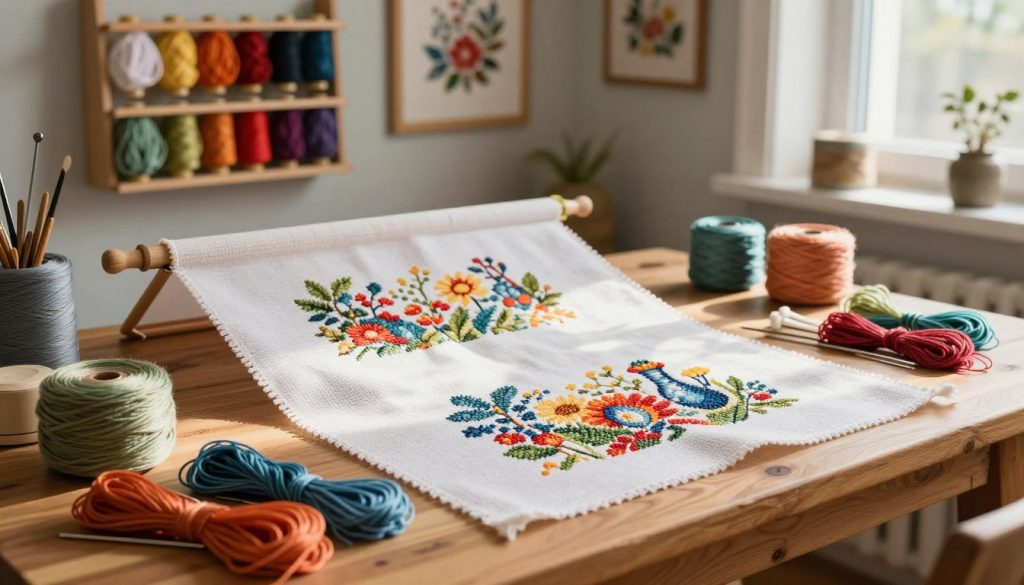
Gridding helps place stitches accurately. It’s a grid on your fabric that shows where each stitch goes. This is great for complex patterns or for those new to stitching.
Backstitching Techniques for Definition and Detail
Backstitching adds detail and definition to your work. It’s stitching over existing stitches for bold lines. Use the right thread color and stitch carefully to get a clean backstitch.
| Technique | Description | Benefit |
|---|---|---|
| Danish Method | Holding needle and floss in a specific way | Reduces strain on hands |
| English Method | Holding needle in one hand and floss in the other | Traditional technique, easy to learn |
| Cross Stitch Gridding | Creating a grid on fabric for accurate stitch placement | Reduces mistakes, especially in complex patterns |
| Backstitching | Stitching over existing stitches for bold lines or outlines | Adds definition and detail to projects |
Fixing Mistakes and Improving Your Cross Stitch Skills
Starting your cross stitch journey means you’ll make mistakes. But, with the right techniques, you can fix them and get better. Whether you’re new to beginner cross stitch or have been doing it for a while, knowing how to spot and fix errors is key to a perfect finish.
Identifying and Correcting Common Cross Stitch Mistakes
Common mistakes include misaligned stitches, wrong colors, and uneven tension. First, check your work to find the mistake. For misaligned stitches, carefully remove them with a seam ripper. If you’ve picked the wrong color, just re-stitch with the right one.
Keeping your tension even is also important. Practice stitching at a steady pace to avoid fabric problems.
| Mistake Type | Correction Method | Prevention Tip |
|---|---|---|
| Misaligned Stitches | Use a seam ripper to remove incorrect stitches | Use a grid or magnifying glass for precision |
| Incorrect Colors | Re-stitch with the correct color | Double-check your color chart |
| Uneven Tension | Practice consistent stitching pace | Use a hoop or frame to maintain tension |
Practice Exercises for Building Muscle Memory
Doing practice exercises can really help improve your cross stitch skills. Try stitching simple patterns or grids to build muscle memory. This will help you get a consistent rhythm, making more complex projects easier.
Regular practice also helps you keep your tension even and be more accurate.
Cross Stitch Therapy: Finding Your Rhythm for Consistency
Cross stitch can be very calming and meditative. To find your rhythm, make a comfortable stitching space. Use good lighting and listen to soothing music or nature sounds.
As you stitch, focus on the motion. Let yourself relax and enjoy the process. This cross stitch therapy can help you get better at stitching and make it more enjoyable.
By fixing mistakes, practicing, and enjoying the calming side of cross stitch, you can really improve. Whether you’re looking for embroidery hacks or just want to enjoy your hobby more, these tips will help you make beautiful pieces.
Conclusion: Elevating Your Cross Stitch Projects Through Consistency
Getting your stitches even is key to making beautiful cross stitch projects. By using the tips from this article, you can improve your embroidery. This will help you make stunning pieces that show off your creativity.
Whether you’re doing complex designs or simple ones, keeping your stitches even is important. As you get better, you’ll enjoy making your cross stitch projects more. They will become more rewarding.
If you’re new to cross stitch, there are many resources for beginners. These can help you learn the basics. For those who are more experienced, there are many sources of embroidery inspiration to help you get creative.
By focusing on making your stitches even and using the tips from this guide, you’ll make amazing cross stitch projects. So, grab your needle and thread, and let your creativity flow through your stitching.
 English