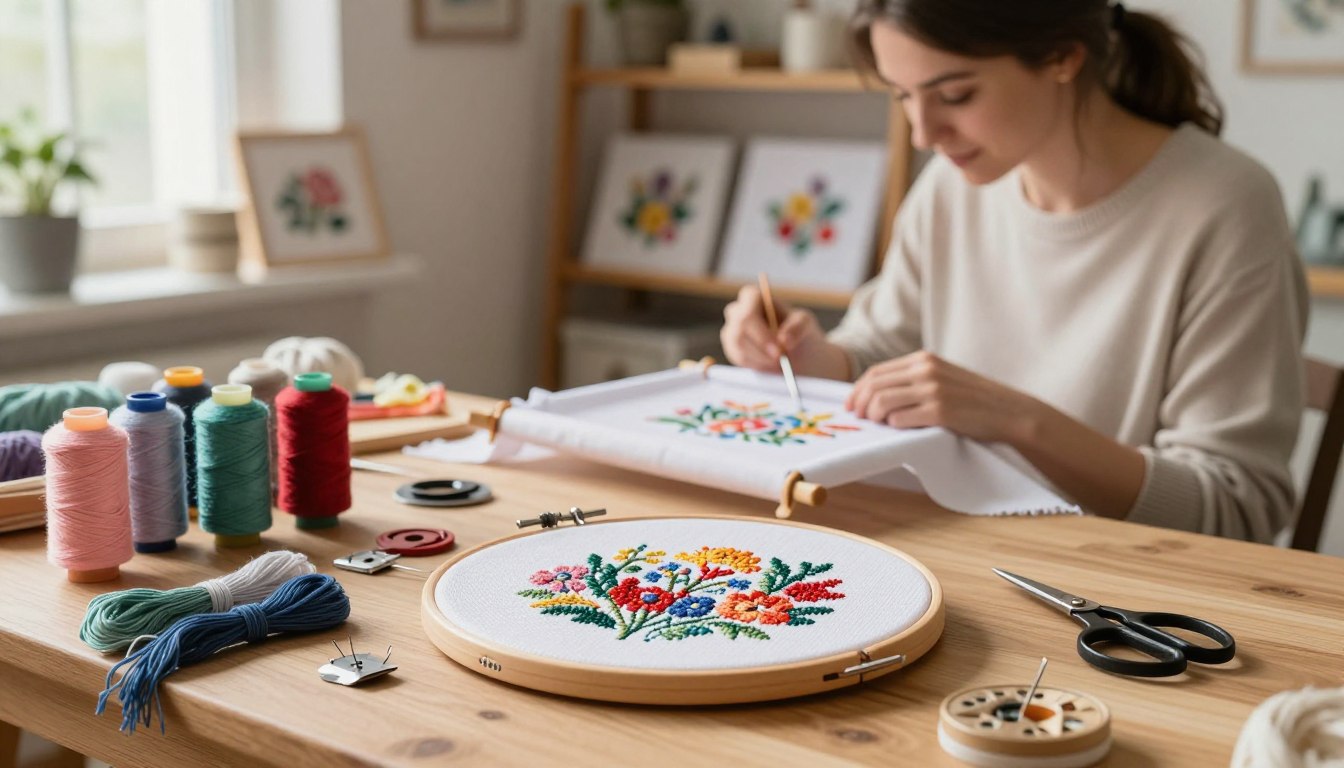
When it comes to cross stitch, a consistent technique is key. It makes stitching more enjoyable. Keeping even tension and mastering basic stitches greatly improves your work’s quality.
Developing a consistent technique lets you focus on the creative parts of your project. You won’t struggle with uneven stitches or complicated patterns. Embroidery hacks offer valuable tips and tricks to boost your skills.
Whether you’re experienced or new to counted cross stitch, improving your technique is crucial. It helps you achieve professional-looking results and makes the hobby more enjoyable.
Key Takeaways
- Consistent technique is crucial for enjoyable cross-stitching.
- Mastering basic stitches improves overall quality.
- Even tension is essential for professional-looking results.
- Embroidery hacks can help refine your skills.
- Counted cross stitch requires attention to detail.
The Foundation of Enjoyable CROSS STITCH
To enjoy cross-stitching, mastering the basics is key. It makes the experience more fun. One important thing is to keep your work consistent.
Understanding Tension and Its Impact
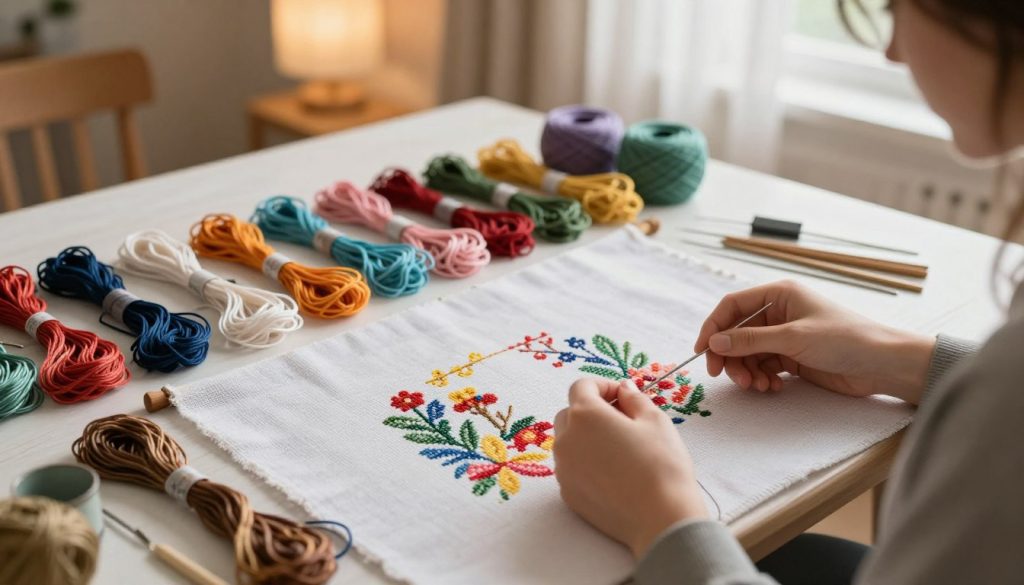
Tension is how tight you stitch. Even tension is crucial for a professional look. If it’s too tight, the fabric puckers. If it’s too loose, your stitches won’t be even.
To get the right tension, pay attention to your stitching style. Adjust as needed to keep your work smooth.
The Importance of Stitch Direction
Stitch direction is also very important. Consistent stitch direction makes your work look neat and uniform. Always stitch in the same direction to keep your stitches even.
How Consistency Affects Your Finished Projects
Consistency in tension and direction makes your projects look great. Experienced needleworkers say, “Consistency is key to a beautiful cross-stitch piece.” It takes practice, but it’s worth it for the beauty it adds to your work.
By focusing on these basics, you’ll make your cross-stitching more enjoyable. It becomes more rewarding too.
Common Inconsistencies That Diminish Stitching Pleasure
Inconsistencies in cross-stitch can make you frustrated and lessen the fun of the hobby. It’s important to keep your stitches consistent for a beautiful project. But, some common problems can slow you down and make it less enjoyable.
Irregular Tension Problems
Irregular tension is a big problem for many cross-stitchers. It happens when stitches are too loose or too tight, making the fabric look bad. To fix this, keep your tension even while stitching. Try stitching a simple pattern and focus on how tight you pull the thread.
Mixed Stitch Directions
Mixed stitch directions can mess up your project’s look. When stitches go in different directions, it looks messy. Always stitch in the same direction, like from top to bottom or corner to corner.
Uneven Coverage and Thread Count Issues
Uneven coverage and thread count problems can also be a problem. These happen when stitches are not even or when the fabric’s thread count doesn’t match the pattern. To solve this, count your stitches carefully and pick a fabric that fits your project well. Aida cloth is good because it’s easy to count stitches.
Identifying Issues in Your Current Work
To find problems in your work, take a break and look at it often. Check for uneven tension, uneven stitches, or bad coverage. Catching these early lets you fix them and get a great finish.
| Common Issues | Description | Solution |
|---|---|---|
| Irregular Tension | Stitches are not pulled tight enough or too tight | Practice maintaining consistent tension |
| Mixed Stitch Directions | Stitches are made in different directions | Stitch in the same direction always |
| Uneven Coverage | Stitches are not evenly spaced | Count stitches carefully and choose appropriate fabric |
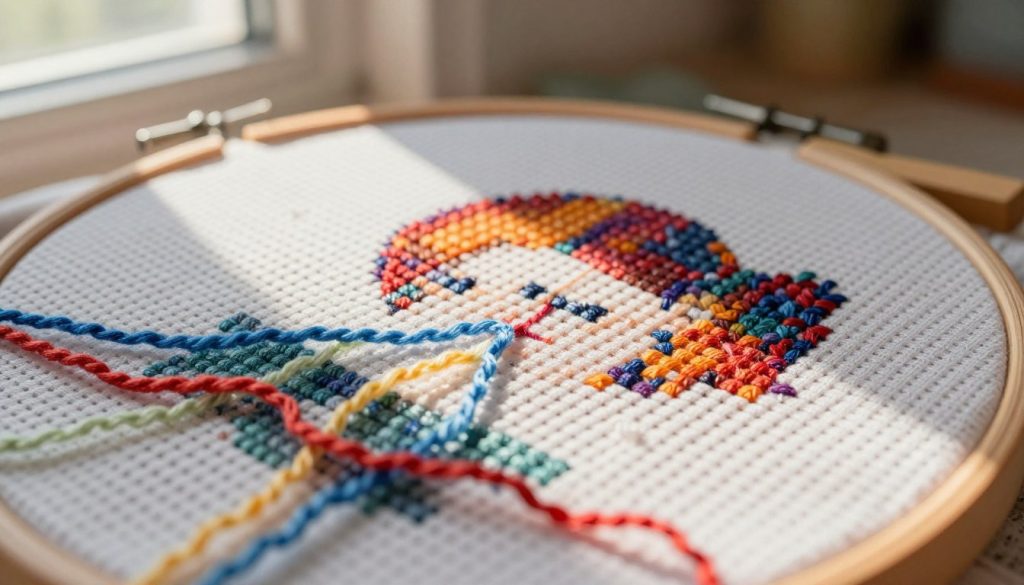
Knowing these common problems and how to fix them can make your stitching better. Regularly check your work and keep your techniques consistent. This way, you can avoid these issues and enjoy making beautiful cross-stitch projects.
“The key to successful cross-stitching is not just in the stitches themselves, but in the consistency and care with which they are made.”
Essential Tools for Developing CROSS STITCH Consistency
Starting your cross-stitch journey means learning about the tools you need. The right tools make stitching fun and rewarding. They help you enjoy the process more.
Selecting the Right Needle and Hoop
Choosing the right needle and hoop is key to consistent stitching. Use a blunt tapestry needle for smooth fabric movement. A sturdy embroidery hoop that fits well in your hand is best. It keeps the fabric tight for even stitches.
Fabric Choices That Support Consistency
The fabric you pick is important for consistent stitching. Aida and Evenweave fabrics are favorites because they stitch evenly. Pick a fabric that matches your skill and project needs for the best results.
Thread Organization Systems
Keeping your threads organized is crucial for smooth stitching. A thread organizer or system helps save time and reduces stress. It lets you focus on stitching without interruptions.
Lighting and Magnification Tools
Good lighting and magnification tools are essential for cross-stitch. Bright light helps see thread colors and fabric holes clearly. Magnification tools, like glasses or lamps, help with even tension and precise stitches.
| Tool | Description | Benefit |
|---|---|---|
| Tapestry Needle | Blunt needle for smooth stitching | Prevents fabric damage |
| Embroidery Hoop | Sturdy hoop for holding fabric taut | Ensures even tension |
| Aida or Evenweave Fabric | Evenly woven fabric for uniform stitching | Facilitates consistent results |
| Thread Organizer | System for organizing threads | Saves time and reduces frustration |
| Magnifying Glass or Lamp | Tool for magnifying work area | Assists in precise stitching |
Step-by-Step Technique Development
Mastering cross stitch is more than just following a pattern. It’s about developing a step-by-step technique. To get better, focus on creating a consistent method that suits you.
Establishing Your Personal Stitching Method
The technique you use in cross stitch greatly affects your projects. There are two main methods: the Danish Method and the English Method.
The Danish Method vs. English Method
The Danish Method helps reduce hand strain by holding the needle and thread in a certain way. The English Method is more common and has a different grip.
Both methods have their benefits. The best way to choose is by trying them out.
Finding What Works for Your Style
Try different techniques to find what feels right for you. Think about thread tension, stitch direction, and comfort while stitching.
Practice Exercises for Improving Consistency
Regular practice is key to improving consistency in cross stitch. Two great exercises are the Grid Sampler Exercise and Tension Control Drills.
Grid Sampler Exercise
The Grid Sampler Exercise helps you keep even tension and consistent stitches. It builds muscle memory and enhances your technique.
Tension Control Drills
Tension Control Drills help you maintain consistent thread tension. This is crucial for a professional finish. These drills help you spot and fix tension problems.
Tracking Your Progress with Sample Projects
Working on sample projects is a great way to track your progress. These projects let you apply your new skills in a real way.
Start with simple projects like small ornaments or bookmarks. Then, move on to more complex designs.
| Project Type | Skill Level | Time Required |
|---|---|---|
| Simple Ornaments | Beginner | 2-3 hours |
| Bookmarks | Beginner | 1-2 hours |
| Complex Designs | Advanced | 10+ hours |
Conclusion: The Rewards of Mastering Consistent Technique
Learning to stitch consistently can make cross-stitching a fun and calming hobby. It’s all about managing tension, choosing the right fabric, and following the right stitch direction. This way, you can make stunning designs that inspire you.
As you get better, you’ll enjoy stitching more. It becomes a way to relax and find peace. This makes cross-stitching a great form of therapy.
With practice, you’ll feel confident tackling any pattern. Your finished pieces will show off your skill and hard work. Displaying them in frames will highlight your talent and the joy of creating.
Remember, the real fun is in the journey, not just the end result. Enjoying the process makes the hobby even more rewarding. This will keep you excited to try new things and keep stitching.
 English