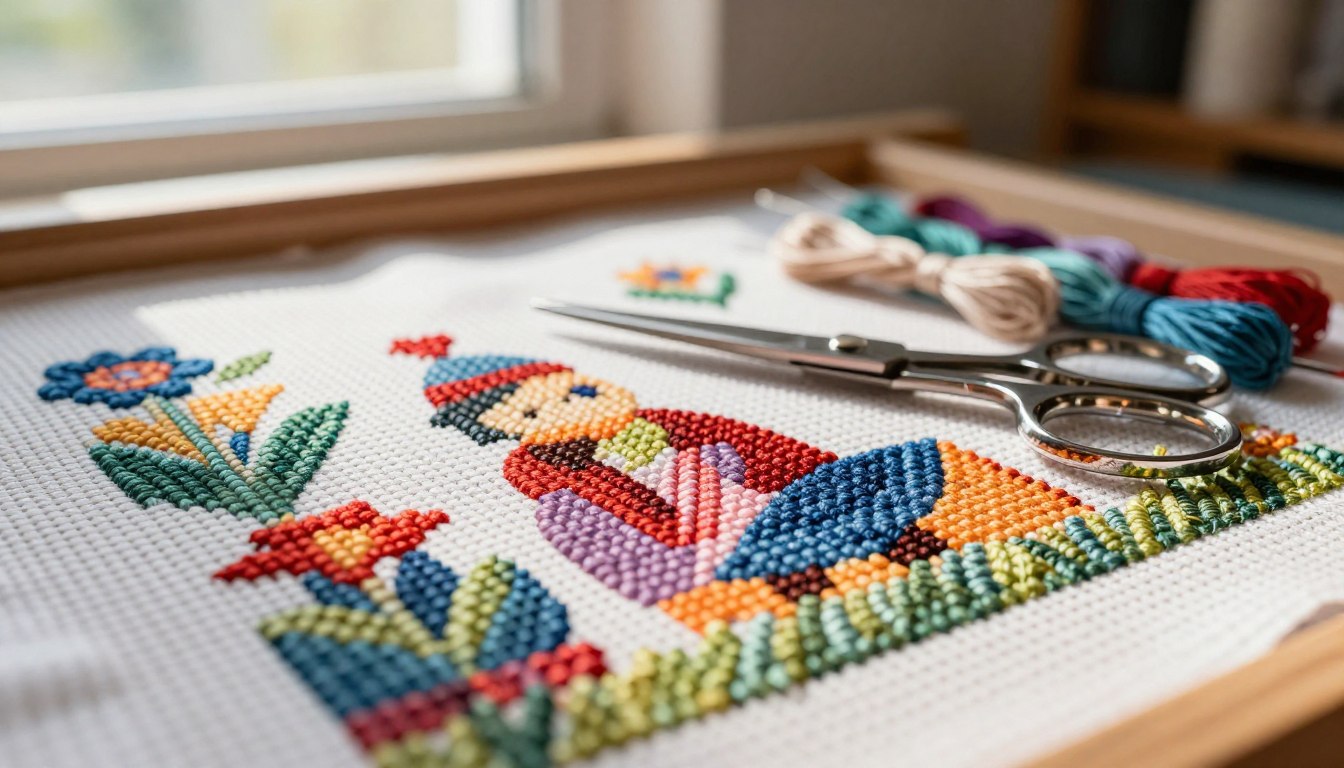
Creating beautiful cross stitch patterns is more than just following a design. It’s about understanding visual harmony and balance. When dealing with complex patterns, it’s easy to lose focus. But keeping everything cohesive is key to a stunning finish.
To achieve visual harmony, apply basic design principles to your embroidery hacks and techniques. This means balancing colors, managing texture, and making sure the design flows well.
When working on your counted cross stitch projects, remember the importance of fabric choice. The right fabric can greatly impact your project’s look.
Key Takeaways
- Understand the principles of visual harmony in embroidery.
- Balance colors and textures for a cohesive look.
- Choose the right fabric for your project.
- Apply design principles to enhance your stitch work.
- Maintain a smooth flow in complex patterns.
Understanding Visual Harmony in Needlework
To make stunning needlework, knowing about visual harmony is key. Visual harmony is when different parts of a design come together well. This makes the whole thing look good and feel right.
Defining Balance and Cohesion in Pattern Work
Balance and cohesion are key for visual harmony in needlework. Balance means spreading out visual things like color and texture to feel stable. Cohesion is when all parts work together as one.
Why Complex Patterns Present Special Challenges
Complex patterns are hard to get right for visual harmony. With lots of parts, making a unified design is tough. But, knowing about balance and cohesion helps you make beautiful needlework.
Elements That Create Visual Flow in Designs
Color, texture, and pattern repetition help designs flow well. By balancing these, you can make a design that leads the viewer’s eye.
| Element | Description | Effect on Visual Flow |
|---|---|---|
| Color | Different colors can be used to create contrast and draw attention to specific areas. | Guides the viewer’s eye through the design. |
| Texture | Varying textures can add depth and interest to a design. | Creates visual interest and can direct the viewer’s eye. |
| Pattern Repetition | Repeating patterns can create a sense of rhythm and unity. | Unifies the design and creates a sense of cohesion. |
By learning to balance and mix these elements, you can make needlework that’s not just pretty but also harmonious.
Mastering CROSS STITCH Techniques for Complex Patterns
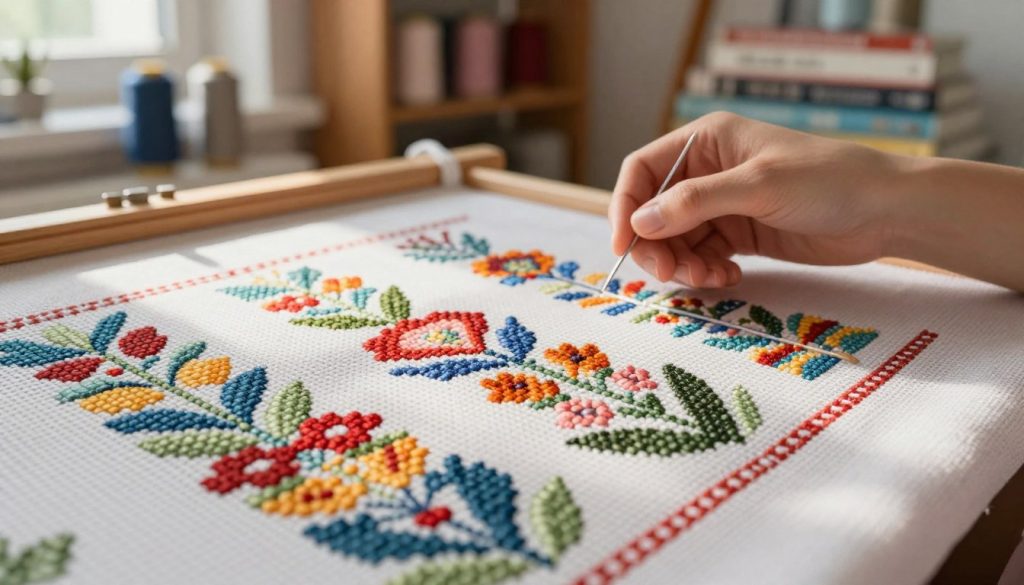
Learning cross stitch techniques is key to making detailed patterns. You must pick the right fabric, organize your floss, and use the right gridding method. Keeping your stitches even is also important.
Selecting the Right Fabric Count and Type
Picking the right fabric is vital for your cross stitch project. The fabric count affects how tight your stitches are. For detailed work, choose a higher count fabric.
Aida cloth and Evenweave linen are top picks. Aida is great for beginners because it shows the stitches well. Evenweave linen gives a smoother look.
Organizing Your DMC Floss for Complex Projects
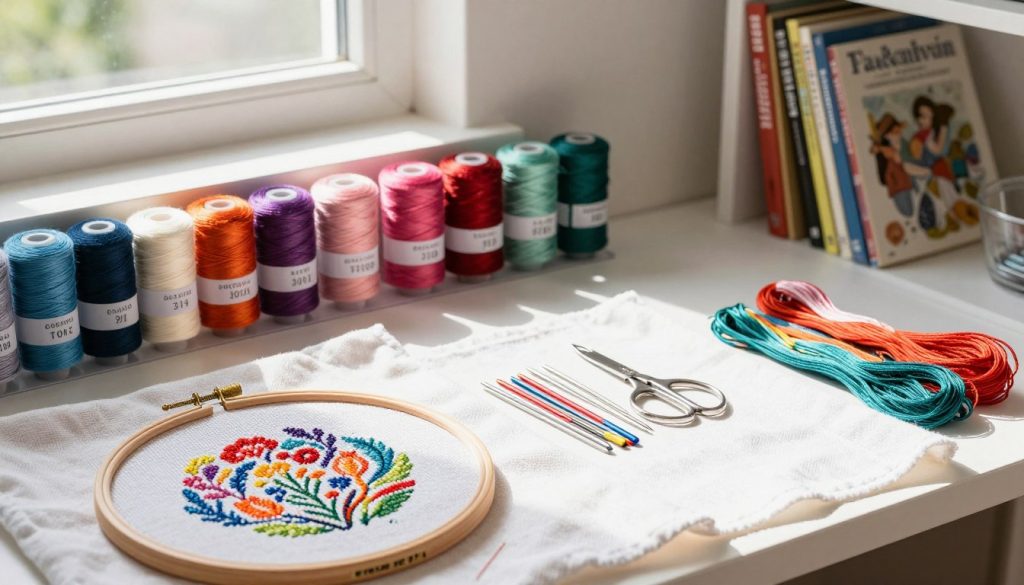
Keeping your DMC floss organized is crucial for complex projects. A floss organizer helps keep your threads tidy and within reach. Labeling your floss by color makes it easier to follow your pattern.
| Floss Color | DMC Number | Length Required |
|---|---|---|
| Red | 814 | 2 meters |
| Blue | 932 | 1.5 meters |
Gridding Methods for Pattern Accuracy
Gridding your fabric ensures your stitches are accurate. Use a watermarking pen or thread to draw a grid. This helps you keep your stitches in line.
Establishing Consistent Stitch Tension
Keeping your stitches even is essential for a professional look. Practice to develop a consistent touch. Uneven tension can ruin your design.
Color Theory Fundamentals for Balanced Designs
Color theory is key in embroidery, helping you make designs that look good and feel right. It shows how colors work together. This makes your cross stitch projects not just pretty but also touching.
Understanding Color Relationships in Embroidery
In cross stitch, colors can be connected in many ways. Complementary colors like blue and orange stand out. They grab your eye. On the other hand, colors like blue, green, and yellow work together smoothly.
Creating Focal Points Through Strategic Contrast
Contrast is a strong tool in cross stitch. It helps you make parts of your design pop. For example, a bright color against a soft background can really make something stand out.
Techniques for Blending Similar Shades
Blending similar shades adds depth to your cross stitch. You can use gradient stitching or variegated floss. These methods make colors flow smoothly, improving your design’s look.
Correcting Color Imbalances Mid-Project
If your project looks off-color, it’s okay. You can change things up by swapping a shade or adding a new color. Being open to changes can make your final piece look great.
Pattern Management Strategies
Working on detailed cross stitch designs needs a good pattern management plan. A solid plan helps you stay organized, cuts down on mistakes, and makes stitching fun.
Breaking Down Complex Patterns into Manageable Sections
Big cross stitch patterns can feel too much. But, breaking them into smaller parts makes them easier to handle. Start by splitting the pattern into quarters or finding natural breaks in the design.
This way, you can focus on one part at a time. It helps you keep track of your progress and stay accurate.
Tracking Progress Without Getting Overwhelmed
To keep track of your progress without feeling too much, use a progress tracker or checklist. Mark off the sections or stitches you’ve done. This shows how much you’ve finished and keeps you motivated.
Digital Tools for Pattern Organization
Use digital tools to improve your cross stitch organization. Apps and software for cross stitch help manage patterns, track thread, and show what the final design will look like. These tools make stitching easier and help avoid mistakes.
Creating and Using Working Copies Effectively
Having a working copy of your pattern is very useful. Use it to mark your progress, note color changes, and spot any issues. This keeps your original pattern clean and makes it easier to refer to while stitching.
By using these pattern management strategies, you can handle even the toughest cross stitch projects with confidence. Good organization and the right tools greatly improve your stitching experience.
“A well-organized stitcher is a happy stitcher.”
Maintaining Stitch Consistency Throughout Your Project
Creating a beautiful cross-stitch piece means keeping your stitches consistent. This is what makes a good piece great, especially with complex patterns.
Directional Stitching for Visual Coherence
Directional stitching means stitching in the same direction. This creates a cohesive look and prevents chaotic stitching. It makes your design harmonious and balanced.
Managing Thread Carries in Complex Areas
When working on complex projects, managing thread carries is key. Keep your tension even and don’t pull the thread too tight. Proper thread management ensures your stitches lie flat and your design looks clean.
Techniques for Even Stitch Coverage
Even stitch coverage is crucial for a professional finish. Use “stitching in the ditch” to stitch along existing stitch edges. This creates a smooth, even surface.
| Technique | Description | Benefit |
|---|---|---|
| Directional Stitching | Stitching in a consistent direction | Creates visual coherence |
| Managing Thread Carries | Keeping tension even and thread carries short | Prevents visible thread on the back |
| Even Stitch Coverage | Stitching along the edges of existing stitches | Creates a smooth, even surface |
Working With Multiple Strands Consistently
Working with multiple strands requires consistent stitching. Use the same number of strands and keep tension even. Consistent strand usage ensures a cohesive look and prevents visual disruptions.
Detail Work for Enhanced Visual Harmony
The secret to visual harmony in cross stitch projects is in the details. It’s what makes a design stand out, adding depth and interest.
Strategic Backstitching Techniques
Backstitching is key for outlining designs and adding definition. To achieve harmony, choose the right thread color and thickness. This creates a cohesive look.
Creating Definition in Intricate Areas
In detailed parts of your design, definition is crucial. Use various stitches and colors that match the main pattern. Contrasting colors can highlight specific details.
Balancing Detail Work With Main Pattern Elements
It’s important to balance detail work with the main design. Too much detail can overwhelm, while too little can make it dull. Finding the right balance is essential for harmony.
Incorporating French Knots and Specialty Stitches
French knots and specialty stitches add texture and interest. They can enhance visual harmony when used thoughtfully. Use them to create focal points or add depth.
| Stitch Type | Purpose | Visual Effect |
|---|---|---|
| Backstitching | Outlining designs | Creates definition and contrast |
| French Knots | Adding texture | Adds dimension and visual interest |
| Specialty Stitches | Creating focal points | Enhances visual harmony |
Troubleshooting Visual Disharmony
Even experienced stitchers can face visual disharmony issues. But knowing how to fix these problems can make a big difference. Achieving visual harmony is key for a stunning cross-stitch piece. Troubleshooting is a vital skill for this.
Identifying Pattern Areas That Disrupt Harmony
The first step is to find the pattern areas causing trouble. Look for uneven stitches, clashing colors, or distorted designs. Carefully examining your work will help you find the problem spots.
- Check for inconsistent stitch tension, which can cause unevenness in the fabric.
- Verify that the colors you’ve chosen work well together and don’t clash.
- Examine the design for any distortions or misalignments.
Techniques for Correcting Mistakes Without Starting Over
Fixing mistakes without starting over needs patience and the right methods. One way is to carefully remove the wrong stitches with a seam ripper or tweezers. Be careful not to harm the nearby stitches or fabric.
Another method is to blend the incorrect stitches into the area around them. Add more stitches or adjust the existing ones to make it look better.
Adjusting Designs That Don’t Work Visually
Sometimes, a design might not look right due to color or layout. Adjusting the design can fix this. You might change the colors, rearrange the pattern, or simplify complex parts.
When to Embrace “Creative Adjustments”
There are times when creative adjustments can make a project special. This means embracing the imperfections and using them to add character. By making smart changes, you can save your project and make it unique.
Conclusion
Learning to achieve visual harmony is key to making beautiful cross stitch patterns. You can master this by understanding color theory, managing patterns, and keeping stitches consistent. Cross stitch can be very calming and meditative, often called cross stitch therapy.
Whether you’re new to cross stitch or have been doing it for a while, these tips will help. They will make your embroidery more inspiring and your projects more rewarding. The process of making intricate needlework is just as valuable as the final piece, teaching you many secrets.
By using these strategies, you’ll create stunning pieces that show off your talent. So, start by gathering your threads and choosing a pattern that excites you. Then, enjoy the journey of bringing your vision to life through cross stitch.
 English