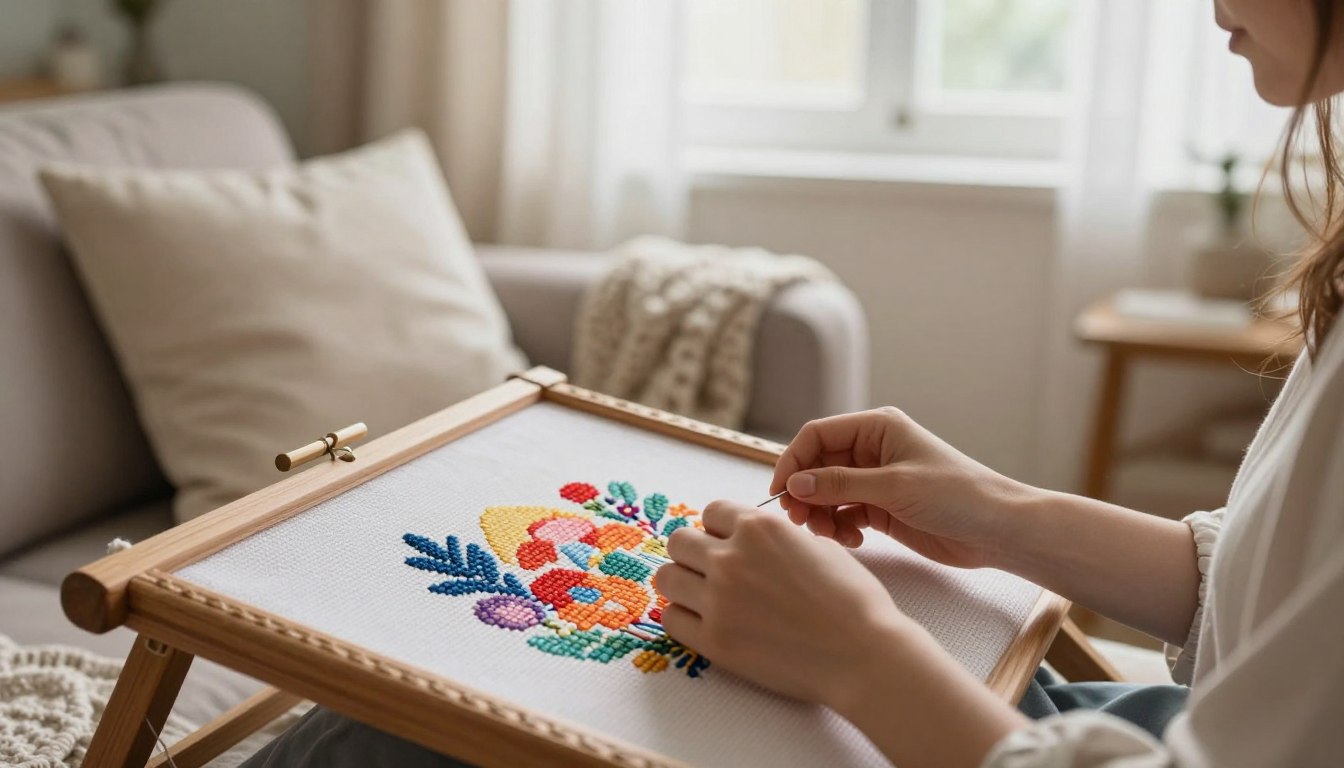
As you spend time on this calming craft, you’ll find it helps you relax and express your creativity. Cross stitching is more than just a hobby; it’s a way to unwind and explore your artistic side.
Watching your project grow stitch by stitch brings a sense of calm. The benefits of cross stitch are well-known. Many find it reduces stress and improves their mental health.
By learning cross stitch techniques, you create something beautiful and feel a sense of pride. As you work, you’ll enjoy seeing your design come to life, thread by thread.
Key Takeaways
- Cross stitching is a meditative experience that reduces stress and promotes relaxation.
- The craft allows you to express your creativity and tap into your artistic side.
- Engaging in cross stitch techniques can help you cultivate a sense of accomplishment.
- Watching your project come together can be a calming and fulfilling experience.
- Cross stitch therapy is a great way to unwind and improve mental well-being.
The Enduring Appeal of Cross Stitch
In today’s world filled with screens, cross stitch offers a welcome break. It brings us into a world of color and texture. You can dive into this traditional craft, enjoying the simple yet rewarding process of making something beautiful.
A Brief History of This Timeless Craft
Cross stitch comes from ancient embroidery traditions. Over the centuries, it has changed with new societies and technology. Today, cross stitch remains a popular hobby, loved for its mix of simplicity and complexity.
Why Cross Stitch Captivates Modern Crafters
Modern crafters love cross stitch for its therapeutic benefits and the joy of making something real. It’s a great way to take a break from digital screens and express your creativity. With many cross stitch patterns out there, you can find projects that match your skills and interests.
The Therapeutic Benefits of Needle and Thread
The repetitive motion of cross stitch can be calming, reducing stress and promoting relaxation. As you work, you’ll feel calm and focused. It’s perfect for those looking for a calming, screen-free hobby. By using embroidery hacks and tips, you can make your cross stitch experience even better.
Essential CROSS STITCH Tools for Beginners
Starting your cross stitch journey begins with the right tools. As a beginner, having the right tools is key to a successful project.
Choosing Your Fabric: Aida, Evenweave, and Linen
The base of your cross stitch is the fabric. You can pick from Aida, Evenweave, or Linen. Aida cloth is great for beginners because it has a clear grid. This makes counting stitches easy.
Evenweave fabric has a less obvious grid and is perfect for detailed designs. Linen adds a unique texture but can be harder to work with.
Needles, Hoops, and Scissors: The Basic Toolkit
Every cross stitch project needs a few basic tools. A tapestry needle is used to stitch without harming the fabric. An embroidery hoop keeps the fabric tight, making stitching easier.
Good scissors for cutting embroidery floss are also crucial.
Understanding DMC Floss and Organization Systems
DMC embroidery floss is a common thread for cross stitch. It comes in many colors. To stay organized, use a thread organizer or small storage box.
This saves time and reduces frustration when looking for specific colors.
Optional Tools That Make Stitching Easier
While not necessary, tools like a magnifying glass or LED light can help. They are especially useful for those with vision issues. A stitch counter also helps track your progress.
With these tools, you’re ready to begin your cross stitch journey. The right tools can greatly enhance your stitching experience.
Getting Started: Step-by-Step Cross Stitch Techniques
Starting your cross stitch journey can be both thrilling and a bit scary. But with the right techniques, you’ll soon be stitching like a pro. Cross stitch is a fun hobby where you create detailed designs on fabric using a needle and thread. To start, you need to learn a few basic techniques.
Preparing Your Fabric with Gridding
Before stitching, you must prepare your fabric. Gridding means marking your fabric with a grid to help you count stitches right. You can use a water-soluble pen or a ruler to draw the grid. Gridding makes sure your stitches are even and your design looks symmetrical. To grid your fabric, fold it in half both ways to find the center, then mark a grid pattern with your tool.
Threading Your Needle and Starting Without Knots
Threading your needle is a key step in cross stitch. To avoid knots, cut a length of floss (about 18 inches) and thread it through the needle. Hold the floss between your thumb and index finger, and pull it through the needle with your other hand. Leaving a small tail can help prevent the floss from coming loose. To start stitching without knots, use a technique called “wasting thread” – thread your needle with a short length of floss, then stitch a few times before cutting it off.
Mastering the Basic Cross Stitch Method
The basic cross stitch method makes an “X” shape on your fabric using two diagonal stitches. Start by bringing your needle up through the fabric at the bottom left corner of the stitch, then down through the top right corner. Make sure to keep your tension even, as tight stitches can pucker the fabric. Complete the “X” by bringing the needle up through the top left corner and down through the bottom right.
Counting and Following Pattern Charts
Cross stitch patterns are shown on a chart, with each square representing a stitch. To follow the chart, count the squares carefully and stitch accordingly. It’s essential to read the chart correctly to avoid mistakes. Start by identifying the center of the chart and your fabric, then work your way outward. Use a highlighter or a ruler to keep track of your progress.
As you practice these techniques, you’ll become more confident in your cross stitch abilities. Remember, the key to mastering cross stitch is patience and practice. With time, you’ll be creating beautiful designs with ease.
Finding and Working with Cross Stitch Patterns
The world of cross stitch is vast and varied. It has patterns for every skill level and interest. Whether you’re new or experienced, there’s a pattern for you.
Skill Level Selection
Choosing the right cross stitch pattern is key. Beginners should start with simple patterns. These have fewer colors and less complex designs.
As you get better, you can try more complex patterns. They will challenge your skills.
Free vs. Paid Patterns
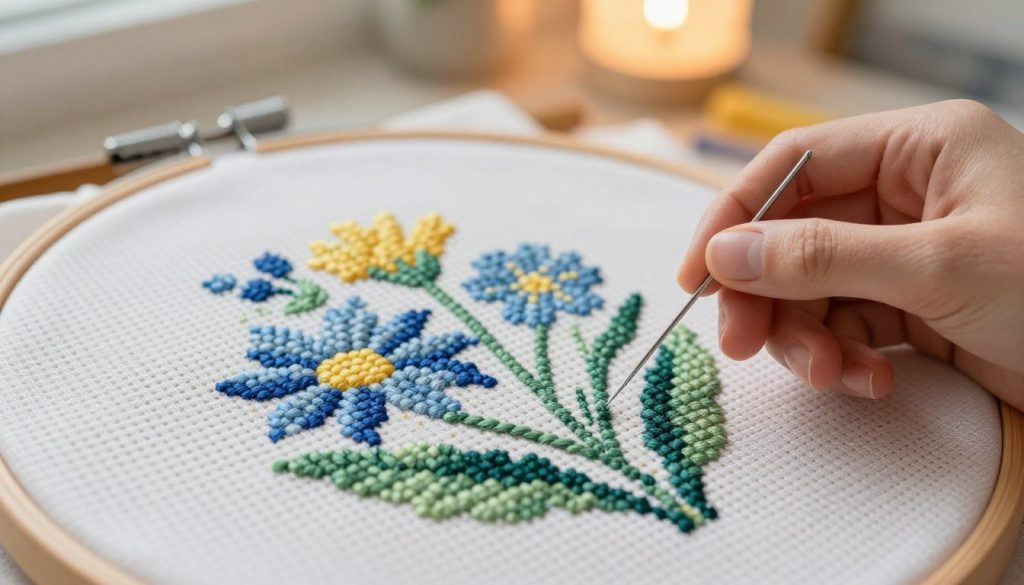
There are many free and paid cross stitch patterns online. Free patterns are great for beginners. But, paid patterns often have better instructions and designs.
Think about what you’re willing to spend. Also, consider what you want from a pattern.
Understanding Pattern Symbols
Cross stitch patterns use symbols and instructions. It’s important to understand these symbols. They help guide you through the stitching.
Many patterns come with a key or legend. This helps you understand the symbols.
Creating Your Own Designs
Creating your own designs is fun and creative. It’s a great way to make your projects unique. Start with a simple idea and use graph paper to make it stitchable.
Learning to find and work with cross stitch patterns opens up a world of creativity. It lets you enjoy the process of bringing your designs to life.
Advancing Your Skills: Beyond the Basic Stitch
Once you get the hang of basic cross stitch, you’ll want to try more. Learning new techniques makes your work better and lets you explore embroidery inspiration and creativity.
Backstitching Techniques for Definition and Detail
Backstitching is key for adding detail and definition. It’s about stitching over existing stitches to make bold lines and fine details. Use a single strand of DMC floss that matches your design’s color. It’s great for striking borders and highlighting parts of your design.
French Knots and Specialty Stitches
French knots give your cross stitch a textured look. To make one, wrap the thread around your needle twice, then push the needle back into the fabric near where it came out. These knots add a special touch to your work, making it unique.
Working with Multiple Colors and Blending Techniques
Using many colors can be tough, but it also lets you create rich designs. To handle multiple colors, use a system like a thread conditioner or color-coded organizer. Blending colors adds depth and complexity to your work.
Tackling Larger and More Complex Projects
When you feel more confident, try bigger and more complex projects. These need good planning, like picking the right cross stitch frames and managing your time. Breaking down big projects into smaller parts makes them easier to handle.
| Technique | Description | Best Used For |
|---|---|---|
| Backstitching | Creates bold outlines and details | Outlining, defining features |
| French Knots | Adds texture and dimension | Creating focal points, adding detail |
| Color Blending | Creates subtle transitions and shading | Landscapes, portraits, complex designs |
Mastering these advanced techniques lets you make intricate and engaging cross stitch projects. You can use different DMC floss colors and textures to make your designs come alive.
Troubleshooting Common Cross Stitch Mistakes
Even the most skilled cross stitchers make mistakes. But knowing how to fix them can save your project. Making errors is part of learning, and fixing them is key to finishing your projects.
Preventing and Fixing Knots and Tangles
Knots and tangles can be annoying. But there are ways to stop and fix them. To avoid knots, manage your thread length and use a needle threading tool. If you find a knot, gently work it out with your needle or use tweezers to remove it.
- Keep your thread taut but not too tight.
- Use a needle threader to help guide the thread through the needle’s eye.
- If a knot forms, don’t pull it tight; instead, work it out gently.
Dealing with Miscounts and Pattern Errors
Miscounts can happen to anyone, and patterns can have errors. To fix miscounts, double-check your work against the pattern chart. If you’ve made a mistake, you might need to frog your stitches. For pattern errors, check the pattern’s errata or contact the designer.
Tips for avoiding miscounts:
- Use a highlighter to mark completed rows on your pattern chart.
- Count your stitches carefully, especially when changing colors.
- If you’re unsure, re-count the stitches before continuing.
Rescuing Stained or Damaged Projects
Accidents can stain or damage your project. For stains, gently blot the area with a damp cloth. Don’t rub, as it can harm the fabric. For damaged projects, decide if you can repair or frog the affected area.
When to Frog (Remove Stitches) and When to Adapt
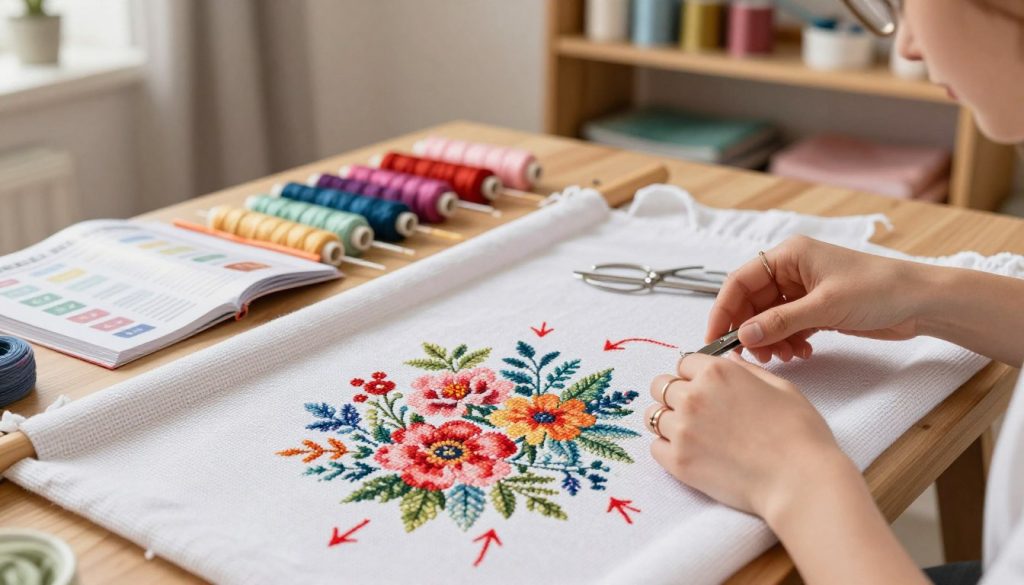
Frogging your work can be tedious. But sometimes it’s necessary. If you’ve made a big mistake, frogging might be best. However, if the mistake is small or not visible, you might adapt your project. Think about how the mistake affects the design and decide.
Remember, the goal is to enjoy the process, not to create a perfect piece.
Conclusion: Embracing the Meditative Journey of Cross Stitch
Exploring cross stitch has shown you a craft that mixes creativity with calm. It’s great for your mental health. Cross stitch lets you create something beautiful while finding peace and focus.
This craft is a journey of calm, letting you express yourself with needle and thread. You’ve learned how to use the right tools and patterns to make it even better. By doing this, you’re becoming more mindful and creative.
Keep going on your cross stitch path, knowing the real magic is in the journey, not just the end result. The secrets you’ve learned will help you as you create and relax. With each stitch, you’ll grow more present, patient, and peaceful.
 English