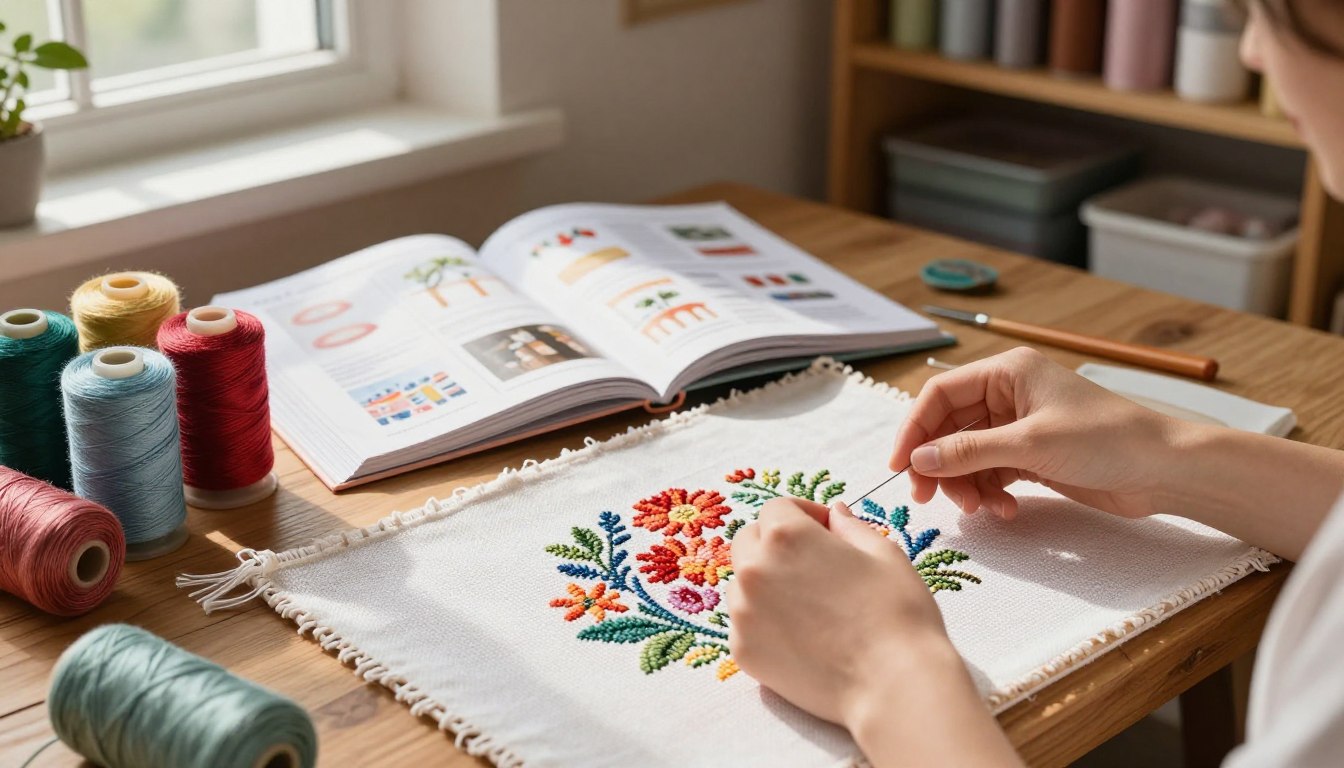
Have you heard about the benefits of embroidery and needlework? Cross-stitch is especially good for improving your focus on small details.
Cross-stitch is a fun and calming craft. It helps your mind, emotions, and body. It boosts your brain power, lowers stress, and makes you feel better overall.
With the right cross stitch tips and techniques, you can get the most out of this craft. You’ll enjoy all the benefits it brings.
Key Takeaways
- Cross-stitch improves attention to fine detail
- Embroidery can reduce stress and anxiety
- Cross-stitch for beginners is a great way to start a new hobby
- Following cross stitch tips can enhance your skills
- Engaging in needlework can improve cognitive function
The Cognitive Benefits of CROSS STITCH
Doing cross-stitch can greatly improve your thinking skills. It makes you more focused and clear-minded. This traditional needlework offers many benefits for your brain.
How Needlework Improves Focus and Concentration
Cross-stitch needs you to pay close attention and concentrate. It’s great for sharpening your focus. By following patterns and counting stitches, you train your mind to stay focused. Regular cross-stitch practice can lead to improved mental discipline, making complex tasks easier.
The Science Behind Hand-Eye Coordination Development
Cross-stitch requires your hands and eyes to work together. As you stitch, you improve your hand-eye coordination. This skill is important for everyday tasks. Studies show that cross-stitch can boost your brain function and even lower the risk of age-related brain decline.
Mindfulness and Therapeutic Benefits Through Repetitive Stitching
The repetitive motion of stitching can be calming, promoting mindfulness. This mindfulness is linked to cross-stitch’s therapeutic benefits, known as “cross stitch therapy.” The soothing effect of the stitches can reduce stress and anxiety. By making cross-stitch a part of your routine, you can enjoy these therapeutic benefits firsthand, improving your life quality.
Exploring cross-stitch, you’ll find many needlework secrets and embroidery hacks to improve your skills. Learning different cross stitch techniques will not only boost your abilities but also enhance the cognitive benefits of this hobby.
Essential Tools and Materials for Precision Stitching
For precision stitching, you need the right materials and tools. The right equipment is key to getting top-notch results in your cross stitch projects.
Selecting the Right Needles and Hoops
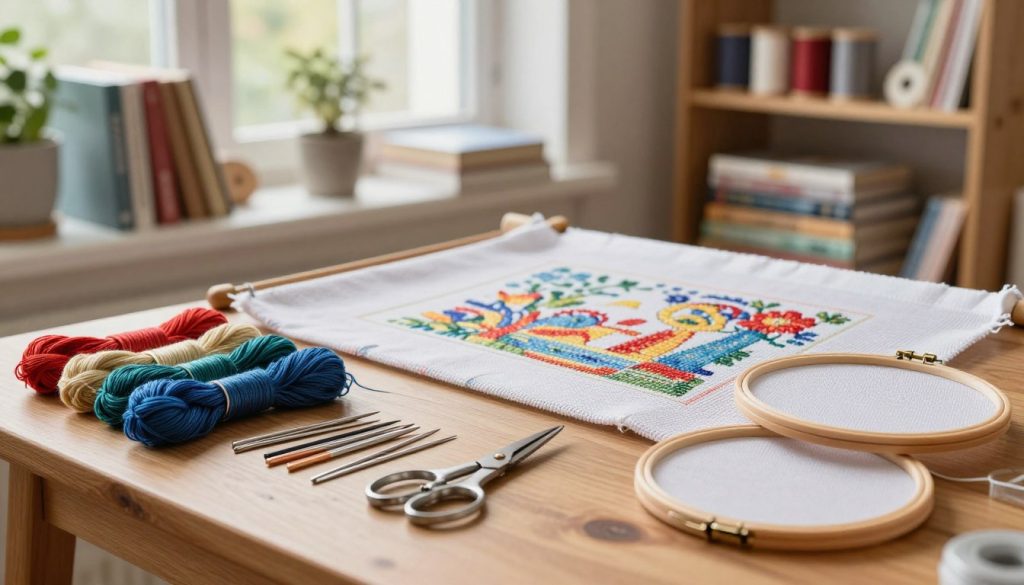
Choosing the right needles and hoops is crucial for cross stitching. The needle size and type greatly affect your stitching experience.
Needle Sizes and Their Purpose
Needles come in different sizes, each suited for specific fabrics and threads. A tapestry needle, often used for cross stitch, has a blunt tip and a large eye for the thread.
Choosing the Appropriate Hoop Size
Your hoop should be big enough to keep your work tight but not too big. Choose a hoop that lets you work comfortably without straining your fabric.
Understanding Different Cross Stitch Fabric Counts
Cross stitch fabric comes in various counts, which show the threads per inch. You’ll find Aida 11, 14, and 18, and evenweave fabrics like linen.
| Fabric Type | Threads Per Inch | Suitable For |
|---|---|---|
| Aida 11 | 11 | Beginners, larger stitches |
| Aida 14 | 14 | General cross stitch, good for details |
| Aida 18 | 18 | Intricate designs, finer details |
Organizing Your DMC Floss Collection
Keeping your DMC floss organized is key for efficiency and to avoid tangles. A well-organized collection makes it easy to find the colors you need.
Color Sorting Systems for Efficiency
Sorting your floss by color is a good method. You can use a color sorting system or group similar shades together.
Storage Solutions for Thread Management
Use storage boxes or bags made for embroidery floss to keep threads tidy. Labeling your storage helps with organization.
Step-by-Step Guide to Basic Cross Stitch Techniques
Learning the basics of cross stitch is key to making beautiful designs. As a beginner, knowing the fundamental techniques is crucial. It will help you grow in your crafting journey.
Preparing Your Fabric and Materials
Before you start, prepare your fabric and materials. Pick the right fabric count for your project. Make sure you have the correct needle, hoop, and embroidery floss. Choosing the right tools is important for a good stitching experience.
Organize your DMC floss collection in a storage box or threader. This makes it easier to find the colors you need. This step is essential for a smooth stitching process.
Creating Your First Stitches: The Danish Method vs. English Method
There are two main ways to make cross stitches: the Danish and English methods. The Danish method uses a vertical needle and starts with the top stitch. The English method uses an angled needle and starts with the bottom stitch.
Both methods have their benefits. Your preference will often decide which one you use. Try both to see which works best for you.
Reading and Following Patterns Accurately
Cross stitch patterns guide you in making beautiful designs. To follow a pattern well, understand the symbols and colors. Take your time to read the pattern carefully. Make sure you know the stitch count and fabric needs.
Using a highlighter or ruler helps track your progress. This simple trick can reduce mistakes and make stitching more fun.
Common Beginner Cross Stitch Mistakes and How to Fix Them
As a beginner, mistakes like miscounting stitches or using the wrong color happen. The key to fixing these mistakes is to spot them early. Be ready to undo your work if needed.
| Common Mistakes | How to Fix Them |
|---|---|
| Miscounting stitches | Carefully re-count the stitches and adjust your work accordingly. |
| Using the wrong color | Check your pattern and replace the incorrect color with the correct one. |
| Tension issues | Adjust your fabric tension to ensure even stitches. |
By mastering these basic cross stitch techniques, you’ll be on your way to creating stunning designs.
Advanced Techniques for Fine Detail Work
To improve your cross-stitch skills, learning advanced techniques is key. These methods enhance fine detail work. As you get better, using these techniques will make your projects look better and be more fun.
Mastering Backstitching Techniques for Definition
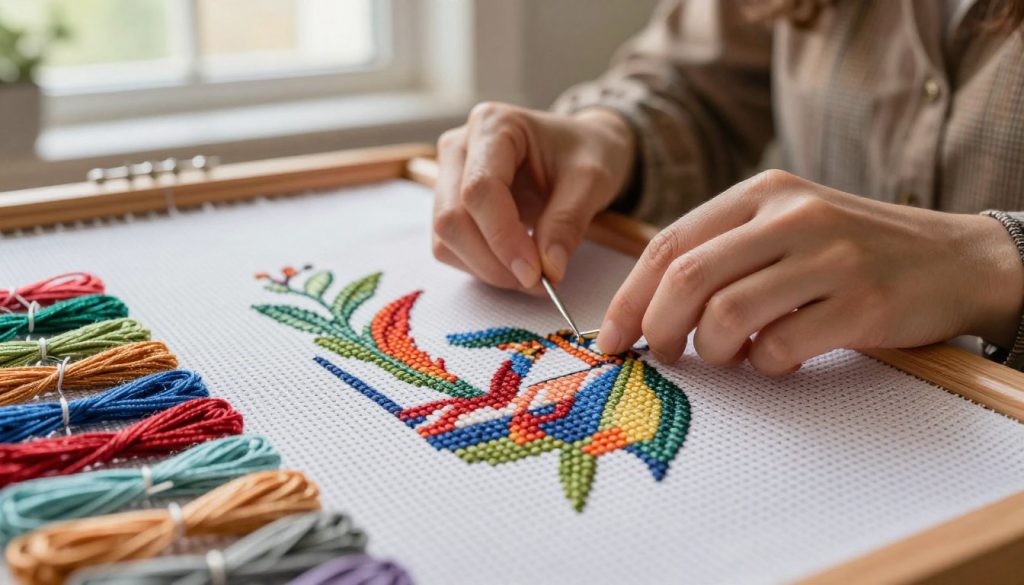
Backstitching is crucial for adding detail and outlines to your designs. It helps make your work stand out. Use a different thread color and keep the tension even to avoid fabric puckering.
Fractional Stitches for Smoother Curves and Lines
Fractional stitches are great for smooth lines and curves. They add depth and detail to your designs. Try quarter and three-quarter stitches for more intricate work.
Cross Stitch Gridding Methods to Maintain Precision
Gridding your fabric is vital for precision in cross-stitch. It helps keep your stitches even and in line. This is especially helpful for complex designs.
Working with Multiple Thread Colors in Detailed Areas
Working with many thread colors needs good thread management. Use a conditioner to prevent tangles. A thread manager can also help keep colors organized.
Using these advanced techniques will make your cross-stitch designs more detailed and intricate. They showcase your skills and creativity. Whether it’s a complex pattern or a simple design, these methods will help you achieve professional results.
Detail-Oriented Cross Stitch Projects to Improve Your Skills
Detail-oriented cross stitch projects are a great way to improve your stitching skills and build confidence. These projects help you refine your techniques and pay closer attention to detail.
Progressive Difficulty: From Simple to Complex Patterns
Start with simple patterns and gradually move to more complex designs. This progression helps you develop your skills without feeling overwhelmed. Beginner-friendly patterns often feature larger stitches and fewer colors, making them perfect for those new to cross stitch.
Small-Scale Projects That Require Precision
Small-scale projects, such as intricate ornaments or miniature designs, require precision and attention to detail. These projects are ideal for practicing fine stitching and improving your overall technique. Using the right tools, like a good quality hoop and appropriate needle, can make a significant difference in the outcome.
Techniques for Maintaining Focus During Intricate Work
To maintain focus during intricate work, it’s helpful to break the project into smaller sections and work on one area at a time. Good lighting and comfortable working conditions also play a crucial role in maintaining concentration. Additionally, taking regular breaks can help prevent fatigue and keep your mind fresh.
By engaging in detail-oriented cross stitch projects, you can enhance your skills and enjoy the therapeutic benefits of this craft. As you progress, you’ll find that your ability to focus and create intricate designs improves, leading to a sense of accomplishment and pride in your work.
Conclusion: From Hobby to Cognitive Enhancement
Exploring cross-stitch has shown you its power to boost focus, memory, and well-being. Adding cross stitch therapy to your daily routine can bring cognitive benefits. It’s a calming and creative activity.
Learning cross stitch takes patience, detail focus, and hand-eye coordination. Moving from simple to complex patterns unlocks secrets that boost your mind and lower stress.
Embracing cross-stitch as a hobby and mental tool improves your mental clarity and focus. So, grab your needle and thread. Start stitching towards a sharper mind and a calmer you.
 English