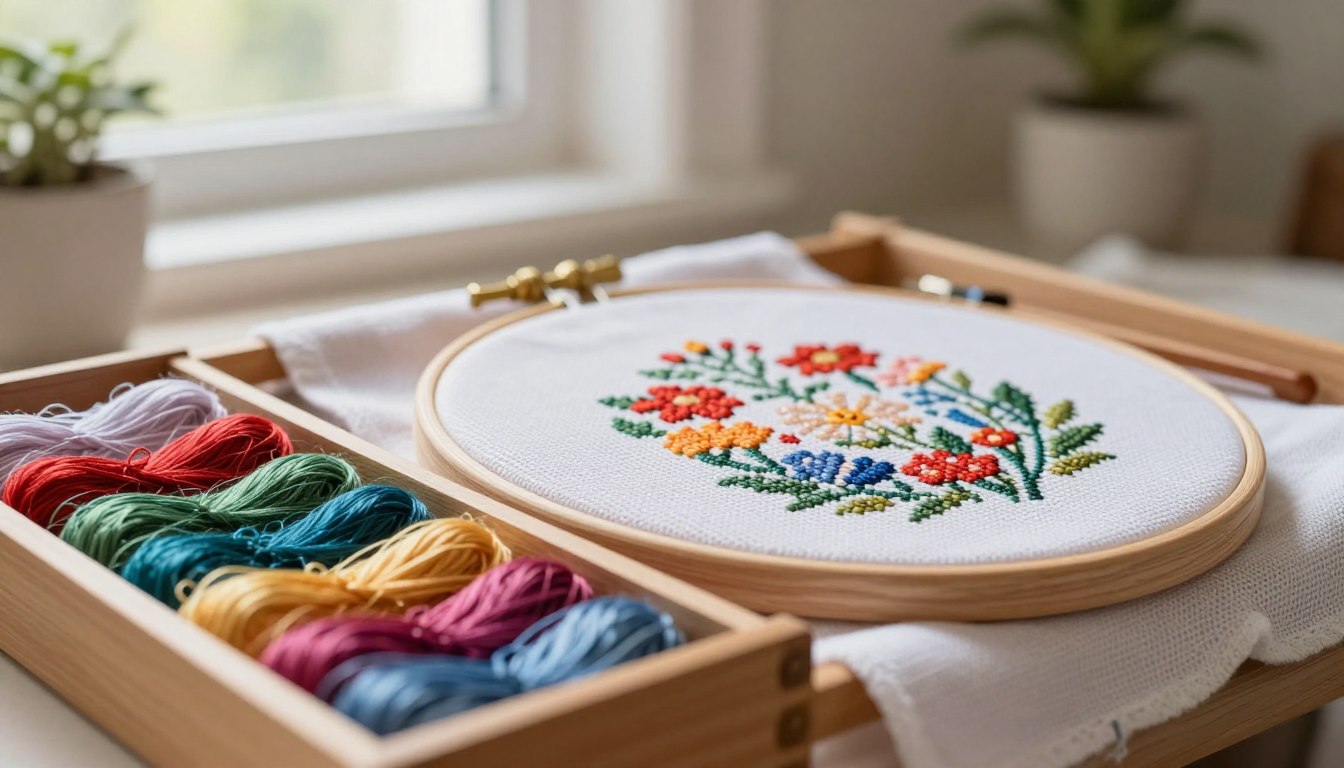
Keeping a smooth stitching flow is key for long embroidery sessions. When tackling complex patterns, it’s easy to lose focus. But, a steady flow keeps you sharp and prevents tiredness.
Reaching a consistent rhythm in stitching brings joy and efficiency to your work. It makes every stitch a pleasure, turning your projects into rewarding experiences.
Key Takeaways
- Maintaining a smooth stitching flow is essential for long embroidery sessions.
- A good flow helps you stay focused and avoid fatigue.
- Consistent stitching rhythm enhances the overall stitching experience.
- Good stitching flow makes completing projects more efficient.
- It allows you to enjoy the therapeutic benefits of cross stitch.
The Impact of Proper Flow on Your Cross Stitch Experience
A smooth stitching flow can greatly change your cross stitch journey. It affects how fast you finish projects and how happy you feel. Whether you’re new to beginner cross stitch patterns or experienced, keeping a good flow is key.
Physical and Mental Benefits of Maintaining Flow
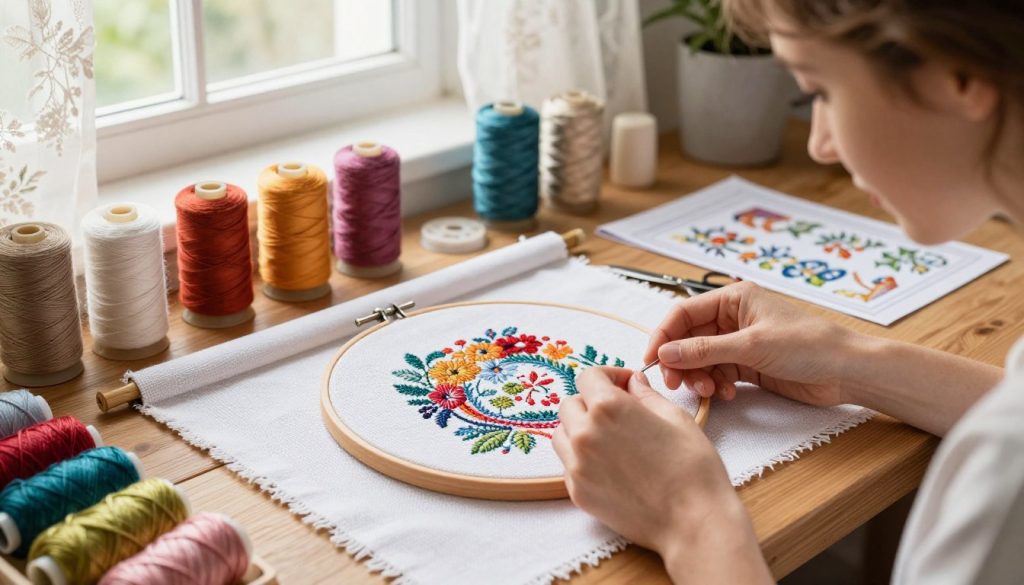
Stitching with a steady flow brings many benefits. It can be like cross stitch therapy, lowering stress and calming you down. By focusing on your stitches, you can relax your mind and hands.
It also helps your eyes and hands get better at stitching. The calm, repetitive nature of cross stitch can be meditative. It helps clear your mind and improve your focus.
How Flow Affects Project Completion Time
Your flow affects how fast you finish projects. When you’re in flow, you work more efficiently. You make steady progress without getting tired.
This is because you don’t stop and start as much. Your muscles also get better at stitching. By improving your flow, you can finish your cross stitch patterns faster. Plus, knowing needlework secrets like the right tension and needle can make your stitching better and faster.
Creating an Ergonomic CROSS STITCH Setup
An ergonomic cross stitch setup can make stitching more enjoyable. It ensures your workspace is comfortable and meets your needs. This way, you can stitch for longer without feeling tired or uncomfortable.
Choosing the Right Chair, Lighting, and Magnification
Choosing the right chair, lighting, and magnification is key. Your chair should support your back, keeping you straight. Good lighting is also important; mix natural and artificial light for your work area. For magnification, a magnifying glass or lamp can help with detailed work, like using DMC floss.
Positioning Your Frame or Hoop for Optimal Comfort
The position of your cross stitch frame or hoop is crucial for comfort. It should be at a height that lets you work without straining your neck or shoulders. Using a lap tray or standing frame can support your project, keeping it at the right distance from your eyes. This setup reduces eye strain and promotes a relaxed stitching posture.
Hand and Wrist Positioning to Prevent Strain
Proper hand and wrist positioning is essential to avoid strain. Keep your wrists straight and your hands in a neutral position. Using ergonomic handles or grips on your needle can make holding it more comfortable. Also, taking breaks to stretch your hands and wrists can prevent fatigue and injury.
By making these ergonomic adjustments, you can create a comfortable and efficient cross stitch setup. This improves your stitching experience and lets you enjoy your hobby for longer without discomfort.
Organizing Your Materials for Uninterrupted Stitching
A tidy stitching space is key for long, uninterrupted stitching. When your materials are organized, you can focus on your project. This makes your stitching more enjoyable and productive.
Effective Floss Organization and Storage Systems
Managing your embroidery floss is crucial. A messy collection of threads can cause tangles and knots. Use a floss organizer or a storage box with compartments to keep your threads tidy.
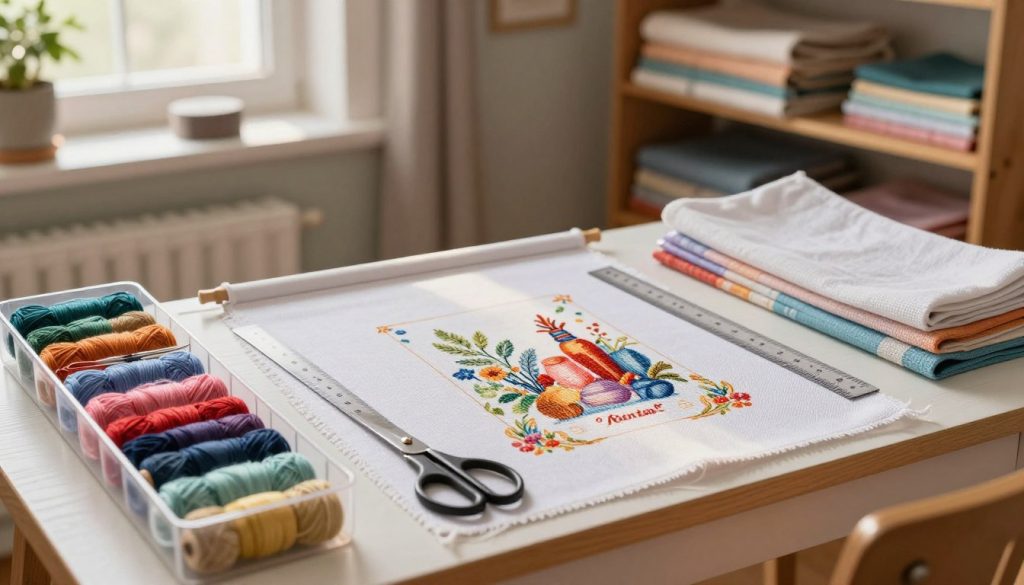
Small zip-lock bags or thread cards can also help. They make it easy to find the floss you need.
Pattern Preparation and Gridding Techniques
Preparing your pattern before stitching is important. Gridding your pattern on paper or digitally can spot issues early. This makes stitching smoother.
Use grid paper or counted cross stitch software for easier gridding.
Creating a Comprehensive Stitcher’s Toolkit
Having the right tools nearby improves your stitching. A good toolkit includes scissors, needles, and a thread conditioner.
Essential Tools for Long Sessions
- Good quality scissors for cutting floss and trimming threads
- A variety of needles for different types of fabric and thread
- A thread conditioner to prevent tangles and knots
- A magnifying glass or lamp for detailed work
Specialty Items for Complex Projects
For complex projects, you might need special tools. A stitch counter, row counter, or pattern magnifier can help. These tools ensure accuracy and track your progress.
Techniques to Maintain Focus and Prevent Fatigue
Cross stitching can be very calming if you do it right. To make your stitching better, keep your focus and avoid getting tired. This part will show you how to stay focused and feel good while stitching.
Establishing a Productive Stitching Rhythm
Having a steady rhythm in your stitching helps a lot. Start by setting a pace that feels right, using backstitching techniques to keep your stitches even. Make sure your thread tension is just right, not too tight or too loose.
To get better at your rhythm, try these tips:
- Stick to the same pattern to keep going strong.
- Keep your area clean to avoid distractions.
- Practice often to get better at it.
Strategic Breaks and Stretching Exercises
It’s important to take breaks to avoid getting tired. Every 30-60 minutes, stop and stretch. Stretch your hands, wrists, and arms to relax any tightness. You can also take a short walk or do some light exercises to wake up your mind and body.
Here’s a simple stretching routine:
| Stretch | Description | Duration |
|---|---|---|
| Wrist Extension | Hold your arm straight out and lift your hand up. | 10 seconds |
| Shoulder Rolls | Roll your shoulders forward and backward. | 15 seconds |
| Neck Stretch | Slowly tilt your head to one side, bringing your ear towards your shoulder. | 10 seconds per side |
Adapting Your Approach for Different Project Sizes
When working on different sizes, you need to adjust how you stitch. For big projects, break them into smaller parts or use a bigger hoop. For small ones, focus on being precise and use a magnifying glass if needed.
Here are some cross stitch ideas for different sizes:
- Use a lap tray or project bag for small projects.
- Try a standing hoop or frame for big projects.
- Adjust your speed based on the project’s complexity.
Troubleshooting Common Flow Disruptions
Even with good planning, problems can still happen. Issues like thread tangles, mistakes, or uneven tension can pop up. To avoid these, check your work often, use good threads, and keep a steady rhythm.
Here are some tips for fixing common problems:
- Use thread conditioner to prevent tangles.
- Keep scissors ready to cut loose threads.
- Check your pattern or guide often to catch mistakes.
Conclusion: Elevating Your Cross Stitch Journey Through Better Flow
Keeping your stitching flow smooth is key to enjoying cross stitch. Understanding the importance of flow, setting up your space right, and staying focused are essential. These steps can make your cross stitch journey better, whether you’re just starting or have been stitching for years.
Beginners should focus on the basics, like the right needlework secrets and techniques. Staying away from common mistakes is also important. As you get better, a tidy workspace and organized materials will help keep your flow going.
Using the tips shared, you’ll find stitching more enjoyable and stress-free. This lets you fully enjoy the relaxing and creative sides of cross stitch.
 English