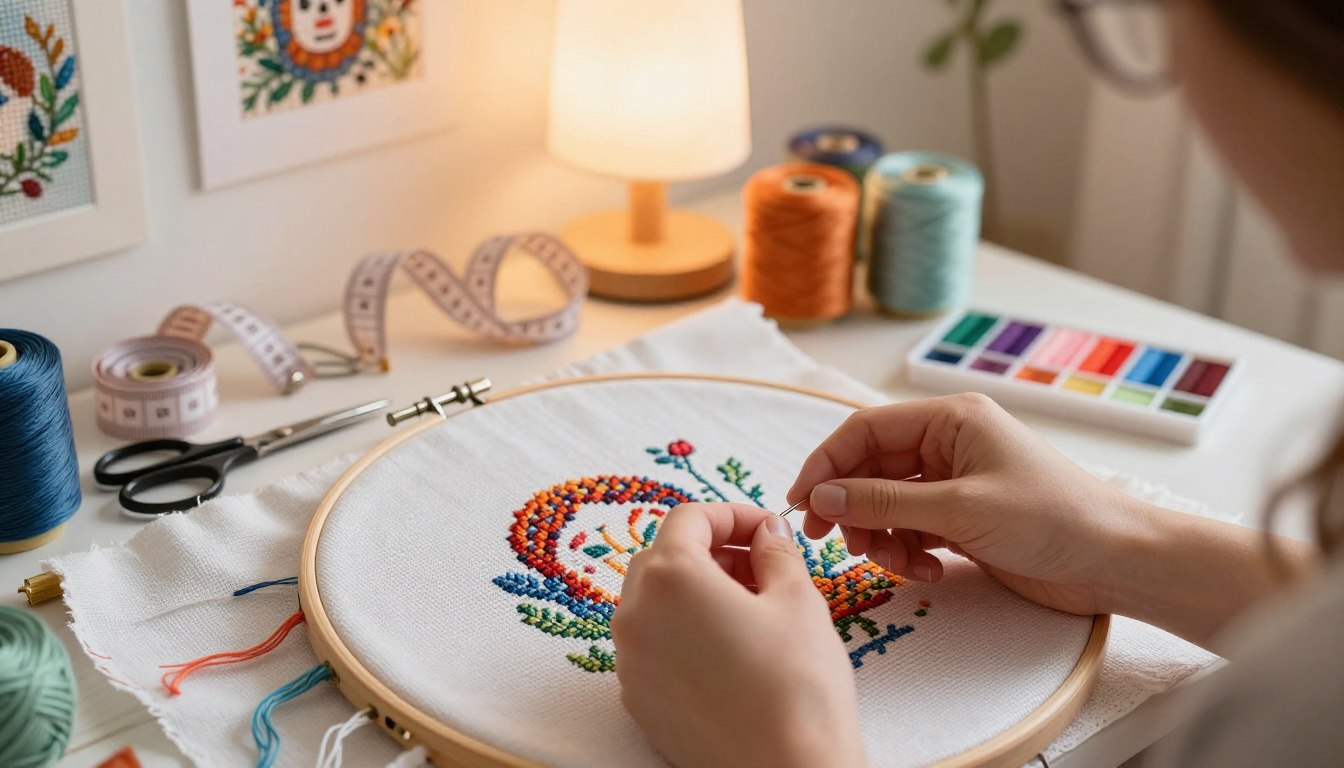
Starting your cross stitch adventure? You might be thinking about how to dodge common errors. Small tweaks can greatly improve your work’s quality. Paying attention to a few important details can help you avoid big mistakes and achieve a stunning result.
Whether you’re new to cross stitch or have been doing it for a while, knowing the value of precision and patience is key. Making small changes, like checking your thread tension and using the correct needle, can greatly affect your project’s success.
Key Takeaways
- Check your tension regularly to avoid uneven stitches.
- Use the right needle for your fabric to prevent damage.
- Read patterns carefully to avoid mistakes.
- Use a hoop or frame to keep your work taut.
- Don’t pull the thread too tightly, as it can cause puckering.
The Foundation of Error-Free CROSS STITCH Projects
To get perfect cross stitch, start with the right tools and techniques. A crafter ready with the basics can handle counted cross stitch’s details. This ensures a flawless final product.
Essential Tools for Precision Work
Precision is key in cross stitch. The right tools make a big difference. Needles and hoops or frames are crucial.
Needle Types and Their Impact on Stitch Quality
The needle type greatly affects stitch quality. Tapestry needles are best for cross stitch. They have blunt tips and large eyes, making them easy to use without damaging the fabric.
Choosing the Right Hoop or Frame
Choosing the right hoop or frame is key. It keeps your work tight and prevents distortion. Adjustable embroidery hoops are great for different project sizes.
| Tool | Purpose | Benefit |
|---|---|---|
| Tapestry Needles | For stitching | Prevents fabric damage |
| Adjustable Embroidery Hoops | For maintaining tension | Offers flexibility for various project sizes |
Selecting the Right Fabric and DMC Floss
Fabric and thread choice is key for a successful cross stitch project. Aida cloth and Evenweave linen are top picks. DMC floss is known for quality and color consistency.
Setting Up Your Workspace for Success
A well-organized workspace is crucial for cross stitching. Make sure it has good lighting, comfy seating, and a flat surface.
By focusing on these basics, you’ll create beautiful, error-free cross stitch projects.
Common Cross Stitch Mistakes and Their Early Warning Signs
Whether you’re new to cross stitch or have been doing it for years, knowing common mistakes is key. These errors can be avoided with the right techniques and awareness. This way, you can achieve a perfect finish.
Tension Issues: Too Tight or Too Loose
Tension problems are common in cross stitch. Stitches that are too tight can make the fabric pucker. On the other hand, stitches that are too loose can make it sag. To fix this, keep your tension even by pulling the thread right as you stitch. It’s also a good idea to check your work often for even tension.
Counting Errors and Pattern Misalignment
Counting mistakes can cause big problems in your cross stitch. To avoid this, use a magnifying glass or a good stitching light to count right. Also, check your work against the pattern often to catch any mistakes early.
Thread Management Problems
Managing your thread well is important for smooth cross stitch. Knots and tangles can be frustrating and take a lot of time to fix.
Preventing Knots and Tangles
To avoid knots and tangles, keep your thread short. A good length is about 18 inches. You can also use a thread conditioner to keep your thread smooth and untangled.
Managing Thread Length Effectively
It’s important to manage your thread length well to avoid knots. When you need to change thread, do it at a natural break in your pattern. Then, cut the thread ends neatly to stop fraying.
Knowing these common mistakes and how to avoid them can make your stitching more enjoyable and successful. Using embroidery hacks like the right fabric and DMC floss can also improve your work. With practice and patience, you’ll soon be making beautiful cross stitch patterns.
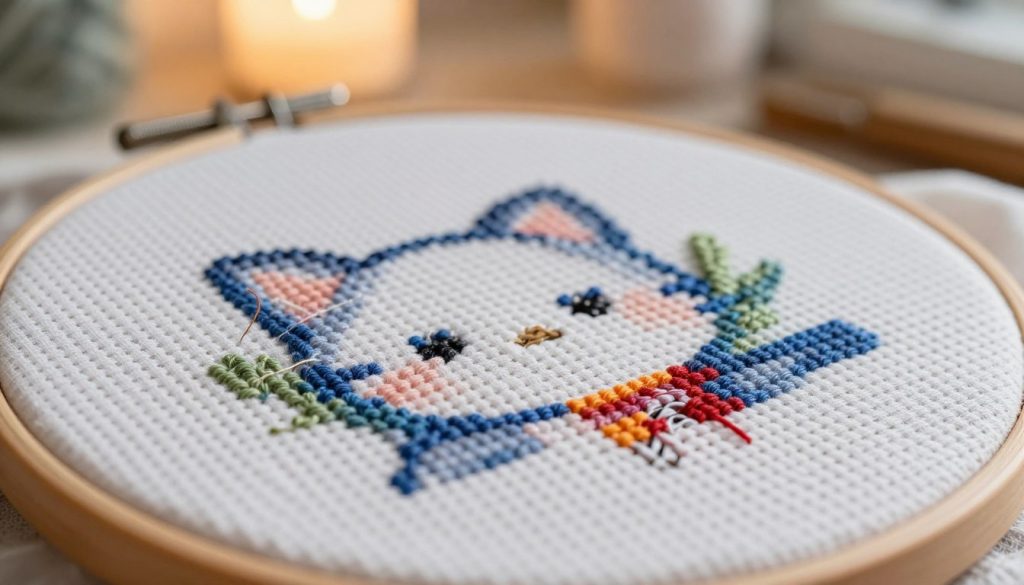
Preparation Techniques That Prevent Major Setbacks
Getting your cross stitch organized can really help avoid mistakes. A good start is key to a great finish. It lets you enjoy the creative part without stress.
Effective Gridding Methods for Accurate Counting
Gridding is a must in cross stitch to avoid errors. It breaks your fabric into easy-to-manage parts. This way, you can track your work easily.
There are many gridding methods. You can draw lines with a ruler or use a pre-printed grid. Choosing the right method is important for accuracy.
Thread Organization Systems for Complex Patterns
Managing threads is key for complex patterns. A good system saves time and reduces stress. You can use thread cards or digital tools to keep things tidy.
Labeling your threads clearly helps too. It makes finding the right color quick and easy.
Pattern Marking and Progress Tracking
Marking your pattern and tracking progress is crucial. Use highlighters or markers for paper patterns. Digital patterns often have built-in tracking features.
Regularly updating your progress keeps you on track. It helps you stay focused and organized.
Digital vs. Paper Pattern Management
Both digital and paper patterns have their benefits. Digital patterns are easy to edit and zoom in on. Paper patterns offer a hands-on feel.
You can mix both for the best of both worlds. For example, print a digital pattern to mark it by hand.
Using Highlighters and Markers Effectively
Highlighters and markers are great for marking patterns. Pick colors that stand out against your pattern. For complex designs, use different colors for each part.
Consistency is key. Find a system that works for you and stick to it.
In-Progress Adjustments for Flawless Execution
Getting your cross stitch perfect needs regular checks and tweaks as you go. This way, you can spot and fix small problems before they get big.
Regular Work Inspection Habits
It’s important to make checking your work a regular habit. Take a break to look over your cross stitch project often. Look for any tension, count mistakes, and thread issues. This helps you find and fix small errors before they become big problems.
Correcting Minor Mistakes Before They Grow
Fixing small mistakes right away is key. You can use frogging to undo stitches without harming your fabric. Frogging means carefully taking out stitches one by one until before the mistake happened.
Frogging Techniques That Preserve Your Fabric
To frog well, carefully pull the thread from the needle and start taking out stitches from the last area worked. Use a magnifying glass or lamp if needed to make sure you’re removing the right stitches. This method keeps your fabric safe by reducing handling and tension.
When to Adapt vs. When to Restart
At times, a small mistake might show a bigger problem with your method or understanding of the pattern. If you keep making the same error, it might be smarter to start over with a new approach rather than trying to fix each mistake.
Adapting Your Technique to Different Pattern Styles
Each cross stitch pattern might need different techniques. For example, detailed designs might need more careful backstitching, while simpler ones might let you relax a bit. Being open to changing your method for each project is crucial for perfect results.
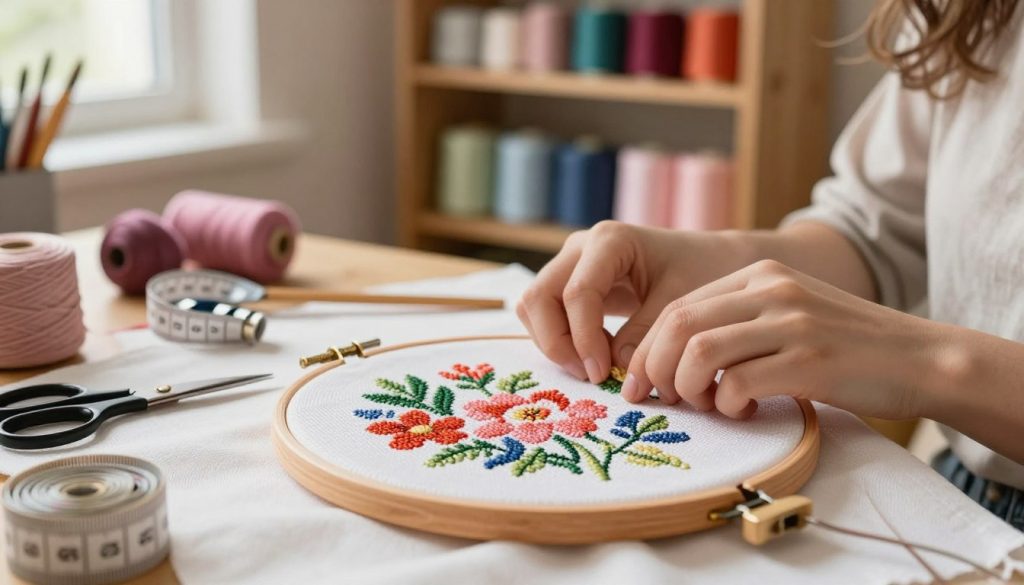
By adding these adjustments to your cross stitch routine, you’ll be ready to tackle the details of various patterns and techniques. This will make your cross stitch journey even more rewarding.
Advanced Techniques for Perfecting Your Cross Stitch
To improve your cross stitch skills, learning advanced techniques is key. These skills will make your work look better and give you embroidery inspiration for harder projects.
Mastering Backstitching for Clean Outlines
Backstitching is vital for clear outlines in cross stitch. It’s important to keep your thread tension even and pick the right color. Start with simple patterns to get better before trying harder designs.
Specialty Stitches and Their Common Pitfalls
Stitches like French knots and long stitches add special textures. But, they can go wrong if done incorrectly.
French Knots Without Frustration
French knots can be tricky, but with the right method, they look great. Use the right needle and twist your thread right. Practice on scrap fabric before adding them to your project.
Long Stitches and Fractional Stitches
Long and fractional stitches help with details and shading. Focus on keeping your thread tension steady and count accurately. A magnifying glass or lamp helps with precision.
Finishing Techniques That Elevate Your Work
The final touches greatly improve your cross stitch. Use a cross stitch frame that matches your design. Stretching and mounting on a strong backing also make your work last longer and look better.
| Technique | Tips for Success |
|---|---|
| Backstitching | Maintain even tension, use correct thread color |
| French Knots | Use correct needle size, twist thread appropriately |
| Long Stitches | Maintain consistent tension, accurate counting |
Adding these advanced techniques to your skills will help you make stunning, professional pieces. These pieces will show off your talent and creativity.
Conclusion: Building Confidence Through Precision
Mastering cross stitch shows you how important precision is. Using DMC floss brings your designs to life with bright colors and fine details. This article’s tips will boost your confidence, making cross stitch therapy even more rewarding.
By following these needlework secrets, you’ll improve your skills and make stunning pieces. Learning to spot and fix small errors will become easy. This way, you can handle complex patterns without stress. Cross stitch becomes a calming activity that lets you express your creativity.
With patience and precision, you’ll make the most of cross stitch. Your hard work will show in every piece you create. So, use what you’ve learned on your next project. Watch your confidence grow with each stitch.
 English