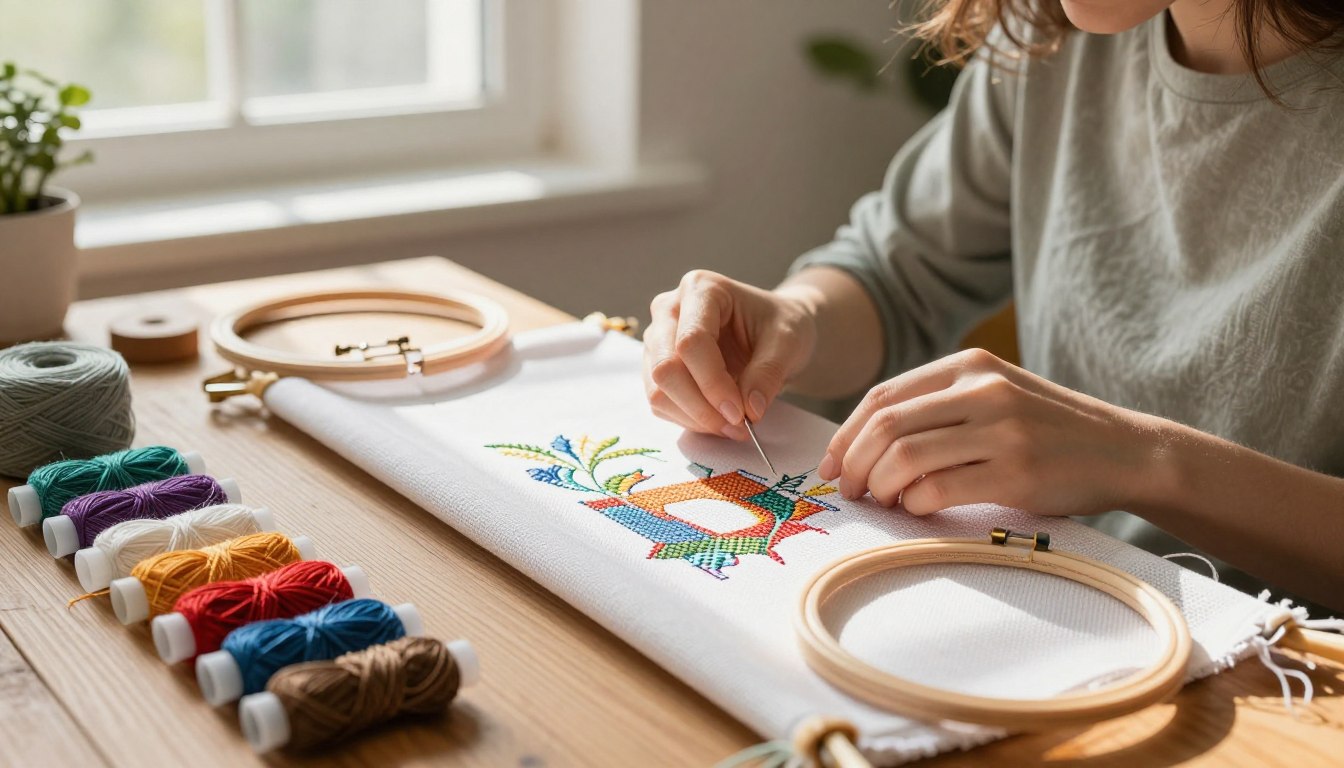
Many people know that cross stitch is good for your fine motor skills and stress relief. This traditional craft has been around for centuries. It combines mental and physical benefits, improving your precision.
When you do cross stitch, you need to focus and pay attention to details. With the right cross stitch tips, even beginners can enjoy this hobby.
Key Takeaways
- Cross stitch improves fine motor skills and hand-eye coordination.
- Regular practice enhances attention to detail and precision.
- Cross stitch can be a therapeutic activity, reducing stress and anxiety.
- With cross stitch tips, beginners can quickly get started.
- Cross stitch is a traditional craft that offers numerous benefits.
The Connection Between CROSS STITCH and Precision Skills
Cross stitch is more than a hobby; it’s a way to improve precision and attention to detail. As you work on intricate cross stitch patterns, you’re not only creating beautiful designs. You’re also sharpening your fine motor skills and cognitive abilities.
How Fine Motor Skills Develop Through Needlework
Needlework, like counted cross stitch, needs precise movements and coordination. This repetitive action boosts your fine motor skills, making your hands more dexterous and controlled. Regular practice can lead to significant improvements in hand-eye coordination and overall manual dexterity.
The Cognitive Benefits of Counted Stitching
Counted cross stitch demands focus and concentration, offering cognitive benefits beyond the craft. By following complex patterns and keeping accurate, you’re exercising your brain and improving focus. Embroidery hacks, such as using a magnifying glass or organizing your DMC floss, can further enhance your stitching experience and cognitive function.
| Cognitive Benefit | Description |
|---|---|
| Improved Focus | Counted cross stitch requires sustained attention, enhancing your ability to concentrate. |
| Enhanced Memory | Following complex patterns exercises your memory and recall abilities. |
| Better Hand-Eye Coordination | The precise movements involved in needlework improve fine motor skills and dexterity. |
Essential Tools for Precision Cross Stitching
Starting your cross stitch journey means knowing the key tools. The right tools can make your work better and more accurate. It’s important to learn about the essential tools for precision stitching.
Selecting the Right Needles and Hoops
Choosing the right needles and hoops is key for precise stitching. Tapestry needles are best for cross stitch because they don’t damage the fabric. The size of your hoop matters too; it should fit your design well and be easy to handle.
Embroidery hoops come in different sizes. Using the right size helps keep your stitches even.
Understanding Fabric Counts and Their Impact
The fabric count affects your stitching’s detail. Higher counts mean more detailed designs, while lower counts result in larger stitches. Aida cloth and Evenweave are popular for cross stitch. Aida is great for beginners because it’s easy to see the holes.
Knowing the fabric count helps pick the right material. This ensures your stitches are precise and even.
Organizing Your DMC Floss for Efficiency
Keeping your DMC floss organized is crucial for efficient stitching. A floss organizer or a simple card with slots helps keep threads tidy. Labeling each thread saves time and prevents mistakes.
As stitchers say, “A well-organized floss collection is the backbone of a smooth stitching experience.”
Mastering Basic CROSS STITCH Techniques
Learning basic cross stitch techniques is the first step to making detailed designs. You need to focus on several key areas to improve your stitching skills.
Proper Stitch Formation for Consistency
Consistency is crucial for a stunning cross stitch piece. Make sure your stitches are the same size. Proper stitch formation means bringing the needle up correctly and then inserting it back down in the right hole, following the pattern. Practice making stitches that are consistent in size and tightness.
To better understand, here’s a simple guide:
| Step | Action | Result |
|---|---|---|
| 1 | Bring needle up | Correct starting point |
| 2 | Insert needle down | Complete stitch |
Maintaining Even Tension Throughout Your Work
Even tension is key for a professional finish. Too tight, and your fabric may pucker; too loose, and your stitches may look sloppy. Practice keeping a steady tension by paying attention to how tight you pull the thread after each stitch.
Reading Patterns Accurately
Reading patterns accurately is essential for cross stitch success. Understand the symbols and colors in the pattern. Take your time to read the pattern before starting and refer to it often as you stitch.
For beginner cross stitch fans, start with simple patterns. Then, move to more complex designs as your skills grow.
Developing Focus and Attention to Detail
To master cross stitch, focus and detail are key. These skills improve your craft and make hobbies more mindful and organized. As you stitch more, you’ll see how these abilities grow.
Creating an Optimal Stitching Environment
Your stitching area is crucial for focus. Make sure it’s well-lit, comfy, and free from distractions. Using storage for your supplies helps keep things tidy and boosts productivity.
Time Management Techniques for Sustained Precision
Good time management is vital for precise stitching. Set aside time just for stitching. Use timers or calendars to stay on schedule. Breaking big projects into smaller tasks helps keep you focused and avoids burnout.
| Time Management Technique | Description | Benefit |
|---|---|---|
| Timer Method | Set a timer for 25-minute focused stitching sessions, followed by a 5-minute break. | Enhances concentration and reduces burnout |
| Scheduling | Allocate specific days and times for stitching in your calendar. | Ensures consistent progress and habit formation |
Mindfulness Practices While Stitching
Mindfulness in stitching boosts focus. Focus on your breath, the needle, and thread. It makes stitching a calming activity that keeps you present and accurate.
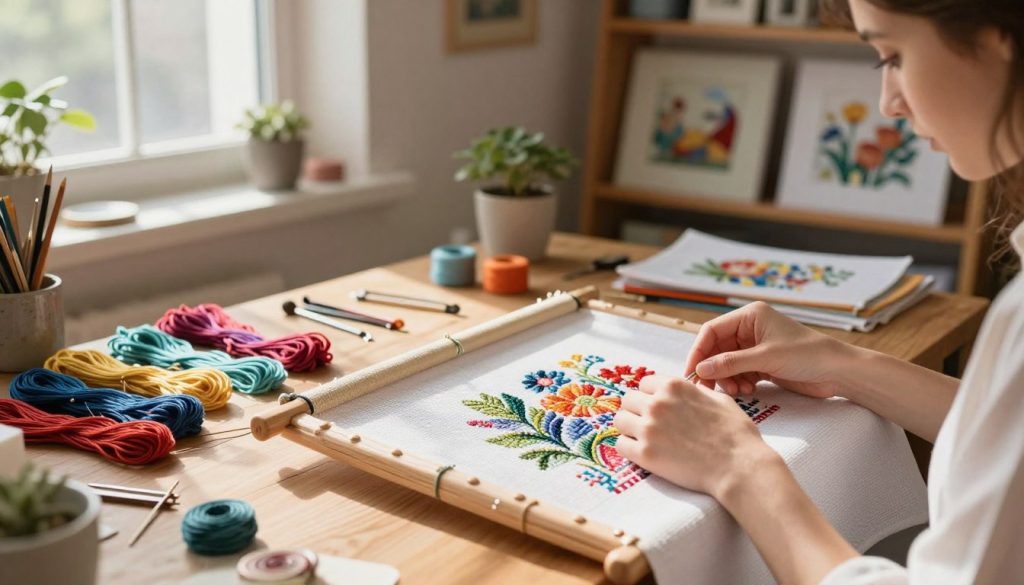
These strategies improve your cross stitch hobby. They turn it into cross stitch therapy. Organize your space, manage time well, and practice mindfulness for a better stitching experience.
Common Precision Challenges and Solutions
As you get better at cross-stitch, you might face some challenges. These can include uneven stitches and thread tangles. It’s important to solve these problems to get great results.
Troubleshooting Uneven Stitches
Uneven stitches can mess up your cross-stitch look. To fix this, keep your thread tension even. Using a hoop or frame helps keep your fabric tight, making stitches even. Also, check your work against the pattern often to spot any mistakes early.
- Check your thread tension regularly
- Use a hoop or frame to keep fabric taut
- Compare your work to the pattern frequently
Correcting Counting Errors Without Starting Over
Counting mistakes are common but don’t mean you have to start over. First, find the mistake by checking your count against the pattern. If it’s small, you can remove the wrong stitches with a seam ripper or scissors. For bigger mistakes, try using a gridding method to fix your stitches.
Tips for correcting counting errors:
- Re-check your count against the pattern
- Use a seam ripper or small scissors to remove incorrect stitches
- Consider gridding for complex patterns
Managing Thread Tangles and Knots
Thread tangles and knots can be annoying. But, there are ways to deal with them. Using shorter threads can help avoid tangles. Also, pulling the thread gently as you stitch can stop knots. If you get a tangle, take your time to work it out with your needle or a beading needle.
To avoid thread tangles, try these tips:
- Cut thread to manageable lengths
- Pull thread gently through fabric
- Use tools like a beading needle to resolve tangles
Advanced Techniques to Enhance Your Precision
As you get better at cross stitch, learning advanced methods can really help. These techniques will make your projects look better and stitch faster.
Backstitching for Definition and Detail
Backstitching is great for adding details to your cross stitch. Use a different thread color to make your design pop. To do it right, use a tapestry needle and follow the pattern’s lines.
Gridding Methods for Perfect Placement
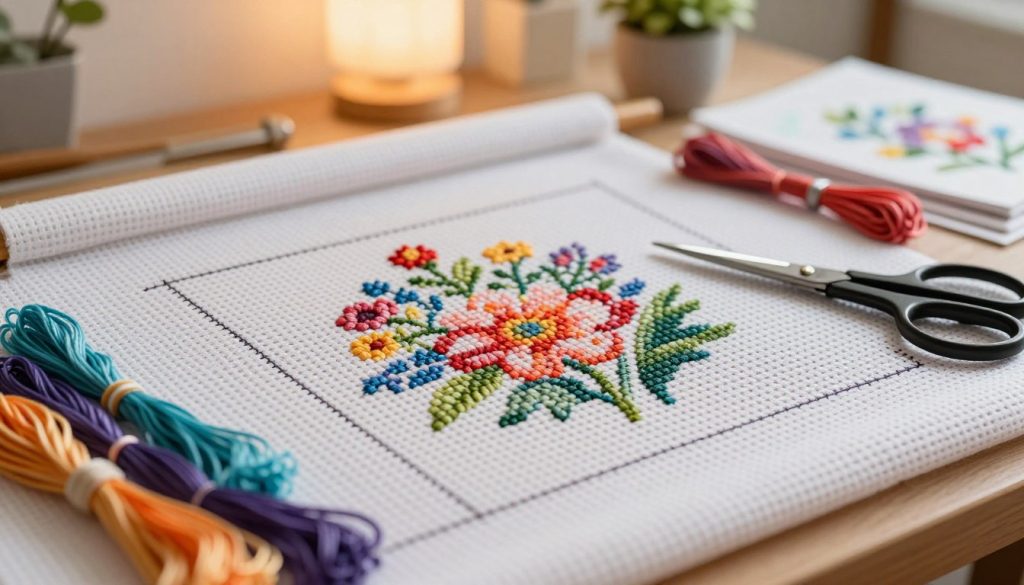
Cross stitch gridding helps you place stitches correctly. It divides your fabric into grids for even tension. You can use a grid fabric or draw one with a ruler and pencil. It’s very helpful for complex designs.
Working with Multiple Colors and Blending
Working with many colors needs good thread management to avoid tangles. Organize your threads by color and use a conditioner to keep them smooth. Blending colors adds depth but requires careful planning.
Tracking Your Progress and Measuring Improvement
To see how you’re getting better, keep a record of your projects. Write down the time you spend on each one and any challenges. This helps you find areas to improve and get better at cross stitch.
| Technique | Purpose | Benefit |
|---|---|---|
| Backstitching | Adds definition and detail | Enhances visual appeal |
| Gridding | Ensures accurate placement | Reduces errors |
| Color blending | Adds depth and dimension | Creates complex designs |
Conclusion: The Lasting Benefits of Cross Stitch Precision
Practicing cross stitch with precision boosts your fine motor skills and brain function. It also improves your overall health. The detailed work can be calming, helping you relax.
Learning embroidery hacks and techniques makes complex projects easier. You’ll be able to follow patterns, manage thread colors, and keep your stitches even. This skill is key to success in cross stitch.
But the benefits don’t stop there. Cross stitch precision also helps you focus better on other tasks. As you keep practicing, you’ll see how it positively affects your mental and physical health. Cross stitch becomes a fun and rewarding hobby.
 English