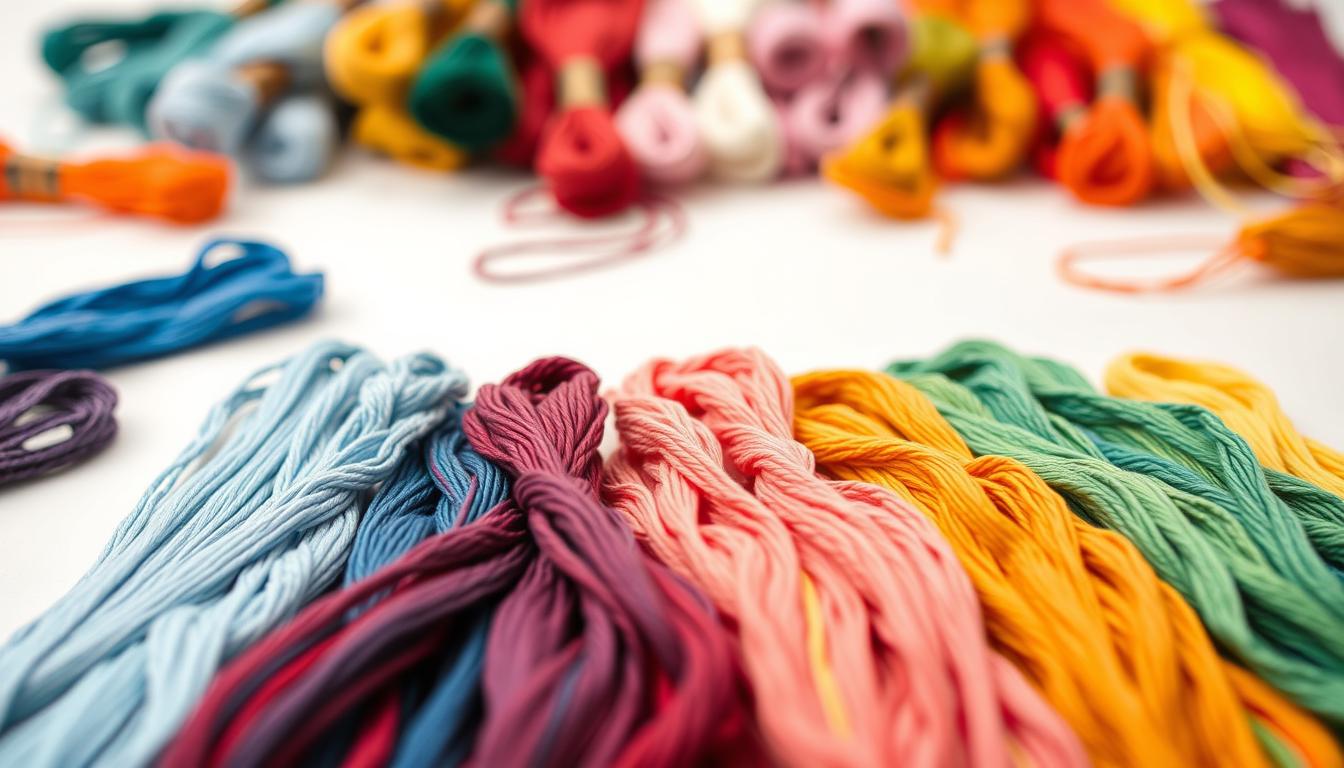
You’re about to get a practical buyer’s guide to the best embroidery floss for cross stitch in 2025. This short intro shows why Six-Strand Embroidery Floss on 14-count Aida gives clean coverage and predictable color for your next project.
You’ll also learn which tools matter: a blunt needle with an elongated eye, a hoop, sharp scissors, and a soluble marker. Top U.S. retailers group essentials like floss & thread, fabric, needles, hoops & supplies and run weekend-only quick pattern sales to help your budget.
Trusted names such as dmc provide free pattern downloads and tutorials that make starting easy. Real stitchers praise kits that arrive well stocked and simple to finish, so you can pick a brand and begin stitching with confidence.
Key Takeaways
- Six-strand floss on 14-count Aida gives neat coverage and reliable color.
- Pack a simple toolkit: needle, hoop, fabric, scissors, and marker.
- Watch weekend sales to save on cross stitch kits and pattern downloads.
- DMC and other brands offer tutorials and free patterns to build skills.
- Customer feedback favors kits with plenty of thread and clear instructions.
What to Look For in Embroidery Floss for Your Next Stitching Project
Start by matching fiber, finish, and strand count to the fabric and pattern you plan to use. Good matching reduces rework and keeps colors true across the whole piece.
Fiber, Strand Count, and Finish: Why Six-Strand Cotton Still Leads
Choose six-strand cotton for versatility. You can split threads to control coverage on different Aida fabric counts.
Mercerization and twist matter. A smooth, consistent finish reduces fuzz and keeps each stitch even when you fill long areas.
Color Range, Dye Lots, and Washfastness for Long-Lasting Patterns
Evaluate the brand’s palette and dye-lot consistency so you can restock mid-project. Established names like dmc make it easier to match colors for downloadable patterns.
“Washfast and lightfast threads protect your work from fading when displayed or washed.”
Fabric Compatibility: Matching Floss to Aida Count, Needles, and Hoops
For 14-count Aida, two strands of cotton usually give solid coverage. Higher counts need fewer strands to avoid bulky crosses.
Use a blunt needle with an elongated eye and a hoop sized to your design area. Plan your supplies—fabric cut, needles, hoops, scissors, and marker—so you can test floss on a swatch before you commit.
- Tip: Watch weekend sale bundles to stock staple colors and save on supplies.
Top Embroidery Floss Brands and Thread Types Loved by Stitchers in 2025
Choosing the right brand and thread can simplify color matching and speed up your project. Start with options that fit your fabric and the pattern complexity.
DMC Spotlight: Iconic Six-Strand Embroidery Floss and Cross Stitch Essentials
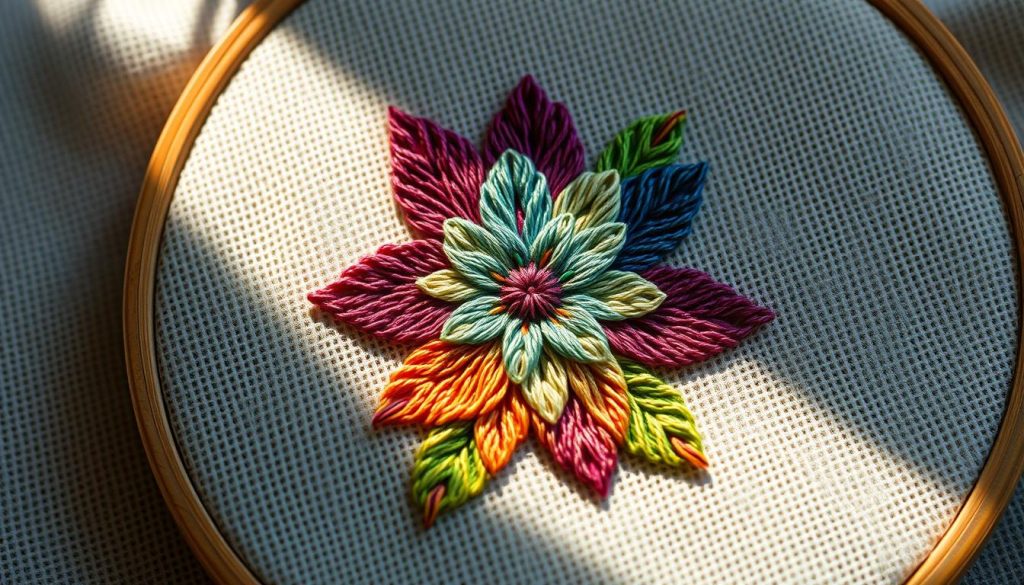
DMC’s six-strand cotton still tops lists for smooth pull-through on Aida and consistent color across dye lots. DMC also offers free downloadable patterns and the Craft Studio tutorials to help you learn fast.
Six-Strand Cotton Bestsellers
Best-selling cotton threads give even coverage for boxed kits and digital patterns. They reduce rework and keep large motifs uniform on common counts.
Metallics, Variegated, and Special Effects
Add metallics or blending filaments for holiday sparkle, and pair them with cotton for coverage. Use variegated threads to create subtle gradients without redrawing stitch patterns.
- Watch weekend sale events to stock up on staple colors and value packs.
- Build a cart with floss, fabric, needles, hoops, and small items like scissors so your order arrives complete.
- Choose curated cross stitch kits as gifts; customers praise clear charts and generous thread supplies.
How to Choose Embroidery Floss for Your CROSS STITCH Projects
Choosing compatible thread and supplies sets you up for even, crisp results. Start by picking six-strand embroidery floss for use on Aida. Beginners often prefer 14-count Aida because larger holes make each cross easier to see and place.
Align Floss with Pattern Style and Aida Count for Crisp, Even Stitches
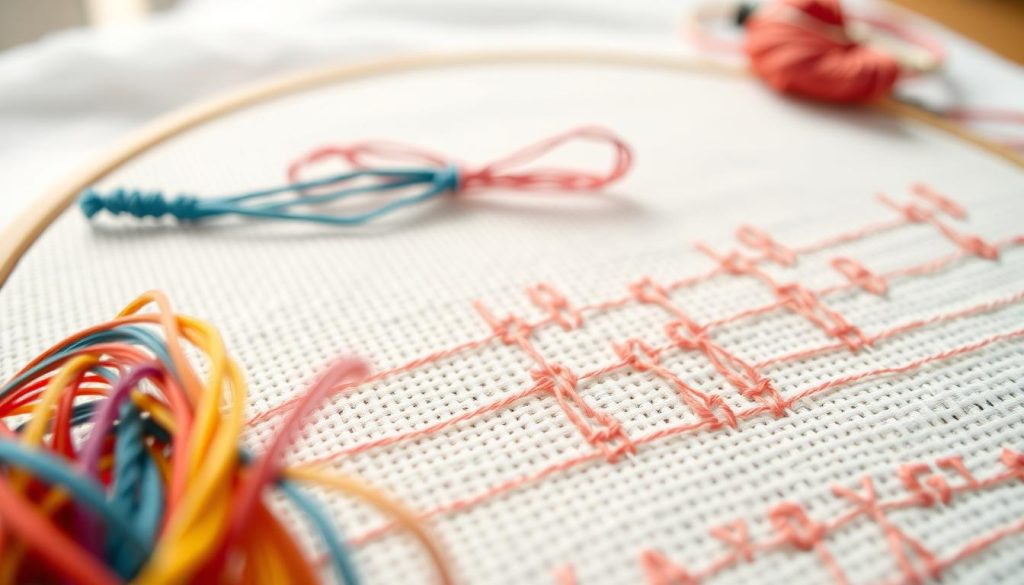
Match strand count to the Aida count: for 14-count, two strands of cotton usually give solid coverage. Test a small swatch to confirm how the color and texture read on your pattern.
Keep style in mind: delicate line art benefits from fewer strands, while bold motifs and filled backgrounds look best with fuller strand usage. Buy an extra skein during a sale when large color blocks are required to avoid dye-lot variation.
Build Your Toolkit: Fabric, Needles, Hoops, Scissors, and Markers That Work Together
Assemble a simple kit: fabric or stitchable items, a blunt needle with an elongated eye, an appropriately sized hoop, sharp pointed scissors, and a soluble marker or magic paper. These items keep placement accurate and reduce fabric strain.
- Organize colors before you stitch: pre-cut and label lengths to reduce tangles and speed color changes.
- For specialty accents, combine one metallic strand with cotton; use short lengths and a gentle pull to avoid kinking.
- Consider cross stitch kits that include pre-sorted floss and fabric if you want an all-in-one option for travel or a quick project.
- Time purchases with retailer promotions to stock core shades, replacement needles, or hoops during a weekend sale.
Conclusion
Tie together supplies, brands, and timing to move from planning to finished embroidery efficiently. Keep a short list of floss colors, needle size, and missing tools so you start without delay.
Prioritize six-strand cotton for reliable coverage and add metallic or variegated threads when a pattern calls for shimmer. Use DMC’s free tutorials and downloadable patterns to practice techniques and expand your library affordably.
Watch U.S. retailers for a timely sale to restock thread and essentials. Choose quality kits as a quick gift; clear charts and full supplies make starting easy. Test a few crosses on scrap fabric to confirm strand choice and tension before you commit.
 English