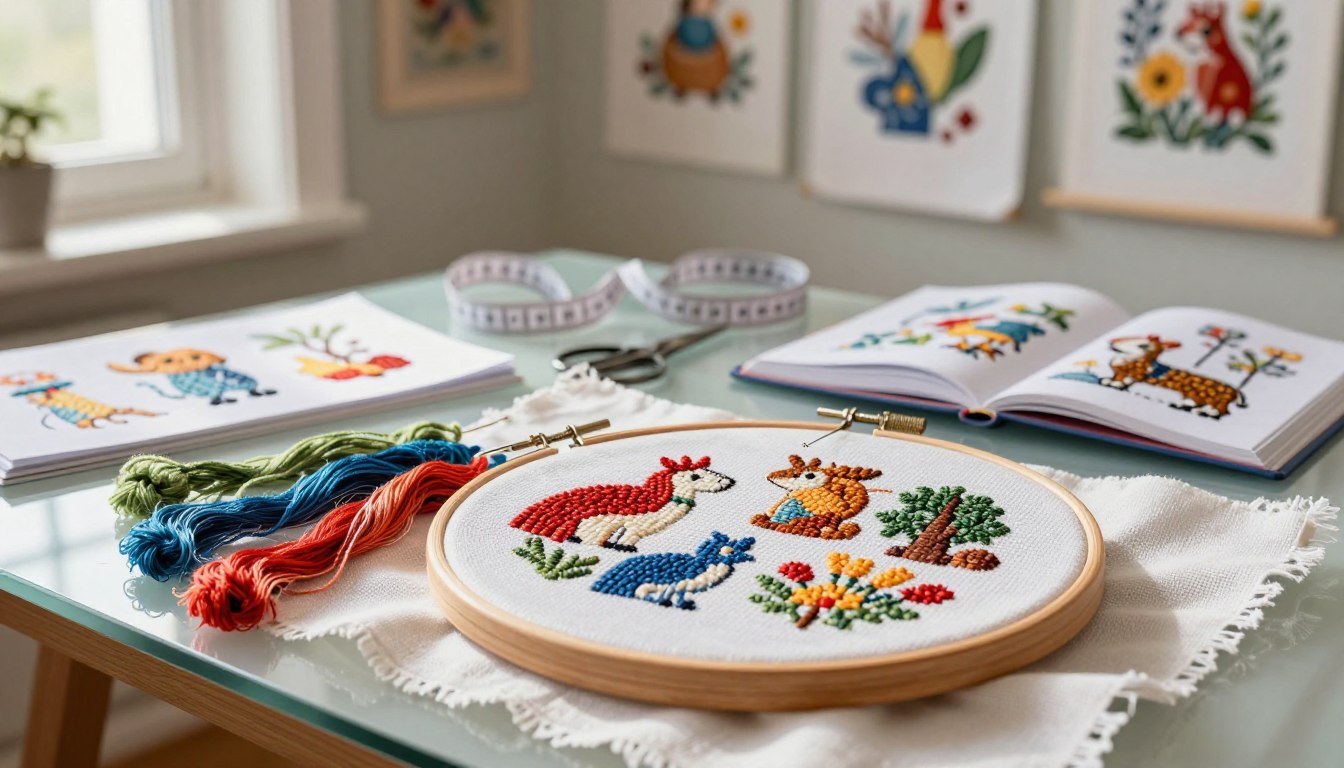
When you do needlework with intention, you’re not just making something pretty. You’re also making it a mindful and healing experience. Online groups say being purposeful in every stitch, color, and choice is key.
Being intentional can turn your hobby into art. This focus makes your work not just look good but also have deep meaning. As you learn cross stitch techniques and needlework secrets, you’ll see how important intention is.
Key Takeaways
- Intention is crucial in creating high-quality cross-stitch work.
- Mindfulness in every stitch and color choice enhances the overall piece.
- Purposeful decision-making during a project leads to more meaningful results.
- Exploring cross-stitch techniques and needlework secrets can improve your skills.
- Embracing intention can elevate your hobby to a form of art.
Understanding Intention in CROSS STITCH
To make great cross-stitch, knowing about intention is key. Intention makes a piece stand out. It’s about being fully present and making every stitch count.
What Does Intention Mean for Needlework?
Intention in needlework means being fully focused on your stitching. It’s about being in the moment and fully engaged. You’re not just following a pattern; you’re choosing every detail.
A Stitching Love Affair says, “The way you stitch affects your project’s look.” This shows how important it is to stitch mindfully for quality results.
The Difference Between Mindful and Mechanical Stitching
Mindful stitching keeps you in the present, making your work better and more enjoyable. Mechanical stitching can lead to errors and lacks personal touch.
| Mindful Stitching | Mechanical Stitching |
|---|---|
| Focuses on the present moment | Follows a routine or habit |
| Deliberate decisions about every stitch | Often results in mistakes |
| Enhances quality and enjoyment | Lacks personal touch |
Knowing the difference between mindful and mechanical stitching helps improve your skills. It helps avoid cross stitch mistakes. Embracing intention makes your needlework more rewarding and professional.
The Mindful Approach to Planning Your Projects
To bring your cross-stitch ideas to life, planning is key. Crafters on Instagram share their projects and planning steps. This mindful planning makes the experience better and ensures quality in the finished piece.
Setting Clear Goals for Your Needlework
Clear goals are essential for a successful cross-stitch project. You need to define the project’s purpose and set a realistic timeline.
Defining Your Project’s Purpose
Think about what you want to achieve before starting. Is it for personal joy or as a gift? Knowing the purpose guides your decisions.
Creating a Realistic Timeline
A realistic timeline helps manage expectations and keeps you motivated. Break your project into smaller tasks and set specific work times. This prevents frustration and keeps you focused.
Selecting Patterns That Inspire Focus
The pattern you choose greatly affects your project’s success. Pick patterns that excite you and keep you focused. Consider the pattern’s complexity, size, and theme to match your goals and skill level.
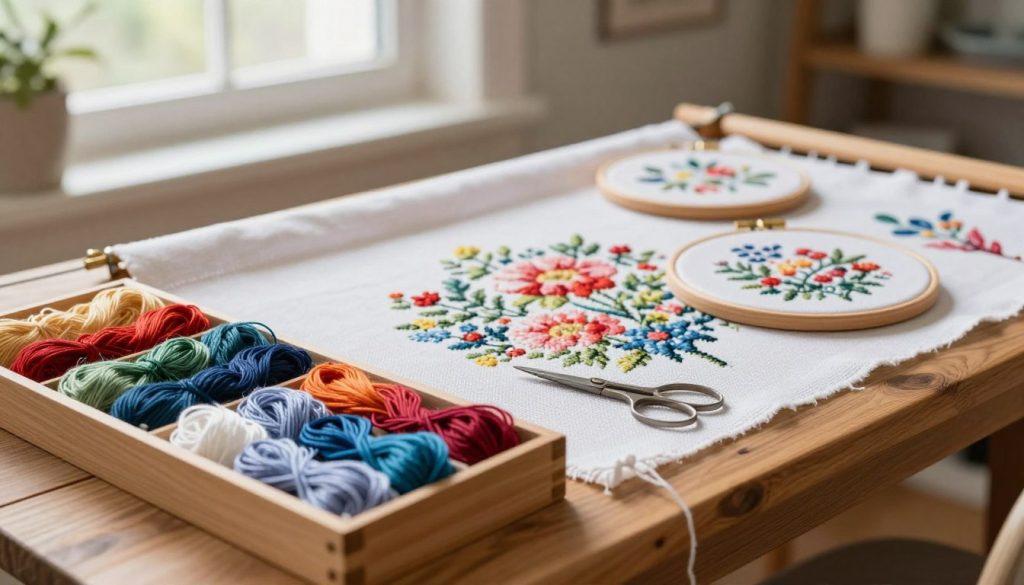
Sharing your process and final product on Instagram connects you with others. Choosing patterns that inspire you keeps you motivated and engaged.
| Pattern Type | Skill Level | Project Size |
|---|---|---|
| Simple designs | Beginner | Small |
| Intricate designs | Advanced | Large |
By planning mindfully, you boost your creativity and productivity. This careful planning leads to a rewarding and enjoyable stitching journey.
Preparing Your CROSS STITCH Materials with Purpose
Getting your cross-stitch materials ready is key to a great finish. It involves a few important steps that can really make your project shine.
Thoughtful Fabric Selection
Picking the right fabric is essential for a good cross-stitch. The fabric you choose can change how your work looks and lasts.
Matching Count to Project Complexity
The fabric’s count should match your project’s complexity. For detailed designs, use a higher count fabric. For simpler ones, a lower count will do.
Color Considerations for Long-Term Satisfaction
The fabric’s color should go well with your threads and design. Choosing a fabric color that contrasts well with your threads makes stitching easier and your project look better.
Intentional Thread Organization
Organizing your threads well can make stitching better. Use a thread organizer or sort by color to work more efficiently.
Creating a Workspace That Promotes Focus
Your workspace affects how well you work and enjoy it. Creating a dedicated workspace that’s comfy and distraction-free helps you focus.
Crafters often share tips on organizing threads and setting up workspaces on social media like Instagram. They show different ways to make a perfect stitching area.
Developing Intentional Stitching Techniques
Intentional stitching techniques are key to making high-quality cross-stitch. They help crafters create professional-looking pieces. Learning these techniques can greatly improve your project’s quality and look.
The Railroad Technique for Perfect Stitches
The railroad technique ensures uniform stitches, making your work look neat. It involves stitching in one direction. This not only improves looks but also makes stitching easier.
Maintaining Consistent Tension
Consistent tension is vital for a professional finish. It keeps your stitches even and prevents puckering. To keep tension consistent, aim for a moderate tightness in your thread.
Directional Stitching for Professional Results
Directional stitching means stitching in a specific direction for a certain effect. It helps manage thread and keeps your work organized.
The Two-Step Method
The two-step method involves two steps for each stitch. First, stitch one direction, then the other. This method helps achieve uniformity, especially in complex patterns.
Danish Method vs. English Method
The Danish and English methods differ in how you hold the needle and thread. The Danish method gives more control, while the English method offers precision. Try both to see which suits you better.
Using these intentional stitching techniques will improve your cross-stitch quality. It will also make your stitching experience better.
Avoiding Common Mistakes Through Mindful Practice
Cross-stitch fans can get better by using mindful practices. These practices help avoid common errors. This makes stitching more fun and successful.
Identifying and Correcting Tension Issues
One big mistake in cross-stitch is uneven tension. This can cause puckering or loose stitches. To fix this, check your work often and adjust your tension. Keeping your tension even is key for a great finish.
Managing Thread Tangles Before They Happen
Thread tangles can be a big hassle. To avoid them, use a thread conditioner or a needle threader. Also, keep your workspace tidy. This helps stop knots and tangles before they start.
Counting with Confidence
Getting your counts right is crucial in counted cross-stitch. To count well, use gridding techniques to break your fabric into smaller parts. Tools like stitch markers or magnetic boards can also help mark your progress.
Gridding Techniques for Accuracy
Gridding means dividing your fabric into smaller grids. This makes counting stitches easier, especially with complex patterns.
Using Tools to Mark Your Progress
| Tool | Purpose |
|---|---|
| Stitch Markers | Marking specific stitches or patterns |
| Magnetic Boards | Keeping track of progress and pattern details |
By adding these mindful practices to your cross-stitch routine, you can steer clear of common mistakes. This leads to better results.
Advanced Techniques That Benefit from Focused Attention
To take your cross stitch to the next level, learn advanced techniques that need your full focus. As you get better, using complex methods will make your work better and boost your confidence in your skills.
Backstitching with Precision
Backstitching is key in embroidery and makes your designs pop when done right. To get it just right, keep your thread tension steady and use a hoop to keep your fabric tight.
Blending Colors for Dimensional Effects
Blending colors can make your cross stitch look deeper and more interesting. Try mixing different shades and colors to get cool contrasts. Variegated threads can also create unique looks.
Specialty Stitches and When to Use Them
Stitches like French knots and long-armed cross stitches add texture and interest. They’re great for making your work stand out.
- French knots are perfect for detailed, raised parts.
- Long-armed cross stitches are great for adding texture to backgrounds or filling big areas.
French Knots Without Frustration
To make French knots easy, pick the right needle and thread. A blunt needle helps, and the right thread weight is key for the look you want.
Long-Armed Cross Stitches for Texture
Long-armed cross stitches are versatile and can make different textures. Try different thread colors and fabrics to get the look you want.
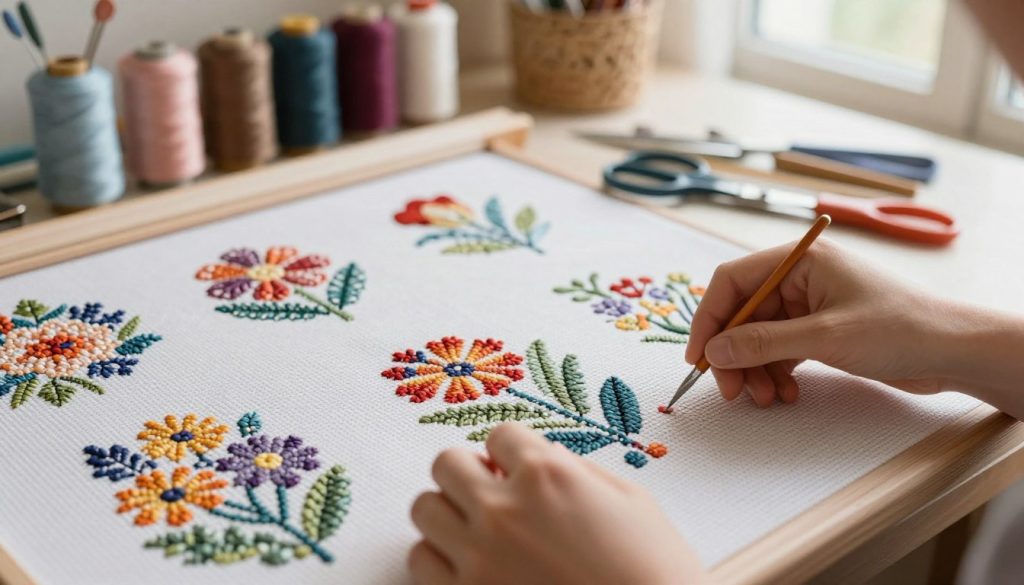
Adding these advanced techniques to your cross stitch skills will let you make complex, eye-catching designs. These embroidery hacks and cross stitch techniques will help you make your projects look professional, whether they’re for yourself or as a gift.
The Therapeutic Benefits of Intentional Cross Stitching
Doing cross-stitch with purpose can really help lower stress and boost mental health. When you stitch with a mindful mindset, you get many benefits. These can make you feel better overall.
Stress Reduction Through Focused Handwork
Intentional cross-stitching lets you focus on now, taking your mind off daily stress. This calming activity offers a break from daily life. Many find it helps quiet their minds, making it a great cross stitch therapy.
Building Patience and Persistence
Cross-stitching teaches patience and persistence, especially with tough patterns. As you tackle hard parts, you grow these traits. This is especially good for cross stitch for beginners, helping them build skills and confidence.
Creating a Meditative Practice with Needle and Thread
The steady motion of cross-stitching can be calming, like meditation. It lets you enter a flow state where time flies. By stitching with purpose, you turn this craft into a calming practice. It offers embroidery inspiration and soothes the mind, no matter the project’s complexity.
Conclusion: Elevating Your Cross Stitch Through Mindful Practice
Adding mindfulness to your cross-stitch can really boost your work’s quality. You’ll see a big difference in how your projects turn out. This is because of the focus and care you put into each stitch.
Looking for ways to improve? Check out cross stitch tips and cross stitch techniques online. You can also find embroidery inspiration in various patterns. And, learn needlework secrets from seasoned crafters.
Being mindful in cross stitch makes your pieces look amazing. It also makes the process more enjoyable. As you keep practicing, you’ll grow more patient and appreciate needlework even more.
 English