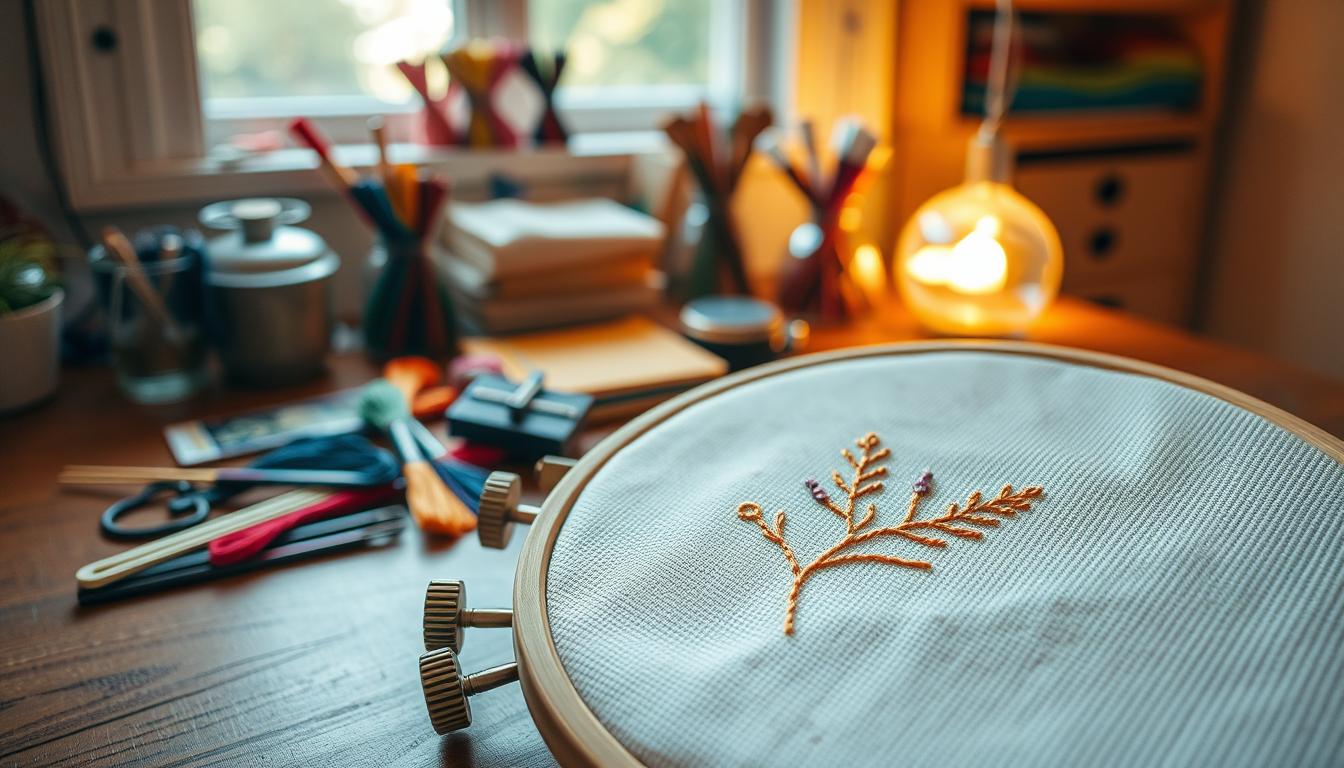
Cross stitch is a calming, affordable craft for all. You can begin with easy projects and grow by making small items or custom gifts. Many stitchers develop a daily habit, slowly completing pieces over time.
There’s a wealth of community and inspiration out there. Instagram, local workshops, and Etsy designers share their work. These communities teach new skills, share ideas, and keep you motivated.
It’s possible to turn a hobby into a business. A maker grew their business after having a baby. They built a website, grew on Instagram, and started selling kits and patterns. By focusing on quality and presenting your work well, you can make a profit.
Key Takeaways
- Cross stitch combines creativity with practical products you can sell, like wall art and gifts.
- Start small with cross stitch for beginners and grow into larger cross stitch projects.
- Community support and WIP posts fuel learning and visibility for your work.
- Productizing—kits, patterns, and polished finishing—turns hobby stitching into income.
- Good presentation and niche focus increase perceived value and sales potential.
Why Cross Stitch Can Be a Viable Side Hustle
Starting a side hustle with cross stitch is all about finding demand. Handmade cross stitch items are always in style for gifts and decor. People love custom pieces like family name samplers and fandom art.
Targeting holidays and special interests can help you sell more. For example, gaming or TV show fans often look for themed items. Small batches of these items tend to sell out fast if you know your audience well.
Getting started is easy and cheap. You only need patterns, some floss, fabric, needles, and basic supplies. Many start by making small items like framed pieces or ornaments. This way, you can test your products without spending a lot.
Using embroidery hacks can also help. Things like pre-cut fabric and printed patterns make your work faster and more profitable.
Stitching is great for making steady progress. You can stitch in short sessions, like during your commute. This makes it easy to fit into your busy schedule.
Stitching is also good for making the same items over and over. This means you can predict how long it takes to make something. This predictability helps you plan and price your items better.
Practical tips for cross stitch include working in batches and keeping track of your inventory. Offer both ready-to-ship items and custom pieces to attract different customers. Share your stitching process on social media to show how it helps you relax and focus.
Understanding Your Market: Who Buys Cross Stitch
Before you start, figure out who will buy your cross stitch. Gift shoppers look for special items for birthdays, weddings, and holidays. They want something that feels unique but can be bought quickly.
Gift buyers looking for personalized and themed pieces
Gift seekers want cross stitch with names, jokes, and seasonal touches. Offering themed designs for special occasions makes it easy for them to choose.
Quick items like small frames or tiny stitches are popular. Adding personal touches at checkout can boost sales.
Collectors and fandom communities (gaming, TV, geekcraft)
Fans of TV shows, games, and anime buy items that celebrate their interests. Geekcraft fans look for cross stitch that looks like their favorite franchises. Pieces inspired by World of Warcraft or Studio Ghibli sell quickly.
Consider making limited editions or exclusive designs to attract collectors. They love rare and detailed items.
Home decor shoppers and small business clients
Home decor fans prefer cross stitch that fits standard frames. They like designs that match their kitchen, nursery, or bathroom. Cross stitch that’s on-trend in home decor sells well.
Small businesses like cafes and boutiques buy branded items. Offering different prices and quick delivery makes your shop appealing.
You can sell your work as digital patterns or starter kits. This appeals to busy makers who want easy projects. Good photos, sample stitches, and clear instructions help turn browsers into buyers.
Essential Cross Stitch Tools and Materials for Selling
To sell cross stitch pieces well, start with the basics. The fabric and thread you choose affect the piece’s finish, price, and the buyer’s experience. Beginners often like Aida for its easy counting. More detailed projects need evenweave and higher-count fabrics.
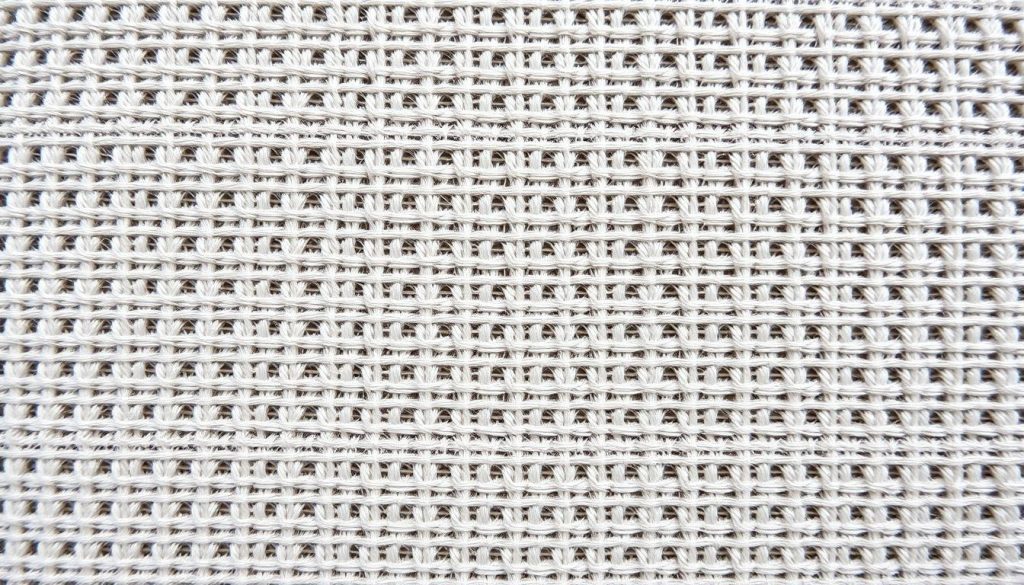
Fabric choices: Aida, evenweave, and counted cross stitch cloth
Aida cloth in 14-count and 16-count is great for beginners because it’s easy to work with. For detailed pieces, offer 25-count and evenweave fabrics. Make sure to list the fabric count and fiber content so buyers know what they’re getting.
Threads and brands: DMC floss and alternatives
DMC floss is the top choice for its colorfastness and wide range of colors. Stock DMC and reliable alternatives like Anchor or Cosmo for budget-friendly options. Include labeled skeins and a color key in kits to avoid confusion.
Needles, hoops, frames, and finishing supplies
Choose needle sizes that match your fabric counts. Offer hoops or Q-snaps for consistent tension. For finished pieces, suggest acid-free foam core, proper matting, and frames that keep stitch height intact. Good finishing increases value and lets you charge more.
Useful extras: gridding tools, needle minders, and organizational systems
Small add-ons make stitching better and boost kit sales. Gridding tools save time and reduce mistakes in counted cross stitch. Needle minders, bobbins, and clear storage boxes help with organization and encourage repeat customers.
Combine these tools into clear, curated kits for all skill levels. A detailed supply list and neat packaging build trust and make your products easier to sell.
Pricing Your Work: How to Price Cross Stitch Projects Profitably
Setting prices for handmade work can be tricky. You need to cover costs, avoid undercharging, and stay competitive. A clear pricing method helps you stay profitable and confident.
Calculating materials, time, and overhead
First, list all material costs: fabric, floss, needles, backing, and framing. Then, track the hours spent on stitching, finishing, and admin tasks. Multiply your hourly wage by the time spent, then add material and overhead costs.
Keep track of actual hours to avoid underpricing. Many stitchers found their perceived effort was much lower than the actual time. This insight helps prevent common mistakes and protects your profit margins.
Using market comparisons and niche pricing strategies
Compare similar items on Etsy, independent shops, and niche stores. Look at size, stitch count, framing quality, and seller reputation. Use these examples to set a base price, then adjust for unique materials or faster service.
Offering kits or digital patterns changes the pricing. These items require less labor per sale. So, you can price them based on design time and delivery costs, not just one-off finishing time.
When to charge premium for custom designs or licensed patterns
Charge more for custom designs, licensed patterns, full-coverage pieces, or high-quality framing. Buyers pay more for complex designs, accurate fandom renderings, and archival backing. Use framing quotes from professional framers to justify higher prices.
Niche fandom pieces and limited runs can fetch high prices if done well. For beginners, offer affordable starter kits. Reserve premium tiers for collectors and commissions.
Below is a pricing guide to help you calculate and compare projects. Adjust the numbers to fit your local costs and hourly rate.
| Item | Typical Cost | Time (hrs) | Suggested Retail Range | Notes |
|---|---|---|---|---|
| Small framed sampler (5″x7″) | $6–$12 materials | 6–12 | $60–$150 | Price reflects finishing quality and simple designs |
| Medium portrait (8″x10″) | $15–$30 materials | 20–40 | $180–$450 | Higher for complex shading or custom commissions |
| Full-coverage piece (large) | $30–$80 materials | 80–200 | $800–$3,500+ | Licensed designs and museum framing push price up |
| Digital pattern | $0–$5 production | 4–20 design | $8–$45 | Pricing cross stitch patterns depends on uniqueness and chart complexity |
| Starter kit for cross stitch for beginners | $8–$20 materials | 2–6 prep | $18–$60 | Include instructions and simple support to reduce refunds |
Creating Sellable Cross Stitch Patterns and Products
Turning a hobby into a business starts with clear steps and neat presentation. You need patterns that stitch fast, products that look good in photos, and finishing touches that make buyers feel they got a good deal. Begin with a simple process: sketch, digitize, prototype, then list.
Turning your designs into digital patterns or physical kits
Use software like PCStitch or Pattern Keeper to digitize your sketches. This way, you can sell digital patterns and offer instant downloads. Include color keys, stitch counts, and a printable layout for a polished file.
Also, offer layered files for advanced stitchers and a simple chart for beginners. You can package your designs as cross stitch kits too. These kits include a printed pattern, floss, needles, and aida. You can even offer an upgrade with a mini tutorial or floss sample.
Product ideas: framed pieces, ornaments, cards, and merch
Make small, quick items to keep orders coming in. Think about framed 5×7 pieces, ornaments, and greeting cards with stitched fronts. Adapt popular themes for fans and seasonal markets. You can also sell small merch like enamel pins or printed tote bags that match your stitch designs.
Use cross stitch frames or hoops as part of the final product. A mounted, ready-to-hang piece can cost more than an unframed sampler. Offer framing options in your listings so buyers can choose a finished look.
Packaging, presentation, and perceived value
Presentation is key for a good first impression. Use packaging solutions like kraft boxes, tissue wrap, and branded labels to create a special unboxing moment. Include care instructions and a short note about the stitch technique used.
Offer add-ons like a stitched care card, an extra needle, or a floss sample to increase perceived value. Clear photos of completed pieces in cross stitch frames and lifestyle shots can build trust and boost clicks on Etsy or Shopify listings.
- Checklist: clear pattern files, neat kit components, and tidy finishing.
- Quick wins: small ornaments, card-sized designs, and framed 5x7s.
- Packing tips: protective sleeves, branded labels, and instruction inserts.
Where to Sell: Platforms and Channels that Work for Cross Stitch
Choosing the right places to sell your cross stitch can really help you grow. You can use online marketplaces, social media, and local fairs. This way, you can reach many different people.
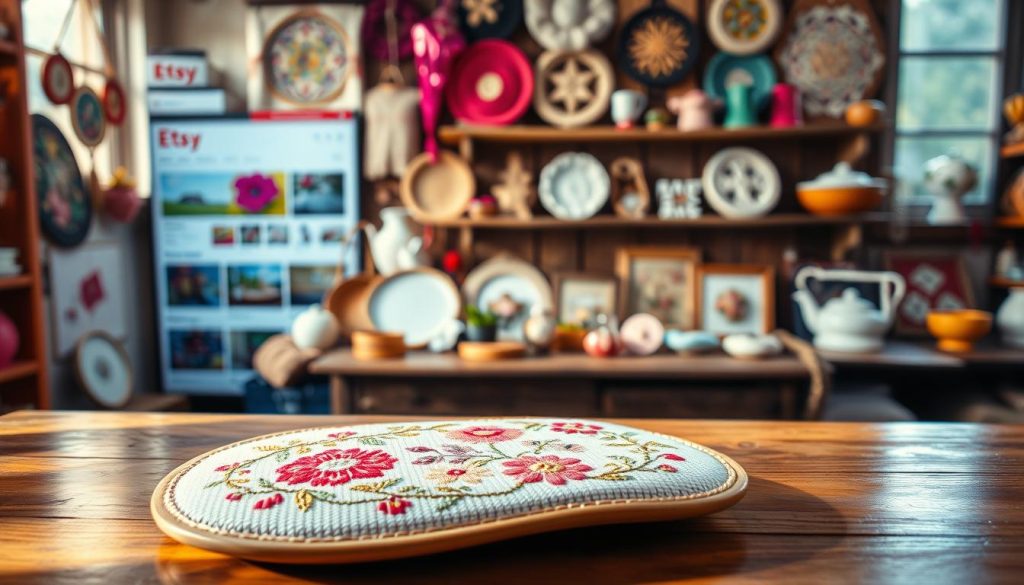
Online marketplaces and your own shop
Etsy is a great place for handmade items and patterns. You can list finished pieces, digital downloads, and kits. This way, you meet different customer needs.
Having your own Shopify embroidery shop gives you control over your brand. You can sell kits, subscriptions, or even host a blog. This helps you keep more of your earnings.
Social platforms for discovery and sales
Sharing your process on Instagram and TikTok can help people find you. Short videos and behind-the-scenes posts work well. Make sure to include calls to action to drive sales.
Try live demos, limited drops, and hashtag strategies on social media. Lemon8 cross stitch can attract a younger audience. Mix organic posts with promotions to turn followers into buyers.
Local options to build relationships
Selling at local craft fairs gives you direct feedback and helps you test prices. It’s a great way to meet repeat customers and local shops. Teaching workshops can also turn students into regular buyers.
Consignment agreements and partnerships with local shops can add to your income. They also expose your work to people who like to see items in person.
Putting channels together
Create a simple funnel to attract and sell to customers. Use social media to draw interest, list bestsellers on Etsy, and offer exclusive kits on Shopify. Keep your inventory up to date and collect emails to grow repeat business.
- Quick tip: Use clear product photos and matching descriptions across Etsy, Shopify, and social platforms.
- Quick tip: Test one local craft fairs event before committing to a full season.
- Quick tip: Experiment with Lemon8 cross stitch posts to tap new discovery channels.
Growing Your Audience with Cross Stitch Tips and Content
To build a following, focus on clear process posts and helpful lessons. Make your craft feel accessible. Share short, honest captions about why you stitch and how it helps your day. This gives viewers a reason to follow, comment, and return.
Post WIP cross stitch updates that show progress without overwhelming readers. Time-lapses and a few close-up shots of texture keep attention. Mention the calm you find in each session to tap into cross stitch therapy themes.
Offer small tutorials aimed at people starting out. Cover basic steps like separating strands, making neat starts, and simple finishing. These posts attract those searching for beginner cross stitch help and convert casual viewers into customers.
Demonstrate backstitching techniques with short clips or step-by-step images. Show common mistakes and quick fixes so learners feel empowered. Practical demos boost engagement and make your patterns more trusted.
Join active communities on Instagram, Reddit, and Facebook groups dedicated to hand embroidery. Use targeted hashtags and host stitch-alongs to encourage repeat participation. Community events turn followers into buyers over time.
Use a mix of content types to keep your feed fresh: educational pins, candid therapy-style captions, and neat before-and-after images. Track which posts drive messages, saves, or sales and refine the balance.
| Content Type | Goal | How to Post |
|---|---|---|
| WIP posts | Show progress, build anticipation | Short captions, close-ups, weekly updates |
| Time-lapse videos | Highlight process and skill | 30–60 second clips with calming music |
| Tutorials for beginners | Attract new stitchers | Step-by-step images, simple language |
| Backstitching techniques | Improve finish quality | Close-up shots, before/after comparisons |
| Therapy-focused captions | Connect emotionally | Personal notes, stress-relief tips |
| Stitch-alongs and hashtags | Grow community and repeat buyers | Clear schedule, dedicated hashtag, prizes |
Common Cross Stitch Mistakes That Hurt Profitability
Small errors can quickly add up when selling your work. You might create a beautiful piece that looks handmade but still earn little. Spotting common mistakes helps save time and money while keeping customers happy.
Underestimating time or mispricing labor
Setting prices without tracking hours can lead to financial loss. Many stitchers find projects take longer than expected. This can cause you to misprice your work and accept orders that don’t cover your labor costs.
To avoid this, time several projects of similar size. Break your work into stages like prepping, stitching, and finishing. Then, multiply the actual hours by your hourly rate. Add in materials and business costs to set a fair price.
Poor finishing, framing, or inconsistent quality
Buyers judge handmade goods by how they’re presented. Bad mounting, wrong mat sizes, or crushed stitches can lower the value. Weak edges or uneven tension can make your work look amateurish, affecting what customers are willing to pay.
Improve your finishing by using acid-free foam core and correct spacing. Check each item at 2x magnification and take photos in natural light to catch flaws before shipping. Better finishing lets you charge more for your work.
Ignoring copyright and pattern source issues
Selling designs that copy protected images is risky. When you scale or sell fandom-inspired pieces, licensing is key. Using exact copyrighted imagery without permission can lead to disputes and platform takedowns.
Choose original patterns or buy licensed designs. Always label the source of your patterns for custom work. Clear licensing protects your shop and builds trust with collectors who value authentic craftsmanship and legal compliance.
Use this checklist to reduce losses and raise your margins:
| Area | Common Problem | Action |
|---|---|---|
| Time Tracking | Underestimation of hours | Record start/stop times for each project phase and average across three builds |
| Pricing | Mispricing cross stitch and ignoring overhead | Set an hourly rate, add material and platform fees, test market with A/B prices |
| Finishing | Bad mounting, crushed stitches | Use acid-free foam core, correct mat sizes, press and block before framing |
| Quality Control | Inconsistent tension and visible mistakes | Inspect under magnification, proof photos before listing, fix errors |
| Legal | Unlicensed designs and unclear pattern sources | Use original or licensed patterns and disclose pattern sources in listings |
| Customer Perception | Low perceived value from presentation | Invest in professional photos, consistent packaging, and clear care instructions |
Scaling Up: From Hobby to Small Business in Embroidery
You can turn a hobby into a steady income by making it a product. Start by offering clear, easy-to-sell items that don’t need your constant attention. Focus on making products that can grow, giving you time to design, market, and plan.
Productizing with kits, digital patterns, and tutorials
Turn your designs into embroidery kits and digital patterns for customers to finish on their own. Create tutorials to go with these patterns, boosting their value and cutting down on support needs. Digital patterns reach more people, while kits appeal to those who like physical products.
Outsourcing finishing, hiring help, and time management
Outsource finishing tasks to a pro framer or a local craft contractor to keep quality high. Hire extra help or a small team for kit assembly and shipping when it’s busy. Use your time wisely by doing design work in batches, planning production days, and keeping simple project lists.
Branding, bookkeeping, and basic business planning for makers
Create a strong brand with consistent packaging, photos, and voice that shows your unique style. Keep accurate records for bookkeeping to track costs, labor, fees, and taxes. Make a basic plan with sales goals, profit margins for kits and patterns, and steps for growing your business.
Conclusion
You can make money from cross stitch and still enjoy it. Start with small pieces that are easy to sell. Use simple techniques to save time and money.
Keep track of how much you spend to price things right. Find out which designs people like most. This helps you make more money.
Make your work look great and share clear patterns. Sell kits, digital patterns, or framed pieces. Use Etsy and Instagram to find customers.
For beginners, offer easy projects and clear instructions. This encourages people to buy from you again. It’s a great way to make money.
Get feedback from others to improve. Use neat stitching, tidy threads, and good packaging to stand out. Sell to fans, gift-givers, and home decor lovers for better prices.
By being consistent, planning well, and promoting your work, cross stitch can be both fun and profitable. Keep trying new things, listen to what customers say, and let your creativity guide you.
 English