Are you torn between CROSS STITCH and diamond painting for your next craft? Both hobbies bring joy and creativity, but they have different tools, speeds, and looks. CROSS STITCH uses embroidery on fabric with DMC floss and needles to create X-shaped stitches. On the other hand, diamond painting involves placing tiny resin drills on a canvas to make a mosaic.
Diamond painting became popular in North America and Europe in 2017, thanks to Paint With Diamonds™. Cross stitch, however, has been around for ages, with a rich community and resources. Each hobby has its own advantages and disadvantages, depending on your schedule, budget, and comfort.
This guide will help you make a choice. You’ll learn about the materials and techniques, the learning curve, and tips for both hobbies. You’ll also discover the costs, time needed, and the therapeutic benefits. By the end, you’ll know which hobby is right for you and your goals.
Key Takeaways
- CROSS STITCH uses DMC floss and fabric for stitched texture and lasting pieces.
- Diamond painting delivers fast visual progress with resin drills and pre-printed canvases.
- Choose based on time, fine motor needs, and whether you prefer needlework or a mosaic-like result.
- Beginners can start with simple cross stitch projects or an easy diamond painting kit.
- You’ll learn practical tips for tools, workflow, and long-term care in the full guide.
Why Compare CROSS STITCH and Diamond Painting for Your Next Hobby
Choosing a new craft can be tough. You want something that fits your schedule, skill level, and goals. By comparing diamond painting and cross stitch, you can find the perfect hobby for you.
What makes this comparison useful
Both crafts offer a structured way to be creative. Cross stitch uses symbols and patterns with DMC floss and fabric. Diamond painting has a legend and resin drills for a canvas.
The feel and look of each craft are different. Cross stitch has textured stitches and thread blending for shading. Diamond painting gives instant sparkle and bold colors.
Who benefits from choosing the right hobby
Newcomers often start with diamond painting. It’s easy to set up and gives quick results, perfect for beginners or those wanting a simple start.
Seniors benefit from both crafts. Cross stitch keeps fine motor skills sharp and focuses the mind. Diamond painting is easier on the hands and keeps things tidy.
Busy people value projects that can be paused easily. Diamond painting is great for short sessions and is easy to take on the go. Cross stitch projects can also be paused with the right organization.
Overview of what you’ll learn in this how-to guide
This guide covers the basics for each craft. You’ll learn about materials like DMC floss, fabric, needles, hoops, and frames for cross stitch. For diamond painting, you’ll need a canvas, drills, a diamond pen, wax, and tweezers.
You’ll discover key techniques like gridding and backstitching in cross stitch. Diamond painting methods include checkerboard, row-by-row, and color-by-color.
The guide also talks about costs, health benefits, display options, and long-term care. You’ll get tips for cross stitch efficiency, project ideas for beginners, and ways to keep your workspace organized.
| Topic | Cross Stitch | Diamond Painting |
|---|---|---|
| Starter Materials | DMC floss, counted fabric, needles, hoop/frame | Pre-printed canvas, drills, diamond pen, wax, tray, tweezers |
| Learning Curve | Moderate; you learn symbols and stitch technique | Easy; intuitive placement and immediate progress |
| Mess & Setup | Low; loose threads require organization | Low to moderate; tiny drills need sorting |
| Therapeutic Benefit | Focus, fine-motor therapy, mindful stitching | Relaxation, repetitive motion, visual reward |
| Best For | cross stitch for beginners seeking long-term skill | Quick starters, busy schedules, family projects |
| Typical First Project | Small sampler following simple cross stitch patterns | Small canvas with large color blocks |
What Is CROSS STITCH: Basics, Materials, and Techniques
Counted cross stitch is a slow, careful craft. You count squares on fabric to place X-shaped stitches. It uses a symbol chart and stranded cotton for color and texture.
Core materials
Start with the right fabric. Aida and evenweave are good choices. For easier counting, choose 14-count Aida.
Use DMC floss for color consistency. Size 24–26 tapestry needles are best for beginners. An embroidery hoop or Q-snap keeps tension right.
Keep sharp scissors and basic tools ready. This makes work faster and prevents fraying.
Essential techniques
Learn to read a pattern chart first. Symbols in the chart match DMC floss numbers. Know full stitches, fractional stitches, and backstitch lines.
Use cross stitch gridding to mark every tenth stitch. This helps avoid counting mistakes and saves time.
Backstitching adds crisp outlines to your designs. Use one strand for subtle lines and two for bold contrast. Secure thread ends to avoid knots.
Beginner tips and common mistakes
Start with a small project to build confidence. Wind DMC floss onto bobbins and label them. Use an organizer box for skeins and keep a list of DMC numbers.
Avoid pulling stitches too tight to prevent distortion. Don’t skip gridding to avoid counting mistakes. If you swap DMC numbers, unpick and re-grid before restitching.
Practice simple techniques and keep sessions short. This keeps you motivated.
What Is Diamond Painting: Tools, Process, and Variations
Diamond painting combines paint-by-numbers with mosaic art. A kit usually includes an adhesive canvas, resin drills, a diamond pen, wax pad, tweezers, and a tray. Some kits also have a guide for matching drills to DMC thread colors.
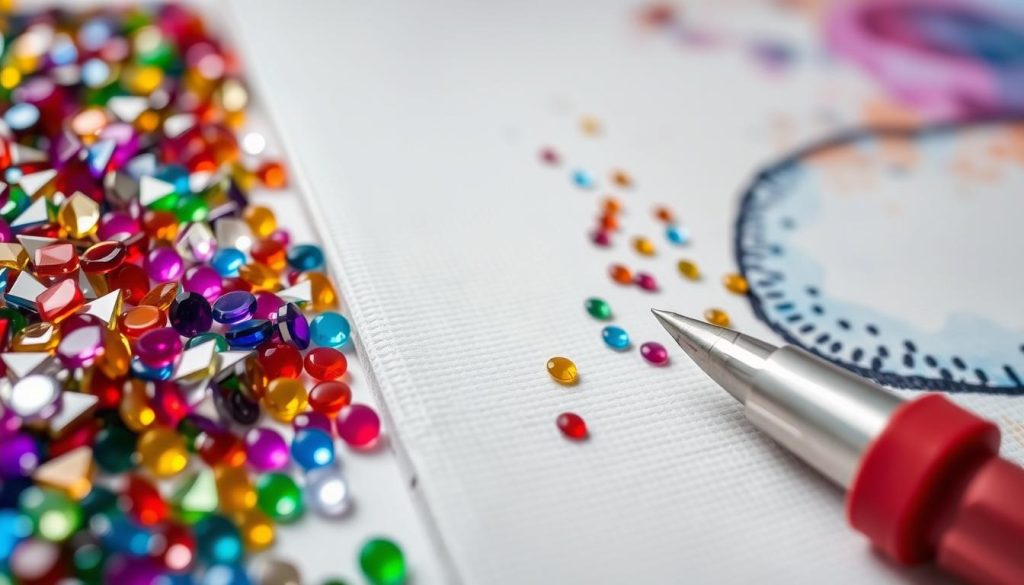
Begin by placing the canvas on a flat surface. Only remove the protective film in small parts to keep the adhesive fresh. Fill the tray with drills and shake it to align them. Then, use the diamond pen to place the drills on the canvas.
Square drills create a tighter mosaic and a fuller look. Round drills are quicker to use but may not be as precise. Choose based on your preference for detail and speed.
There are different ways to work on your diamond painting. The checkerboard method is satisfying but can be slow. Row-by-row keeps your work organized. Color-by-color is fast but may leave sticky areas if not covered quickly.
Use simple techniques to work faster and make fewer mistakes. Sort drills and keep them in labeled bags. Work in small sections and refill the wax on your pen as needed. Tweezers are helpful for placing drills accurately.
Watch out for common problems. Use weights to flatten canvas creases. If drills spill, use a vacuum with pantyhose to catch them. Keep cleaning wipes ready to remove debris and protect your work from pets.
Start with a small kit to get used to the tools and techniques. Use a multitool tray to speed up repetitive tasks. If you plan to display your work, seal it to protect it.
Skill Level and Learning Curve: Which Hobby Is Easier to Start
Choosing between cross stitch and diamond painting depends on your pace and learning style. Both hobbies welcome beginners but require different skills. Find the hobby that fits your goals and abilities.
Learning CROSS STITCH: counted cross stitch basics and beginner cross stitch projects
Cross stitch for beginners requires learning counted patterns and managing floss. It also demands even tension. This can be challenging at first.
Begin with small projects like a 4×4 inch sampler or a simple floral kit from DMC. These projects help you practice gridding and basic stitches. They’re perfect for beginners.
Making mistakes is part of learning cross stitch. Unpicking and re-stitching rows helps you learn faster. It’s better than avoiding mistakes.
Learning Diamond Painting: no-mess start and quick satisfaction
Diamond painting for beginners offers quick results. You simply peel the film, pick drills with a pen, and stick them in place. It’s easy and mess-free.
With minimal technique, you see fast progress in short sessions. This quick reward keeps you motivated. It’s great for casual crafting or busy schedules.
Which hobby suits absolute beginners, people with fine motor issues, or kids
Diamond painting is perfect for those who want quick results or have fine motor issues. It’s low on tactile strain and easy to pause and resume.
Cross stitch is better for those who want to improve fine motor skills and enjoy learning step by step. It can help with focus and dexterity over time, especially with adapted projects.
Kids can start with simplified cross stitch using larger needles and Aida 14 or 11 count fabric. They also enjoy diamond painting kits with larger drills and bold guides.
Time, Effort, and Project Workflow for Both Crafts
Diamond painting and cross stitch have different paces. Diamond painting is great for short, focused work. Cross stitch needs longer, more detailed sessions.
Work sessions and portability
Diamond painting is perfect for quick breaks. Its small kits can be finished in hours. You can pick up where you left off anytime.
Cross stitch can be done on the go with hoops or small projects. But, it needs longer times for pattern reading and counting. Using small frames helps keep your work tidy and reduces mistakes.
Project timelines
Small diamond kits finish fast. But, big canvases take days or weeks. Your speed is more important than the kit size when setting deadlines.
Cross stitch projects vary a lot. Small items like ornaments can be done in hours. But, big projects like samplers can take months. Break down big patterns into smaller parts to track your progress.
Organization strategies
Good organization is key in cross stitch to avoid redoing work. Use labeled bobbins and clear boxes for threads. Keep patterns organized for easy access. A clear workflow helps avoid mistakes.
For diamond painting, sorting drills is crucial for big projects. Use special trays and bags for drills. Tools like multi-placers help with repetitive tasks. Keep your canvas sealed to protect the adhesive.
| Aspect | Diamond Painting | Cross Stitch |
|---|---|---|
| Typical short project | Small round-drill kit (few hours) | Ornament or bookmark (hours–days) |
| Large project timeline | Large high-drill canvas (days–weeks) | Sampler with backstitch (months) |
| Portability | High — ideal for portable crafting with trays | Moderate — use hoops and compact cross stitch frames |
| Organization tools | Stackable organizers, labeled zip bags for diamond sorting | Floss bobbins, plastic boxes, pattern binders for cross stitch organization |
| Workflow tip | Work by color blocks and use multi-placer for speed | Grid the fabric, follow a cross stitch workflow of sections and checks |
Cost Comparison: Budgeting for Supplies, Kits, and Extras
Starting a new craft can be pricey. A small diamond painting kit costs about $10–$20. Cross stitch kits for beginners are $15–$30. Larger diamond projects can cost $30–$150.
Big cross stitch samplers might cost $30–$60 or more. This depends on the fabric and chart details.
Typical starter kit prices
Diamond painting starter kits are quick and cheap. They start at a low price. Cross stitch kits from DMC include fabric, needles, and floss for a bit more.
More colors and higher-count fabric increase the cost. This is for beginners.
Ongoing costs you should plan for
DMC floss cost adds up over time. This is especially true for many projects or rare colors. Specialty fabrics like Aida or evenweave also increase costs for complex designs.
Diamond painting needs extra drills and sealing supplies. These add small but regular expenses.
Framing and display expenses
Framing can be the biggest cost after materials. Professional framing, glazing, and mats preserve your work but cost more. Diamond paintings need stretcher bars or foam board and sealing for a finished look.
Plan for framing costs early to avoid surprises.
Tool reusability and where to save money
- Buying DMC floss by the skein saves money for many projects.
- Get replacement drill packs from trusted sellers to avoid color issues.
- Invest in quality scissors and a reliable frame to save on framing costs.
- Compare diamond painting kit price per square inch for large canvases.
Budget snapshot table
| Item | Typical Cost Range (USD) | Notes |
|---|---|---|
| Small diamond starter kit | $10–$20 | Good for short projects and testing interest |
| Small cross stitch kit | $15–$30 | Often includes DMC floss and basic fabric |
| Large diamond canvas | $30–$150 | Price varies with size and print detail |
| Large cross stitch sampler | $30–$60+ | Higher-count fabric raises cost |
| DMC floss skein | $0.50–$1.50 each | Buy in bulk to lower DMC floss cost |
| Framing / mounting | $20–$150+ | Cross stitch framing can be pricier for archival work |
| Reusable tools | $5–$40 | Good quality scissors, pens, and frames pay off over time |
Your budget choices shape the craft you enjoy. Small buys let you test both hobbies. Investing in quality tools or time-saving accessories stretches your dollar across many projects.
Therapeutic Benefits: Relaxation, Focus, and Mindfulness
Needle arts like cross stitch and diamond painting help you slow down and find peace. They’re perfect for short breaks or long evenings. These crafts support your mood and focus without needing special skills.
Mental health benefits of counted needlework
Working on a pattern helps you focus. Cross stitch therapy offers structured tasks that reduce worries. It lowers stress on tough days.
As you stitch, you’ll notice small motifs coming to life. The rhythm of stitching creates a calm pace. This pace helps you enter flow states and feel steady progress.
How repetitive crafts ease tension
Diamond painting relaxation comes from placing drills in a repeated motion. The tactile action and instant sparkle give quick rewards. Seeing areas fill in makes it great for after work or between errands.
It’s low mess and easy to set up, making it a top choice for relaxation. You can start right away and see stress drop without needing to learn a lot.
Choosing a craft for routines or group settings
Go for diamond painting if you want fast results in groups or at craft nights. It’s perfect for social settings because newcomers learn quickly. They leave with something to show for it, boosting confidence.
Choose cross stitch for fine motor rehab or cognitive engagement. It’s great for seniors and those in rehab because it improves concentration and hand coordination.
| Therapeutic Aim | Cross Stitch | Diamond Painting |
|---|---|---|
| Onset of relaxation | Gradual; builds with focused stitching | Fast; visible progress within minutes |
| Best for mindfulness | High; counting and repetition aid cross stitch mindfulness | Moderate; repetitive placement supports meditative routine |
| Suitability for group therapy | Good; structured projects fit longer programs | Excellent; low barrier and quick outcomes |
| Motor-skill benefits | Strong; fine motor and hand-eye coordination | Moderate; repetitive grip and placement practice |
| Setup and mess | Minimal; thread and fabric management | Very low; contained drills and sticky canvas |
| Ideal user | Seniors, rehab patients, those seeking deep focus | Busy people, beginners, social crafters |
Finished Look, Display, and Longevity of Your Work
Your finished piece gets noticed, whether stitched or resin-drilled. Think about texture, light, and care before displaying. The right framing and mounting can change how it looks and lasts.
How stitched pieces present themselves
When a cross stitch is framed, you see the stitches and fabric texture. Backstitching makes lines sharp. Special stitches add depth. Use acid-free mats, linen or cotton backing, and UV-protective glazing for color and structure.
Ways to show sparkly canvases
Diamond painting shines brightly. Crafters often mount canvases on stretcher bars for depth. You can also glue to foam board or add magnetic hangers. Sealing with resin or a special sealant keeps it dust-free and shiny.
Care and durability for both formats
Fabric work lasts with the right framing and cleaning. Keep it away from damp places and direct sunlight. Resin drills can lose their stickiness if exposed to heat or dust. Sealing before display makes cleaning easier and keeps it looking good.
Quick comparison table
| Feature | Cross Stitch | Diamond Painting |
|---|---|---|
| Visual effect | Textured, defined stitches with subtle sheen | High sparkle, light-catching surface |
| Mounting options | Archival framing, acid-free mats, glazing | Stretcher bars, foam board, magnetic hanger bars |
| Longevity | Decades with archival care | Years with sealing; risk of drill loss without it |
| Maintenance | Dust with soft brush; avoid moisture | Seal for protection; store flat and dust lightly |
Choose your display wisely. Museum-style framing is best for cross stitch. For diamond painting, use stretcher bars and sealing techniques. These choices ensure your work stays beautiful for years.
Common Tips, Hacks, and Needlework Secrets to Get Better Results
Small changes can make a big difference in needle arts. Use tested tricks to cut errors, speed up progress, and keep supplies tidy. Here are tips for cross stitch hacks, diamond painting hacks, and smart ways to stay organized. Your projects will look cleaner and finish faster.
Cross stitch and embroidery hacks to reduce mistakes
Mark every 10 stitches or use a washable pen to avoid counting mistakes. Start threads with the loop method or a short tail to secure ends without knots. Use backstitching for crisp outlines and added detail.
Watch for common mistakes like over-tight stitches, swapped DMC numbers, and skipped gridding. Fix small errors as you go to save time later.
Diamond painting shortcuts that speed progress
Try checkerboard, row-by-row, or farm plot methods from Paint With Diamonds. Match technique to canvas size and patience. Use multi-placer tools to lay many drills at once in large color blocks.
Remove creases by weighing the canvas flat under books or a mattress. Recover spills by covering a vacuum nozzle with pantyhose to pick up loose drills without sucking them away.
Tools and cross stitch organization for tidy workspaces
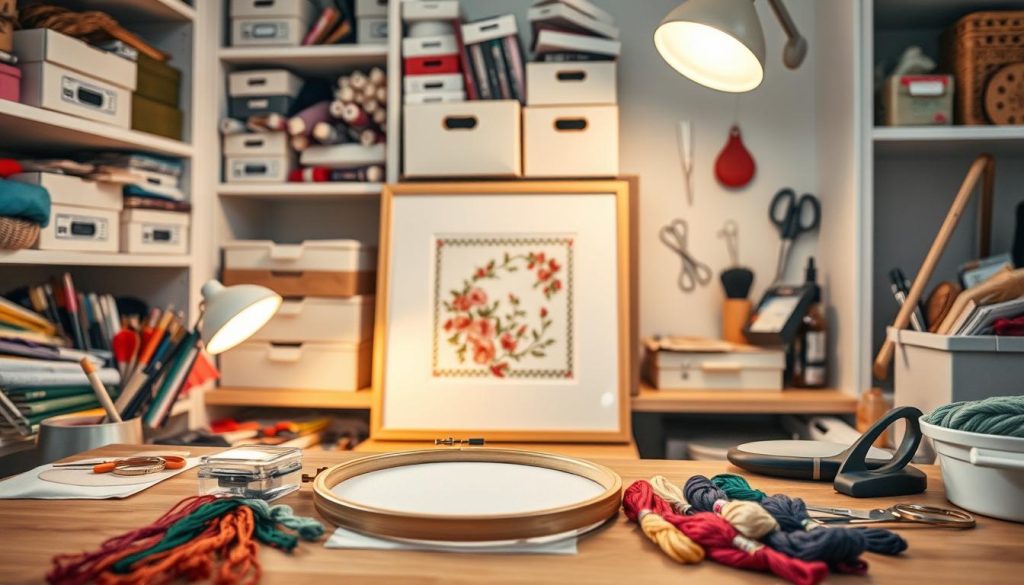
Keep essential items within reach: quality embroidery scissors, tapestry needles, labeled floss bobbins with DMC numbers, and a magnifier with LED lamp for detailed sessions. Use Q-snaps or an embroidery frame to maintain even tension.
For travel, pack small zip pouches and clip-on lamps so you can stitch anywhere.
Diamond trays and storage that prevent chaos
Invest in several grooved diamond trays and labeled containers for drills to avoid color mix-ups. Carry a compact tray and a few zip bags for on-the-go work. A diamond pen with interchangeable heads, wax pads, and tweezers make placement smoother and let you switch between fine detail and speed work easily.
Quick fixes and maintenance tips
Check threads and drills before long sessions so you don’t run out mid-project. For stubborn creases on cross stitch fabric, steam lightly from the wrong side and press with a cloth. For diamond canvases, press flat under weight and seal only after you’re sure the piece is complete.
Store patterns and kits in folders or clear boxes to keep paper and drills together.
| Task | Cross Stitch Tools | Diamond Painting Tools |
|---|---|---|
| Start securely | Loop method, short tail | Use tidy tray, sort drills first |
| Speed up filling | Work by 10-stitch grid sections | Multi-placer, checkerboard method |
| Avoid errors | Mark grid, double-check DMC numbers | Label drills, work by color |
| Fixing creases | Steam from wrong side, press with cloth | Weight flat, release trapped air carefully |
| Portable options | Q-snaps, zip pouches, clip-on lamp | Compact diamond trays, small storage boxes |
| Organization tip | Floss bobbins labeled with DMC | Labeled bags and multiple diamond trays |
Conclusion
You now know the differences between cross stitch and diamond painting. Diamond painting is quick to start, mess-free, and sparkly. It’s also easy to take with you. Cross stitch, on the other hand, offers a tactile experience, rich techniques, and lasting pieces.
When picking a hobby, think about what you value most. Choose diamond painting for fast results, ease, and a shiny finish. Go for cross stitch if you love patterns, want durable art, and enjoy learning new skills.
Start with a small project to see if it’s right for you. Try a 5×7 diamond canvas or a simple sampler. Use the tips from this guide to improve your experience. Look for community support and online tutorials to keep learning and improving.
 English