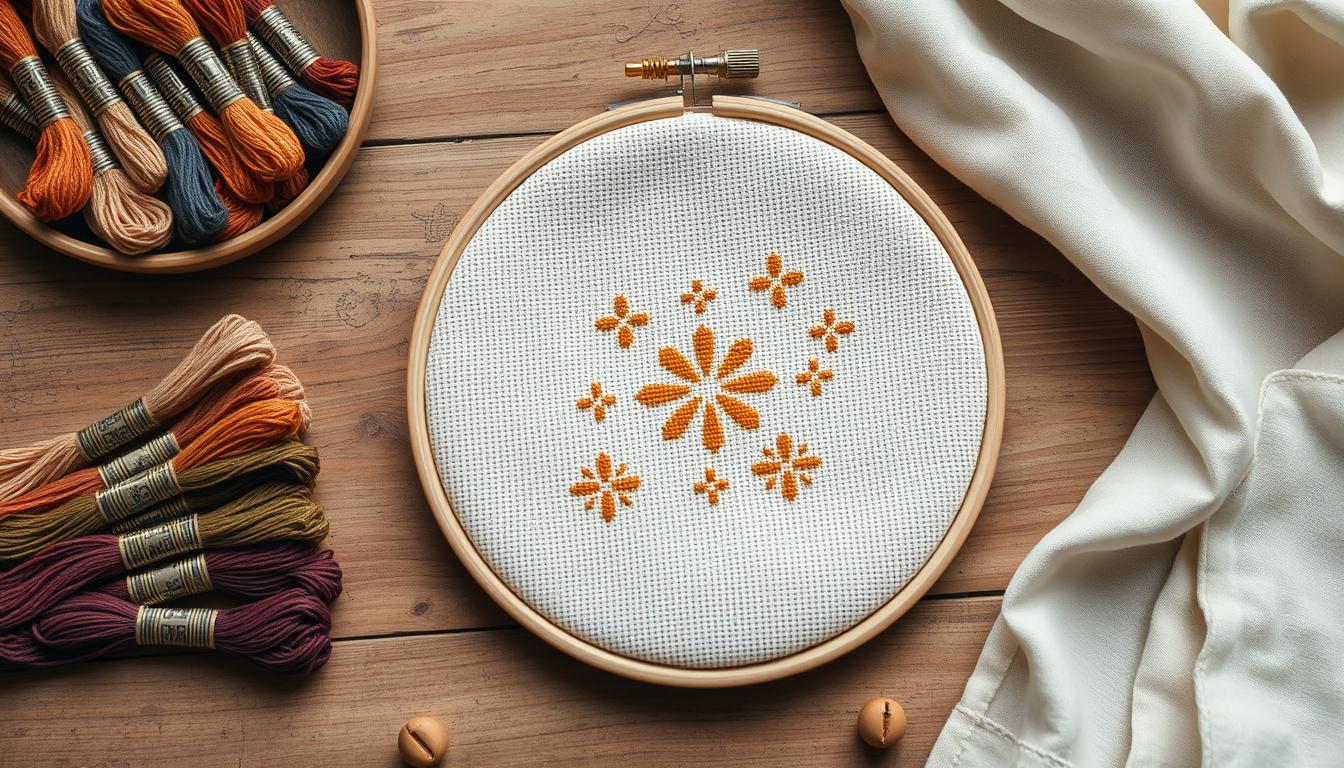
You want to finish more cross stitch projects without burning out. These practical cross stitch hacks focus on tools and techniques that cut counting errors and speed up stitching. The right accessories — from a PURElite LED magnifying lamp to Q-Snap frames and Lakeside Needlecraft tools — make your sessions more comfortable and more accurate.
Whether you work on quick gifts or marathon counted cross stitch pieces like HAED, these tips help you place stitches faster and get a neater finish. Expect suggestions that apply to cross stitch for beginners and experienced stitchers alike, including thread management with DMC bobbins and timesaving needle tricks using Easy Guide ball-tipped needles.
You’ll learn simple changes that save hours: better lighting, organized floss, taut fabric, and smart starts and stops. Use these cross stitch tips to make stitching more enjoyable and to move through projects with consistent progress.
Key Takeaways
- Good lighting and magnification reduce eye strain and mistakes.
- Organized floss and needle parking save search and rethread time.
- Q-Snap frames and hoop stands keep fabric taut and speed hand movement.
- Specialty needles and thread joins cut rethreading and wasted tails.
- These cross stitch hacks benefit beginners and veterans working on small and large projects.
Why these cross stitch hacks make a real difference for your projects
Smart habits and the right tools can make stitching faster and less frustrating. You’ll save time and avoid mistakes. This way, you can focus on enjoying your project.
How the right accessories speed up stitching
Magnifying LED lamps help you see every detail, reducing mistakes. Spotting errors early saves time and effort.
Q-Snap frames keep fabric tight, making stitches even and preventing snags. This makes your work look better and last longer.
Hoop stands let your hands move freely, speeding up your work. Your posture improves, making stitching easier.
Organized bobbins save time searching for floss. A DMC bobbin box with labeled slots makes finding colors quick and easy.
Common time-wasting cross stitch mistakes you can avoid
Poor lighting can lead to miscounts and wasted time. Fixing your lighting can save hours and reduce eye strain.
Disorganized bobbins and loose thread storage cause endless searching. Use a bobbin box and simple labels to avoid this.
Loose fabric tension in hoops or frames means constant adjustments. Q-Snap or tensioned hoops keep your stitches even, saving time.
Skipping gridding on complex patterns can lead to errors. Basting or using washable pens for gridding saves hours on big designs.
Inefficient starts, finishes, and weak thread joins mean rethreading often. Learning secure starts and finishes keeps your momentum going.
Who benefits most: beginners, intermediate stitchers, and counted cross stitch veterans
Beginners find cross stitch easier with white or cream 14-count Aida, blunt needles, and a DMC bobbin box. These choices help build confidence and improve results.
Intermediate stitchers save hours with parking systems, Q-Snap frames, and gridding. These tools help tackle denser patterns with fewer mistakes.
Advanced stitchers benefit from advanced parking techniques, Needle Park Avenue-style systems, and rolling storage. These keep large projects tidy and progress steady.
| Skill Level | Key Accessories | Primary Time-Saver |
|---|---|---|
| Beginner | 14-count Aida, ball-tip needles, DMC bobbin box | Clear fabric and tidy floss make every stitch faster |
| Intermediate | Q-Snap frame, parking system, LED magnifier | Reduced errors on complex segments and faster rhythm |
| Veteran (counted cross stitch) | Needle parking, rolling storage, large gridding tools | Protects large pieces and prevents costly miscounts |
Set up a high-visibility workspace with magnified lighting
Good lighting changes how you work. With magnified lighting, you spot tiny holes and misplaced stitches faster. A clear workspace cuts mistakes and keeps your eyes fresh during long sessions.
Choose a reliable LED magnifying lamp that balances brightness with low heat. A daylight LED helps you see true thread colors and reduces eye fatigue. You will find that a proper lamp makes many other cross stitch tools feel easier to use.
Why LED magnifying lamps reduce eye strain and errors
An LED magnifying lamp gives magnification plus steady, cool light. This combo brings tiny holes and subtle color changes into focus. You will make fewer counting mistakes and place stitches more accurately with clearer vision.
Features to look for: brightness, magnification, flexible neck, and portability
Check lumens first. Aim for a model around 500–700 lumens for accurate color rendering on cross stitch fabric. Look for 2x magnification for most counted work; stronger lenses suit very small counts.
Pick a flexible neck so you can angle light without twisting your shoulders. Decide between floor, table, or clip-on styles based on your studio setup. Battery or mains power gives you portability if you stitch away from your main table.
Placement tips so you always see colors and tiny stitches accurately
Place the lamp so the halo of light surrounds the lens and keeps shadows off your work. Angle it slightly forward to illuminate both fabric and chart at once. Keep the lens removable if you like to alternate between magnified and direct viewing.
Set height to avoid glare on protective glasses or acrylic frames. Test a few positions before you commit. Small adjustments make a big difference when you stitch for hours.
| Feature | What to look for | Why it matters |
|---|---|---|
| Brightness (lumens) | 500–700 lumens recommended | Accurate color rendering on cross stitch fabric and charts |
| Magnification | 2x common; 1.75x–3x useful | Helps spot holes, tiny stitches, and color shifts |
| Mount type | Table, floor, or clip-on | Choose based on your workspace and portability needs |
| Neck flexibility | Fully adjustable gooseneck or articulating arm | Allows optimal angle without straining posture |
| Power source | Mains or battery operation | Battery options let you stitch away from a power outlet |
| Heat output | Low-heat LED arrays | Keeps fabric and threads cool during long projects |
| Brand examples | PURElite 3-in-1, Magnificent Pro Daylight Lamp | Proven performance across many embroidery hacks and setups |
Master thread management with organized bobbins and parking systems
Good thread habits cut mistakes and speed every project. Keep your DMC floss clean, labeled, and easy to reach. This way, you spend less time choosing colors and more time stitching.
Use a bobbin storage box to keep DMC floss sorted and clean
Choose a bobbin storage box that holds about 30–50 bobbins. Wind each DMC floss onto a numbered plastic bobbin and file them by color family. This keeps your bobbins clean and makes choosing colors quick.
If you prefer low-cost options, try toe-separator organizers. They keep bobbins from slipping and are great for travel.
Needle parking techniques for parking on HAED and large counted cross stitch patterns
Break large designs into columns or blocks. Stitch down one column and park threaded needles on the next. This keeps your place and saves time.
Use hair clips to secure groups of parked threads for long-term projects. This prevents slipped threads during pauses and while you move the fabric.
Tools to try: Needle Park Avenue and homemade parking boards to keep threaded needles tidy
Needle Park Avenue is a magnetic board with foam slots. It holds threaded needles by symbol. It works well for scattered-stitch charts but has a limited number of slots.
Homemade parking boards offer flexibility. Use foam-backed boards, small magnets, or stitched tabs attached to your frame. These DIY solutions attach easily to Q-Snap frames and can expand as your project grows.
Try front-start and front-finish hacks to reduce rethreading. Bring the thread up from the front, stitch about fifteen stitches over the tail, and carry the end to the side. This secures starts and finishes without bulky knots and keeps parked needles ready for long sessions.
Adopt a consistent parking techniques routine and combine it with proper bobbin storage. Your stitching flow will improve, you will lose fewer bobbins, and overall cross stitch organization will feel calmer and more efficient.
Keep fabric taut and accessible with Q-Snap frames and hoop stands
Steady fabric makes stitching faster and fewer mistakes. Q-Snap frames and hoop stands offer a stable work area. This lets you focus on your pattern without worrying about fabric tension.
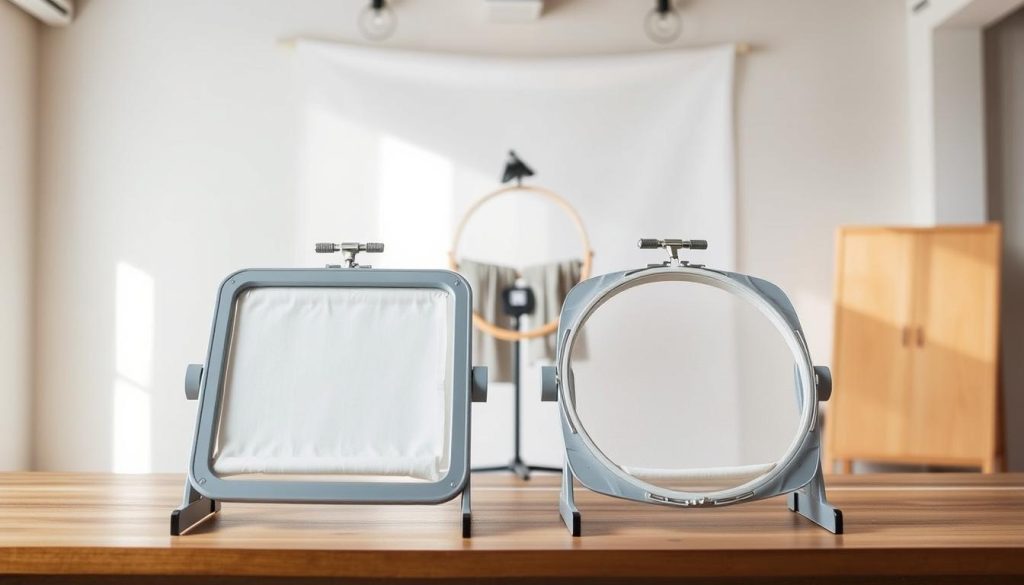
Why Q-Snap frames save time over traditional hoops
Q-Snap frames are quick to set up and keep fabric tight. You won’t need to adjust them during your project. They hold better than wooden hoops, especially for big counted pieces.
How an embroidery hoop stand speeds up hand movements and back-and-forth stitching
An embroidery hoop stand keeps your frame steady. This lets you stitch with both hands, reducing wrist movement. Many stands adjust height and angle, and some have a chart holder for easy reference.
Choosing the right size frame for cross stitch projects and cross stitch fabric counts
Choose a frame that shows a good working area without stretching your fabric. The right size depends on your fabric count and project size. Consider how you stitch and how portable you need your setup.
Q-Snap frames come in various sizes, like an 8″ x 8″ for small motifs. For big designs, go for larger frames to avoid moving them often. Remember, the thickness of Q-Snap frames can affect handling near edges. Some hoop stands don’t come with a hoop.
Protect large projects and maintain clean fabric with magnetic clips and rolling storage
Big cross stitch projects need clean and organized fabric to save time. Use light solutions to protect your fabric from dirt, sunlight, and hand oils. Small habits can make a big difference over time.
How magnetic fabric clips prevent dirt, sunlight, and oil transfer
Magnetic fabric clips don’t pierce the fabric, so your work stays clean. They keep folded sections in place, reducing hand contact and oil transfer. These clips stay put during long stitching sessions without snagging threads.
Best practices for rolling and storing excess aida or evenweave during long projects
Rolling storage keeps fabric organized with minimal creases. Use a tube or stretcher and avoid tight folds. Magnetic clips or soft straps keep the roll secure without squishing the fabric.
Store rolls in a dry, shaded area to prevent fading. Use breathable bags or boxes to block dust. Wear clean hands or thin gloves when handling large pieces. Regular checks help spot dirt or pests early.
When to use soluble canvas for stitching on clothing or non-gridded fabric
Soluble canvas is great for stitching on clothes or loose fabrics without a grid. You attach it to the fabric, stitch through, then wash it away. DMC soluble canvas works well for washable items like shirts and denim.
Remember, using soluble canvas adds a wash step. This might extend your project’s finish time. But it lets you stitch on more fabrics. For thick fabrics, test the magnetic clips’ grip before long storage; some clips are too short for heavy rolls.
Use ball-tip needles and other specialty cross stitch tools to speed stitching
Choosing the right tools can cut down on mistakes and save time. Ball-tip needles and other tools help you stitch faster with fewer errors. A well-set-up workspace that matches your fabric, thread, and needle makes every session better.
Benefits of ball-tip tapestry needles for aida and evenweave
Ball-tip needles are great for aida and evenweave because they don’t split fibers. Their rounded tip makes it easier to find the right holes, reducing mistakes. Brands like Easy Guide offer ball-tipped needles that feel better than regular ones.
Needle sizes, eye sizes, and when to choose a blunt vs. ball-tip needle
Choose needle sizes based on your fabric’s count. For 14-count aida, use size 24 needles. Size 28 is better for 28-count evenweave. Make sure the needle’s eye is big enough for two strands of DMC floss.
Most of the time, a blunt tapestry needle is best for counted projects. But for high-count fabrics, a finer needle is needed if the eye can handle two strands. Ball-tip needles are great for stitching small details without damaging threads.
Handy extras: tail tuckers, threaded needle holders, and needle minders
Tail tuckers keep short thread tails in place, saving you from rethreading often. Handmade butterfly tail tuckers work well, but they can be more delicate than metal ones.
Threaded needle holders make it easy to switch colors quickly. Needle minders prevent lost needles and make it easier to find them during fast stitching. These tools help you stay focused and keep your stitching smooth.
CROSS STITCH gridding and pattern markers to avoid counting mistakes
When a chart gets dense, counting errors can slow you down. Simple tools and habits can help. Use a clear system for cross stitch gridding and keep pattern markers handy. This way, you’ll never lose your place on a scattered-stitch chart.
How gridding saves hours on complex projects
Gridding maps the fabric to the chart, making stitching by squares easier. This method prevents miscounts on busy cross stitch patterns. You’ll spend more time stitching and less time fixing mistakes.
For big HAED or full-coverage pieces, use gridding with parking techniques. This method works page-by-page. It keeps thread changes organized and helps spot mistakes early.
Practical gridding methods and trade-offs
Washable pens create a fast 10×10 grid that washes out after finishing. Use a reliable brand like Frixion or water-soluble fabric pens. Always test on scrap fabric first. Basting with contrasting thread is low-cost but requires removing stitches later.
Soluble canvas is a temporary guide for non-gridded garments or odd-count fabric. Pre-gridded fabric removes the setup step but costs more and limits fabric choices. Choose based on project size and washing or blocking needs.
Pattern markers and chart holders to keep your place
Pattern markers range from simple Post-It notes to wooden magnetic markers. These are found on Etsy and in specialty cross stitch shops. They frame the active chart area, making it easy to mark rows and columns.
Magnetic chart holders or clip-on stands keep printed patterns at eye level. This reduces head movement and prevents lost lines. It pairs well with your gridding system for faster progress on complex patterns.
| Method | Speed | Removal Effort | Best for |
|---|---|---|---|
| Washable pens | Fast to apply | Low if washed correctly | Mid-size projects and aida |
| Basting thread | Moderate setup time | High; must unpick | Durable guide for long HAED pieces |
| Soluble canvas | Moderate; needs attachment | Low; dissolves in water | Odd fabrics and wearable stitching |
| Pre-gridded fabric | Instant; no prep | None | Fast starts and tournament-style projects |
| Pattern markers / magnetic holders | Instant navigation aid | None | Scattered-stitch charts and multi-page patterns |
Work smarter with thread-saving and joining hacks
Small choices can save big amounts of time when you stitch. Focus on thread-saving methods that stretch each skein. Cut down on rethreading and keep your flow steady in dense patterns. Try a few techniques and stick with the ones that fit your rhythm.
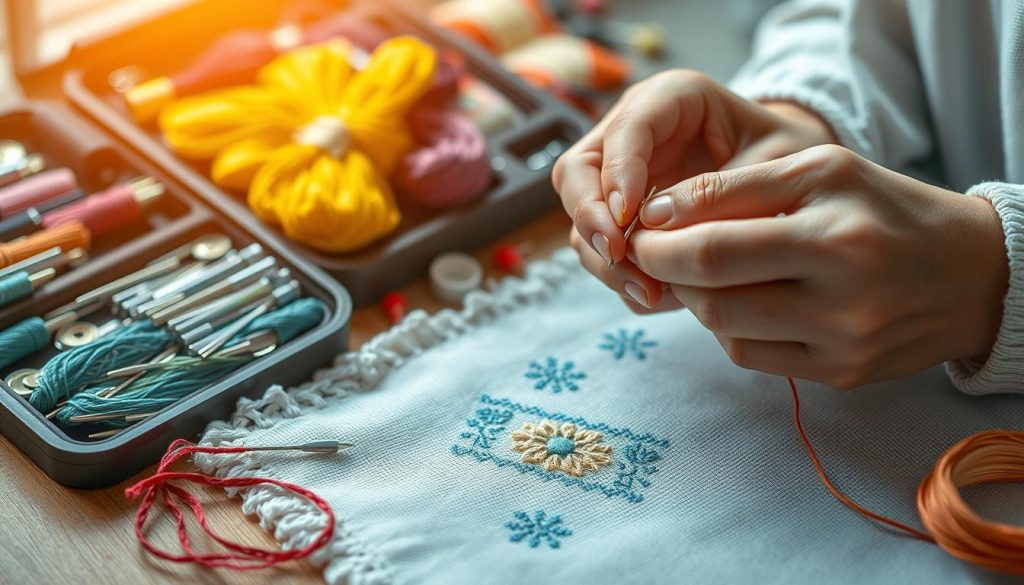
Use thread tail tuckers to make the most of short tails instead of wasting time rewinding. A tail tucker lets you push tiny ends through to the back and stitch over them. This keeps your thread usable for more stitches. Watch for fragile tips; some tuckers break or slip away, so store them in a secure spot.
Practice secure front starts to avoid flipping the fabric. Bring a tail to the back about 15 stitches to the right of where you begin. Stitch over that tail for the first 10 stitches to lock it in place. When you finish, bring the tail forward, unthread, and repeat so both starts and finishes stay tight without bulky knots.
When you work confetti stitches, plan your moves to cut interruptions. Double-threading gives fuller coverage and lowers the chance of breakage. Use parking to leave colors where you need them and keep a Needle Park Avenue or magnetic needle holder handy to store threaded needles. This keeps your palette accessible and saves minutes of searching.
Switching colors in scattered areas becomes easier if you map color swaps ahead of time. Group nearby color changes and work small clusters before moving on. That reduces repeated rethreading and makes your stitching sessions more productive.
Be mindful that front-start techniques take practice before they speed you up. Try them on a scrap piece first. Keep fragile tools like tuckers in a labeled container. With routine use, these thread-saving habits will shave hours off large projects and boost your satisfaction with each finished panel.
Organize your kit so you spend more time stitching and less time searching
Good cross stitch organization makes your supplies easy to find. Start with a system that fits your space and bag. Small boxes and smart hacks save you minutes each session.
Use proven storage for floss and needles to quickly find the right color. DMC bobbin boxes keep skeins organized and labeled. For a budget-friendly trick, use toe-separator organizers to prevent bobbins from tangling when working on multiple colors.
Choose portable solutions for stitching outside the home. Clip-on lamps and battery LED magnifiers make stitching comfy in cafes and parks. A small Q-Snap or compact frame fits in a tote. Magnetic boards or Needle Park Avenue keep needles, scissors, and threads in place as you move.
Protect pattern pages for repeated use. Laminating charts or ironing lightweight interfacing to the back of paper patterns prevents tears and softens edges. Reusable magnetic pattern markers and Post-It alternatives mark lines and pages without damaging the chart, improving preservation.
Try household items to save time and money. Binder clips hold thick fabrics taut when hooping, rubber bands guide seam allowances, and small resealable plastic bags organize trims and tiny tools. These small fixes turn into practical cross stitch ideas that cut prep time.
For a clear overview, consider a simple table of storage choices and uses:
| Item | Best use | Why it helps |
|---|---|---|
| Bobbin boxes (DMC-style) | Sorted floss storage | Prevents tangles, quick color access |
| Toe-separator organizers | Separate wound bobbins | Inexpensive, keeps threads tidy while stitching |
| Clip-on lamps & battery LEDs | Portable lighting | Enables portable stitching anywhere without outlets |
| Magnetic boards & needle parks | Hold needles and clips | Makes needle changes fast and reduces dropped tools |
| Lamination or interfacing | Chart protection | Prevents wear, keeps pages flat |
| Reusable magnetic markers | Marking patterns | Nonpermanent, easy to move as you stitch |
Set up zones in your tote or work area: thread zone, tool zone, and pattern zone. This habit supports consistent cross stitch organization and frees mental space for stitching. Use one or two portable stitching staples and a chart preservation method that suits your workflow, and you will spend more minutes stitching and fewer minutes hunting.
Speed stitching techniques and posture improvements for longer sessions
Working on big counted projects needs a solid plan. This plan should mix practical stitching methods with a comfy setup. Short, focused sessions are better than long ones for steady progress and less strain.
Stitching in columns, parking, and working page-by-page
Stitch in columns of ten and work down each page row. This method reduces fabric flips. Parking threads in nearby rows avoids constant rethreading and keeps the momentum going.
Use hair clips or small binder clips to keep needles tidy. Only unthread at column ends. This limits interruptions and boosts speed stitching on big projects.
Ergonomic setup: chair height, hoop position, and using adjustable lamp stands
Adjust your chair so your feet are flat and knees at 90 degrees. Place the hoop or Q-Snap at eye level to avoid leaning. An embroidery hoop stand and adjustable lamp stand help your hands move quickly while keeping your neck relaxed.
Try different heights and angles for a week. Small posture changes can remove shoulder tightness and let you stitch longer without pain.
How treating cross stitch as therapy and planned sessions increases consistency
Plan regular stitching sessions like appointments. Seeing cross stitch as therapy makes repetitive work calming and focused. This keeps you moving forward, especially on long projects.
Planned sessions work well with parking and column methods. Together, they help maintain rhythm, protect your neck and shoulders, and complete complex patterns with fewer setbacks.
Embellishments, finishing hacks, and project-ready tips
When you’re almost done stitching, small decisions make a big difference. Use special finishing hacks to save time and keep your stitches neat. Plan your trims and backstitching carefully to avoid redoing big areas. Test your techniques on a scrap first to make sure they work well with your fabric and colors.
Backstitching and trims: Add neat backstitching after your main crosses are done. Use fine needles and short thread lengths to avoid pulling the fabric. Keep threads separate and work in one pass when you can. Add trims, beads, or appliqué after blocking to keep things in place and avoid redoing stitches.
Blocking and washing: Gentle blocking and washing set threads and flatten puckers. Use mild detergent and cool water. Rinse well and dry flat on a towel with weights on the edges if needed. Always test colorfastness on a scrap before washing the whole piece.
Soluble canvas removal: For pieces stitched on soluble canvas, remove the support after washing. Follow the product instructions for soaking until the canvas dissolves. Then, rinse gently to clear any residue. Be careful around threads and trims during removal so they don’t shift or loosen.
Framing and mounting: Pick a mounting method that fits the piece’s future use. Use Q-Snap frames or stretcher bars for even tension during final stretching. Mount on acid-free board for preservation, add a dust mat, and consider UV-filtering glazing for color protection. For a professional finish, consider Michaels or Framebridge for conservation options.
Practical finishing hacks:
- Remove basting used for gridding before final blocking to avoid distortion.
- Use a blunt needle to tuck thread tails securely on the front for a clean back.
- Label and test any specialty trim for washability before attaching permanently.
- Keep parked needles and short threads secured during final handling.
These steps in backstitching, soluble canvas removal, blocking, and framing bring a polished result. Use finishing hacks that fit your fabric and design for lasting cross stitch finishing.
Conclusion
These nine cross stitch hacks can help you avoid mistakes and save time on every project. Better lighting and magnifiers, organized bobbins, and Q-Snap frames are just the start. Magnetic clips, rolling storage, and ball-tip needles also make a big difference.
Gridding, pattern markers, and thread-saving tips are key. Keeping your kits organized and using good posture can also improve your work. When you mix practical techniques with good organization, your results will be better and you’ll do less rework.
Start with one change at a time. Try a ball-tip needle, a Lakeside Needlecraft lamp, or a bobbin box for DMC floss. For big projects, add parking or gridding to reduce mistakes.
Household items like toe separators and hair clips work well with special tools. They make cross stitch therapy easy and focused. Investing in the right tools and routines really helps.
These hacks let you focus on design and quality. Cross stitch inspiration keeps things fun. Next time, pick one hack to try and see how much time and enjoyment you save.
 English