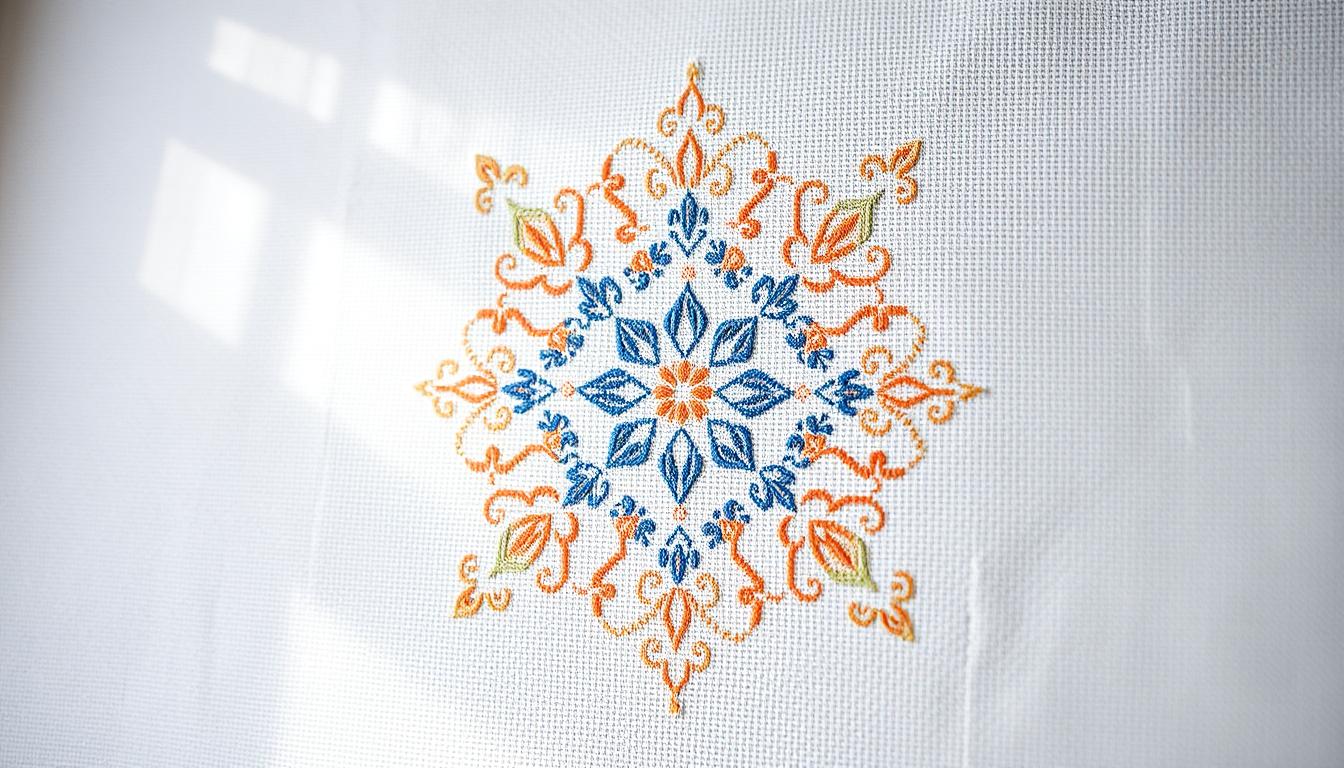
You can adapt a counted cross stitch chart into a broader embroidery project with a few simple choices. Start by treating the grid as a guide, and plan where to add outline work or small decorative fills.
Beginner-friendly tools like 14-count aida, basic threads, and beginner kits make the shift easy. Many leading brands provide free patterns and clear tutorials that help you move from a gridded design to a mixed technique finish.
Using the counted layout helps you place each stitch accurately. Then you can add texture, shine, or scattered accents to match your vision for the craft project.
Choose fabric, thread, and hoop size to suit the final look. With the right supplies and a short plan, your adapted pattern will feel polished without extra frustration.
Key Takeaways
- You can adapt a cross stitch chart as a base for embroidery by adding simple embellishments.
- Beginner kits and 14-count aida make transitions smoother for new crafters.
- Counted layouts help place stitches; outlines and fills add texture and shine.
- Pick fabric, thread, and hoops with your project goals in mind for best results.
- Using pre-packed kits or mixes of supplies keeps costs manageable.
How Cross Stitch Fits Into Your Embroidery Projects
Working from a gridded pattern makes it simple to repeat motifs and keep spacing exact. Counted work is ideal when you need symmetry, clean typography, or pixel-like motifs. A chart maps each unit so placement is repeatable across items and sizes.
Key differences
Key differences between counted grids and freehand
- Grid-based work uses even X-shaped units guided by a chart; freehand uses lines, fills, and texture placed by eye.
- Counted patterns excel at geometric designs, borders, and repeat motifs that need exact placement.
- Freehand embroidery suits flowing florals, satin fills, and shaded textures for painterly effects.
When a counted pattern works best
Choose a counted pattern when deadlines, repeated gifts, or tiny surfaces demand predictability. Use 14-count aida for beginner-friendly visibility and balanced detail.
- Combine methods: stitch the main motif on the grid, then add backstitch outlines or seed stitches for depth.
- Pick aida for strict counted work; use evenweave or linen to blend counted and freehand elements smoothly.
- Plan finishing early so your fabric, pattern scale, and hoop match the final items or decor.
What to Buy: Kits, Patterns, and Supplies You’ll Actually Use
Pick tools and materials that keep projects quick, tidy, and fun from start to finish. A short, reliable kit or a single printed pattern lets you focus on learning techniques instead of hunting parts.
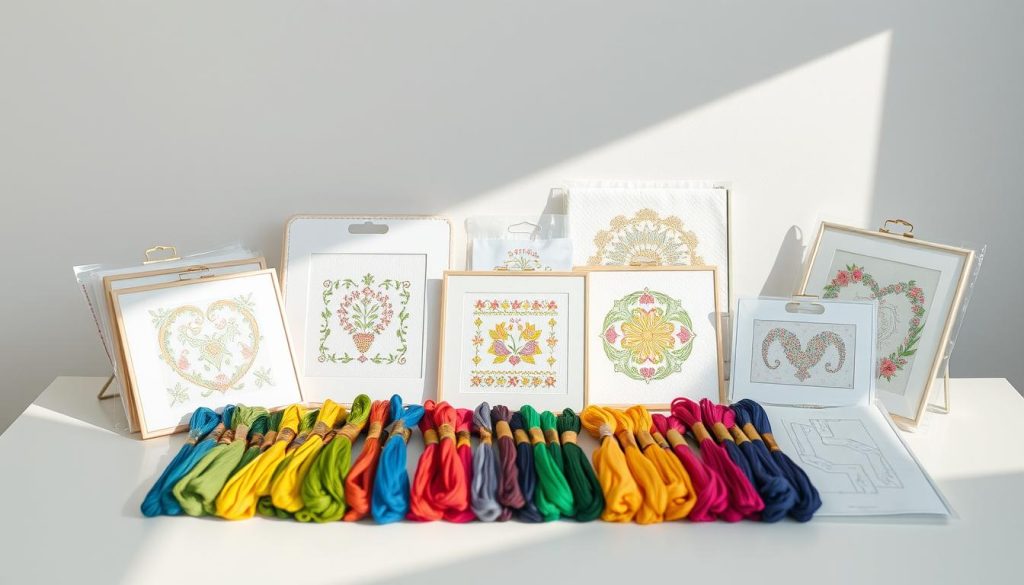
Fabric basics: aida count explained
Count means stitches per inch. Higher counts give smaller repeats; lower counts make larger, easier holes. A 14-count aida is beginner-friendly because the holes are easy to see. Your crosses stay consistent and the finished size stays manageable without magnification.
Embroidery floss vs thread
Use six-strand embroidery floss so you can separate strands for coverage. Most charts call for two strands on 14-count fabric. Pick classic palettes first, then add metallics or specialty tones for highlights.
Needles, hoops, and scissors
Build a basic toolkit: a blunt, elongated-eye needle to protect fabric, a sturdy hoop for even tension, and sharp scissors for clean cuts. Keep a washable marker or magic paper for guidelines.
Kits vs downloadable patterns
Kits bundle fabric, pre-sorted floss, a needle, and instructions—great for beginners. Downloadable patterns are fast, let you use stash supplies, and are ideal when you want to print and start immediately.
Shopping smart and quick projects
Watch retailer pages for limited weekend sales and “Quick & Easy Pattern Sale.” Check new releases when you shop—recent drops include seasonal titles and fresh cross stitch kits for fast gifts and decor.
Stamped kits, stitchables, and learning resources
Stamped kits and stitchable items speed starts for cards, ornaments, and small gifts. Also, use DMC video tutorials and the free “1000 patterns” resource to learn techniques before scaling up.
- Pro tip: Buy one well-rated kit, then compare its supplies to downloadable patterns to learn value and quality.
CROSS STITCH Patterns You Can Adapt for Embroidery Finishes
A small series of backstitches and French knots can transform a pixelated chart into lively embroidered decor. Start by outlining major shapes with backstitch to sharpen edges and letters. Then add a few French knots or straight stitches to create texture or tiny highlights.
Try different fabrics and pre-made items. Swap aida for evenweave or linen for softer drape. Or use pre-finished tags, bookmarks, and ornaments to skip complex finishing and speed up a gift-ready project.
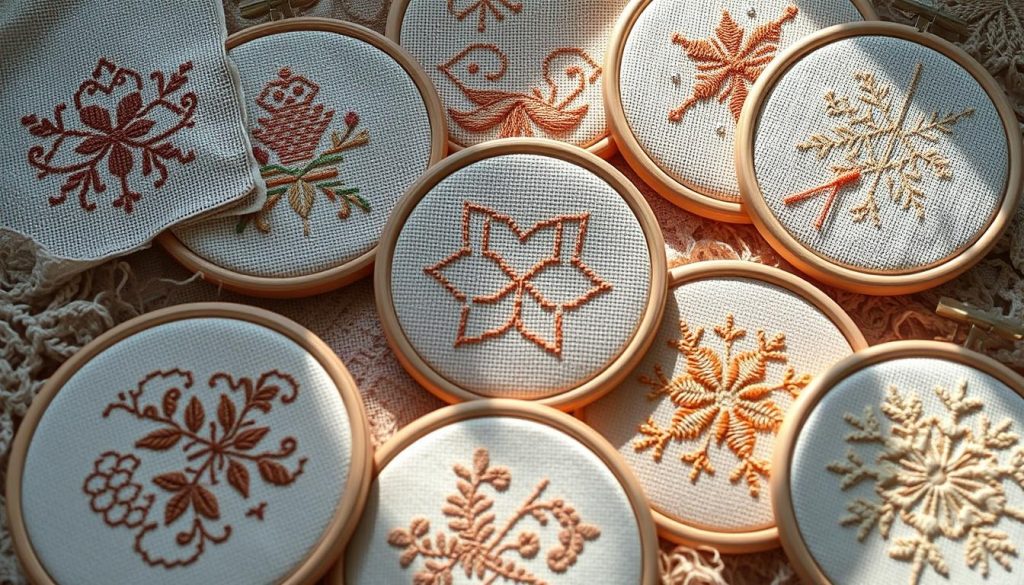
Turn patterns into quick projects
Small charts work well as ornaments, mini art hoops, or flat-fold cards for seasonal or last-minute gifts. Choose a hoop that frames the motif tightly and trim fabric neatly with sharp scissors for a clean finish.
Trending motifs and smart buys
Look for bold seasonal patterns like Just CrossStitch Christmas 2025, 2025 Nutcracker, Winter Welcome, Quaker Pumpkin, or Jólakötturinn – The Yule Cat. Check weekend sale sections and Stamped Kits & Stitchables to launch projects fast.
| Finish | Best Fabric | Key Supplies | Why it Works |
|---|---|---|---|
| Mini art hoop | Evenweave or linen | Hoop, two strands floss, blunt needle | Flat display, professional look, easy to gift |
| Ornament | 14-count aida or pre-cut stitchable | Scissors, backing fabric, beads, charms | Quick, festive, uses small charts well |
| Flat card | 11-14 count aida | Sharp needle, card blanks, tidy edges | Mail-friendly, personal, fills space fast |
| Mixed embroidery art | Linen or evenweave | Sharp needle for detail, metallic threads, beads | Combines charted units with freehand texture |
- Add backstitch for definition, then minimal embellishments for depth.
- Match floss and thread to fabric count; use two strands on 14-count for even coverage.
- Time purchases during a sale and pick kits when you want everything prepped.
Conclusion
, Choose a compact starter piece so you can practice combining counted motifs with light line work without pressure.
Keep it simple: use 14-count aida, two strands of floss, and a snug hoop from a short supplies list. Try one ornament, mini hoop, or card to learn backstitch, French knots, and finishing steps.
Watch retailer pages for weekend sale events and new November releases. Pick between all-in-one cross stitch kits or downloadable charts based on your timeline and stash.
Use brand tutorial libraries for quick refreshers. Organize your threads and tools, keep even tension, and enjoy the craft—small patterns lead to polished, gift-ready results.
 English