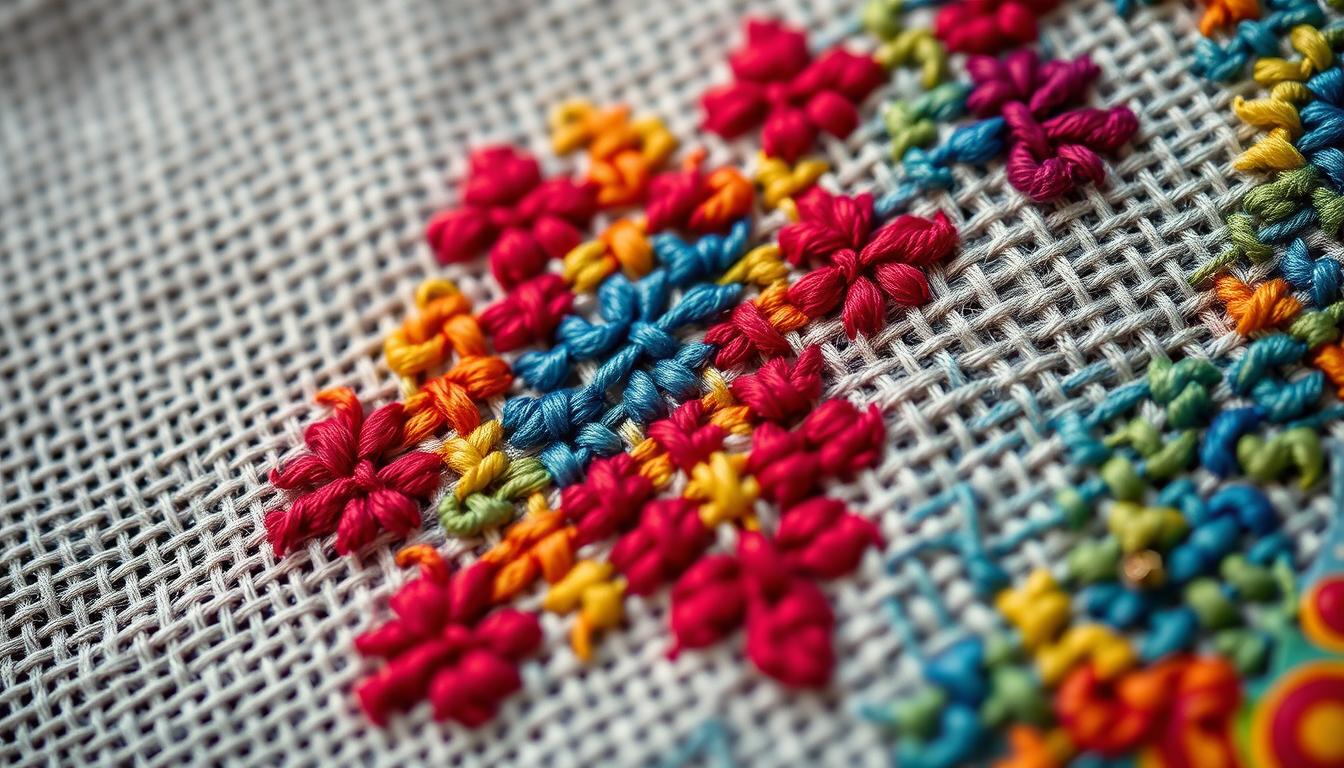
You want clear answers before starting a new needle project. This intro lays out what machine-made embroidery can and cannot do, and how that compares to handwork on aida fabric.
Count matters: aida fabric’s “count” tells you how many tiny squares per inch. A 14-count is ideal if you are learning and want visible holes and easy tension control.
A basic toolkit helps your judgment. Six-strand floss, a blunt needle with an elongated eye, a hoop, sharp scissors, and a transfer tool make neat, consistent stitches and reveal where a machine may fall short.
Machine work can speed simple motifs and offer consistency. But for textured depth, exact angle of the cross, and heirloom detail, hand technique still leads. This section prepares you to weigh speed, pattern fidelity, and the final look for your next craft project.
Key Takeaways
- Machine embroidery suits fast, simple motifs; hand work gives more texture and control.
- Aida count affects stitch size—14-count is beginner-friendly.
- Keep a basic toolkit on hand to compare machine results to hand tension and finish.
- Modern kits and downloadable patterns make setup easier for both methods.
- Decide by project goals: quick decor or heirloom-quality work.
Machine-Made vs Hand-Stitched: What You Can Actually Get Today
Machine programs often aim for speed and uniformity, not the precise grid alignment of hand pieces. You’ll notice machines use satin, fill, or running methods to create motifs that read like tiny Xs from a distance. Up close, they lack the true counted X formed over aida intersections.
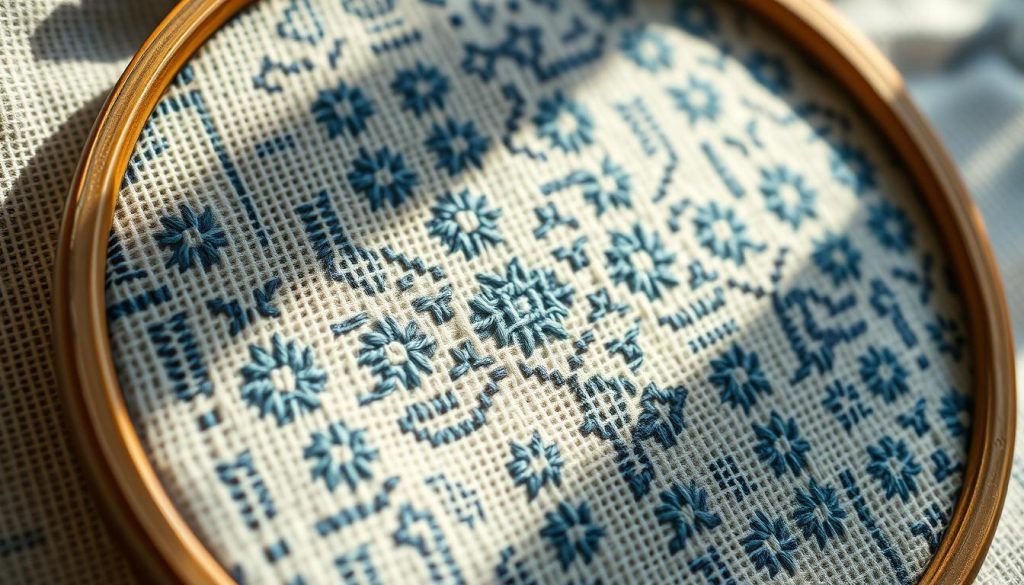
How machine work differs from traditional hand stitching
Hand work uses a grid on aida fabric, a blunt needle, and six-strand floss to lock angles and tension. That gives consistent texture and crisp crosses you can count.
Machines follow digitized paths. They excel at repeating a motif fast, which is perfect for bulk projects, apparel, or quick decor found in weekend pattern sales.
What machines can replicate and where they fall short
At a glance, simple icons and low-density designs can pass for counted work. But complex cross stitch patterns, fine shading, and backstitch detail often flatten when converted to machine formats.
Retailers offer stamped kits and downloadable patterns for hand stitching, plus stitchable blanks if you want a quicker route without full counting. Use machines for repeatable, bold shapes and keep hand methods for precise names, dates, and heirloom pieces.
CROSS STITCH by Machine or by Hand: Pros, Cons, and Real-World Results
Choosing a method means weighing fast, repeatable results against tactile depth and control.
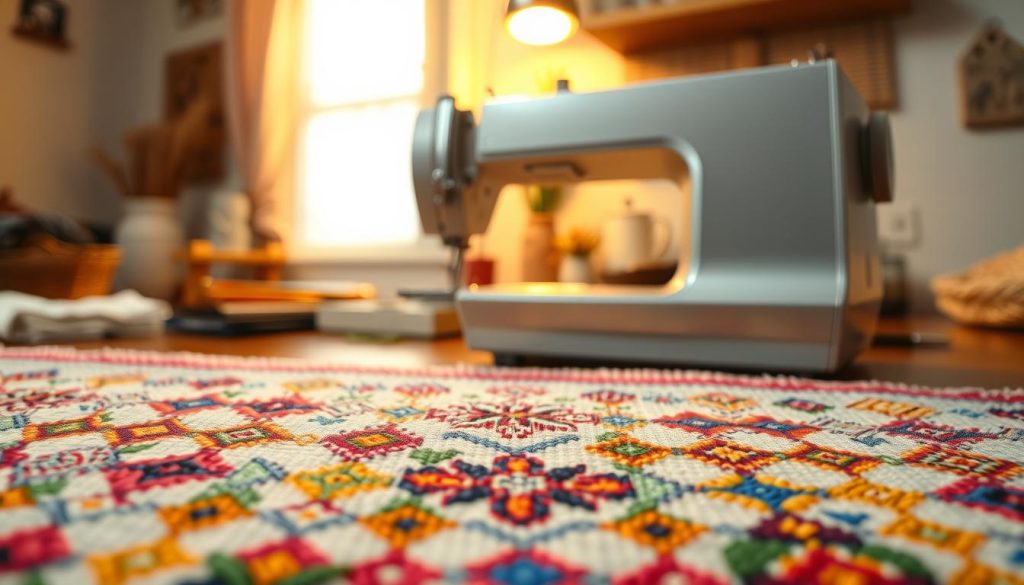
Pros of machine-made looks
Speed and consistency help when you need many identical pieces for events or small-business orders.
Machines reproduce logos and simple motifs with uniform spacing. They save time on bulk runs and lower per-item cost.
Pros of hand work
Texture and control are the big wins for hand pieces. You guide each stitch, thread placement, and tension on your chosen fabric.
Hand methods give subtle light play and heirloom quality that many kits and mass embroidery cannot match.
Cons of machine approaches
Automated embroidery often uses fills that mimic crosses from afar. Up close, the angle and lay of thread differ from hand-formed Xs.
Complex shading, fractional stitches, and fine backstitch details can be hard to reproduce without digitizing compromises.
Cons of hand work
Hand stitching takes time and practice. Beginners do better on 14-count aida and with a toolkit: six-strand floss, a blunt needle, hoop, scissors, and transfer tools.
Finish steps like washing, blocking, and framing also add hours but improve final value.
| Feature | Machine | Hand |
|---|---|---|
| Speed | High for repeats | Slow, deliberate |
| Texture | Flat fills | Tactile depth |
| Best use | Bulk decor, logos | Heirlooms, detailed projects |
| Setup needs | Digitizing, stabilizer | Kits, charts, community help |
When to Choose Machine-Like Results and When to Hand Stitch Your Project
Your project’s design, timeline, and budget tell you whether to aim for machine speed or hand detail. Use a quick checklist to decide before you buy materials or book digitizing time.
A quick decision checklist: pattern complexity, fabric count, deadline, and budget
Pattern complexity: If the design has tight shading, fractional work, or fine backstitch, choose hand cross stitch for accurate count and texture. For bold motifs and logos, a machine-like finish often looks fine.
Fabric and count: Higher count fabric needs more precision and time by hand. If you’re short on hours, pick moderate count or simplify the pattern to suit machine-friendly fills.
- Deadline: For multiple fast pieces, stamped kits or machine output and stitch kits win.
- Budget: Machines may add digitizing and stabilizer costs; cross stitch kits bundle fabric, floss, needle, and charts for predictable spend.
- Skill level: Beginners do best on 14-count aida and with downloadable patterns or stamped guides to reduce counting.
Tools and finishing: A good hoop, blunt needle, and quality floss are non-negotiable. Plan for washing and framing for hand pieces; machine items often need less finishing time.
Final tip: Use sale events to stock up on supplies and patterns, and pick cross stitch kits when you want a streamlined, reliable route to a satisfying result.
What We Offer to Support Your Stitching Path: Kits, Patterns, and Supplies
Build your next piece with ready-made kits, downloadable charts, and tools chosen for clear results. You’ll find options for every skill level, from beginner bundles to advanced samplers that include fabric, needle, floss, and clear charts.
Ready kits and downloadable patterns
Choose convenience. Cross stitch kits and stitch kits arrive with everything you need so you can start quickly. Downloadable cross stitch patterns and stamped kits give instant access when you prefer digital charts or guided placement.
Supplies and tools that matter
Stock essentials: six-strand thread and quality floss, proper count fabric, blunt needles, hoops, beads, and finishing tools. These items make a big difference in tension, color blending, and final presentation.
Sales, trends, and learning support
Look for Quick & Easy pattern sale weekends and clearance items to stretch your budget. Browse trending seasonal patterns — holiday collections, Santas, Nutcrackers, and Halloween themes — or tap the 1000 patterns program for free downloads.
- Gift cards and curated bundles make ideal presents.
- Customer feedback notes clear charts and generous thread in many kits.
- Use the Craft Studio tutorials and community groups if you need step-by-step help.
Shop smart: add kits, supplies, and sale items to one cart so you’re ready to stitch the moment your package arrives.
Conclusion
, Pick the approach that matches your timeline, budget, and the look you want on your fabric.
Quick recap: machine embroidery can mimic cross stitch motifs at speed, but true counted cross stitch still shines by hand for precise Xs and texture. For beginners, start on 14-count aida with a blunt needle, six-strand floss, a hoop, and clear patterns.
Practical tips: use kits or downloadable patterns, watch for weekend sale events to stock thread and supplies, and combine methods—machine accents plus hand detail—when a project needs both speed and depth.
Shop trusted retailers, follow tutorials, and join communities so your stitching looks great on both sides of the fabric.
 English