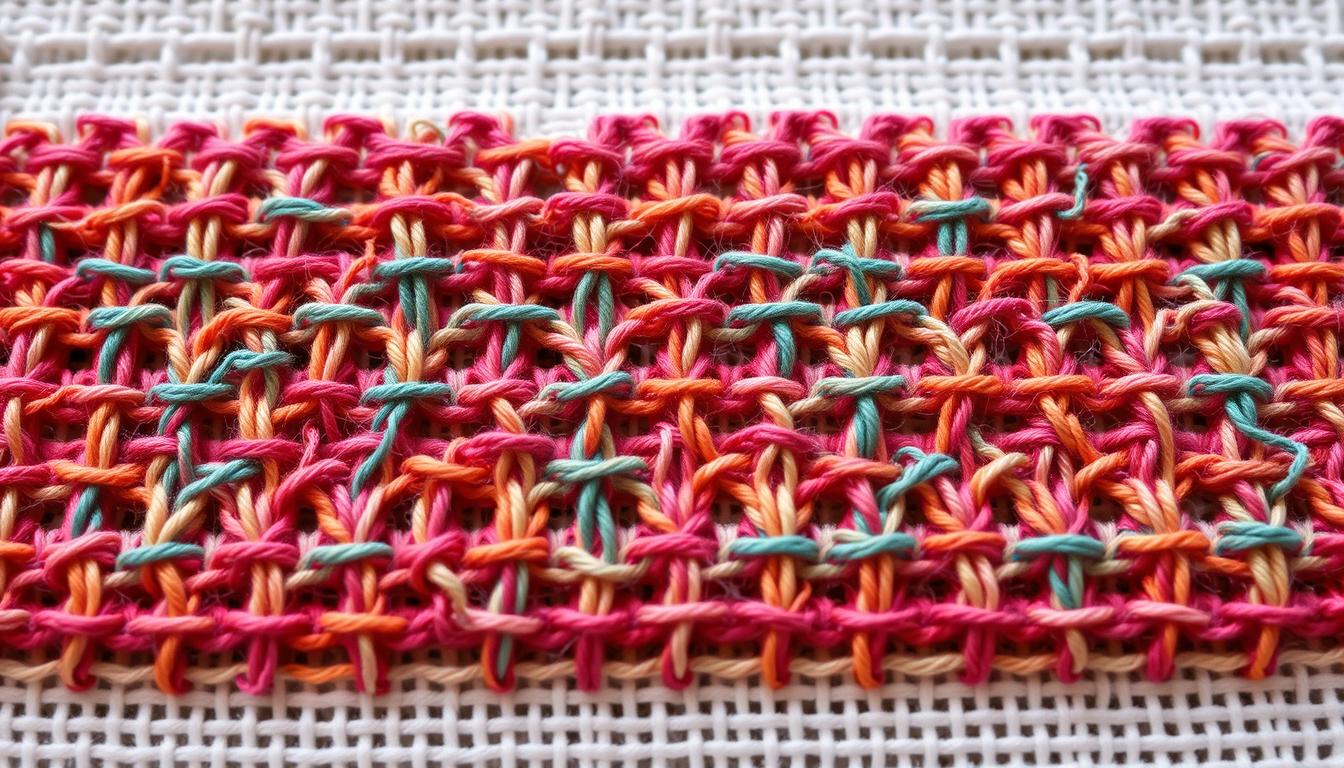
You can try using yarn on traditional aida fabric, but you should match yarn thickness to a lower-count aida so each cross lies flat and fills the square without bunching.
Beginner-friendly advice: start on 14-count aida so the grid is easy to see and your tension stays even when you use thicker thread. Essential tools include six-strand embroidery floss or yarn alternatives, an elongated-eye needle, a hoop, sharp scissors, and marking tools.
Yarn gives a chunkier, tactile finish and works best with bolder patterns and fewer color changes. You can buy kits that bundle fabric, chart, needle, and thread so you can test yarn versus floss. Also watch for a sale to stock up on patterns and fabric and practice both approaches.
Key Takeaways
- Match yarn thickness to lower-count aida for flat, full crosses.
- Start on 14-count aida to learn tension and control.
- Yarn gives bold coverage; floss lets you fine-tune detail.
- Begin with simple patterns or beginner kits to compare results.
- Keep even tension and neat starts/ends whether you use yarn or floss.
- Shop during a sale to build supplies and practice more projects.
CROSS STITCH With Yarn vs Floss: What You Need to Know
Swapping floss for yarn changes how your work covers aida and how your tools behave. You’ll need to match fiber thickness to fabric count, choose a sturdier needle, and adjust tension so each cross lies flat. Below are clear points to help you decide.
Yarn or Floss: How Fiber Size Affects Aida Count and Coverage
Fiber diameter dictates coverage. Thicker yarn fills holes more fully, so most makers use 11–14 count aida to avoid crowding and raised crosses.
If you want fine shading or fractional work, keep using stranded embroidery floss so you can vary strands on higher-count fabric.
Needle Choice: Blunt Needles With Larger Eyes for Yarn
Use a tapestry-style blunt needle with an elongated eye for yarn. It slides through the weave without splitting fibers and accepts bulkier thread cleanly.
Standard practice for floss remains a blunt cross stitch needle sized to the fabric and floss amount.
Fabric Fit: Matching Yarn to Lower-Count Aida and Stitchable Items
Balance fabric count and yarn thickness: drop to a lower-count aida as yarn gets thicker to keep tension even and the cross smooth.
Test a small swatch from a cross stitch kit or stitch kits before committing. Use a hoop, keep your backs tidy, and consult dmc or other brand tutorials for chart reading and finishing tips.
- Quick tip: Try a small kit on sale to compare yarn vs embroidery floss without overspending.
Shop the Right Supplies: Kits, Threads, Fabric, and Tools for Yarn-Friendly Stitching
Picking the right kit and tools makes testing yarn on aida simple and stress-free. Start with supplies that remove guesswork so you can focus on technique and look.
All-in-One Kits for First Trials
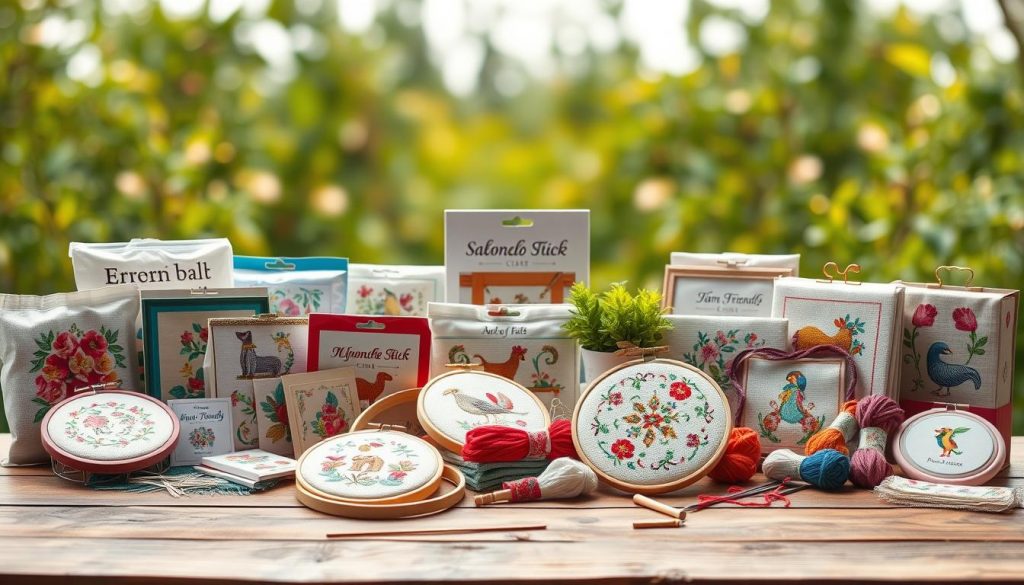
Cross stitch kits and stitch kits bundle fabric, chart, and a blunt needle. Choose beginner-friendly kits with larger motifs and fewer color changes when testing yarn.
Threads, Yarn, and Alternatives
Compare DMC six-strand floss to soft lightweight yarn. Floss lets you vary strand count; yarn adds plush texture for bold patterns.
Essential Tools and What’s on Sale
Prioritize fabric sized to your pattern, a tapestry needle with an elongated eye, hoops, and sharp scissors. Look for “Quick & Easy Pattern Sale” weekends to try small projects affordably.
- Buy kits for a complete start.
- Pick 11–14 count fabric for yarn trials.
- Check reviews for generous thread and clear charts.
| Item | Best For | Notes |
|---|---|---|
| Beginner kit | Learning yarn coverage | Includes fabric, chart, needle |
| DMC floss | Fine shading | Adjust strands for coverage |
| Lightweight yarn | Textured motifs | Use on lower-count fabric |
| Hoop & needle | Tension control | Elongated-eye tapestry needle recommended |
Techniques to Keep Stitches Neat When You Use Yarn
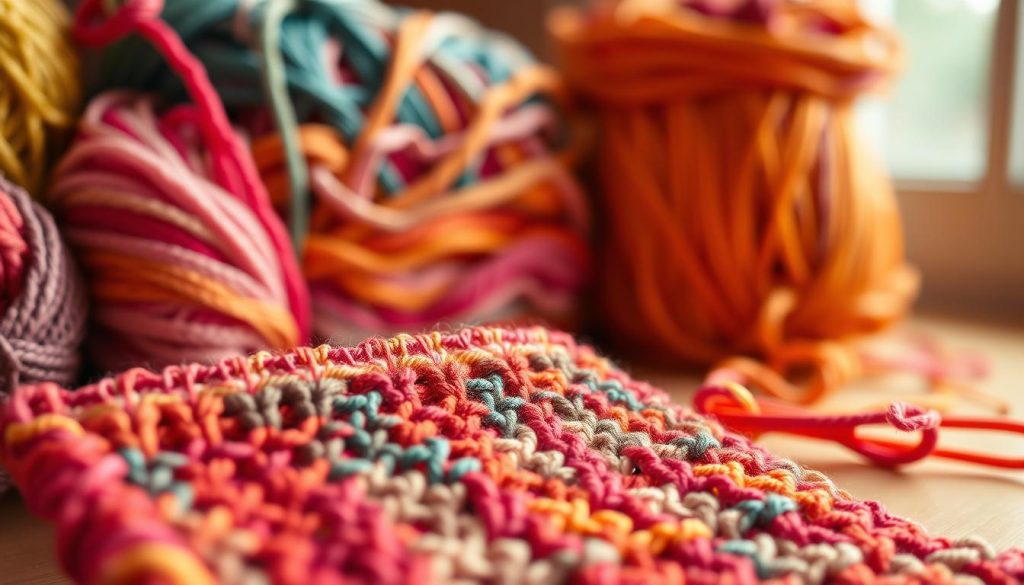
When you switch to yarn, neat starts and steady tension keep motifs crisp on lower-count fabric.
Start, Tension, and Backstitch Outlines
Anchor cleanly. Begin with a waste knot or loop method if your yarn allows. Keep tails short so bulky ends do not lump under adjacent crosses.
Keep tension even. Lightly snug each stitch without squeezing the fabric. A hoop holds the weave taut on 14-count and lower so each cross lies flat.
Let the needle and thread hang briefly to reduce twist. Yarn gains torque faster than embroidery floss, which can warp stitch uniformity if you don’t pause.
Use backstitch selectively to sharpen edges. For outlines on lower-count fabric, try a single strand of embroidery floss or a finer yarn to define shapes without crowding.
“Start neat, keep tension steady, and finish tidy — small habits make textured work look professional.”
Finishing and Care
Keep the back tidy by avoiding long carries. Secure thread often to limit bulk and make framing easier.
Trim ends with sharp scissors and block gently to square the piece. Wash only if colorfast; hand-wash in cool water and air-dry flat.
For display, stretch into hoops or use a shadowbox frame to protect raised texture. Lean on dmc tutorials and stitch kits for clear diagrams and video help while you adapt techniques for yarn.
| Technique | Why It Helps | Tool |
|---|---|---|
| Clean anchor | Prevents lumps under crosses | Waste knot / loop method |
| Even tension | Makes crosses sit flat | Hoops |
| Reduce twist | Improves uniformity | Pause and let thread dangle |
| Selective backstitch | Sharpens shapes | Single strand floss or fine yarn |
| Care & display | Preserves texture and color | Scissors, blocking board, frame |
Conclusion
Final tips to help you test yarn on lower-count fabric with confidence.
Start on a 14-count aida with a blunt needle, a hoop, and sharp scissors. Try a small project from a cross stitch kits or stitch kits bundle so you can compare yarn and floss without guesswork.
Pick bold motifs and seasonal patterns that suit a textured look. Shop retailer categories for fabric, threads, needles, hoops, and watch for a sale to save on supplies.
Yes—you can use yarn. Test on a small swatch, keep tension steady, and enjoy the plush results of textured embroidery.
 English