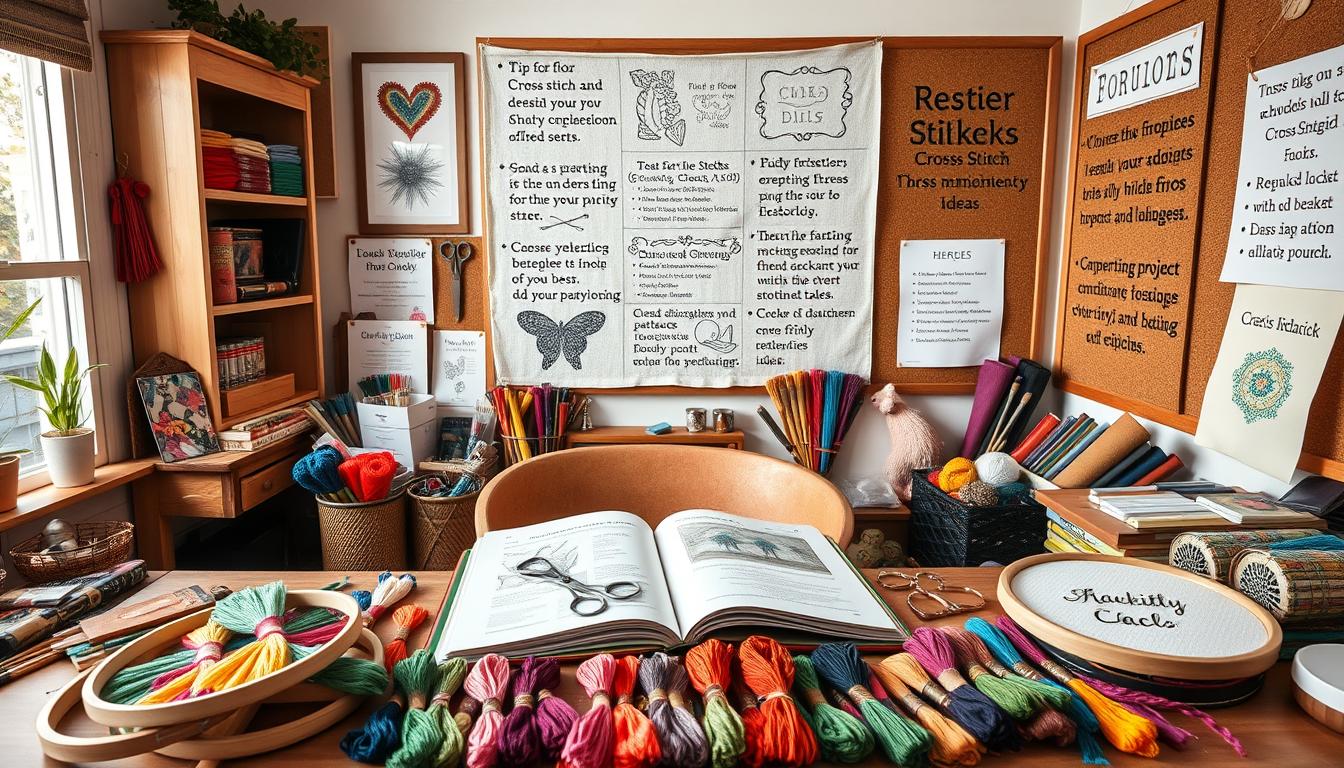
You’ve likely tried a kit that was almost perfect but left you short on thread or puzzled by the pattern symbols. This introduction gathers practical, buyer-focused tips you could use to shop smarter and start each project with confidence.
You’ll read proven hacks that sped setup, cut mistakes, and stretched your budget across kits and patterns without sacrificing finish quality.
Customer feedback showed that clear patterns, extra thread in kits, and a friendly support group made stitching more relaxing and beginner-friendly.
By the end, you will know when to buy a kit or a single pattern, how to match fabric and needle choices, and which shop filters and supplies details matter for a cleaner, quicker result.
Key Takeaways
- Look for kits with extra thread and clear pattern keys to avoid mid-project stops.
- Match fabric count and needle size to your pattern for neater crosses and faster progress.
- Use shop filters—format, designer, cloth count—to find the right pattern quickly.
- Organize floss and tools before you start to keep stitching sessions tidy and productive.
- Plan purchases around sales to build a versatile stash for ornaments and larger projects.
Why smart CROSS STITCH hacks matter for your projects and your budget
A few practical choices before you start can cut costs, reduce rework, and make every project more enjoyable.
You protect your budget when you pick kits with clear pattern charts and extra thread. Those details stop emergency runs to the shop and prevent stalled projects.
You also minimize rework by matching pattern complexity to your available time. Choosing beginner-friendly designs during busy weeks keeps progress steady and boosts satisfaction.
- Save on supplies: standardize thread brands and organize leftovers to avoid buying duplicates.
- Reduce waste: pick the right cloth count for your eyesight to prevent restarts and overcuts.
- Cut delays: opt for downloadable patterns when instant access will keep a project moving.
Plan finishes—ornaments, cards, or flatfolds—so small scraps work harder and patterns stretch farther. Simple parking and labeling systems keep you on track in denser designs.
Timing purchases around sales at major U.S. retailers lets you stock essentials without paying full price. These small hacks kept many stitchers finishing more, while spending less.
Shop smarter: choosing cross stitch kits and patterns that make stitching easier
A few simple selection rules will help you buy kits and patterns you actually complete.
Beginner-friendly cross stitch kits with clear patterns and extra thread
Pick kits that list fabric count, needle size, and included notions. Look for clear pattern charts and pre-sorted floss. Customer reviews praising extra thread mean fewer mid-project stops and less stress.
How to pick cross stitch patterns you’ll actually finish
Check finish size, color count, and confetti density. Choose small or monochrome designs for busy weeks and larger, colorful patterns for slower seasons. Prefer large-symbol charts or multi-page PDFs to reduce eye strain.
Stamped kits and stitchables for quick wins and giftable items
Stamped kits and stitchables cut counting time and make fast, gift-ready results. They are ideal when you need a last-minute present or a quick morale boost.
Downloadable patterns vs. paper: when instant access saves your project
Choose downloadable patterns when shipping delays would stall progress. Use shop filters—Paper or PDF, Pattern Type, Cloth Count, Designer, and Stock Status—to narrow choices fast.
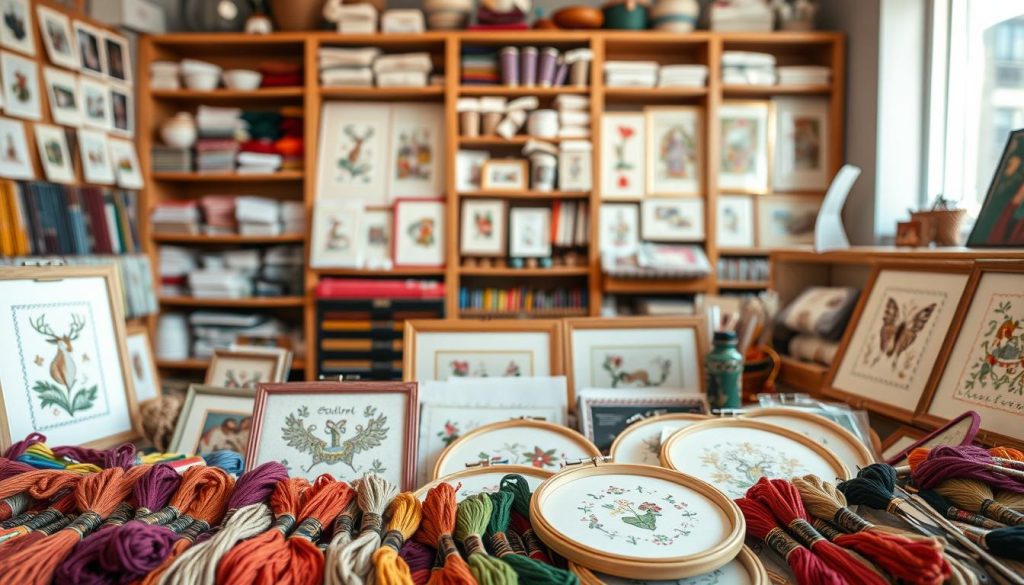
| Item | Best for | What to check |
|---|---|---|
| Beginner kits | First projects | Extra thread, clear chart, pre-sorted floss |
| Stamped kits | Fast finishes/gifts | Pre-printed fabric, simple color palette |
| Downloadable patterns | Instant start | High-contrast charts, multi-page PDFs |
Supplies that change everything: floss, fabric, needles, hoops, and more
Small supply choices often make the biggest difference in speed and final quality. Pick a few reliable items and you’ll avoid common stops and rework.
Thread and floss hacks for organization, color consistency, and leftovers
Organize floss and thread by color number and keep each project in its own bag. Label bobbins and tuck partial lengths into a parking card so ORTs stay useful.
Standardize on two or three trusted brands to keep conversions predictable across patterns and designers.
Fabric and cloth count: choosing the right fabric for your design
Match fabric count to the design: lower counts for relaxed work, higher counts for fine detail. Use filters like Cloth Count when buying to find exact matches fast.
Test edges with a zigzag stitch or fray check before you mount to cut time spent fixing unraveling.
Needles, hoops, and notions that boost comfort and speed
Pair needle size to fabric to reduce snagging and hand fatigue. Keep a small notions kit—sharp scissors, a needle minder, and extra needle sizes—for quick swaps.
Review the pattern requirements before checkout so you have the right hoop or frame and avoid duplicate purchases.
CROSS STITCH
Simple items from around your home often work just as well as specialty gadgets.
Unconventional tools that save money
You can use binder clips as fabric clamps and washi tape to mark a temporary grid. These swaps speed setup and cut costs.
Magnets or enamel pins make reliable needle minders. A lint roller or painter’s tape picks up loose ORTs and fuzz without tugging threads.
Creative ORT and scrap ideas
Turn short leftovers into confetti for shaker cards or fill clear baubles for seasonal ornaments.
Braid longer scraps into tassels for bookmarks and fobs. Keep cosmetic cases as portable project bags to protect small hoops and floss.
- Everyday solution: parchment plus a warm iron flattens edges before framing.
- Lighting: a daylight LED lamp plus a magnifier improves work on higher counts.
| Household item | Use | Why it helps |
|---|---|---|
| Binder clips | Fabric clamp | Cheap, adjustable pressure |
| Washi tape | Temporary grid | Low residue, removable |
| Magnets/pins | Needle minder | Secure between breaks |
| Small jar | ORT display | Colorful, sentimental keepsake |
Save while you stitch: sales, clearance, and trending cross stitch designs
Smart timing on promotions helps you score festive patterns and kits without breaking the bank.
Watch the shop’s trending list for holiday hits like Just CrossStitch Christmas 2025, the 2025 Nutcracker, and recurring Schooler Santa releases.
Use dedicated pages—Kits on Sale and Patterns on Sale—to stock ornaments, samplers, and seasonal designs at lower prices.
What’s trending now (holiday and seasonal picks)
- Pick festive kits such as Happy Holiday Gnomes and Winter Sled for gift-ready finishes.
- Add autumn favorites—Pumpkin Window and Quaker Pumpkin—to your autumn queue.
- Track designer series to plan themed gifts and coordinated displays across multiple patterns.
Quick & easy pattern sale hacks: build momentum with fast finishes
Time purchases around weekend promos like the Quick & Easy Pattern Sale to collect small projects that finish fast.
Compare kit vs. pattern pricing: if you have needles, fabric, and leftover threads, buy the pattern and use your stash to stretch the value.
- Use clearance pages to grab past-year Schooler Santa patterns and discounted stitch kits.
- Sort by Downloadable Patterns during a sale to start immediately and avoid shipping delays.
- Consider gift cards to lock in sale pricing for future buys without picking a specific pattern.
Build your stitcher’s toolkit: essential supplies to add to cart
Build a compact toolkit now so you can start projects the same day an idea strikes. A focused cart saves time and helps you enjoy stitching without hunting for basics.
Beginner must-haves, thoughtful gifts, and home-friendly projects
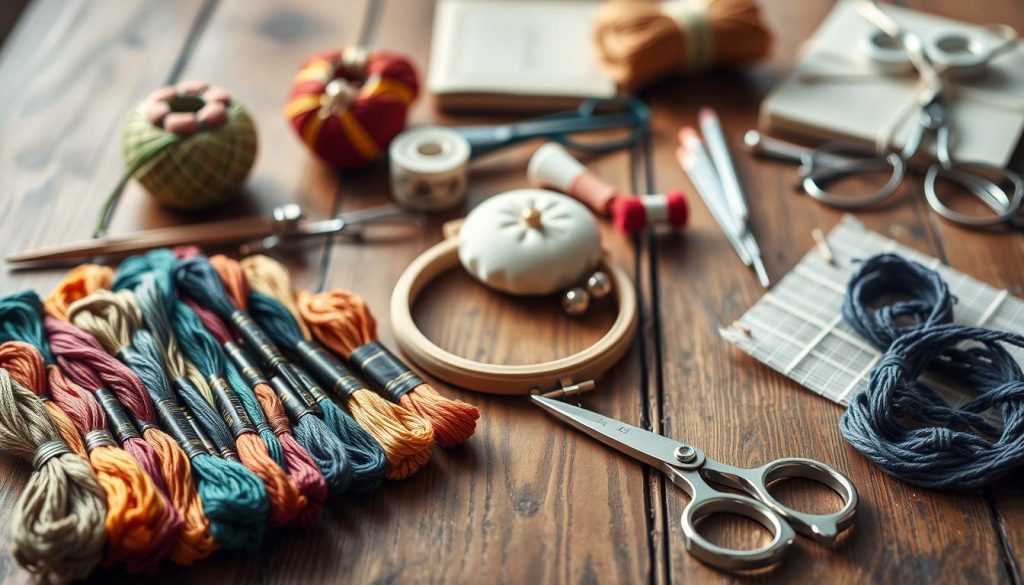
Start with a quality needle set in multiple sizes, an 8–10 inch hoop or Q-snap, sharp snips, and a simple needle minder. Add neutral thread and floss basics so you can begin a pattern right away.
Pick two to three cross stitch kits aimed at beginners to practice full crosses, backstitch, and simple finishes. Include small stitch kits or stitch patterns that finish into cards, bookmarks, or ornaments—easy gifts that build confidence.
Choose fabric cuts in 14, 16, or 18 Aida or 28/32 evenweave and expand your needle assortment to match those counts. Use shop filters for Cloth Count and Product Type to find compatible items fast.
- Starter list: needle set, hoop or Q-snap, snips, thread/floss, beginner kits, fabric cuts, lamp or lap frame, finishing supplies.
Join the community: get support, inspiration, and real-time advice
Tap into an active online circle to get instant help with counting, color matches, and finishing ideas.
Community groups—especially friendly Facebook pages—gave many beginners quick, usable answers about fabric count and needle size. Posting a photo often led to a step-by-step fix within hours.
Designer series and recurring magazines hosted stitch-alongs that kept people on track. Shared deadlines turned large projects into daily goals and made finishing more likely.
- Get real-time tips on counting errors and thread tangles by sharing progress photos.
- Join de-stash swaps to try new kits and patterns without big expense.
- Adopt popular organization systems you see in posts—floss cards and WIP trackers speed work.
- Follow live tutorials and finish clinics to learn ornament, flatfold, and framing techniques.
- Take part in themed challenges to break big projects into small daily stitch milestones.
Celebrate wins—first French knot or first linen finish—and the group will help you pick your next project and reliable retailers. Community support made stitching more fun and productive.
Conclusion
, When you pair the right tools with timely sales, your projects moved from wishlist to wall-ready.
Quick wins came from buying clear kits with extra thread, choosing downloadable patterns for urgent work, and using clearance and sale pages to stock small, fast items that finish into cards or gifts.
Turn ORTs into ornaments or shaker cards, keep a compact toolkit for comfort, and pick trending designs to match holiday calendars.
Stay connected to a helpful community for fast fixes and shop smart so each cross stitch effort is cheaper, neater, and more satisfying.
 English