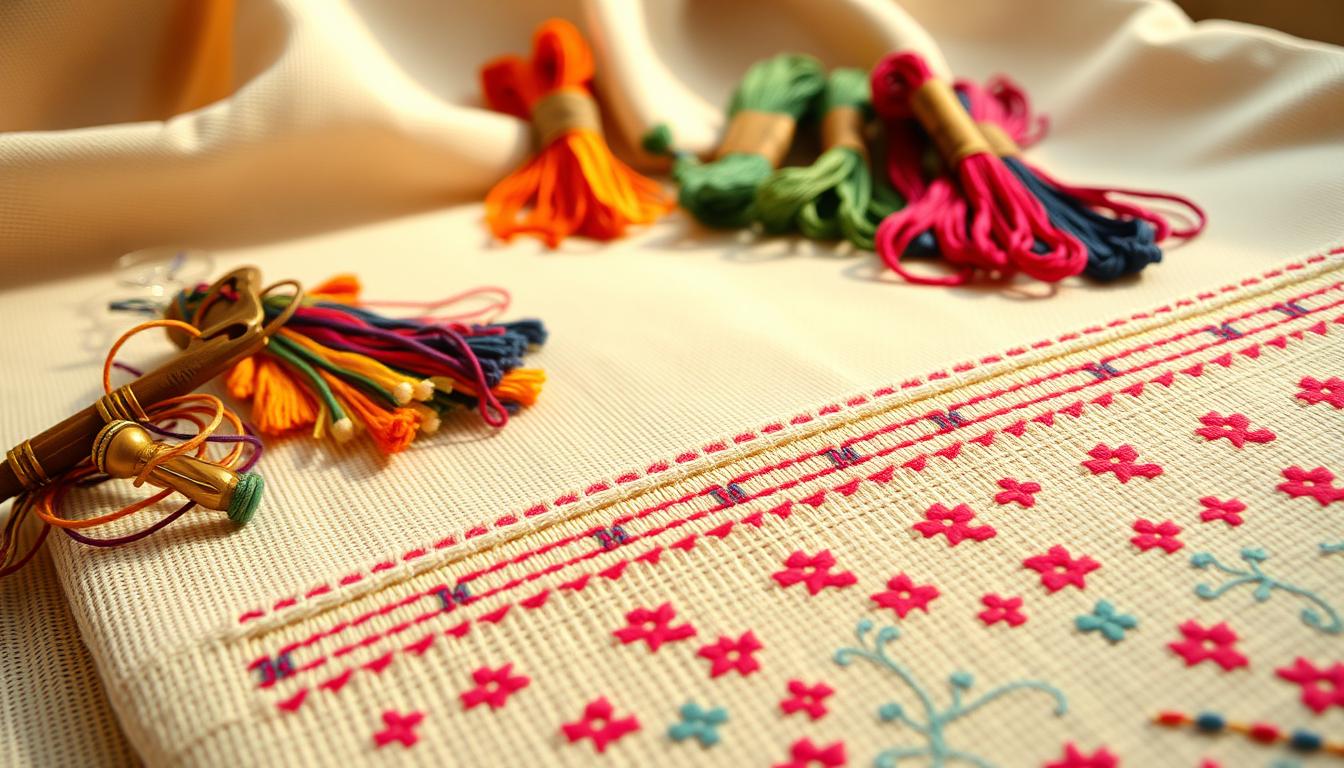
Deciding between cross stitch and tapestry can feel big when you’re just starting. This short guide helps you pick the craft that fits your time and goals today.
Cross stitch is a counted form of embroidery that builds pictures with X-shaped stitches on a visible grid, usually on aida cloth. You’ll meet cotton floss brands like DMC and Anchor and learn how strands control coverage and simple backstitch details.
Tapestry uses thicker wool on canvas for a denser, painterly look. Patterns for counted work come as charts, while stamped options print designs on fabric to make counting easier for first projects.
You’ll also learn why fabric count matters—how 28-count over two threads equals 14-count size—and see small sampler or weekend projects that give quick wins. Local shops and Flosstube communities can help as you start stitching your first design.
Key Takeaways
- Cross stitch uses a visible grid and counted charts, making it beginner-friendly.
- Tapestry gives a fuller texture with thicker yarn and canvas.
- Thread choice (DMC, Anchor) and strand count affect coverage and look.
- Fabric count (aida, evenweave, linen) determines finished size.
- Small samplers and weekend projects build skills and confidence quickly.
- Communities and local shops offer classes, patterns, and support.
Choosing Your First Stitching Craft: How to Decide Today
Think about motion: do you prefer small repeated moves or filling broad areas? That choice often guides whether a counted-thread approach or canvaswork fits your taste and schedule.
What you’ll enjoy about each
Counted-thread vs. canvaswork: what feels good to you
Counted-thread uses gridded charts and aida or evenweave fabrics. You follow squares, use cotton floss, and see steady pixel-like progress. That makes patterns and quick projects easy to pick up.
Canvaswork fills canvas with tent-like stitches and thicker yarn. It gives dense coverage and a textured finish that works well for pillows or wall decor.
Beginner-friendly factors
- Motion: charted squares versus filling canvas—try both to find your natural way.
- Supplies: floss, needle, hoop and fabric for counted work; yarn and canvas for canvaswork.
- Learning curve: visible grids cut counting errors; canvaswork is forgiving on tension but less detailed for fine color shading.
- Time & finishes: small cross patterns make fast ornaments; canvas pieces often take longer but finish as sturdy household decor.
| Factor | Counted-thread | Canvaswork |
|---|---|---|
| Motion | Square-by-square chart following | Tent-like fill for broad areas |
| Supplies | Cotton floss, needles, hoops, aida | Wool/yarn, canvas, larger needles |
| Time per project | Quick small projects available | Denser coverage can take longer |
| Finish options | Frames, ornaments, samplers | Pillows, wall art, useful decor |
CROSS STITCH for Beginners: What It Is, How It Works, and Why It’s Different
You build images one square at a time, so progress is easy to see and satisfyingly steady.
Counted vs. stamped patterns
Counted charts or stamped fabric
Counted patterns give you a grid chart that maps each X and the direction of every cross worked. You follow symbols and place each stitch in the right square.
Stamped patterns print the design on the fabric so you simply stitch over the marks. Stamped options speed learning but limit fine placement choices.
Fabric basics
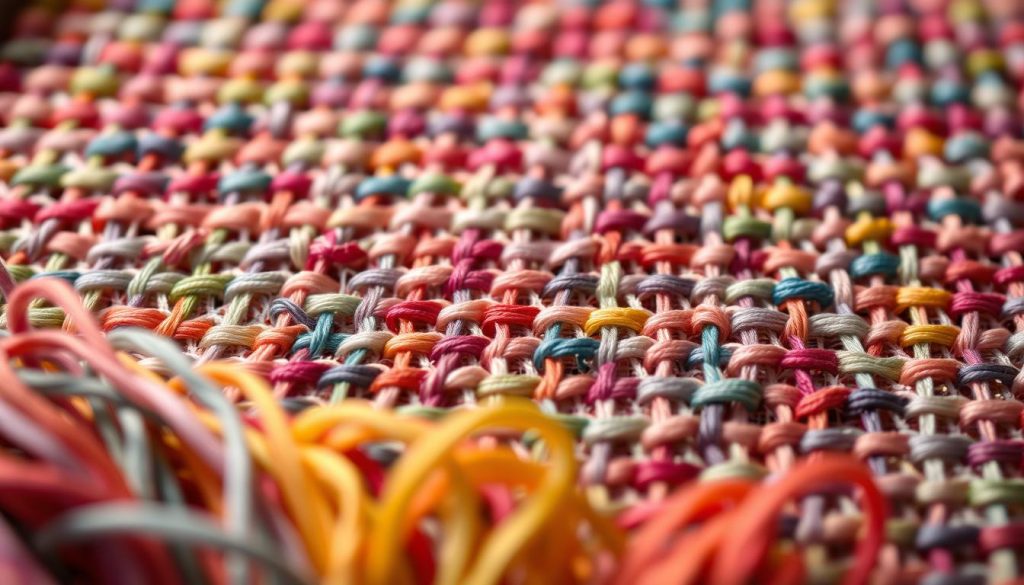
Aida is beginner friendly because its squares are visible. Evenweave fabric and linen let you stitch over equal threads for finer detail.
Fabric count runs roughly 11–40. For example, 28‑count over two threads equals 14‑count aida over one square, so sizing is easy to plan.
Floss, needles, and key stitches
Cotton floss is six-stranded and separable. Try “1 over 1” for tiny detail and “2 over 2” for full coverage.
Learn full crosses, half and quarter crosses for curves, and backstitch for crisp outlines. Thread your needle so coverage matches the chart.
Related history and techniques
Shaded designs grew from berlin wool work in the 19th century and still influence modern embroidery. The montenegrin stitch offers a reversible, historic option you can try later.
| Topic | Why it matters | Beginner tip |
|---|---|---|
| Pattern type | Charts teach counting; stamped shows placement | Start with a small counted chart |
| Fabric | Affects detail and finished size | Use 14‑count aida to learn tension |
| Floss & needle | Controls texture and coverage | Separate strands and test “1 over 1” |
| Historical styles | Inspire shading and structure | Read a book or sampler for ideas |
Why Cross Stitch Often Beats Tapestry for Your First Project
For a quick win, many beginners find counted embroidery gives faster visible progress than canvaswork.
The main advantage is clarity. Counted cross stitch uses gridded charts that map directly to aida’s visible holes and square system. That alignment reduces counting mistakes and saves you time on fixes.
Color changes are easier here. Switching floss shades is quick, so you can follow complex designs without wrestling thick yarn or compensating for heavy fills.
- You use a simple method: full crosses for coverage, backstitch for outlines, and a few fractional stitches for detail.
- Tools are minimal—fabric, floss, hoop, and needle—so you spend more time stitching and less time prepping gear.
- Patterns labeled “quick & easy” and active communities share tips to shorten your learning curve and speed early finishes.
Bottom line: If you want a clear, reliable way to learn embroidery and see results fast, this approach is a strong first choice.
How to Start Cross Stitching Now: A Step‑by‑Step Weekend Method
Choose a compact pattern that you can finish over a single weekend to build confidence fast.
Set up your first sampler: pick a small pattern with a limited palette, then choose fabric—14‑count aida or 28‑count evenweave worked 2 over 2 will finish the same size. Separate cotton floss into strands, cut short lengths, and thread your needle for even tension.
Mark the fabric center and begin from the chart midpoint. Work in a consistent direction so the top legs of your crosses align for a tidy look.
Size, time, and method
Estimate time by dividing total stitches by available hours. Pick “Quick & Easy” or new patterns tagged for weekend projects to keep goals realistic.
Smart shopping and support
- Buy a beginner kit with pre-cut fabric, floss cards, hoop, and needles.
- Consider small supplies like buttons and a needle minder for finishing.
- Join Flosstube or stitch‑alongs for live tips, pattern links, and community help.
| Choice | Why it helps | Beginner tip |
|---|---|---|
| Pattern size | Keeps project time realistic | Choose under 2,000 stitches for a weekend |
| Fabric count | Affects feel and detail | 14‑count aida or 28‑count over 2 for same finish |
| Supplies | Simplifies setup | Grab a kit with floss, hoop, and needle |
Conclusion
A clear chart and visible fabric turn beginners into confident makers in a few focused sessions.
For fast, confidence-building progress, cross stitch pairs readable charts with aida or evenweave fabric, separable cotton floss from brands like DMC and Anchor, and easy beginner kits, so you can finish small projects today.
You’ll appreciate how embroidery heritage—from Berlin wool work to modern designs—keeps techniques useful across the century. Start with tiny pieces to learn direction and tension, then expand to larger designs or wool and canvaswork later.
Use books, videos, and stitch‑alongs to grow skills one X at a time. Pick a pattern, thread your needle, and begin—your first finished piece is within reach.
 English