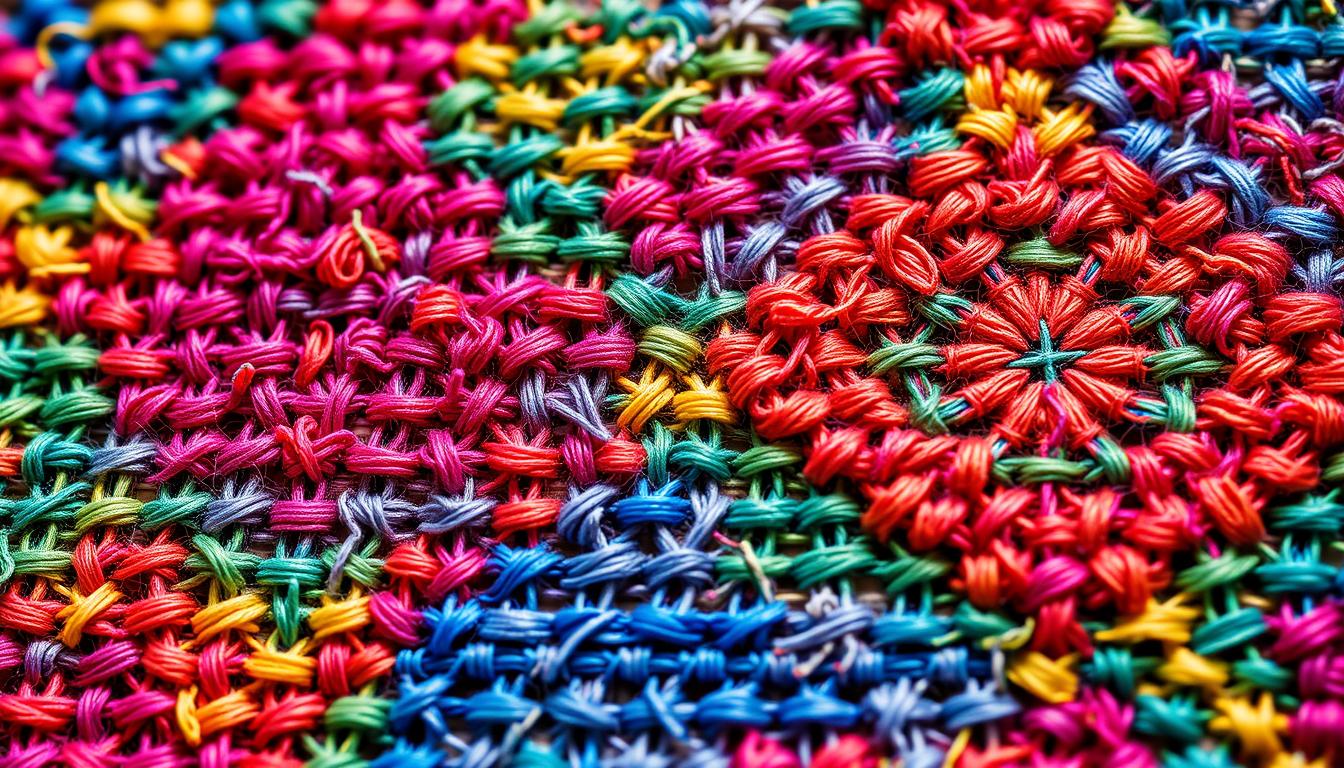
Choosing the right needlework saves you time and money. If you want clear guidance, this intro lays out the practical differences so you can pick a project that fits your skill level and goals.
Cross stitch often uses a single X-shaped stitch on aida fabric. You will work with six-strand embroidery floss and a blunt needle that slips through the aida holes instead of piercing them. Beginners usually start with 14-count aida for easier counting and crisper crosses.
Needlepoint and freeform embroidery use different canvases and techniques. Needlepoint often needs a canvas that you pierce repeatedly. Freeform embroidery relies on varied stitches and choices of fabric, so the results look more organic.
Leading brands curate kits and downloadable patterns that bundle fabric, thread, needle, and charts. Communities and Facebook groups offer fast support and praise clear, beginner-friendly designs. Weekend sales for quick patterns can help you finish small projects and build confidence.
Key Takeaways
- You’ll see why 14-count aida and a blunt needle are great starting points.
- Kits and downloadable patterns simplify supply choices and planning.
- Counted grid work gives you precise results compared to freeform methods.
- Look for brands that label difficulty and include charts and tools.
- Community groups can help you troubleshoot and celebrate progress.
- Short, weekend-friendly patterns are useful for skill building.
Embroidery, Needlepoint, and Cross Stitch: What Sets Each Apart
Each needle art uses distinct cloth, tools, and counting methods that shape the final look. This makes your choice of project a practical decision, not just an aesthetic one.
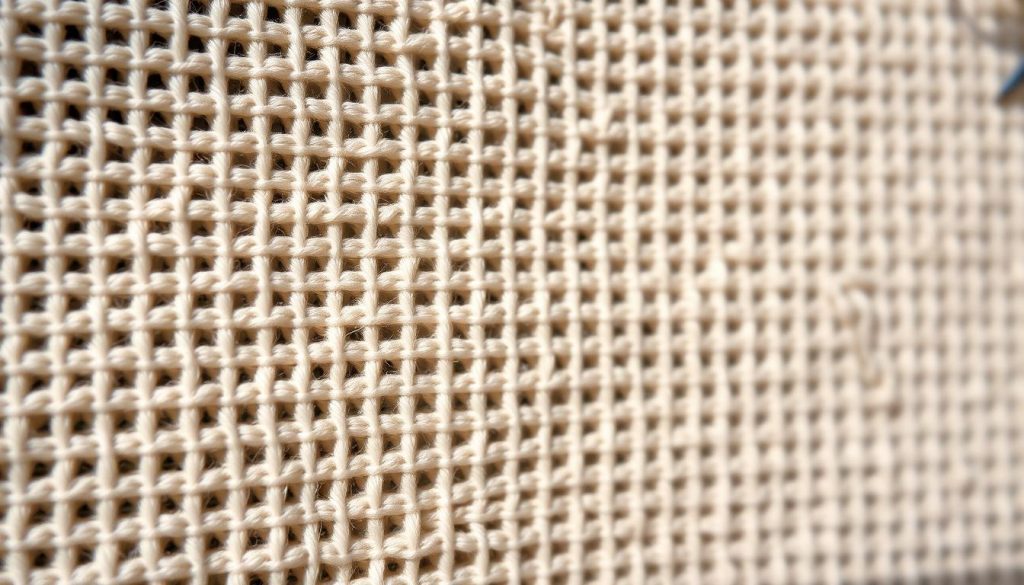
Fabric and count: aida vs evenweave, linen, and canvas
Aida gives a clear square grid and is the easiest way to learn how many holes equal an inch. A 14-count aida is beginner-friendly because each small block equals one complete unit of work.
Evenweave and linen are finer and require more counting skill for even spacing. Canvas for needlepoint uses larger holes and supports dense coverage for bold designs.
Stitches and tools: basics and when to use them
The classic X-shaped cross and the outlining backstitch use six-strand embroidery floss and a blunt, elongated-eye needle that slides through aida without tearing it.
Embroidery opens a wider vocabulary — satin, chain, and French knots — and may call for sharps or small needles. Needlepoint favors tapestry needles and sturdier threads for full canvas coverage.
“Start with a simple ‘How to Start’ lesson, then learn to read a chart and finish with a backstitch for crisp outlines.”
- Pick a counted pattern for precise, grid-based work.
- Choose evenweave or linen when you want flowing textures.
- Use canvas for dense, durable projects.
CROSS STITCH Essentials: Fabric, Floss, Needles, and Patterns
A clear fabric grid makes counting simple and keeps each tiny cross even. For beginners, a 14-count aida is the easiest choice because the holes are visible and spacing stays consistent. That visibility helps you place each stitch without squinting.
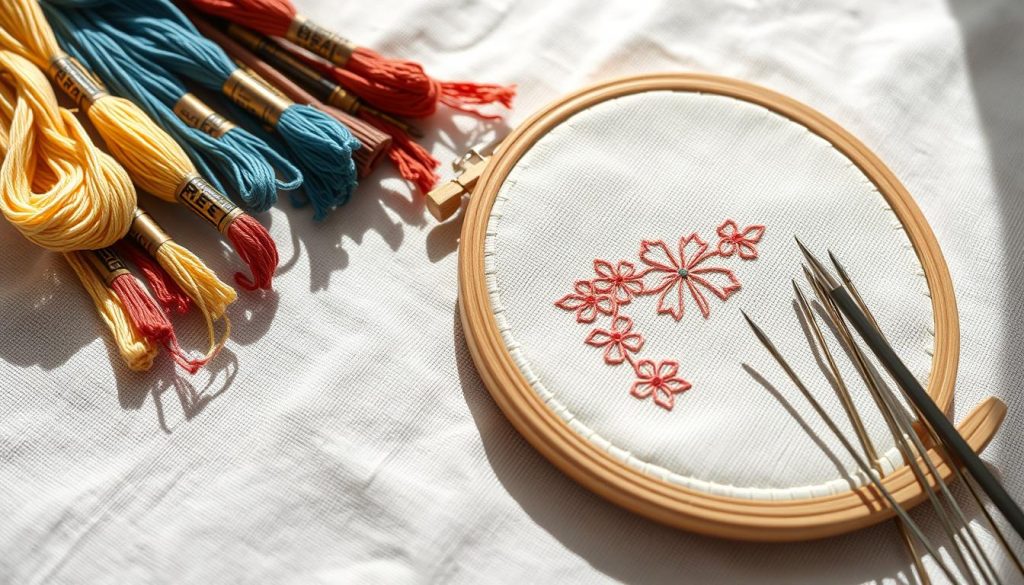
Aida count explained for beginners: why 14-count is your easy-start choice
14-count aida gives one stitch per square and a forgiving guide for new hands. You’ll spend less time recounting and more time enjoying your work.
Choosing floss and threads: six-strand embroidery floss for clean, even stitches
Use six-strand embroidery floss and separate strands as the pattern directs. Keep thread lengths short to avoid fray and twist. Consistent tension produces neat crosses and uniform coverage across your fabric.
Blunt cross stitch needles, hoops, and scissors: small tools, big difference
Pick a blunt needle with an elongated eye so multiple strands slide through easily and the aida threads stay intact. Add a hoop to keep fabric taut and sharp embroidery scissors for precise snips.
- Toolkit: six-strand floss, 14-count aida or a stitchable item, blunt needle, hoop, sharp scissors, and a washable marker.
- Store threads by color family and label with brand codes to avoid mismatches later.
- Use free pattern libraries and new releases to test styles before committing to larger projects.
Shop Cross Stitch Kits, Patterns, and Supplies
Find curated kits, fresh patterns, and core supplies that make starting a new project fast and fun.
Kits bundle fabric, thread, a blunt needle, and a clear chart so you can begin the same day. Many brands add generous floss amounts and neat packaging that reviewers praise.
Cross stitch kits and stitch kits
Choose ready-made cross stitch kits for convenience, or grab a single downloadable pattern if you want to pick your fabric and thread. New patterns drop regularly; check releases dated 11/11/2025 and 11/14/2025 for trending titles.
Floss, fabric, needles, and supplies
Replenish floss and thread by the skein or buy curated color bundles as a thoughtful gift. Pick aida cuts, stitchable items, needles, hoops, and core supplies to complete your toolkit.
On sale this weekend
Scan the sale categories: Kits on Sale, Patterns on Sale, and Quick & Easy Pattern Sale weekends to save. Use filters by theme, difficulty, or size to find projects that match your time and budget.
- Mix kits and standalone patterns to balance convenience and customization.
- Look for well-reviewed bundles that reduce mid-project reorders.
- Check clearance and gift cards to stretch your budget.
Start Stitching Today: Beginner Guides, Toolkits, and Community Support
Get started with a simple plan: one small project, clear instructions, and the right supplies.
Your essential toolkit checklist to begin cross stitching
Assemble basics fast: six-strand embroidery floss, fabric or a stitchable item, a blunt needle with an elongated eye, a hoop, sharp scissors, and a soluble marker.
Pack enough thread and floss to finish your chosen pattern so you avoid mid-project runs. A compact case keeps threads and needles tidy for a quick session or a weekend project.
Learn with step-by-step tutorials: start, read a chart, and backstitch
Follow a proven learning path: a beginner lesson, a chart-reading guide, then backstitch for crisp outlines. Short videos and diagrams clarify symbols and fractional stitches.
Inspiration and support: stitch-alongs, pattern libraries, and a welcoming community
Join stitch-alongs or Facebook groups to get fast help and friendly feedback. Free pattern libraries and monthly newsletters deliver new ideas and occasional sale alerts for small kits and patterns.
“A clear kit and a friendly community turn a first finish into real momentum.”
| Item | Purpose | Quick Tip |
|---|---|---|
| Six-strand floss | Color and coverage | Cut short lengths to avoid tangles |
| Blunt needle | Safe for evenweave and aida | Use an elongated eye for multiple threads |
| Hoop & scissors | Tension and trims | Keep scissors sharp for clean snips |
| Soluble marker | Temporary guides | Wash away marks after finishing |
Conclusion
Pick a compact project, grab a complete kit, and build momentum with one focused session.
Start with beginner-friendly supplies: choose from full kits, cross stitch kits, or ready-made stitch kits and downloadable patterns. Time purchases around a weekend sale to save and finish a small piece fast.
Use tutorials and online groups for quick help. Lean on stitch kits when you want convenience and buy standalone supplies when you prefer to customize. Now add one small project to your cart, set aside an evening, and place your first cross with confidence.
 English