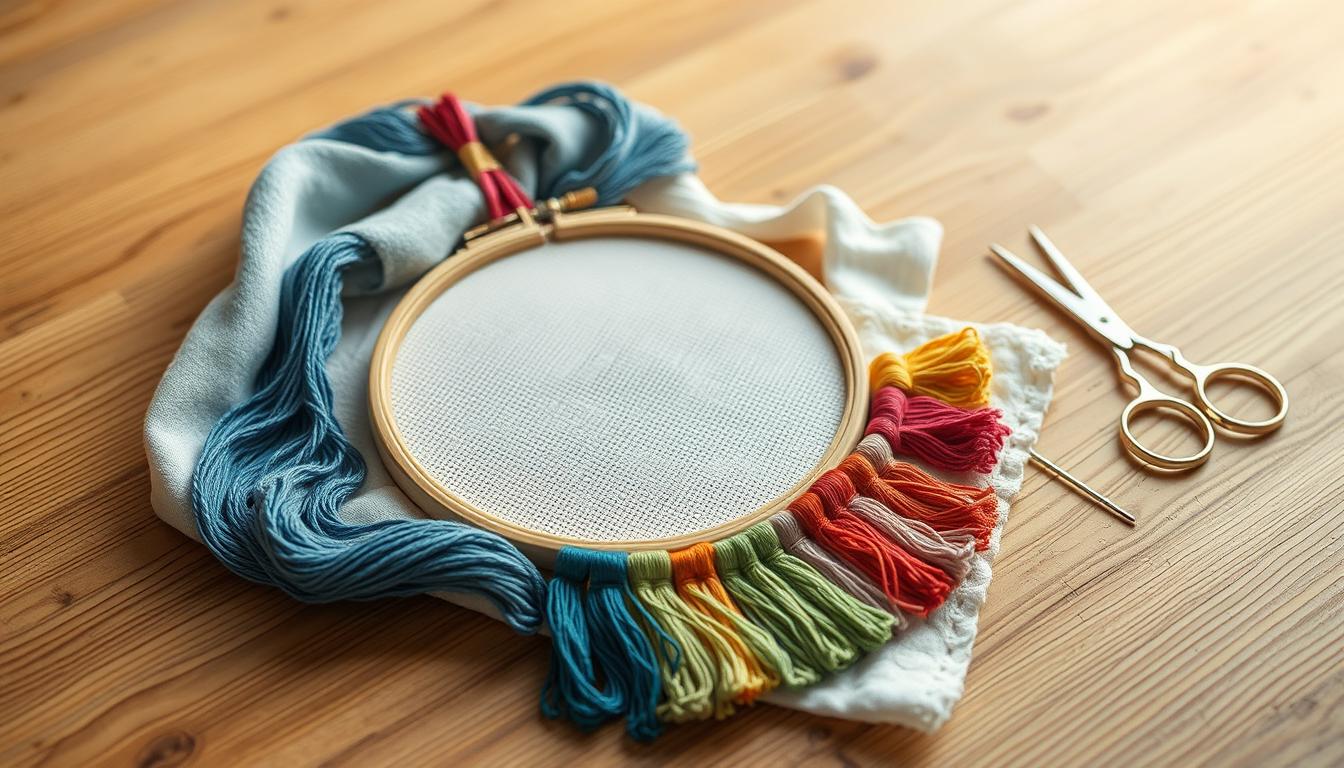
Ready to pick a new hobby? If you want a clear, low-stress way to make art with yarn or thread, this guide helps you choose. You’ll see why many new makers find one needlework style especially friendly.
Cross stitch typically uses a single, repeatable stitch on a grid-like fabric, so you follow a chart and watch clear shapes appear. A 14-count aida and a blunt needle with six-strand floss make early attempts neater and less frustrating.
This Buyer’s Guide compares that approach with embroidery and crochet so you can decide how to get started based on your time, budget, and first project goals. You’ll learn which patterns and kits work well on day one and which supplies truly matter.
By the end, you’ll know how counted charts turn into finished designs, which tools to buy, and how to set realistic time estimates for a first piece.
Key Takeaways
- You can learn the basics quickly by following grid-based patterns and a consistent stitch method.
- Pick 14-count aida, a blunt needle, and six-strand floss for easier, tidier results.
- Start with small patterns or beginner kits to build confidence and finish a project fast.
- Compare time and cost between embroidery and crochet to match your schedule and budget.
- Understand counted charts and color blocks to avoid common beginner mistakes.
Is Cross Stitch Right for You Today? Understanding the Basics and Beginner Appeal
For many first-timers, grid-guided needlework turns a daunting design into clear, trackable steps.
Counted designs rely on a visible fabric grid so you follow a chart square by square. This makes progress obvious and reduces mistakes.
DMC recommends 14-count aida for new makers because the holes are easy to see. The fabric’s count tells you how many Xs fit in an inch, which helps you pick the right size for your project.
Start-up tools are minimal: a blunt needle, basic thread, and a small hoop will get you going. DMC’s free tutorials help you learn cross stitch and read charts before you commit to larger designs.
Active communities also make a big difference. Groups like Caterpillar Cross Stitch share beginner kits, pattern tips, and encouragement from stitchers such as Tony, Sandra, and Annabelle.
“Clear patterns and plenty of thread made finishing my first piece a joy.”
- Gentle learning curve: count-based charts break designs into manageable steps.
- Easy fixes: you can remove and redo single squares without ruining the work.
- Wide range of modern patterns lets you pick a taste-appropriate, quick project.
| Feature | Why it helps beginners | Practical tip |
|---|---|---|
| 14-count aida | Visible holes make neat Xs easier | Choose 14-count for first projects |
| Single blunt needle | Simplifies threading and handling | Use a large-eye, blunt-tip needle |
| Counted charts | Guides each stitch by grid coordinates | Follow one square at a time |
| Community support | Real-time help and motivation | Join a Facebook group for quick answers |
CROSS STITCH
Start small: learning the basic X on aida fabric gives you fast wins and steady progress. The fabric has clear holes so every cross lines up, and the visible grid makes counting simple.
How it works on aida and why 14-count helps
You make each X by stitching two diagonals over the same square using the fabric’s holes as guides. The “count” tells you how many stitches fit in an inch; a higher count means tinier crosses.
Pick 14-count aida for your first project. It balances readability with detail so your small motifs look tidy.
Backstitch for outlining: when and why
Add backstitch to outline faces, letters, or edges. A single running line around shapes brings definition and makes motifs pop.
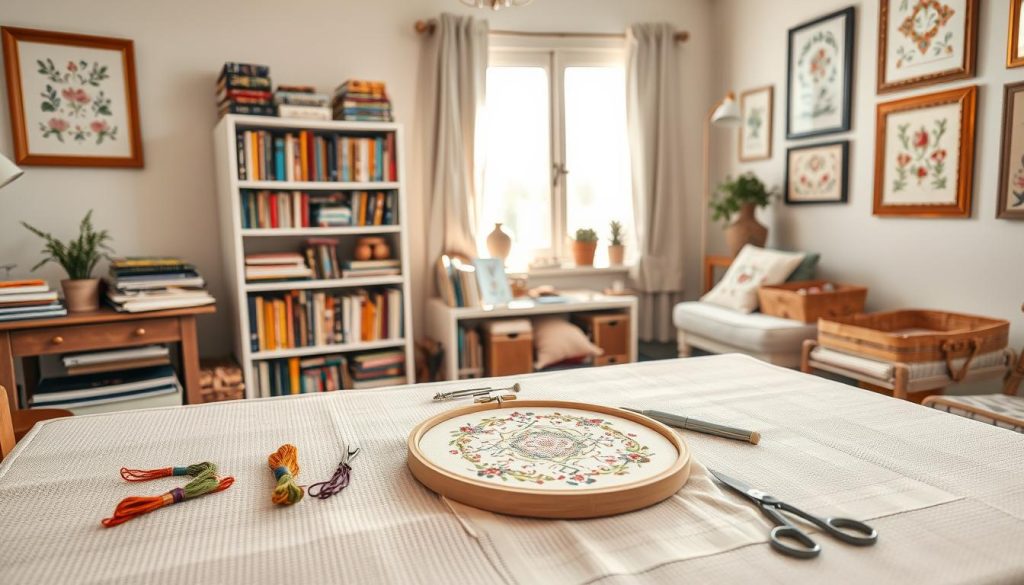
- Use a blunt needle with an elongated eye and separate six-strand floss for proper coverage.
- Keep fabric taut in a hoop, cut manageable thread lengths, and anchor starts neatly on the back.
- Mark guides with a water-soluble pen or magic paper and remove markings after finishing.
“Aida’s grid and a simple needle let you learn cross basics fast.”
Embroidery vs Crochet vs Cross Stitch: What’s Easiest, What You’ll Buy, and How You’ll Learn
Choosing between counted patterns, freehand surface work, and yarn craft comes down to how much structure you want right away. Each path teaches a different rhythm and rewards different first projects.
Learning curves compared
Counted technique gives a clear roadmap: you follow a chart and repeat simple Xs, so progress is visible and easy to fix.
Surface embroidery asks you to learn many stitches and where to place them. That freedom is fun but can feel less guided at first.
Crochet requires mastering yarn tension, stitch anatomy, and shaping. It builds fabric fast but needs practice to read patterns and form edges.
Project types and finishes
For quick wins, counted designs work well for ornaments, cards, bookmarks, and small hoop art. Embroidery excels on monograms and textured embellishments for home decor.
Crochet shines for wearables and cozy items like scarves, blankets, and bags that need shaping and joining.
- You’ll buy a tidy starter set for counted work: fabric, floss, blunt needle, and a hoop.
- Embroidery often expands into specialty threads and multiple needles.
- Crochet kits focus on hooks, yarn, and pattern-reading for shaping.
“A small counted chart can deliver a satisfying first finish faster than a multi-stitch sampler or a shaped crochet accessory.”
| Skill | Starter buys | Good first projects |
|---|---|---|
| Counted | Fabric, floss, blunt needle, hoop | Cards, bookmarks, small hoops |
| Embroidery | Needles, threads, varied fabric | Monograms, accents on garments |
| Crochet | Hooks, yarn, basic pattern | Scarves, granny squares, hats |
Your Cross Stitch Supplies Checklist: Fabric, Floss, Needles, Hoops, and More
Start smart: pick quality basics so you spend time stitching, not fixing gear. A small, focused kit gets you to a finished piece faster and keeps frustration low.
Aida “count” explained: count is stitches per inch. Choose 14-count aida for clear holes and readable Xs that suit new eyes and steady hands.
Floss and thread: use six-strand embroidery floss and separate strands. Two strands on 14-count give smooth coverage without wasted thread. Keep bobbins or a small box to sort colors and avoid tangles.
Needles and hoops: pick blunt needles with elongated eyes; they thread easily and won’t split fabric. Use a hoop slightly larger than your motif and re-hoop as you stitch to keep tension even.
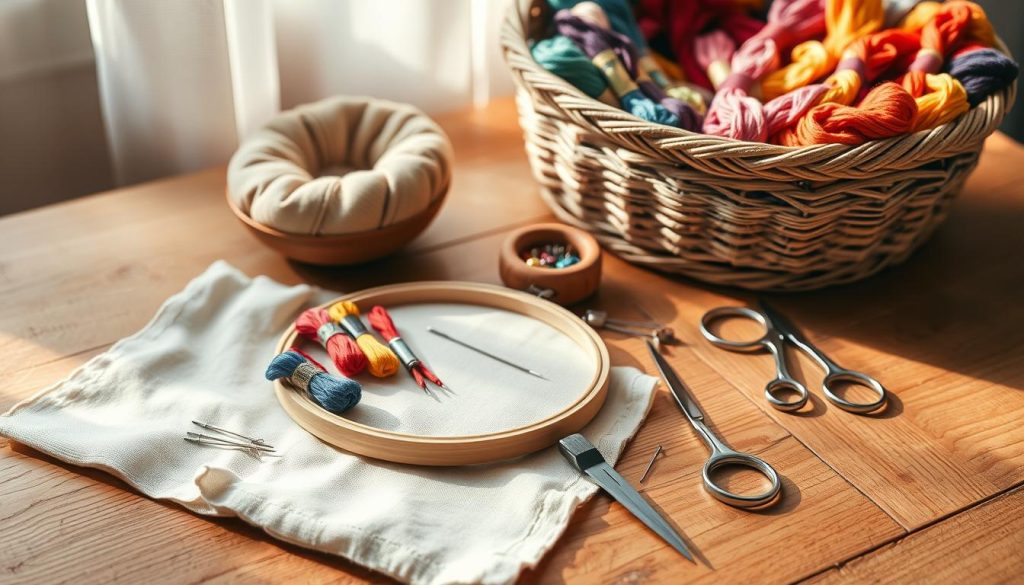
- Sharp embroidery scissors and spare needles for clean work.
- Water-soluble markers or magic paper for placement and guides.
- Spare fabric pieces, a light or magnifier, and a needle minder to protect tools.
| Item | Why it helps | Tip |
|---|---|---|
| 14-count aida | Easy to read | Start here |
| Embroidery floss | Color options, smooth coverage | Use two strands on 14-count |
| Hoop & needle | Tension and safe threading | Keep a couple sizes |
With these cross stitch supplies organized, you’ll stitch more and troubleshoot less.
Shop Smarter: Kits, Patterns, and Sales to Get You Stitching Fast
Find the smartest ways to buy your first kit, pick a fast pattern, and get stitching this weekend.
Cross stitch kits vs building your own stash
Pick a kit if you want everything pre-coordinated: fabric, floss, a needle, and a printed chart arrive ready to use. That lets you start the project immediately and avoids color guesswork.
Build your stash when you know your preferred fabric count and thread brands. Buying supplies separately gives more flexibility for future projects.
Downloadable patterns and weekend sales
Downloadable patterns let you begin today. DMC’s 1000-pattern program offers free downloads when you sign up, and many shops list trending cross stitch patterns for holidays.
Check the Quick & Easy Pattern Sale this weekend for small designs that finish fast and keep momentum high.
Where to buy and great gift ideas
Shop categories to add to your cart: Cross Stitch Kits, Downloadable Patterns, Stamped Kits & Stitchables, clearance items, and gift cards. Caterpillar Cross Stitch is noted for beginner-friendly kits and strong community support.
| What to buy | Why it helps | Shop tip |
|---|---|---|
| Starter kit | All-in-one and beginner-friendly | Choose kits with extra thread |
| Small pattern | Fast finish and motivation | Filter by size and difficulty |
| Floss, fabric, needles | Core supplies for any project | Match fabric count to chart |
| Gift card | Easy present for new makers | Great for unsure color tastes |
“Pick a small, clear chart and a kit with extra thread to reduce early frustration.”
Conclusion
If you crave visible progress and few tools, pick a counted pattern and begin with a compact kit.
You’ll get the basics fast on 14-count aida using a blunt needle and two strands of floss. Tiny steps build rhythm and confidence, so stitch a few rows and pause to enjoy the change.
Use DMC tutorials to learn cross stitch techniques like reading charts and adding backstitch outlines. Join a community for tips, and shop downloadable patterns or a Quick & Easy sale to get started with low cost.
Final tip: choose a small pattern, confirm the fabric count, and set short weekly goals. With these simple steps you can turn one small cross into a lasting hobby.
 English