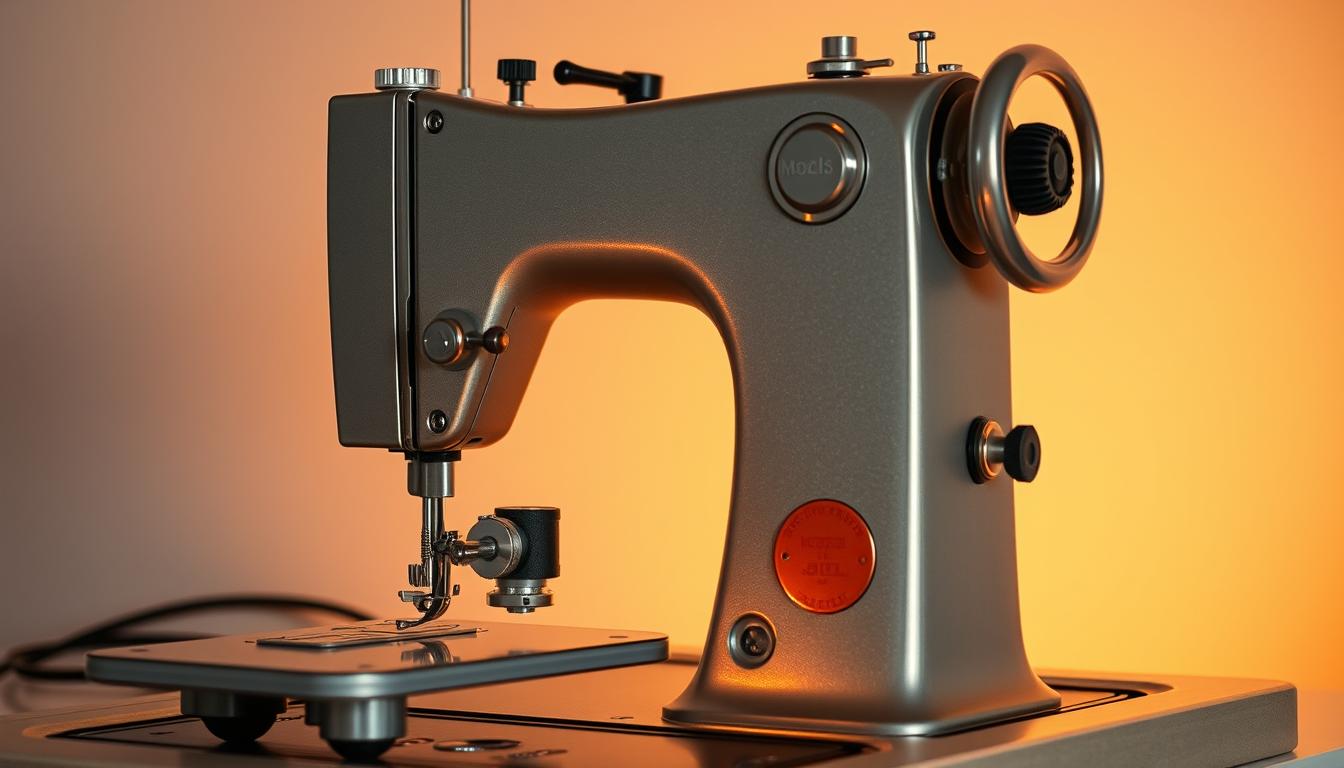
You want clear results and a smooth path into a popular needle craft. A modern cross stitch machine reads a digital pattern and lays down uniform stitches so your final piece looks crisp and consistent.
Most projects use a simple X-shaped stitch and often a backstitch to outline details. Machines work best with aida fabric and stranded floss, the same supplies you’d choose by hand. Brands like DMC and beginner-friendly Caterpillar Cross Stitch offer clear kits and generous thread that help you get started.
Whether you shop for a machine or start by hand, this guide shows how pattern formats, fabric count, floss type, and needle style affect results. You’ll learn when a machine speeds large pieces and when a small starter set fits your first project.
Key Takeaways
- You’ll see how a machine interprets digital patterns for consistent results.
- Machine-rendered stitch mimics hand placement but improves alignment.
- Choose 14-count aida, stranded floss, and a blunt needle to get started.
- Compare entry-level and advanced features before you shop for kits or accessories.
- Find patterns, tutorials, and community help through DMC Craft Studio and active Facebook groups.
Understanding How Cross Stitch Machines Render Stitches
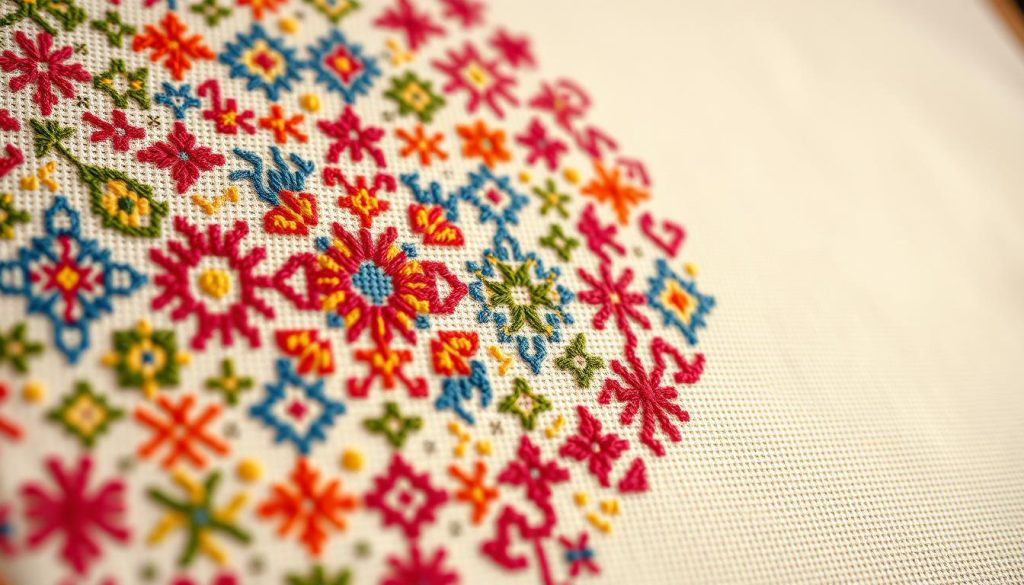
A machine converts each pixel of a chart into a precise X on fabric, using the pattern grid to target exact holes and color changes.
From chart to fabric, the controller reads symbols and maps them to needle moves so each stitch aligns with aida holes. The machine spaces crosses to match the chosen count, which dictates stitch size and overall detail.
Fabric choice matters. Aida’s even weave makes alignment reliable and reduces distortion. Most beginners pick 14-count aida for clear results and easy handling.
Threads and floss affect coverage. Machines use stranded embroidery floss and manage strand count to avoid bulky intersections. Pick a blunt needle with an elongated eye so floss passes through holes without splitting.
“Correct tension and hooping keep placement accurate as the pattern advances.”
Backstitch outlines are added when you need sharper edges or lettering. You’ll decide when a clean outline helps clarity and when a softer look is better.
CROSS STITCH Buyer’s Guide: Features and Specs You Should Compare
Quality results begin with software that handles common chart files and downloadable patterns. Check if the machine reads chart formats you already use and if it imports new patterns without conversion. Many retailers list new patterns and kits by date so you can shop current releases.
Pattern handling and software
Look for compatibility with popular file types and a clear import flow. On-screen previews and simple resizing save time when you adjust count and layout.
Stitch accuracy and resolution
Evaluate how the unit manages count and density settings. Good machines keep even coverage on 14-count aida without puckering at color-change areas.
Hoops, frames, and fabric handling
Choose models with stable frames and a reliable feed system so placement stays true across large panels and full-coverage areas.
Needles and thread paths
Confirm compatibility with a blunt needle and elongated eye. Clear thread paths prevent fraying and keep floss and thread moving smoothly.
Speed, noise, and maintenance
Weigh speed modes and noise output for home use. Check maintenance intervals and easy access to parts so repairs won’t stall your projects.
Beginner-friendly setup
Look for guided tutorials, step-by-step diagrams, and video support. DMC’s Craft Studio resources are useful for onboarding and reading charts.
“Verify tension controls, thread detection, and recovery features to protect long runs of fine detail.”
| Feature | What to check | Why it matters |
|---|---|---|
| Software / Patterns | File types, import, previews | Reduces setup time and format issues |
| Stitch Accuracy | Count/density control | Ensures even coverage on aida fabric |
| Hoop & Feed | Frame stability, fabric tension | Keeps crosses aligned on large pieces |
| Needle & Thread Path | Blunt tip, elongated eye, smooth guides | Prevents fraying and fabric damage |
| Support & Extras | Tutorials, kits, parts availability | Speeds learning and long-term use |
Who Should Use Cross Stitch Machines
For makers who value speed and precision, a machine turns digital charts into reliable finished pieces. You’ll find this especially helpful when you want consistent placement and fewer counting errors.
Beginners who want clear, consistent results
If you are a beginner, a machine gives clear prompts and on-screen previews that help you learn cross stitch without worrying about miscounts. Caterpillar Cross Stitch kits are useful: they include clear patterns, extra thread, and a friendly Facebook group for questions.
Hobbyists scaling up home projects and gifts
Hobby makers benefit when larger samplers, stockings, and framed pieces keep uniform crosses across wide areas. Automation reduces fatigue and speeds completion for seasonal and home decor items.
Side hustles and small shops
Small shops can produce personalized cards, monograms, and ornament designs quickly while keeping a handmade look. You’ll match machine capabilities to your turnaround needs and decide where a hand-finished outline adds charm.
- Learn cross with on-screen guidance and minimal counting errors.
- Scale orders for cards and giftable designs without losing quality.
- Use supportive communities to bridge skill gaps as you grow projects.
“Machines help you get started faster and keep each design consistent as you expand your range.”
Essential Materials and Supplies Your Machine-Ready CROSS STITCH Projects Need
Start by gathering core materials that keep your machine running smoothly and your projects consistent.
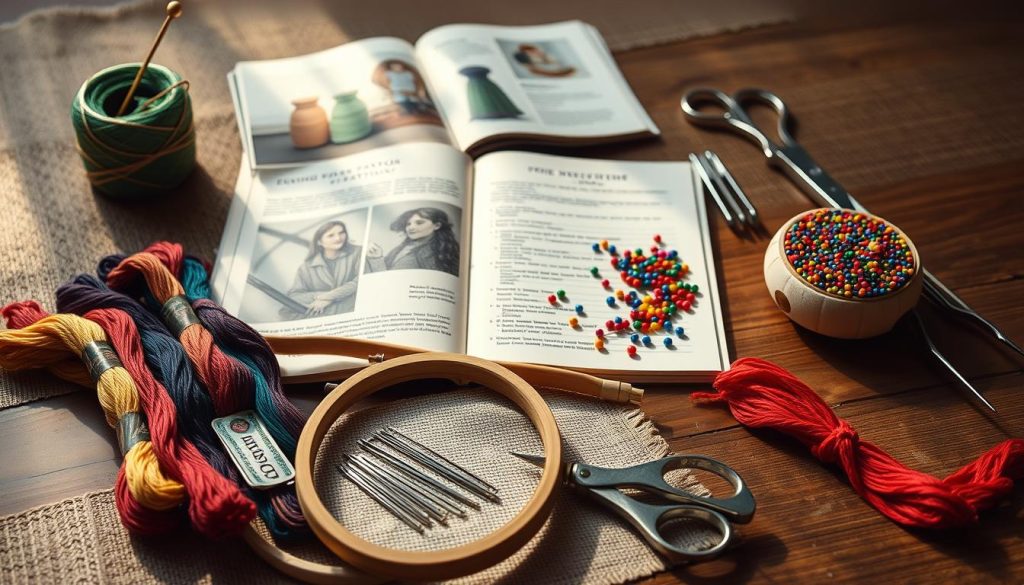
The toolkit: embroidery floss, aida fabric, blunt needles, hoop, and sharp scissors
Assemble a reliable kit: Six-strand embroidery floss, a 14-count aida fabric, a blunt needle with an elongated eye, a taut hoop, and sharp embroidery scissors.
DMC’s essential toolkit matches this list and adds marking tools and bobbins to keep threads tidy.
Choosing fabric count: why 14-count aida is recommended
Start with 14-count aida to balance visibility and detail. It makes placement easier and reduces miscounts when your machine maps pixels to holes.
As you gain control, try finer counts for denser coverage. Keep matching dye lots for consistent colors across panels.
Add-ons that elevate designs: beads, charms, buttons, and stitchable items
Plan thread management and color labeling so you switch threads quickly during multi-color runs.
- Pick beads and charms that won’t tangle the thread path or change tension too much.
- Choose stitchable items like ornaments and pouches that fit your hoop or frame.
- Stock backup threads and extra needles to avoid downtime on long runs.
“A small, organized kit speeds workflow and keeps every cross neat across wide designs.”
Where to Shop and What to Buy Right Now
Shop with a plan: decide if you want an all-in-one kit or to build from components before checkout. New kits and patterns arrived recently (New Kits 11/11/2025, New Patterns 11/14/2025), so seasonal favorites and quick projects are in stock.
Kits vs. components
All-in-one cross stitch kits give curated thread, fabric, and needles so you start fast. Stamped kits and stitchable items cut prep time for gifts.
Buying components lets you match colors, pick fabric counts, and save on bulk floss when a sale is on.
Patterns to download today
Browse downloadable patterns for seasonal hits: Christmas samplers, Happy Holiday Gnomes, Nutcracker motifs, and quick & easy designs ideal for gift crunches.
Supplies on sale
Target floss, fabric, needles, hoops, and beads during clearance windows. Stock up on thread and backup needles to avoid interruptions on long runs.
Gift-ready options
Pick gift cards or beginner-friendly stitch kits for new makers. Check difficulty, color count, and included items before you add to cart.
“Use shop categories—patterns, kits, supplies, stitchable items—to save time and find clearance deals.”
Conclusion
Armed with setup tips and supply lists, you can move from pattern to finished piece smoothly.
You’re now able to evaluate a cross stitch machine’s stitch accuracy, fabric handling, needle and thread paths, and learning support so you can get started without second-guessing.
Match patterns and kits to your goals—seasonal designs, gifts, or a home project—while confirming the right count, needle type, and embroidery floss.
You understand the toolkit: hoop, blunt needle, floss, scissors, and spare threads to keep stitching on schedule.
Learn cross stitch with videos and diagrams, troubleshoot tension or thread fray, and plan finishing touches for cards and ornaments confidently.
Now pick a pattern, gather your supplies, and enjoy steady progress on your next project.
 English