You want a quick, reliable rule for 14-count Aida. For most beginner-friendly projects, use two strands of six-strand floss so each cross looks full without getting bulky. This gives neat coverage on the fabric and keeps your finished art even and tidy.
14-count Aida means there are 14 holes per inch, so stitches sit at a comfortable size for new makers. Pair two strands with a blunt tapestry needle and a hoop to hold fabric taut. Add a DMC pattern, sharp scissors, and a small marker and you’re ready.
In this buyer’s guide you’ll learn how strand choice affects coverage, when to switch for outlines or details, and which supplies and kits to look for—especially items on sale—to build a smart, budget-friendly stash.
Key Takeaways
- Two strands on 14-count Aida give balanced coverage for most projects.
- Use a blunt tapestry needle, hoop, and DMC floss for tidy results.
- Choose patterns or cross stitch kits based on time and budget.
- Check supplies and stitch kits on sale to save on starter gear.
- Swap strand count only for fine details or outlining work.
Strand Count for 14-Count Aida: Your Simple Rule of Thumb
Choose strands carefully on 14-count Aida and you’ll control coverage, texture, and clarity with each pass of the needle. This short guide gives the practical rule and quick exceptions so you can start a new project with confidence.

The quick answer: Use 2 strands of six-strand embroidery floss on 14-count Aida
Two strands is the go-to choice for most makers. It fills the hole cleanly and keeps your finished work even without bulk. DMC recommends 14-count for beginners, and two strands pair well with a blunt tapestry needle and a hoop.
How coverage changes the look: 1 vs 2 vs 3 strands on 14ct
- One strand: lighter coverage, good for subtle backgrounds or delicate effects.
- Two strands: balanced coverage for full areas and most patterns or stitch patterns.
- Three strands: bold, raised look; use sparingly for accents to avoid snagging the fabric.
When to break the rule
Backstitching and fractional stitches often use one strand to keep lines crisp. For bold outlines, test two strands or specialty thread first. If you’re shopping, look for beginner kits and downloadable cross stitch patterns on sale to get started affordably.
CROSS STITCH fundamentals that affect strand choice
A few core basics—fabric count, tension, and tools—drive the strand choice that gives the best coverage.
Understanding fabric “count” and stitch size for clean, even coverage
Fabric count is the cornerstone: on 14-count Aida you make 14 stitches per inch, so strand choice balances thread thickness against hole size for clean coverage.
Tension matters as much as count. Use a hoop to keep the fabric taut so each stitch lands evenly. Loose tension puckers the fabric and distorts the final art.
A blunt tapestry needle with an elongated eye protects the weave and guides floss through holes without splitting fibers. Sharp-pointed embroidery scissors trim tails close for tidy results.
- Two strands usually give smooth, even coverage on 14-count fabric.
- Use fewer strands for fractional crosses and fine curves in patterns.
- Shorten thread lengths and condition dry floss to reduce fraying on higher counts.
| Item | Why it matters | Quick tip |
|---|---|---|
| 14-count Aida | Defines stitch size and hole spacing | Test two strands first |
| Hoop | Keeps tension even | Replace if warped |
| Tapestry needle | Protects fabric and guides floss | Choose elongated eye |
| Sharp scissors | Neat trims reduce show-through | Keep a small, pointed pair |
When you shop a sale, buy a small swatch kit and try different strand counts. Hands-on testing teaches how your stitching and tension affect coverage.
What to buy for the best results on 14ct: kits, floss, fabric, and tools
Start with a clear plan and a few quality items to get the best results on 14-count fabric. Pick a path that fits your time and budget before you buy supplies.
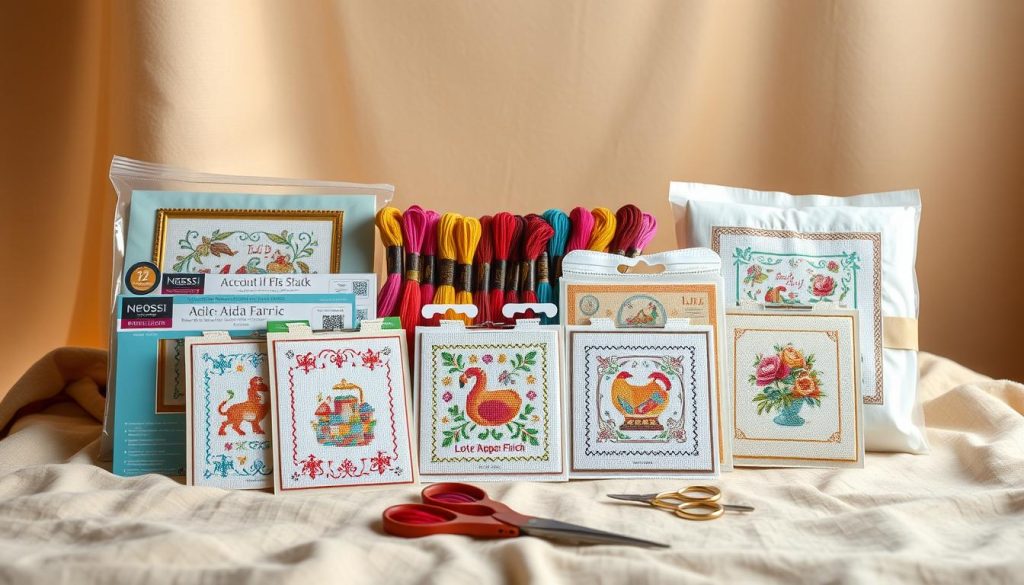
Cross stitch kits vs downloadable patterns: choose your path
Full kits include fabric, floss, needle, and chart so you can begin right away. They save time and often include extra thread.
Downloadable patterns give you freedom to pick brands, fabric size, and hoop style for custom coverage.
Floss and thread: colors and stash organization
Use six-strand embroidery floss and wind DMC colors onto bobbins. Label numbers and group by palette so patterns move faster.
Fabric, hoops, needles, and scissors
Choose 14-count Aida for easy holes and neat crosses. A hoop sized just larger than the design keeps tension even.
Keep a blunt tapestry needle for regular work and a fine needle for backstitch lines. Use sharp, pointed scissors to trim tails close.
Shop smart
- Browse “What’s Currently On Sale” and Clearance for bargain stitch kits and patterns.
- Consider gift cards during seasonal sales so recipients can pick preferred supplies.
- Start with a small seasonal chart on sale to finish a compact project and build confidence.
Conclusion
Focus on a compact motif, basic tools, and the two-strand rule to finish a project you love.
On 14-count Aida, use two strands of six-strand floss, a blunt tapestry needle, a hoop, and sharp scissors for tidy results. One strand works for delicate shading or fractionals, and one strand keeps backstitch lines crisp.
Build a short shopping list: fabric, needle, hoop, floss, and a small kit if you want everything ready. Check retailer sale sections for starter kits and seasonal charts so you can begin affordably.
Pick a compact design, use manageable thread lengths, and keep even tension. A few focused sessions will make each cross neater and your next stitch faster.
 English