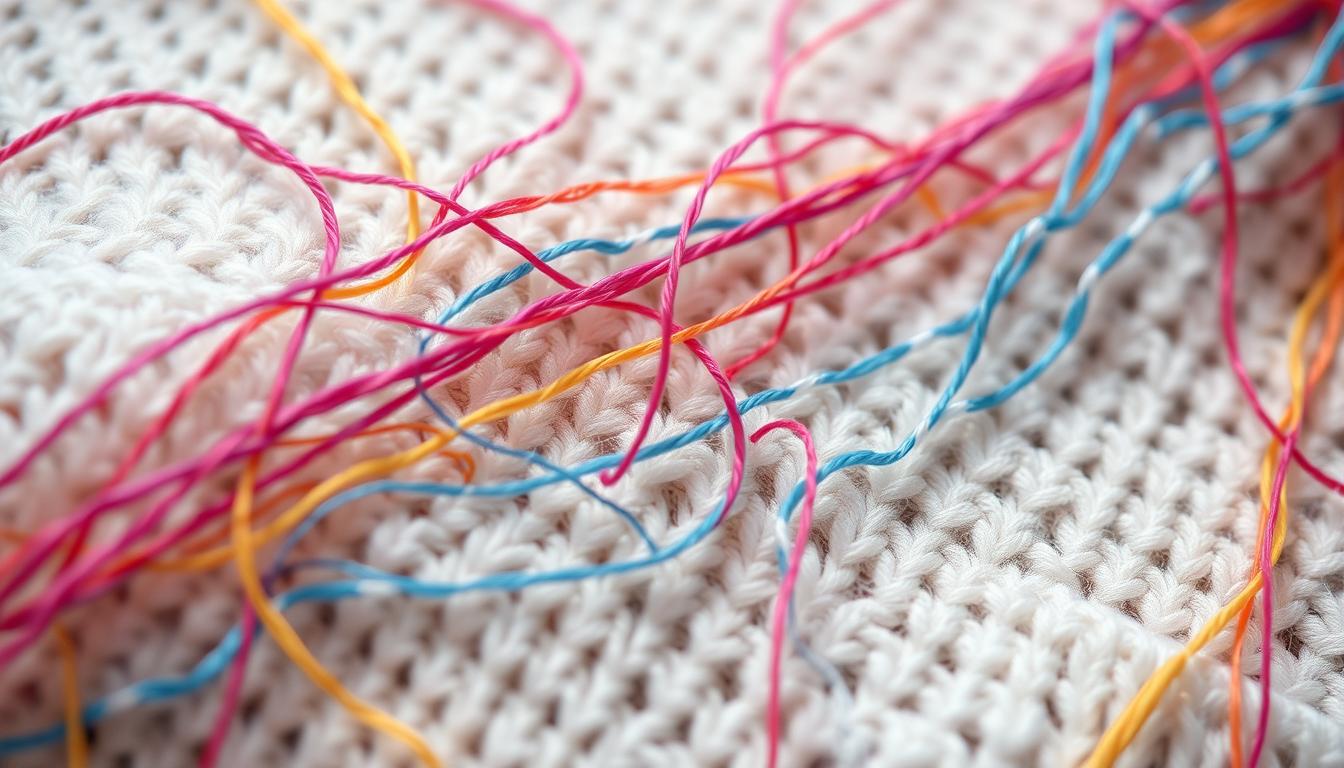
You can add cross stitch to knitwear using stranded embroidery thread, but you will adapt techniques made for aida fabric to the stretch and texture of your knit.
Start by mapping stitches per inch on a swatch to match aida count ideas. A 14-count feel works well for beginners when you measure gauge on your fabric.
Use a blunt needle and stranded floss so you don’t split yarn fibers. Stabilize the area with light tension so each stitch sits flat and avoids puckering.
Decide if you will stitch directly on the garment or attach a small patch. Pick bold, low-detail patterns so the design reads over knitted texture.
Consider kits or ready patterns if you want matched supplies and less guesswork, especially during a sale. Secure thread tails on the wrong side to protect the knit and the art of your project.
Key Takeaways
- Test on a swatch to match count and avoid distortion.
- Use blunt needles and stranded embroidery thread for neat work.
- Place designs away from heavy stretch zones for comfort.
- Choose bold patterns or kits to simplify your first attempt.
- Secure tails on the wrong side to preserve the garment.
Can You Use Embroidery Thread on Knits? What Works, What Doesn’t
Embellishing knitwear with stranded floss takes a little planning, but it yields durable, eye-catching results. Knit fabric lacks aida’s rigid grid, so you’ll mark a light guide or use the knit gauge to place each cross consistently.
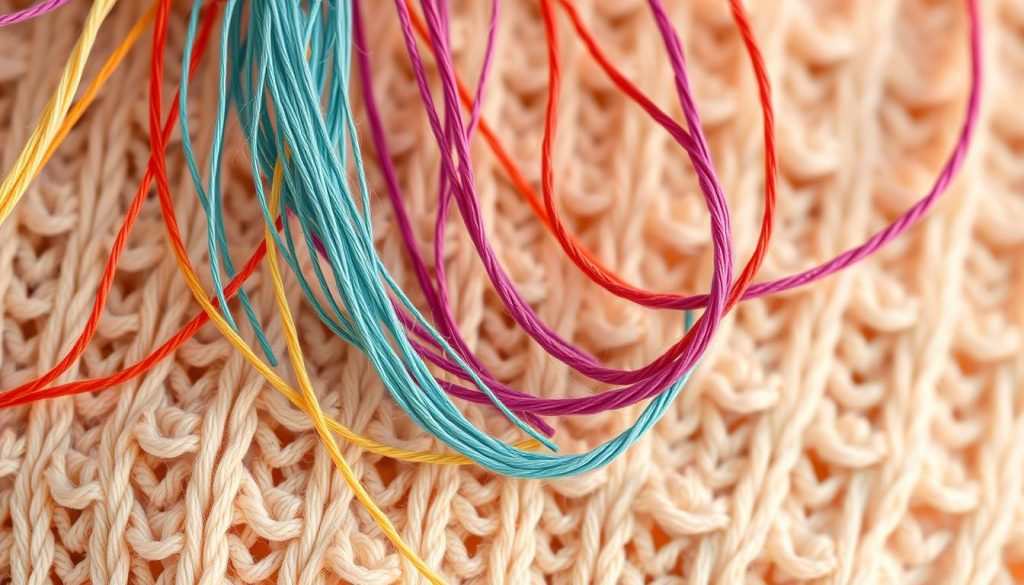
Understand the fabric first: aida’s count gives fixed stitches per inch. Knits stretch and recover, so avoid over‑tight hoops and work with gentle tension to prevent distortion.
Choose a blunt needle with an elongated eye to pass between yarn loops without splitting fibers. For fine detail and color depth, reach for embroidery floss and separate strands like you would on 14‑count aida.
Pick yarn instead when you want bold texture on bulky sweaters or accessories. Plan simple stitch patterns and solid motifs so your project reads well over the knit’s texture.
- Use stitch kits if you’re starting; they include thread, needle, and patterns suited to beginners.
- Test on a swatch, check how threads wash and rub, and place designs away from heavy wear zones.
CROSS STITCH Essentials and Toolkit for Knitted Embellishments
Get the right tools and test them on a swatch before you work on a garment.
Embroidery floss and threads
Choose DMC Six‑Strand embroidery floss so you can split strands for coverage. Use 2–3 strands for medium gauges and 1 strand for very fine knit fabric. Keep extra threads wound on bobbins to avoid tangles.
Needles and notions
Pick a blunt needle with an elongated eye sized for your chosen floss count. Add sharp pointed scissors to trim tails close without snagging. A water‑soluble marker or magic paper helps mark a light guide.
Hoops, frames, and tension
Use hoops or frames with a thin barrier to prevent marks. Tighten only enough to lay the surface flat. Practice consistent tension so each cross sits even without compressing the knit.
Adapting count to gauge
Measure stitches and rows per inch on the garment and treat that as your working count. Start with small cross stitch patterns—hearts or initials—to confirm spacing.
| Item | Why it matters | Recommended |
|---|---|---|
| Embroidery floss | Color control and strand options | DMC Six‑Strand |
| Needles | Protects yarn loops | Blunt, elongated eye |
| Hoop & barrier | Stabilizes without stretching | Wood hoop + tissue |
| Scissors & marker | Clean trims and light guides | Sharp scissors, soluble pen |
- Pro tip: consider curated kits or stitch kits from DMC when you want matched supplies and clear diagrams.
How to Choose Kits, Patterns, and Supplies for Stitching on Knitwear
Before you buy, think about whether you want a curated kit or to build a customized supply set. That choice shapes what you need for a smooth project and keeps your garment safe.
Complete kits vs. DIY supplies
Complete cross stitch kits give color‑matched embroidery floss, a suitable needle, clear charts, and usually enough threads to finish. They are great when you want to start right away.
Pick stitch kits when you prefer focused motifs or a compact lesson that adapts well to knit fabric.
Patterns that work on knits
Use bold, high‑contrast cross stitch patterns and simple stitch patterns. Downloadable cross stitch patterns let you scale motifs to your gauge. Avoid tiny backstitch details on heavily textured fabric.
Smart shopping and what’s on sale
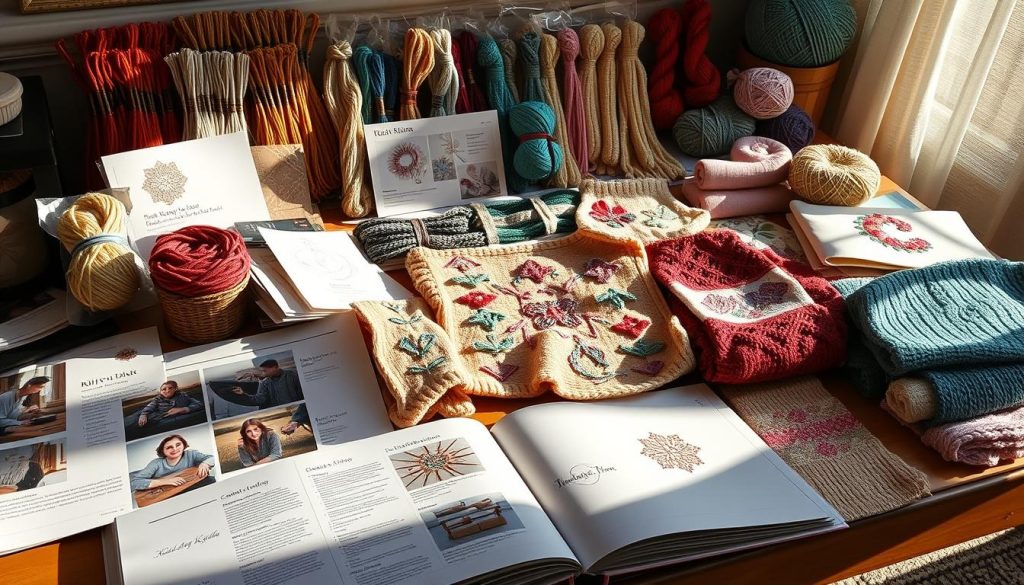
Shop Kits on Sale and Patterns on Sale to save. Check contents for plenty of thread, clear charts, and beginner guidance. Look for DMC freebies and tutorials to stretch your craft budget.
| Item | Why it matters | Buy tip |
|---|---|---|
| cross stitch kits | Everything curated for one project | Choose kits with extra threads |
| floss & threads | Color control and coverage | Buy good-quality embroidery floss |
| needles & hoops | Protects fabric and improves tension | Pick elongated-eye needles and thin hoops |
Conclusion
Finish with a small practice swatch, so you confirm strand count, tension, and how the fabric handles your design.
Your beginner toolkit—DMC Six‑Strand floss, a blunt elongated‑eye needle, a hoop, sharp scissors, and a soluble marker—will get you clean results fast.
You can add cross stitch to knitwear when you translate aida’s count into your knit gauge, stabilize lightly, and pick bold motifs that read over texture.
Start small, secure tails neatly on the wrong side, and choose a curated kit or DIY supplies based on convenience and cost. This approach keeps your embellishment durable and wearable.
 English