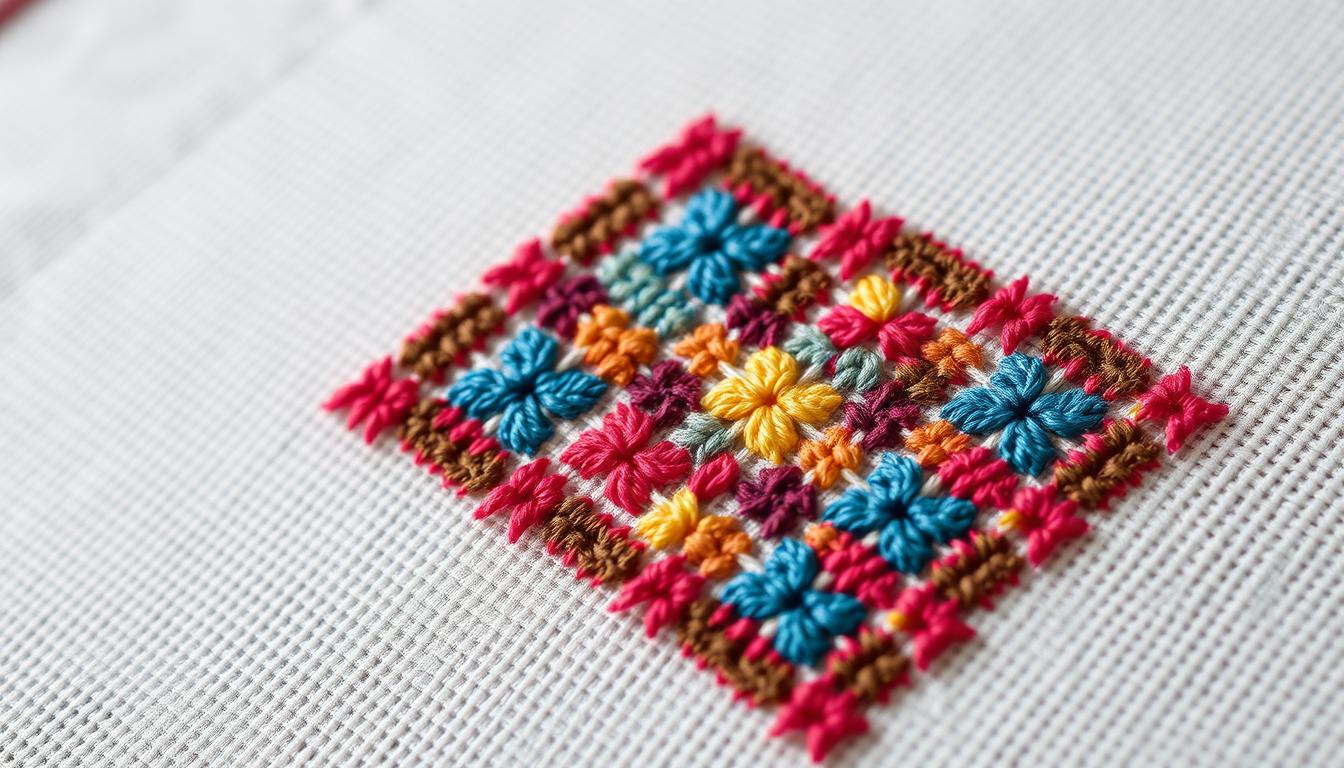
You want a clear comparison before you start your next needlework project. This short intro helps you decide between tapestry’s full-coverage look and the neat, counted grid of cross stitch.
Cross stitch uses a simple X-shaped stitch on Aida fabric with defined holes. Most beginners use 14-count Aida for even results. Kits often include fabric, thread, a printed pattern, and a blunt needle to keep your work tidy.
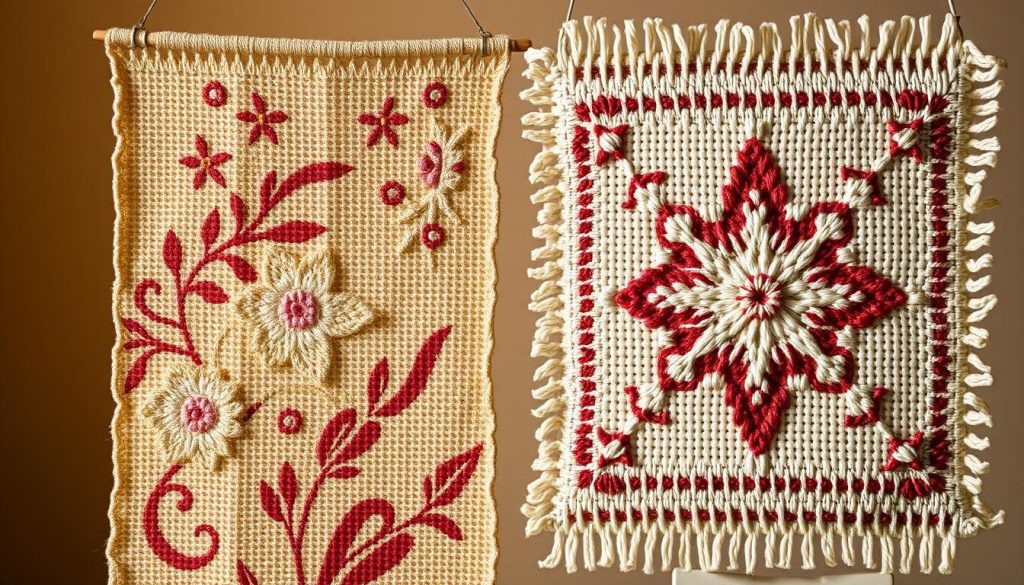
Tapestry leans toward heavier canvas work that covers the base fabric more completely. The result is a woven texture that suits bold designs and larger pieces. You’ll learn how materials and tools change the feel and finish of your work.
Key Takeaways
- Choice matters: pick tapestry for coverage, cross stitch for crisp, counted art.
- Fabric count sets stitch size; 14-count Aida is beginner-friendly.
- Kits and downloadable patterns speed up setup and reduce guesswork.
- A blunt needle and the right thread improve texture and durability.
- Supportive tutorials and communities help you progress faster.
Tapestry vs cross stitch: techniques, fabrics, and results explained
Tapestry works like painting with yarn; counted projects work like plotting pixels on a fabric grid. This helps you see how technique shapes the final piece.
Technique at a glance
Tapestry uses diagonal or tent-style work to cover canvas densely. Counted work relies on an X made square by square to build crisp geometry.
Fabric & count
Canvas for tapestry is sturdy and accepts thicker yarn. Aida is a gridded fabric with clear holes; the “count” tells you stitches per inch.
14-count Aida gives beginners visible squares and good detail without tiny work. Higher counts increase detail but need finer control.
Threads, needles, and finish
Tapestry favors wool and large tapestry needles for a plush finish. For cross stitch you use six-strand embroidery floss and a blunt needle; two strands on 14-count often give solid coverage.
Time and texture differ: tapestry is meditative and heavy, perfect for cushions and hangings. Counted work is faster per motif and suits framed art, ornaments, and precise stitch patterns.
- Read a chart and keep even tension to avoid skewed lines.
- Follow a pattern and use backstitch for clean outlines.
CROSS STITCH essentials for your next project
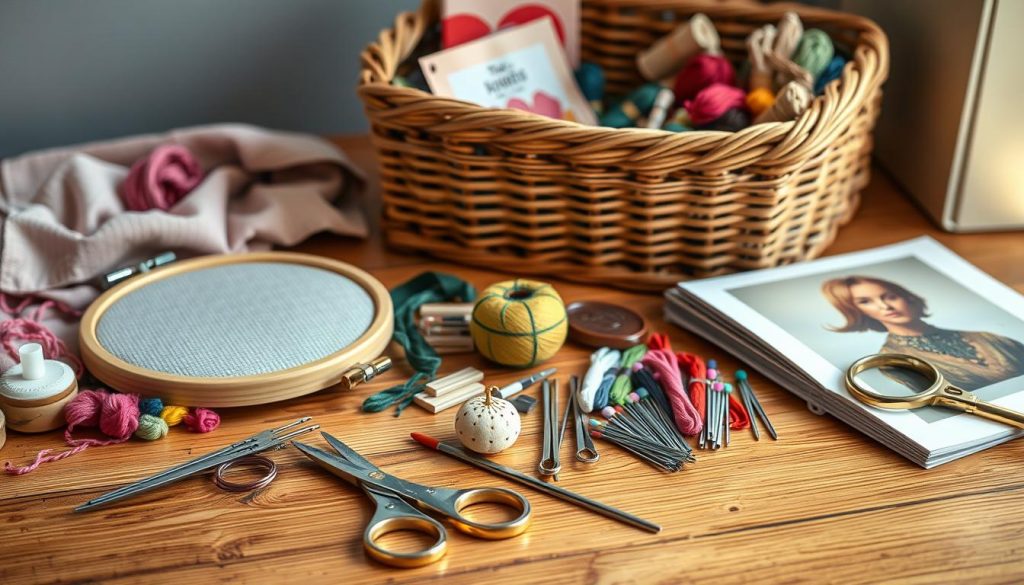
Before you begin, lay out a simple set of supplies so your first rows stay neat.
Your toolkit
- 14-count Aida fabric for easy holes and a clear count.
- Embroidery floss (six-strand) so you can strand to match coverage.
- A blunt-point needle with an elongated eye, an embroidery hoop, sharp scissors, and a washable marker.
Kits vs patterns
All-in-one cross stitch kits include preselected threads, printed charts, and fabric. They speed your start and reduce guesswork. Downloadable cross stitch patterns let you pick fabric, thread, and finish for a custom result.
Learn and improve
DMC offers 14-count recommendations and many free patterns via its repository. Step-by-step diagrams teach starts, reading a chart, and backstitch. Online groups like Caterpillar Cross Stitch provide friendly feedback on tension and thread anchors.
“Set good habits early: count twice, keep even tension, and trim threads cleanly.”
Shop cross stitch kits, patterns, and supplies in the US
Find curated kits and downloadable patterns that make starting a new project fast and fun. You can pick a complete starter kit or grab a digital pattern to print at home. Both paths save time and help you finish more pieces.
Curated kits bundle fabric, threads, a needle, and a printed chart so you can open the box and begin the same day. These stitch kits are ideal if you want coordinated colors and a proven plan.
Patterns to download
Shop by theme—holiday, nature, samplers, and modern art. Look for the Quick & Easy Pattern Sale to collect small designs that finish quickly. Trending cross stitch patterns include seasonal issues like holiday samplers and spooky designs for Halloween.
Supplies you’ll use on every project
- Core items: DMC embroidery floss, Aida fabric by count, blunt needles sized to your fabric.
- Tools: Wooden or plastic hoops, sharp embroidery scissors, and small storage for threads.
- Extras: Stitchables, finishing hardware, and digital gift cards to share with other makers.
Compare kits on sale and patterns on sale to stretch your budget. Add a few key supplies so you won’t pause mid-project and can enjoy steady progress.
“Buy a ready kit to learn the flow, then use downloadable patterns to grow your skills.”
Conclusion
Choose the approach that fits your final look and how much time you want to spend. Tapestry delivers plush coverage; counted work gives crisp detail. Match texture, tools, and finish to your project so the result meets your expectations.
You now know why 14-count Aida helps beginners, why a blunt needle and the right thread make stitching smoother, and how pattern choice affects time and detail.
Pick an all-in-one kit for easy setup or a downloadable pattern to customize colors and threads. Use tutorials and online groups when you need tips on tension, backstitch, or stitching rhythm.
Start small—set up a tidy workspace, pick a current set of stitch patterns, and add what you need to your cart. Short daily sessions will turn a simple cross into a framed piece you’ll be proud to gift or display.
 English