
You’re deciding which needle craft to try first, and the choices can feel overwhelming. This intro compares crochet, counted needlework, and freehand embroidery so you know what to expect for your first project.
Counted needlework often uses a single repeated pattern on 14-count aida, a blunt needle, and six-strand floss. That grided approach makes it easier for a beginner to learn cross stitch and follow a chart without guessing.
Crochet builds fabric fast with hooks and yarn, while embroidery gives you freedom to shape detailed designs. We’ll show which tools matter, where to find beginner kits and free downloadable patterns, and how community tutorials can help you get started.
Key Takeaways
- Counted work reduces mistakes and is friendly for beginners.
- Crochet finishes projects quickly but needs more shaping skill.
- Embroidery offers detail and creative freedom with more stitch choices.
- Starter kits and online patterns make it simple to get started.
- Supportive communities and tutorials speed up your learning curve.
How Crochet, Embroidery, and CROSS STITCH Compare for Beginners
For first-timers, working on a fabric with clear holes reduces guesswork and speeds learning.
Skill curve: one-stitch simplicity vs multiple techniques
Cross stitch uses a single repeated motion on a counted ground, so the learning curve is gentle. Each square on aida equals one stitch, which helps you keep even tension and fewer mistakes.
Embroidery asks you to learn several stitches and thread-handling techniques. Crochet requires control of hook tension and shaping to form fabric. If you want the simplest start, the grid method wins.
Tools and materials you’ll need to get started
Begin with 14-count aida for clear holes and an easy read of patterns. The fabric’s count tells you how many stitches per inch; higher counts make smaller work.
Essential items: six-strand floss, a blunt cross needle with a large eye, a hoop to hold fabric taut, sharp scissors, and a water-soluble marker for placement. Crochet needs a hook and yarn, while freehand embroidery needs sharp needles and varied thread types.
- You’ll learn how count choices (14-count vs higher) affect stitch size and chart readability.
- Tools shape workflow: reading charts for counted work versus counting rows for crochet or tracing designs for embroidery.
- Tutorials are widely available to help you get started with reading charts and basic backstitch.
Pros and Cons at a Glance: Crochet, Embroidery, and Cross Stitch
You’ll notice clear trade-offs: speed and texture on one side, fine detail and control on the other.
Crochet: fast fabric building, yarn texture, and project versatility
Pros: You can build a whole project quickly—hats, scarves, and blankets take shape fast. Textured stitches add depth and warmth with minimal supplies.
Cons: Early shaping, row counting, and maintaining even tension can frustrate new makers.
Embroidery: freeform designs, stitch variety, and learning complexity
Pros: Embroidery lets you create painterly designs and varied textures using many stitches and thread types.
Cons: Freehand placement, transferring patterns, and learning multiple techniques add time and complexity.
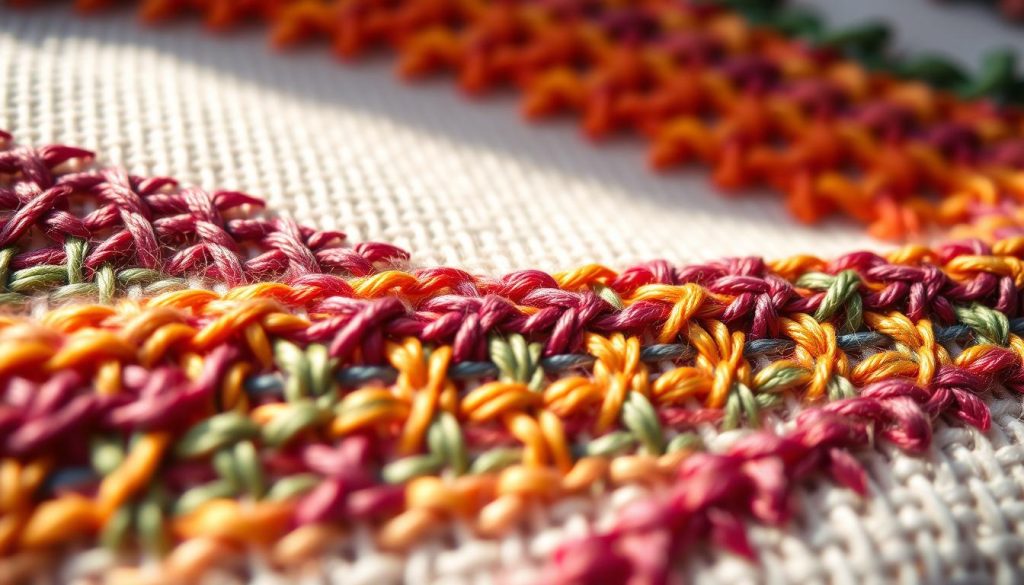
Cross stitch: grid-based accuracy, clear patterns, and relaxing repetition
Pros: A single main stitch on counted fabric gives predictable results. Charted patterns on aida reduce guesswork for beginners.
Cons: Counting errors occur, and highly detailed patterns can be time-consuming.
Time, cost, and finish quality: what to expect
Crochet often finishes fastest for large pieces. Embroidery and cross stitch reward patience with detail.
Cost-wise, cross stitch needs minimal supplies: aida, floss, a blunt needle, and a hoop. Embroidery may require varied threads and needles. Crochet needs hooks and yarn but few extras.
“Clear charts reduce uncertainty compared with freehand placement and complex shaping.”
| Factor | Crochet | Embroidery | Cross Stitch |
|---|---|---|---|
| Speed | Fast for large items | Moderate | Slow but steady |
| Cost | Moderate | Varied | Low |
| Finish | Drape and volume | Painterly texture | Crisp, pixel-like designs |
- Choose simpler patterns and larger fabric counts for early success with cross stitch.
- Care tips differ: block crochet, protect embroidered fabric, and frame completed cross work.
- Your ideal craft depends on timeline, budget, and the look you want to achieve.
CROSS STITCH: Why It’s Ideal for Your First Stitching Project
A counted ground and a single repeatable motion make learning much less intimidating.
Start with one main stitch on 14-count aida. This fabric has clear holes so each cross is easy to place and see. You’ll use a basic toolset: six-strand embroidery floss, a blunt needle with an elongated eye, a hoop, and sharp scissors.
Charts map symbols directly to colors and squares, so you follow patterns step by step without guessing placement. Free downloadable cross stitch patterns and regular newsletters supply fresh ideas as you progress.
- You’ll learn simple thread management to avoid tangles and save time.
- Backstitching adds crisp outlines without raising difficulty.
- All-in-one beginner kits remove guesswork by including extra floss and clear instructions.
- Active Facebook groups and online forums help you troubleshoot counting and color changes.
Keep your first project small and clearly charted. That builds accuracy and confidence. Once you master the count and one stitch, you can try finer fabric and larger patterns with ease.
Shop Cross Stitch Essentials: Kits, Patterns, Fabric, Floss, and Supplies
Find everything you need to start a new project—from complete kits to individual threads and finishing tools.
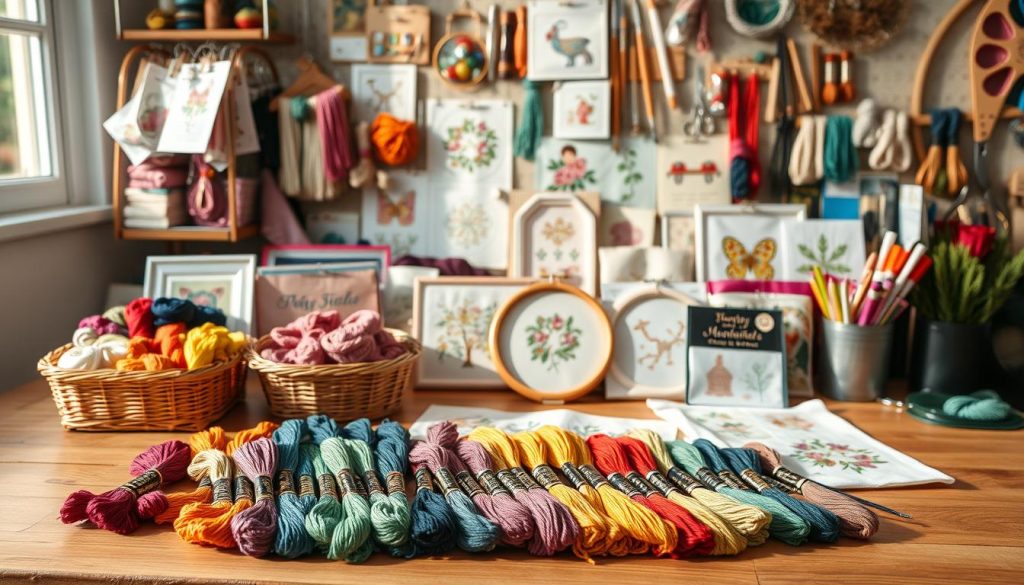
All-in-one kits to get started fast
All-in-one kits include fabric, floss, a blunt needle, and a chart so you can start immediately. Choose beginner-friendly stitch kits with clear charts and pre-sorted thread.
Downloadable patterns and what’s trending now
Downloadable patterns give instant access to seasonal designs like holiday ornaments, Schooler Santa sets, and Halloween or Thanksgiving motifs. Look for Quick & Easy Pattern sales on weekends.
Fabric, floss, needles, hoops, and accessories you’ll actually use
Stock the essentials: 14-count fabric, quality floss, needles, and a small hoop. Add beads, charms, or buttons only when a pattern calls for them.
Weekend sales, clearance items, and gift-ready kits
Shop clearance and kits on sale to save. Pick gift-ready cross stitch kits with neat packaging and add cards for a thoughtful present.
- Use categories—Patterns, Kits, Floss & Thread, Fabric, Needles & Hoops—to shop efficiently.
- Pair a small chart with pre-sorted thread to reduce setup time.
- Sign up for newsletters to catch limited-time sales and new pattern drops.
Learn Cross Stitch: Step-by-Step Guides, Toolkits, and Pro Tips
Ready to learn cross stitch? Start with a clear plan and a small toolkit so you can focus on technique.
Your essential cross stitch toolkit checklist
Minimal supplies get you started fast: 14-count aida, six-strand embroidery floss, a blunt needle with an elongated eye, a hoop sized to your pattern, sharp pointed embroidery scissors, and a soluble marker or magic paper.
Start stitching: read a chart, make your first stitch, outline with backstitch
First, learn to read chart symbols and find the center so every cross lands in the right square. Count carefully on 14-count fabric for steady results.
Begin with a secure thread start, keep even tension, and form neat X’s. Work small color blocks to avoid frequent thread changes.
Backstitching adds crisp outlines for lettering and borders without adding much complexity. Follow structured tutorials: start, read a chart, then add backstitch for finish details.
Beyond the basics: creative uses for leftover threads
Save leftover threads (ORTs) for bookmarks, tiny tassels, or mixed-media cards. Use household items—bobby pins, binder clips, or a small tray—as budget-friendly substitutes for specialty tools.
| Step | What to do | Why it helps |
|---|---|---|
| Checklist | 14-count aida, six-strand floss, blunt needle, hoop, scissors, soluble marker | Keeps setup minimal so you can get started quickly |
| Reading charts | Find center, match symbols to colors, count squares | Reduces placement errors and speeds progress |
| First stitch | Secure start, even tension, finish X’s neatly | Creates a tidy fabric and makes color changes simpler |
| Thread care | Separate strands, avoid tangles, use parking for color blocks | Saves time and reduces rework |
“Start small and follow a clear tutorial — it builds accuracy and confidence.”
Conclusion
A guided, single-stitch workflow helps you see steady progress and build confidence quickly.
If you want a simple start, pick a small chart on 14-count aida with a blunt needle and a limited palette.
Choose ready-made kits or cross stitch kits with pre-sorted floss to save time. Watch weekend sale banners and compare the Kits on Sale and Patterns on Sale categories before you shop.
Use free downloadable cross stitch patterns, tutorials, and active online groups for help. Prefer embroidery or other craft styles? Try a tiny sampler, then return to counted work for calm, measurable progress.
Finish pieces as ornaments or framed art for your home. Add a gift card and a stitch kit when shopping for friends to make gifting easy.
 English