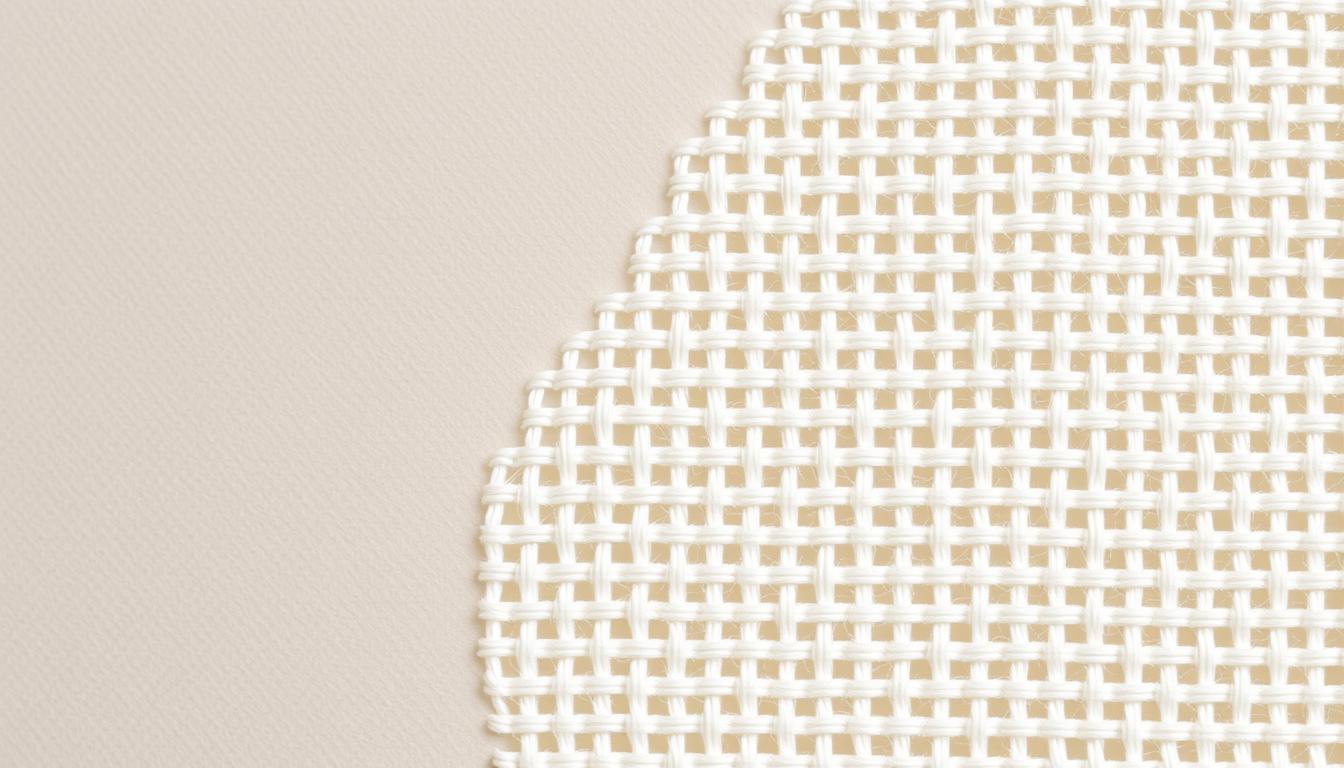
You may unwrap Aida and find it stiff, sharp, or slow to work with. In counted-thread embroidery, that firm feel comes from the gridded squares, visible holes, and factory finishing.
The cloth’s count — how many stitches fit per inch — controls size and thread behavior. A 14-count aida gives clear squares and easy X-shaped units, so beginners see the pattern and get consistent coverage with common six-strand floss from DMC or Anchor.
Needle choice and hoop setup also matter. A blunt-point needle with an elongated eye helps the thread glide through holes without splitting fibers.
In this article you’ll learn why Aida feels hard, when to soften it, and quick fixes like gentle pre-wash, better hoop tension, and a small test area so your first photo-to-finish results match your vision.
Key Takeaways
- Aida’s grid and finishing cause the initial firmness you feel.
- Count (stitches per inch) affects size, thread coverage, and needle glide.
- Use a blunt needle, six-strand floss, and a hoop for smooth work.
- Try gentle pre-washing or adjusted hoop tension to soften the hand.
- Test a small area to confirm look, feel, and pattern scale before you begin.
Why Aida Can Feel “Too Hard” for Beginners
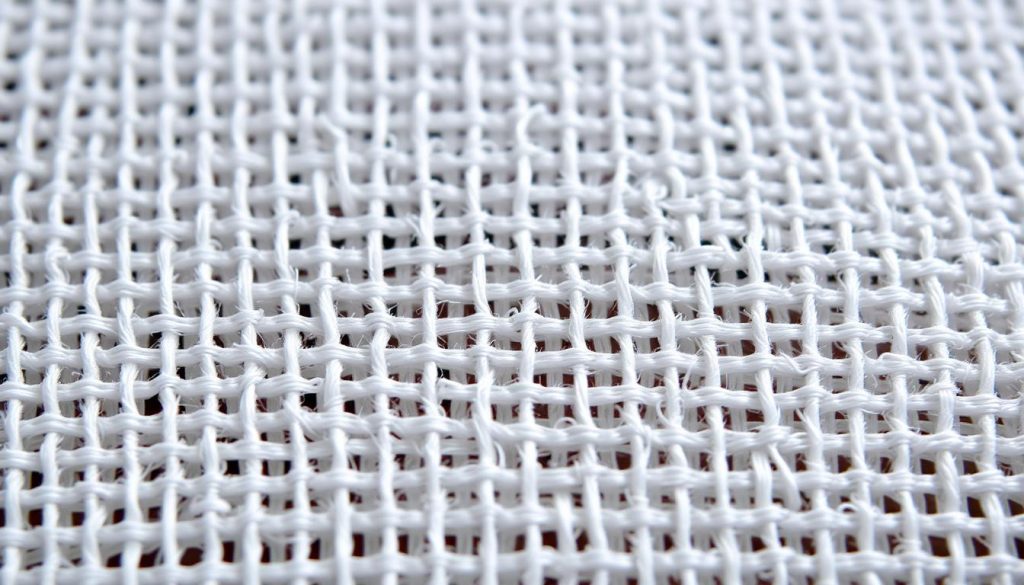
That crisp, structured feel of Aida comes from how it’s woven and prepared at the mill. You can see a plain grid of squares with a hole at each corner. This evenweave grid makes counting easy and helps you place each cross stitch precisely.
What Aida Cloth Is
Aida is a woven fabric with visible squares that guide your needle. The count equals how many stitches fit in an inch, so higher count makes smaller, denser stitches.
Starch, Finish, and Count Per Inch
Most stiffness comes from factory sizing and starch used to keep the cloth crisp on the shelf. That finish helps edges but can make needle glide harder and increase thread drag.
- Example: 28-count evenweave over two threads = 14-count Aida over one square.
- Lower counts (11–14) feel looser than 18–20 and affect tension and coverage.
| Count (stitches/inch) | Feel | Recommended use |
|---|---|---|
| 11–14 | Softer hand, easy to see squares | Beginners, bold patterns, larger designs |
| 18–20 | Firmer, tighter weave | Detailed patterns, finer color work |
| 28 (evenweave over 2) | Very fine, equivalent to 14 Aida | Advanced, high-detail charts |
Simple Ways to Soften Aida Before You Start Stitching
A gentle rinse and careful hooping are all you need to soften Aida for clean work.
Pre-wash and condition: Fill a basin with cold water and dunk the fabric briefly. Use no harsh detergents. Handle the cloth gently so the square grid and holes stay aligned.
Lay the piece flat on a clean towel to air-dry. Smooth the fabric with your hands while it is still slightly damp. This keeps the count accurate per inch and avoids warping the pattern.
Hoop or frame setup: Fit the Aida into a hoop so it is taut but not drum-tight. Too much tension can distort the cross form and pull holes out of line.
Use a blunt needle with an elongated eye and six-strand cotton floss to reduce snagging as you work. Cover the inner hoop edge with low-tack paper tape to protect the fabric from scuffing.
Common mistakes to avoid
- Avoid hot water, aggressive scrubbing, or wringing; these can shrink cotton and shift the count.
- Don’t use strong detergents or bleach; they can stiffen or weaken fibers.
- Test a small corner first as an example before you start the main photo-ready area.

| Step | What to do | Why it helps |
|---|---|---|
| Cold rinse | Submerge briefly, gentle squeeze | Relaxes sizing without shrinking |
| Air-dry flat | Lay on towel, smooth by hand | Keeps squares and holes true to count |
| Hoop setup | Taut, not drum-tight; tape inner rim | Prevents distortion and scuffing |
| Toolkit check | Blunt needle, six-strand floss, hoop | Reduces splitting and eases stitching |
CROSS STITCH Techniques That Make Stiff Fabric Easier to Work
Working with firm Aida calls for a few tool and tension tweaks that save time and frustration.
Use the right tools
Pick a blunt-point needle with an elongated eye so embroidery floss seats cleanly in each square without slicing fibers. Use six-strand cotton and keep thread lengths short to cut fuzz and tangles.
Control tension
Light hands win. Keep your hoop taut but not drum-tight. Pull stitches with a gentle, even tension so the fabric grid stays true to count.
Choose a method that fits the design
For large color blocks, the cross-country method speeds work. For complex patterns, parking helps you keep track without over-handling firm fabric.
Backstitch basics
Do outlines after the crosses. Use short passes and a steady needle point so embroidery thread lays flat and edges read crisp.
“Small adjustments in tools and tension make stiff fabric feel like second nature.”
| Problem | Fix | Why it helps |
|---|---|---|
| Thread splitting | Use elongated-eye blunt needle | Threads pass through holes without fraying |
| Too much drag | Shorten thread length; lighten tension | Reduces fuzz and snagging on fibers |
| Hoop abrasion | Pad inner rim with paper tape | Protects fabric and embellishments |
When to Change Fabric: Aida vs. Evenweave and Linen
Pick your ground fabric by balancing readability, comfort, and the final look you want. If you value neat counting and bold shapes, 14-count aida is a safe starter. It gives clear squares that help you place each cross and stitch precisely.
Quick comparison: 14-count Aida vs higher counts and evenweave
14-count Aida — easy to read, forgiving for beginners, and ideal for sampler-style patterns and bright colors. It holds structure and reduces miscounts.
Higher counts / 28-count evenweave — stitch over two threads on 28 to match 14-count size while gaining a softer hand and finer form. You may use a smaller needle and finer tension.
Evenweave and linen — these fabrics drape softer and suit photo-like patterns, fractional stitches, and detailed backstitch work. They lower hand fatigue but need steadier counting.
- Adjust thread strands and floss choice (brands like DMC or Anchor) for coverage when you move up in count.
- Test a small area first to confirm size, color, and how embellishments sit on the fabric.
| Fabric | Feel | Best for |
|---|---|---|
| 14-count Aida | Structured, easy to read | Beginners, bold patterns, samplers |
| 28-count evenweave (over 2) | Softer, finer detail | Photo-like patterns, fine outlines |
| Linen | Soft, textured | Heirloom samplers, fractional work, wool work |
Conclusion
Conclusion
When your Aida feels stubborn, a few simple steps turn it into a pleasant ground for your work. You now know that finish and count cause most stiffness, and gentle pre-wash plus correct hoop tension make threads glide.
Use the right needle, DMC or Anchor floss, and a short thread length so each cross and stitch sits neat. Pick methods — cross-country or parking — that match the pattern and your comfort with counting.
Keep backstitch for crisp sampler outlines and take regular photo checkpoints. With this plan you can evaluate new patterns, choose fabric by count, and grow your embroidery art one X at a time.
 English