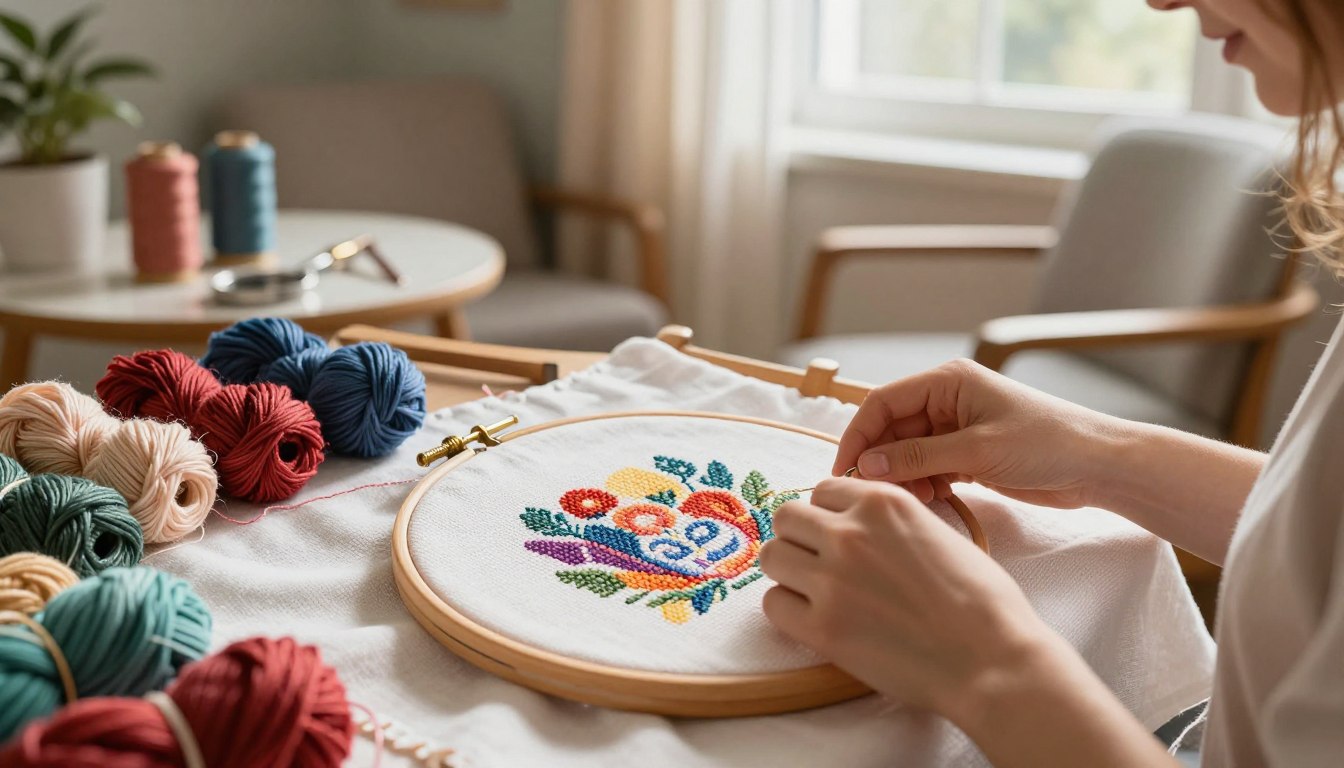
Cross stitch is more than just a hobby. It’s a way to calm your mind and improve focus. Whether you’re new to cross stitch or returning to it, the simple act of counting stitches helps you stay in the moment.
Studies and personal experiences show that repetitive stitching can lower stress and anxiety. Places like Royal United Hospitals Bath talk about the benefits of crafts. Organizations like Caterpillar Cross Stitch also share how stitching can improve mood and sleep.
To start, you only need a few things: a needle, fabric, and some DMC floss. This hobby is affordable and can be done anywhere. It’s perfect for busy people and all skill levels.
Using cross stitch as therapy can lead to real benefits. It can help you concentrate better at work or school. It also makes for a calming evening activity that can help you sleep better. Plus, it builds self-esteem and supports fine motor skills and hand-eye coordination.
Key Takeaways
- Cross stitch reduces stress through calming, repetitive motions.
- Counting and pattern work enhance focus and sustained attention.
- Beginner cross stitch is affordable, portable, and accessible to all ages.
- Regular stitching can improve sleep and provide a screen-free self-care ritual.
- Completed projects offer tangible rewards that boost motivation and mood.
The science behind repetitive stitching and reduced stress
When you start stitching, your brain gets into a rhythm. This repetitive motion calms your mind and helps you focus. It’s a way to practice mindfulness and take short breaks.
Stitching is like a moving meditation. You see your work grow with each X-shaped stitch. This feedback tells your brain you’re doing well, which reduces stress and keeps you present.
How rhythmic motion changes chemistry
Repetitive actions change your brain’s chemistry. Studies show they lower stress hormones and increase feel-good chemicals. Research at Royal United Hospitals Bath found that crafts, like cross stitch, can lower cortisol levels.
Flow state and focused immersion
Flow state is when you’re fully in the moment. Cross stitch helps you get there with clear goals and feedback. You count stitches and see your work grow, which keeps you calm.
Evidence from studies and clinical observations
Studies and therapists agree: stitching lowers anxiety and boosts mood. They suggest short, regular sessions for best results. Cross stitch is backed by many as a way to manage stress.
Practical takeaway
Short stitching sessions can make a big difference. Try 15–30 minutes a few times a week. It builds habit, improves mindfulness, and helps you relax.
CROSS STITCH as a tool for improving concentration and attention
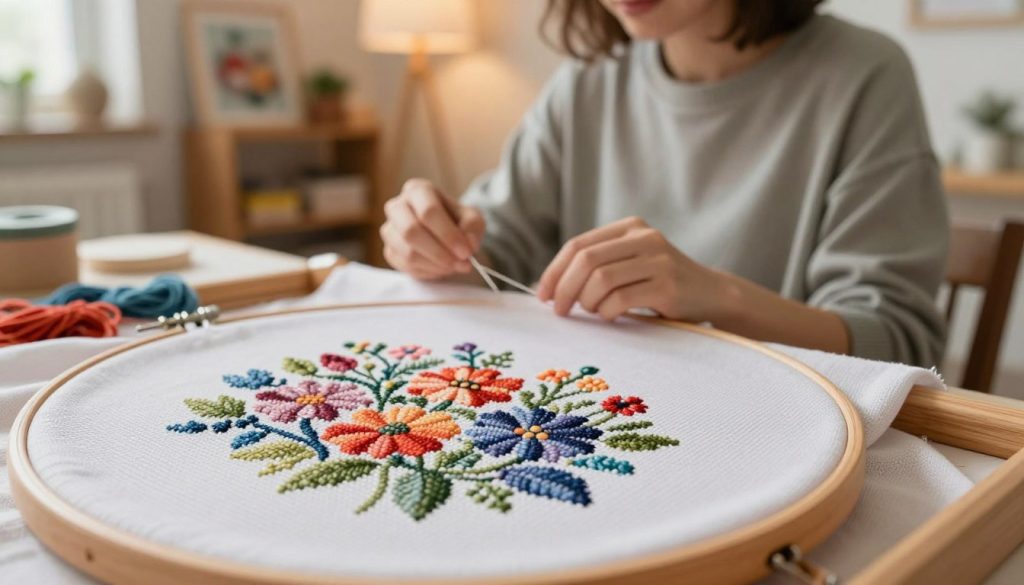
Counted cross stitch requires you to map squares and follow color keys. It trains your brain to stay focused. This task is predictable and low in distractions, helping you concentrate better.
Start with a small project and build your confidence. A 10×10 motif helps you track each stitch and avoid skipping steps. Using high-contrast floss and lighter fabric makes it easier to follow the pattern.
Counting stitches, pattern following, and sustained attention
Counting stitches makes each square a goal. Seeing your progress on a printed pattern motivates you. Use a water-soluble pen or highlighter tape to keep your place.
Work in short, focused blocks. Try 20-minute sessions with brief breaks. Over time, increase the session length to improve your concentration.
Benefits for people with attention challenges and ADHD
People with ADHD often benefit from structured tasks. Cross stitch provides a calm, productive activity. The tactile work and clear counting reduce distractions and offer rewards as you complete rows.
Many find that pattern following and repetitive stitching lower anxiety and boost persistence. You get small successes with each row, which motivates you and reduces stress.
Practical exercises to build focus using cross stitch patterns
- Begin with a 10×10 grid motif. Time a single session for 15–20 minutes and count stitches aloud to reinforce attention.
- Choose monochrome or geometric cross stitch patterns to limit color switching and simplify pattern following.
- Use counted cross stitch samplers that repeat the same stitch sequence. Repetition trains muscle memory and steadies your gaze.
- Mark progress visually: highlight completed squares on paper patterns or use removable grid tape on fabric.
- Set gradual goals: add five stitches per session until you reach a sustainable rhythm that fits your concentration level.
Below is a compact plan you can follow over four weeks to increase focus through cross stitch practice. Track sessions, pattern type, and minutes stitched to measure gains in attention.
| Week | Pattern Type | Session Length | Exercise | Progress Marker |
|---|---|---|---|---|
| 1 | 10×10 monochrome motif | 3 x 15 min | Count each stitch aloud; mark completed grid | Complete 3 motifs |
| 2 | Geometric 20×20 | 3 x 20 min | Use high-contrast floss; highlight pattern rows | Finish half of motif |
| 3 | Monochrome sampler | 4 x 20 min | Introduce longer runs; grid fabric with pen | Complete two sampler blocks |
| 4 | Repeated-counted cross stitch | 4 x 25 min | Extend sessions; track minutes stitched | Stitch for 100 total minutes this week |
How cross stitch builds patience and perseverance over time
Building patience starts with matching your project pace to your skill level. Begin with small motifs or a bookmark to master thread control and pattern reading. Once you’re steady, move on to medium-sized samplers and then to larger pieces.
Work in short, focused sessions to reach stitch-count goals. Breaking a pattern into blocks lets you see your progress. Keep a challenging piece and a simple one to balance your work.
Seeing your progress motivates you with small rewards. Each completed row or section gives a sense of achievement. This builds momentum and turns slow effort into a lasting habit.
Don’t worry about mistakes like miscounted stitches or tangled thread. Learn to fix them with a seam ripper, tweezers, or by re-gridding the fabric. Treating mistakes as temporary problems helps keep your patience.
Track any recurring errors and adjust your technique. Better lighting, a larger fabric count, or a different needle can help. Each solved problem strengthens your perseverance.
Emotional benefits: mood, self-esteem, and relief from anxiety
Cross stitch gives you quiet wins to hold and show off. Finishing a small piece boosts your self-esteem and mood. It shows your hard work and builds long-term confidence.
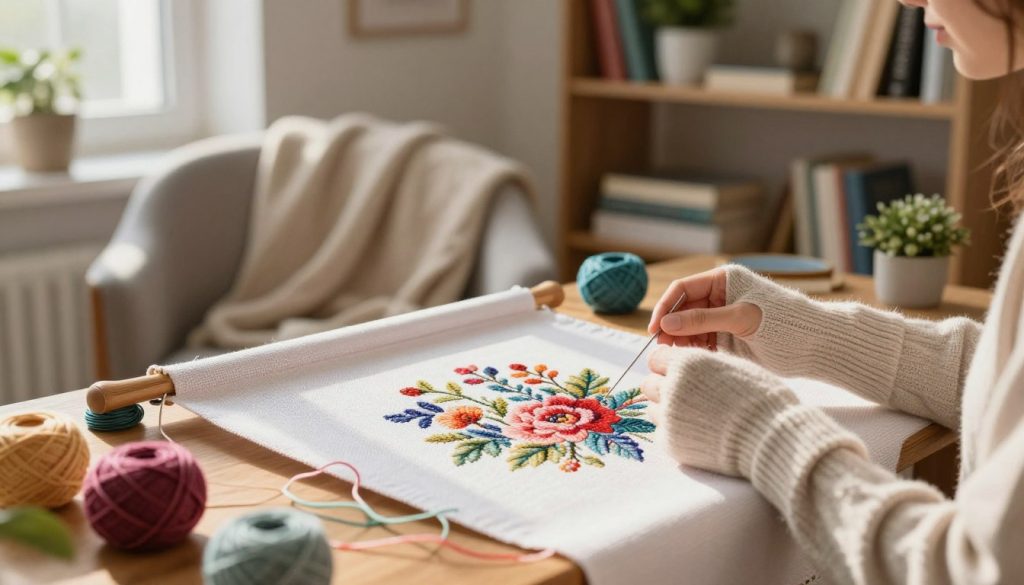
Sense of achievement from completed projects
Finishing projects gives you a steady sense of reward. Each piece you complete shows you’ve mastered something. This helps lower anxiety by giving you clear goals and results.
Cross stitch as a non-screen evening ritual to improve sleep quality
Stitching before bed helps you relax. The motion calms your mind and reduces blue light exposure. Short sessions of 15 to 30 minutes can signal it’s time to sleep.
How gifting and sharing your work boosts social connection and mood
Sharing your stitching with others boosts your mood and social ties. Joining stitch-alongs and meetups gives you feedback and support. Making gifts shows off your skills and strengthens relationships.
To start, set aside time each evening for stitching. Choose patterns that are easy to see in low light. Have a few small gifts ready to share. These steps make cross stitch a great way to improve your mood, self-esteem, and sleep.
Physical and cognitive advantages: fine motor skills and brain health
Cross stitch helps improve your fine motor skills. It requires precise movements like needle insertion and thread tensioning. This strengthens your fingers and enhances control.
Using different fabrics and thread counts can adjust the difficulty level. This lets you adapt as your dexterity grows.
Working on detailed motifs boosts your hand-eye coordination. Each cross stitch must be placed correctly, and you switch between stitches. This improves your ability to coordinate your eyes and hands.
Reading a chart and counting stitches is a cognitive workout. It involves pattern reading, color changes, and planning. These activities improve your working memory and executive function.
Engaging in cross stitch may help prevent cognitive decline with age. It keeps the brain active with complex tasks. Cross stitch, along with puzzles, reading, and social activities, can keep your mind sharp without costing much.
To see real benefits, mix up your stitches and materials. Try backstitching, fractional stitches, and French knots. Choose clear DMC floss and a fabric count that matches your eyesight and hand strength. These changes make cross stitch a valuable exercise for both your body and mind.
Practical cross stitch tips and tools to maximize mental benefits
Start with a setup that supports calm and focus. Choose projects that fit your energy and time. Good lighting, a comfy chair, and a clean workspace help keep sessions short and regular.
Choosing beginner cross stitch kits, cross stitch fabric, and DMC floss
Look for beginner kits with clear instructions and labeled DMC floss. Use 14-count Aida fabric to avoid eye strain. Start with small motifs to build confidence.
DMC floss ensures consistent colors. Keep extra skeins of key colors handy. Higher-count fabric means finer details and slower stitching.
Essential cross stitch tools, frames, and organization strategies
Get basic tools like blunt tapestry needles, small scissors, a needle threader, and a hoop or Q-snap. Frames help with even tension and posture.
Use simple organization methods. Label floss on bobbins and keep a portable kit. A magnetic chart holder or highlighter tape helps with counting.
Embroidery hacks, backstitching techniques, and counted cross stitch shortcuts
Try embroidery hacks to save time. Use a water-soluble pen or a machine grid to avoid counting mistakes. Loop-start or waste-knot anchoring secures thread without knots.
Apply backstitching for crisp outlines. Use one strand for delicate lines and two for bold details. Master shortcuts like working in blocks of ten and jumping between colors.
Keep sessions brief and regular for mental benefits. Match project complexity to your mood. Good frames and tidy organization support steady practice.
Creating a mindful stitching routine and selecting the right projects
Start small to build a lasting habit. Aim for 10–30 minutes a day or a focused 15–20 minute evening session. Match a simple ritual to your time slot, such as making tea, setting a timer, and choosing a quiet chair. These cues help embed cross stitch routines into your day and make practice feel automatic.
How to set realistic stitching goals and build a daily habit
Set clear, measurable milestones: aim to finish a motif, complete X stitches, or stitch for a set number of minutes. Record progress in a small journal or a project planner. Seeing daily wins strengthens motivation and keeps cross stitch planning practical and reachable.
Project selection: patterns, ideas, and skill-appropriate projects
Pick projects that match your current level. If you are trying cross stitch for beginners, choose single-color motifs, geometric repeats, or sampler kits. Move up to multi-color counted cross stitch and backstitching as you gain confidence.
Choose quick wins like bookmarks, hoop art, small home decor, or giftable ornaments for steady progress. Those cross stitch ideas give visible results and reduce the urge to abandon larger cross stitch projects.
Using gridding, planning, and projects to prevent common mistakes
Plan before you stitch. Use printed cross stitch patterns and mark fabric with water-soluble pens or pre-marked Aida. Pre-count and secure thread ends to avoid tangles and lost time.
Adopt cross stitch gridding to prevent miscounts. Grid lines reduce unpicking and keep your focus steady. Double-check fabric orientation and color keys before you begin each session.
Use a needle minder and end-of-session checks to cut down on dropped needles and miscounts. These small habits stop cross stitch mistakes early and make each session more productive.
Below is a compact comparison to guide your project picks and routine choices.
| Skill Level | Best Project Types | Routine Goal | Planning Tools |
|---|---|---|---|
| Beginner | Single-color motifs, bookmarks, small hoop art | 10–20 minutes daily; finish a motif in 1–3 sessions | Printed cross stitch patterns, water-soluble pen, simple planner |
| Intermediate | Multi-color samplers, small counted cross stitch pieces | 15–30 minutes daily; set stitch-count milestones | Pre-gridded patterns, stitch journal, needle minder |
| Advanced | Large counted cross stitch images, detailed landscapes | 20–60 minutes sessions; track progress by sections | Detailed cross stitch planning, full gridding, color key charts |
Conclusion
Cross stitch is easy to start and won’t break the bank. It’s great for your mental health. Short sessions can boost focus and patience. It also helps lower stress and makes you feel happier.
It’s good for your hands and brain too. The touch and repetition of cross stitch improve fine motor skills. They might even help your brain stay sharp for longer.
To begin, choose a starter kit with DMC floss and 14-count Aida. Set small goals for each day. Use gridding and simple ways to keep things organized.
Keep your threads tidy and mark your patterns clearly. Pick projects that are easy to finish. This way, you’ll see progress and stay excited to keep going.
Try to stitch for 15–30 minutes each day. This helps you get into a flow state and enjoy the benefits. Joining a stitch group can give you support and new ideas.
Stitching can help you relax, focus better, or connect with others. Every stitch you make brings you closer to feeling better and more focused.
 English