Starting a consistent creative routine can be tough. But routine stitching is a great way to build lasting creative discipline. By stitching regularly, you feel a sense of achievement. It also deepens your connection to your creative side.
Creating a routine gives you a steady way to express your creativity. It helps you grow as a creative person. Experts say routines are based on ease, not drama. So, routine stitching is a simple way to nurture your creative spirit.
Key Takeaways
- Routine stitching helps build lasting creative discipline.
- Consistent stitching fosters a sense of accomplishment.
- Embroidery inspiration can be found in routine stitching practices.
- Creative discipline is developed through regular creative activities.
- Routine stitching provides a consistent outlet for creativity.
The Meditative Power of CROSS STITCH for Creative Discipline
The rhythmic motion of cross stitch can be a powerful tool for mental focus. As you stitch, you’ll find that the repetitive motion can induce a meditative state. This state can help you cultivate creative discipline by training your mind to focus on the present moment.
Understanding the Connection Between Needlework and Mental Focus
Needlework, including cross stitch, requires attention to detail and a steady hand. As you work on a project, you’ll develop your ability to concentrate. This allows you to stay focused on complex tasks.
The embroidery hacks and needlework secrets you learn along the way will also enhance your skills. This makes you a more proficient crafter.
How Regular Stitching Creates Productive Habits
Regular stitching can create productive habits by providing a consistent routine and a sense of accomplishment. As you work on your cross stitch projects, you’ll develop a routine. This routine helps you stay on track and achieve your goals.
By following cross stitch tips and using cross stitch patterns, you’ll be able to complete projects efficiently. This further reinforces your productive habits.
By incorporating cross stitch into your daily routine, you can experience its meditative power. This craft helps you develop the creative discipline needed to tackle complex projects. With patience and practice, you’ll master various cross stitch techniques. This allows you to create beautiful and intricate designs.
Essential Tools and Materials to Begin Your Cross Stitch Journey
Starting your cross stitch journey needs more than just excitement. You need the right tools and materials. The correct supplies make your stitching better and your projects last longer. They help you focus on creating, not on what to do next.
Selecting Quality Fabric and DMC Floss for Lasting Projects
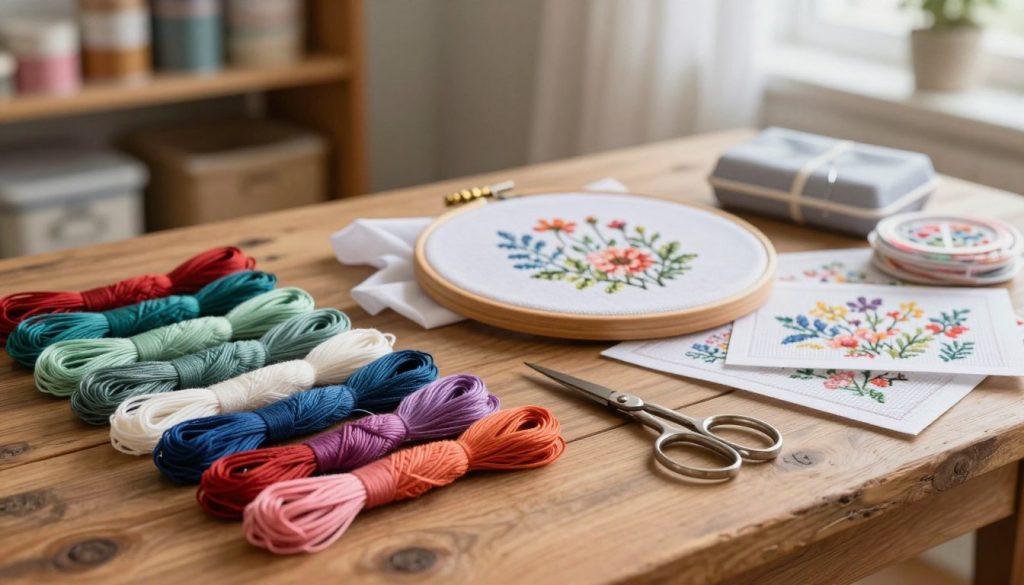
The base of any cross stitch is the fabric and thread. Aida cloth and Evenweave are top picks because they have a grid that makes stitching simple. For thread, DMC floss is the favorite for its many colors and quality. Picking the right fabric and thread is key for your project’s look and life.
Choosing the Right Needles and Cross Stitch Frames for Comfort
Tapestry needles are perfect for cross stitch because of their blunt tips and big eyes. They make threading easy. A cross stitch frame or hoop keeps your fabric tight and comfortable. Frames come in sizes and styles, fitting your stitching way.
Creating an Effective Cross Stitch Organization System
Keeping your workspace tidy is crucial. You need a way to store threads, needles, and patterns. Thread organizers or bobbins keep your floss neat and within reach. Also, protect your patterns in sleeves or folders to avoid damage and make stitching easier.
Step-by-Step Guide to Mastering Basic Cross Stitch Techniques
Learning basic cross stitch techniques takes patience and practice. It’s important to start with the basics and build up slowly. We’ll guide you through each step, from preparing your fabric to fixing common mistakes.
Step 1: Preparing Your Fabric with Proper Gridding
First, prepare your fabric with a grid. This helps keep your stitches even and accurate. You can use a water-soluble pen or a ruler to draw the grid.
Tip: Choose high-quality fabric like Aida or Evenweave. It makes your stitches even and your project look professional.
Step 2: Reading and Transferring Cross Stitch Patterns
After preparing your fabric, it’s time to transfer the pattern. Start by understanding the pattern’s legend and symbols. Then, use a transfer method like tracing or a transfer pen to mark the pattern on your fabric.
Remember: Take your time when transferring the pattern. Accuracy is key for a beautiful project.
Step 3: Executing Perfect Stitches
Perfect stitches are the heart of cross stitch. It’s about using the right technique to make uniform stitches.
The Standard Cross Stitch Method
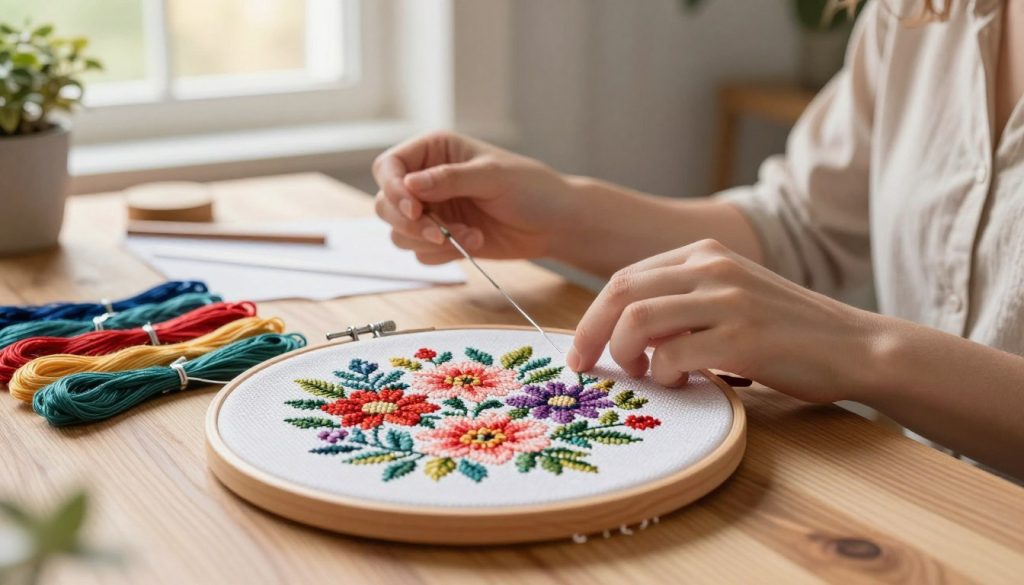
The standard method makes an “X” on your fabric with two diagonal stitches. Start by bringing your needle up at one corner, then down at the opposite corner. Finish the “X” by bringing your needle up at the last corner and down at the remaining corner.
Backstitching Techniques for Definition
Backstitching adds definition to your project. It’s a straight stitch along the edges of your design. Start by bringing your needle up at one end, then down at the other end.
| Stitch Type | Description | Usage |
|---|---|---|
| Standard Cross Stitch | Making an “X” on the fabric | Main stitch for cross stitch projects |
| Backstitch | Making a straight stitch | Adding definition and outlines |
| French Knots | Creating small knots | Adding texture and detail |
Step 4: Troubleshooting Common Cross Stitch Mistakes
Even pros make mistakes in cross stitch. Common issues include misaligned stitches, wrong color usage, and fabric distortion. To fix, identify the mistake and carefully remove it with a seam ripper.
Tip: Work in a well-lit area and use a magnifying glass if needed. Regularly check your work to catch errors early.
Developing a Consistent Creative Practice Through Counted Cross Stitch
Building a consistent creative practice is key for growth. Counted cross stitch is a great way to do this. It helps you develop a habit that brings discipline and mindfulness.
Creating a Sustainable Stitching Routine
Start by setting aside time each day or week for cross stitch. Being consistent helps build a habit. Even a little time each day can be helpful.
As you get better, stitching becomes more relaxing. It helps you focus and calm down.
Creating a routine helps reduce distractions. This makes your stitching more enjoyable and accessible.
Cross Stitch Therapy: Using Needlework for Mindfulness and Stress Reduction
Cross stitch therapy uses needlework to calm the mind and reduce stress. The repetitive motion of stitching is meditative. It helps calm your worries and brings a sense of calm and achievement.
Adding cross stitch therapy to your daily routine can lower stress levels. It’s a great way to find embroidery inspiration and a creative outlet.
| Benefits of Cross Stitch Therapy | Description |
|---|---|
| Mindfulness | Promotes being present in the moment |
| Stress Reduction | Calms the mind and soothes the spirit |
| Creative Expression | Fosters creativity through various cross stitch ideas and projects |
Progressing from Beginner to Advanced Cross Stitch Projects
As you move from beginner to advanced projects, you’ll face new challenges. Start with simple patterns and then try more complex ones. This keeps your practice interesting and rewarding.
To keep growing, try new projects that challenge you. This keeps your practice vibrant and fulfilling.
Conclusion: Stitching Your Way to Creative Fulfillment
Discovering cross stitch techniques can be a game-changer for your creativity. By adding needlework secrets to your daily life, you’ll find peace and boost your skills. This can make you more productive and creative.
Sticking to a routine with cross stitch can make you feel complete and calm. With the right tools and materials, you can make projects that make you happy and proud.
Using the tips from this article, you can begin your cross stitch adventure. As you keep stitching, you’ll get better at focusing and creating. This will help you take on new projects with confidence.
Now, it’s time to grab your needle and thread. Start stitching your way to creative happiness.
 English