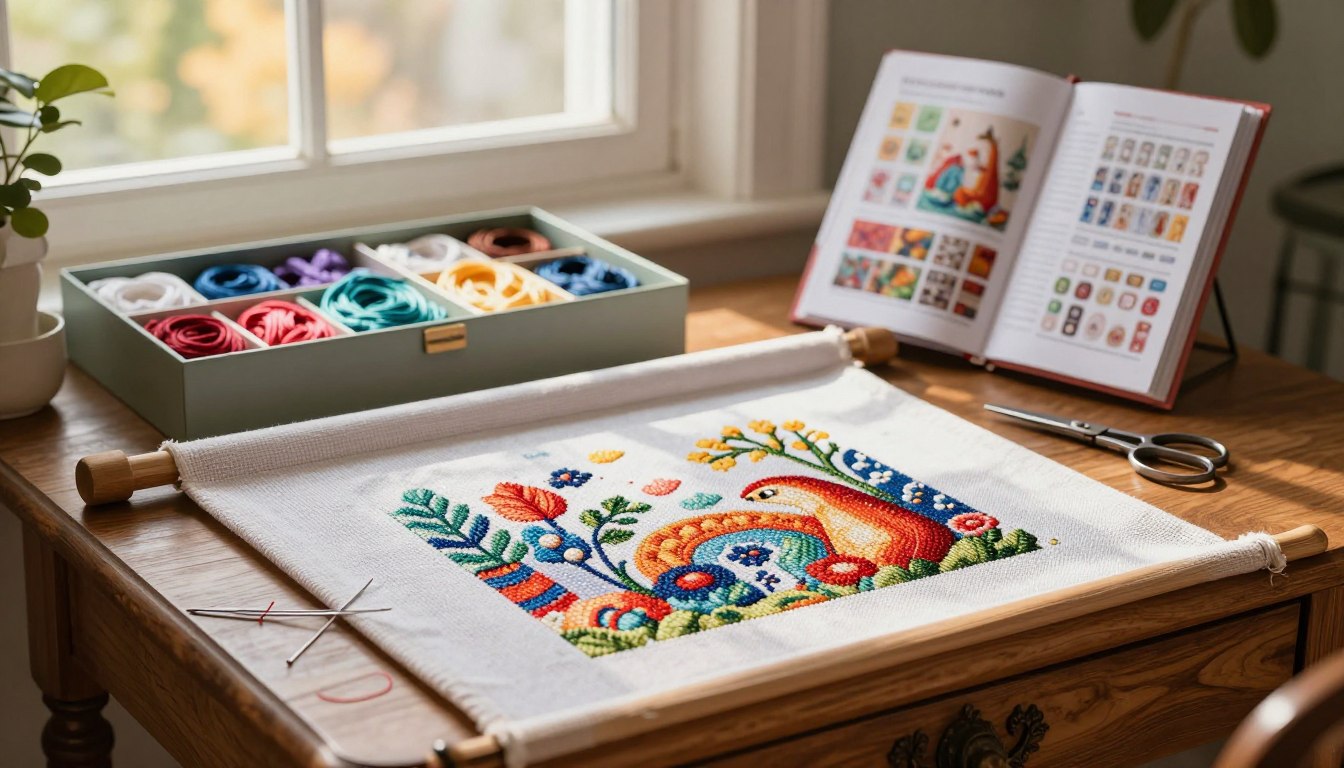
If you want your counted cross stitch projects to look professional, this section has practical tips. You’ll learn how to make each piece neat, clean, and even. These tips will help you avoid rework, save time, and make framing or gifting easier.
These tips are for cross stitch beginners and those who work with DMC floss and printed patterns. You’ll get advice on fabric, tension, tools, stitch methods, thread management, and counting. This way, you can enjoy the craft without getting frustrated.
The article covers everything you need to know. You’ll learn how to choose the right fabric and count, master tension, and pick stitching methods. You’ll also learn how to manage thread and finish pieces cleanly. Follow these tips and you’ll spend less time fixing mistakes and more time stitching with confidence.
Key Takeaways
- Small changes in fabric and tools yield a more professional finish for counted cross stitch.
- Consistent tension and the right needle or hoop lead to even, plump Xs.
- Good thread habits reduce tangles and messy backsides for easier finishing.
- Accurate counting, gridding, and simple repairs save hours and frustration.
- These cross stitch tips are practical for beginners and stitchers refining technique.
Choosing the Right Fabric and Count for Neat Stitches
Choosing the right cross stitch fabric is key to your project’s success. It affects how easy it is to count, the neatness of your stitches, and how colors look on the fabric. Use these tips to pick the best fabric for your skill level and the patterns you want to stitch.
Aida cloth has clear holes and a grid that helps beginners. For newbies, 14ct Aida cloth is often the best choice. It’s forgiving for counting and following simple patterns.
Evenweave fibers are closer together, making them good for 16ct or 32ct projects. They offer a smooth finish and are less prone to splitting. This makes evenweave great for those who want a polished look without the linen’s challenges.
Linen has a natural texture and elegant drape. But, its uneven thread spacing requires more careful counting and placement. If you choose linen, be prepared to spend more time practicing before tackling detailed patterns.
Fabric count affects stitch size and how much fabric shows between Xs. Higher counts like 16ct or 32ct make smaller, denser stitches. Lower counts, such as 14ct or 28ct, show more fabric and might need extra strands for coverage.
Strand choices depend on fabric count. On 16ct or 32ct, two strands work well for neat, less-bulky Xs. For 14ct or 28ct, many use three strands for fuller coverage, but it can look thicker.
When cutting fabric, leave enough margin. Aim for at least a 2-inch border around your design. For larger pieces or framing, a 3-inch margin is better. It gives room for hooping, mounting, and trimming without risking your stitches.
If you struggle with thread splitting on Aida cloth, try evenweave. It has a softer handle and fewer split strands. This change can help improve your stitch consistency and confidence with more complex patterns.
| Fabric | Common Counts | Best For | Typical Strand Use | Note |
|---|---|---|---|---|
| Aida cloth | 14ct, 16ct | Beginner cross stitch, clear counting | 2–3 strands (3 for fuller coverage on 14ct) | Easy grid, visible holes, may split threads |
| Evenweave | 16ct, 32ct | Refined finish, even stitches, less splitting | 2 strands common on 16/32ct | Threads sit side-by-side for tidy Xs |
| Linen | 28ct, 32ct (varies) | Elegant projects, textured look | 2 strands typical on higher counts | Uneven threads require careful counting |
Mastering Tension and Tools to Keep Stitches Even
Good tension and the right tools make your cross stitch look neat. You can control tension with the right frame. Keep threads flat with simple tools and avoid twisted floss with smart needle techniques. Small changes will improve your finish and speed.
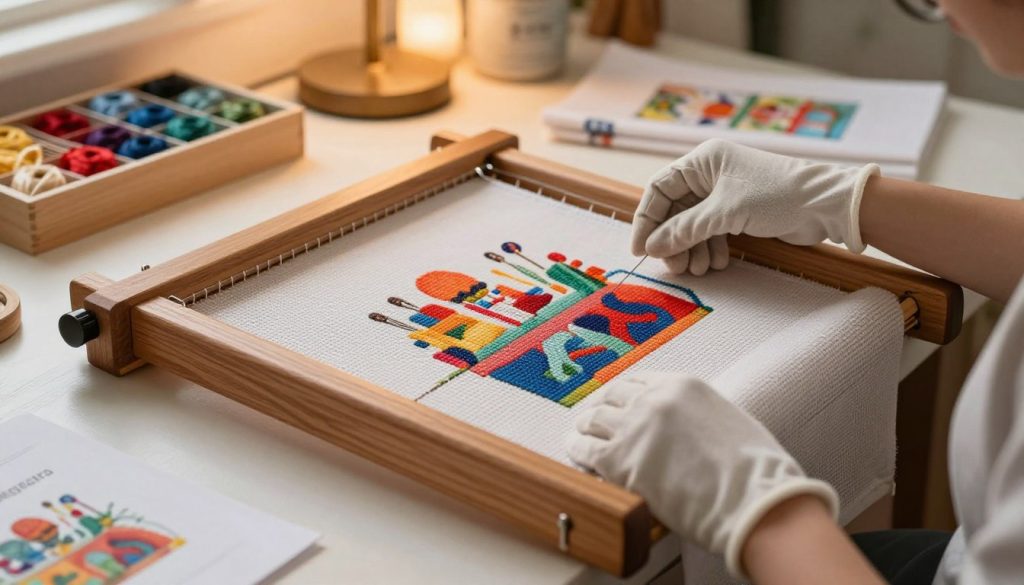
Choosing between an embroidery hoop, Q-Snap, or larger frames affects tension and comfort. An embroidery hoop is light and portable, perfect for stitching on the go. A Q-Snap holds fabric very taut in a square or rectangle, helping create even stitches and reducing distortion. Scroll or wooden frames give steady tension for big projects and keep fabric flat across a wide area.
Use a laying tool to smooth and position threads before you lock a stitch. A simple chopstick or a dedicated laying tool helps you arrange strands so they lie parallel and flat. The railroading technique separates strands with the needle as you stitch and keeps threads from twisting, giving a polished, raised look to each cross. Railroading and careful laying take extra time but reward you with cleaner, more even results.
Pick the correct tapestry needle size for your fabric count and strand number. A blunt needle reduces fabric damage and guides the thread through the weave. If the needle is too large, it will stretch holes and ruin tension. If it is too small, threading and passing multiple strands becomes awkward. Match needle size to your fabric and floss for the smoothest stitching.
Work habits protect your tension and tools. Let your needle hang occasionally so the floss can untwist. If the strands start knotting, stop and untwist rather than forcing the stitch. Use sharp embroidery scissors for clean thread ends, a needleminder to park needles safely, and keep your workspace clean to prevent stains or rust marks on fabric.
Ergonomics matter. If your stitches are too tight, lift the thread slightly with the needle as you pull through, or give a small tug near the end of the thread to remove slack if you stitch loosely. Consistent hand position and relaxed shoulders help you keep steady tension over long sessions.
| Tool | Strength | Best Use | Notes |
|---|---|---|---|
| Embroidery hoop | Portable, easy | Small to medium projects, travel | Good for quick work; tension may loosen over time |
| Q-Snap | Very taut, square area | Neat stitches, small to medium detailed pieces | Preferred by many for even tension and cleaner finish |
| Cross stitch frames (scroll/wood) | Stable, large coverage | Large projects, long-term work | Keeps even tension across wide fabric; less portable |
| Laying tool | Precision thread control | Flattening threads, arranging strands | Helps form even surface texture; pairs well with railroading |
| Needle (tapestry) | Blunt tip, various sizes | All counted-thread work | Match size to fabric count and strand number to avoid distortion |
| Small accessories | Maintenance and safety | Scissors, needleminder, clean mat | Prevents stains, lost needles, and preserves tools |
CROSS STITCH: Stitching Methods for Neat, Consistent Xs
Getting consistent Xs is all about how you stitch and your habits. The techniques you choose will affect the final look. Small changes in how you stitch can make colors and details stand out.
For large areas of the same color, try the Danish method. You stitch one leg at a time, then go back for the other. This keeps the stitches even and rows neat. Many prefer DMC threads for this method, especially when stitching from top to bottom and left to right.
The English Victorian method stitches a full X in one go. It’s great for keeping color flow with variegated floss. You can change the direction to add shading. This method might not be as uniform, but it adds a painterly touch to your work.
Choose the right method for your project. Use the Danish method for solid colors and a crisp look. For variegated threads or where color changes are key, go with the English Victorian method. You can switch methods as needed.
Keep your stitch direction the same throughout. Make sure all top legs point the same way. This makes the fabric look like one piece. It also helps backstitching and details sit well on top of the crosses.
Test techniques with small swatches before starting a project. Try embroidery hacks like short thread lengths and neat ends. These tricks can speed up your work and make it look better.
Thread Management and Floss Best Practices
Good thread care makes your cross stitch look neat and stitching fun. Choose brands like DMC floss or Anchor for even colors and less fraying. Make sure the strand count in your pattern matches your fabric to get the right stitch size.
Choosing quality floss and correct strand count
DMC floss is great for consistent colors and durability. Always check your pattern for the right strand count before starting. Use two strands on 16ct or 32ct for neat stitches and the loop method. For fuller stitches, use three strands on 14ct or 28ct, but not too many on high-count fabric.
Preventing tangles, knots, and twist
Cut your thread to 10–12 inches to avoid snags and twist. Let the needle dangle to let the thread unwind naturally. If you feel twist, stop and untwist it instead of forcing it. If strands separate, gently join them to keep your stitches smooth.
Proper starting and ending techniques
Avoid big knots by using the loop method for two-strand starts or weaving the tail under stitches. For ends, weave the tail under stitches to secure it without bumps. If your floss knots a lot, try shorter lengths and a steady rhythm.
Keep your workspace tidy and store skeins flat or on cards. Small habits like winding skeins onto bobbins and labeling thread colors save time and reduce mistakes.
| Topic | Quick Tip | Why it helps |
|---|---|---|
| Floss brand | Use DMC floss or Anchor | Consistent dye lots, less fray, reliable colorfastness |
| Strand count | Follow pattern: 2 strands for 16/32ct, 3 for 14/28ct | Avoids puffiness or gaps; keeps stitch size consistent |
| Length | Cut 10–12 inches | Reduces tangles and twist; easier to manage |
| Starting | Use loop method or weave tail | No bulky knots; cleaner front and back |
| Ending | Weave under back stitches | Secure finish without lumps on the front |
| Tangle prevention | Let needle dangle to unwind; untwist when needed | Stops knots before they form; smoother stitching |
| Organization | Use bobbins and label colors | Improves cross stitch organization and speed |
Counting, Gridding, and Following Cross Stitch Patterns Accurately
Accurate counting and a clear plan keep your project neat and save time. Start with simple checks to place the design and set up a temporary guide. Use tools and habits that reduce errors and make large patterns manageable.
Centering is key. For centering cross stitch, find the pattern center using arrows or the printed grid, then find the fabric center by folding or creasing. Mark lightly where needed, but avoid permanent marks that could show through.
Try several gridding methods to suit the piece. Basting a temporary grid with contrasting thread gives a clear visual map. A water-soluble pen lets you draw fine, removable lines without stitching through every square. Some stitchers prefer washable grid tape for large projects that need strong, straight guides.
Marking charts keeps you from losing your place. Use a highlighter on paper charts or digital marking tools for progress tracking. Marking charts after each session makes it easier to resume work without recounting or guessing.
Preventing miscounts takes deliberate habits. Count twice before you stitch, use nearby pattern landmarks as checkpoints, and work in small, manageable sections. When you stitch methodically—complete one direction of crosses first, then finish the opposing leg—you lower the chance of double-stitching a square.
Adopt practical routines for tricky patterns. Verify color symbols for variegated threads and stitch slowly through complex areas. For beginners, choose simpler cross stitch patterns to practice centering and cross stitch gridding before tackling large, detailed charts.
Keep these quick rules in mind:
- Fold fabric to find the center before using basting or pen marks.
- Use a water-soluble pen or basting for temporary guides that wash out.
- Highlight or digitize your chart for reliable marking charts and progress tracking.
- Count twice and use pattern landmarks to avoid preventing miscounts.
Care, Washing, and Finishing for Clean, Puffy Stitches
Proper care after stitching brings out the best in your work. Gentle handling, timely washing, and careful finishing preserve color and texture. These simple steps help your puffy stitches sit nicely on the fabric and make framing easier.
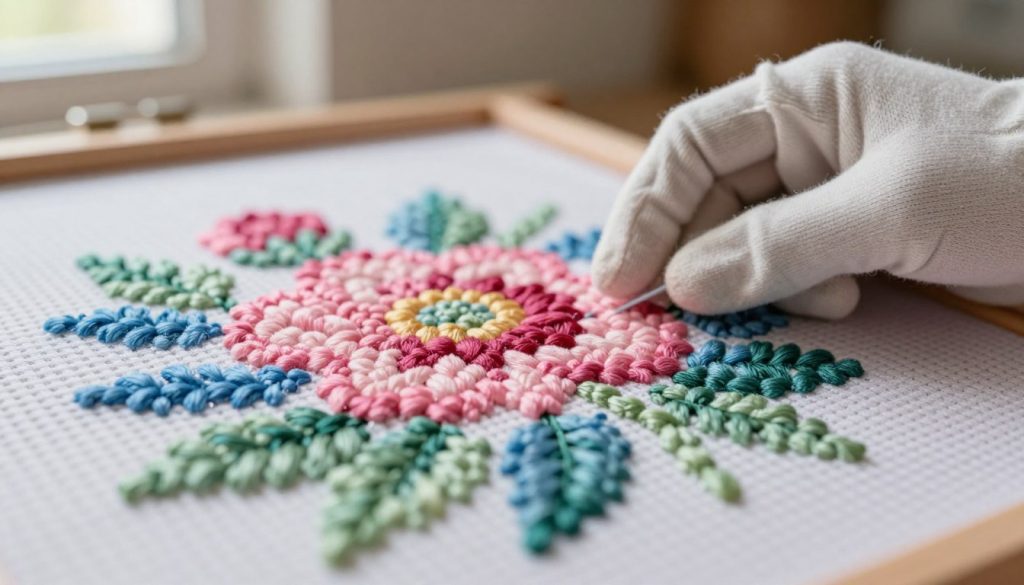
When and how to wash finished or in-progress pieces
Wash cross stitch only when threads are colorfast. Test a spare scrap or a hidden area first. Use cool or lukewarm water and a mild detergent such as Woolite or a specialty fabric wash made for handwork.
Submerge the piece, let it soak for a few minutes, then lift gently. Avoid harsh agitation that can distort stitches. Rinse until water runs clear. Frequent handwashing while you stitch is unnecessary; save washing for finished pieces or when visible dirt appears.
Blocking, pressing, and drying for best presentation
After washing, gently press out excess water by rolling the piece in a towel. Lay flat to dry on another towel, reshaping and smoothing the fabric to even out tension. This process of blocking cross stitch helps square corners and improves overall lay.
When pressing, work from the wrong side with a pressing cloth between the iron and fabric. Use steam and light pressure. For puffy stitches, lift the iron frequently to avoid flattening texture. Pinning to a flat surface during drying can secure edges and keep the design true.
Finishing tips for framing and backing
Allow at least two inches of margin for framing unless your framer advises otherwise. Attach a clean backing fabric to protect the back and give a tidy finish; cotton or muslin works well as backing fabric. Stretch evenly over mounting board to avoid puckers.
Secure loose threads by weaving tails into nearby stitches before trimming. Pick frames that leave depth between the glass and stitches. Use spacers or mats so the frame does not press on puffy stitches and ruin texture. These cross stitch finishing choices keep your piece looking crisp and gallery-ready.
Common Mistakes to Break and Good Habits to Adopt
Cross stitch mistakes happen when you rush, use the wrong tools, or ignore small habits. This guide will show you common mistakes and simple habits to adopt. These habits will help keep your work neat and even.
Habits to stop
Rushing through your work can lead to uneven tension and more repairs. Stitching slowly and steadily reduces errors and saves time.
Using the wrong needle size can distort fabric or make threading hard. Choose the right needle size for your fabric and thread count to avoid puckering.
Carrying floss long distances can show through on light fabrics and cause tension issues. Break strands and secure ends by weaving, not by tying knots.
Positive habits to adopt
Wash your hands before stitching and avoid snacks near your work. Clean hands keep fabric and floss free of oils and stains during long sessions.
Keep thread lengths short, about 10–12 inches, to reduce tangles and fraying. Use sharp embroidery scissors reserved for floss to make clean snips.
Take regular breaks to stretch your fingers, wrists, and neck. Short rests improve focus and let you maintain consistent tension.
Organize floss with labeled bobbins or cards and use a needleminder to prevent dropped needles and misplaced threads.
Practice strategies to build muscle memory
Practice cross stitch in short, regular sessions to build speed and consistency. Small, deliberate practice beats long, unfocused marathons.
Work on sampler swatches to test stitch methods, strand counts, and tension before starting a big project. These quick trials help you avoid common mistakes.
Repeat fundamentals such as consistent stitch direction and railroading until they become second nature. Treat stitching like cross stitch therapy when you need calm and steady progress.
Below is a quick reference comparing mistakes, their effects, and corrective habits.
| Issue | What it causes | Corrective habit |
|---|---|---|
| Rushing | Uneven tension, miscounts, extra repairs | Stitch slowly, take breaks, set small goals |
| Wrong needle size | Fabric distortion, hard threading | Match needle size to fabric count and strand number |
| Carrying floss long distances | Show-through on light fabric, tension pull | Break strands, weave ends; avoid long carries |
| Using knots to secure ends | Bumps on the back, bulky finishes | Use loop starts, weave ends under stitches |
| Neglecting hand care | Stains, dirt on fabric, floss discoloration | Wash hands, avoid food, clean periodically |
| Long thread lengths | Tangles, fraying, uneven stitches | Use 10–12 inch lengths and rotate floss |
| Infrequent practice | Slow progress, shaky tension control | Daily short practice, use sampler swatches |
Conclusion
Small changes can make a big difference in cross stitch. Start by choosing the right fabric count for your project. Use a hoop or Q-Snap to control tension.
Tools like railroading and laying tools help keep stitches even. Pick the right stitching method for your thread. Danish for solid fills and English for variegated work best.
Quality floss from brands like DMC is essential. Make sure to use the correct strand count. Managing threads is key, so grid and count before stitching.
Follow the washing and finishing steps to keep your work looking great. Practice with short projects to test different techniques. Use this guide’s checklist to build good habits.
Improvement comes with practice. Muscle memory and good habits will make your work look professional. Treat each piece as both craft and calm time.
Explore cross stitch ideas and patterns for inspiration. Enjoy discovering your own needlework secrets as you improve on future projects.
 English