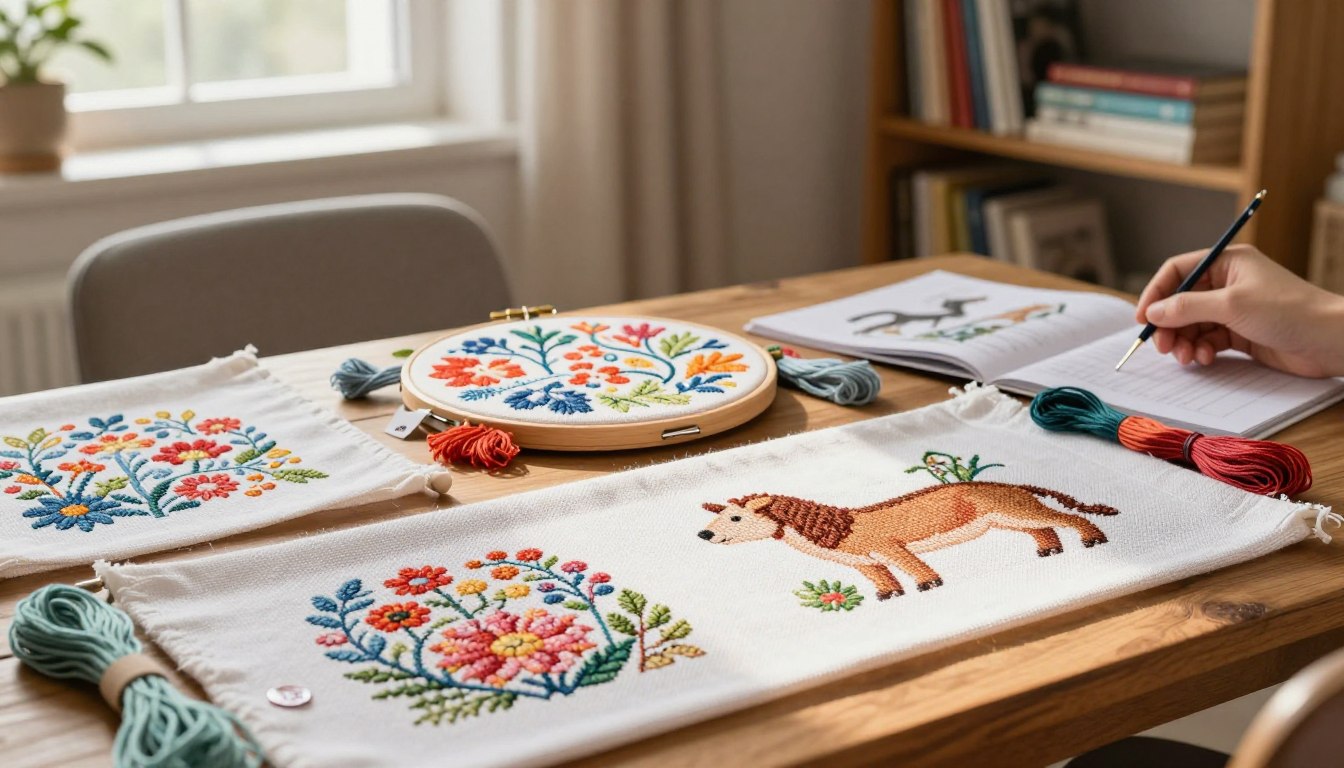
Figuring out how much time to spend on a CROSS STITCH project is key. It affects what patterns you choose, how you take on commissions, and when you plan to give gifts. Instead of calling yourself “fast” or “slow,” focus on your stitch rate. This means how many stitches you can do per hour or day.
Counted cross stitch patterns can be small or huge. A big design might look amazing but takes a lot of time and supplies. By knowing your stitch rate, you can plan better and avoid being disappointed.
This guide will teach you to figure out total stitch count and test your speed. You’ll learn how to turn that speed into a timeline. It also covers how materials, technique, and your workspace affect your work. Plus, there’s advice for beginners, fans of counted cross stitch, and those looking for ideas.
Use a stitch-calculator method: log the time and stitch count of a finished piece to find your average stitches-per-day. Be truthful when tracking time and don’t compare yourself to others. With this info, you can set realistic deadlines for work, plan gifts, and keep your personal projects fun.
Key Takeaways
- Base time estimates on stitch count and your measured stitches-per-hour, not vague labels.
- Track time on a completed piece to calculate an accurate average for future cross stitch projects.
- Avoid oversized charts if your schedule or budget can’t support long-term projects.
- Materials, technique, and environment change your pace—factor them into estimates.
- For cross stitch for beginners, start with modest patterns to learn realistic timing.
Understanding the big picture: average project timelines and why they vary
Before starting a new pattern, it’s good to know the timeline. Cross stitch projects vary a lot. This depends on stitch count, fabric, and pattern detail. Knowing these ranges helps plan better and keeps expectations in check.
Why project time estimates differ
The total stitch count is key for estimates. A design with lots of stitches on 14-count cotton takes longer than a sparse one on 28/36 count, even if they’re the same size.
Things like color changes and backstitching slow you down. Your tools and routine also affect your speed. Health and interruptions play a role too.
Real-world examples to set expectations
Use a simple way to estimate time: track your stitching, add up the time, and divide by the number of stitches. One stitcher did about 232 stitches a day. Another did 250 stitches an hour in focused evenings.
For example, a 90×90 square has 8,100 stitches. At 250 stitches an hour, that’s about 32 hours. You can adjust this to fit your pace to figure out how long a pattern will take.
Common timeframes for typical cross stitch projects
Small motifs with 100–500 stitches finish quickly, in hours to days. They’re great for trying new things.
Medium pieces with 2,000–10,000 stitches take weeks to months. Set daily goals to avoid burnout and keep the spark alive.
Big projects with tens of thousands of stitches can take months to years. Plan ahead for time and materials. Test your speed, then estimate the time needed based on your life.
Planning your project: calculating stitch count and realistic pacing
Start planning your project by figuring out the stitch count and doing a simple speed test. Use clear steps for counted cross stitch to make your timeline accurate. Keep track of tools and materials like DMC floss, as they can affect your pace.
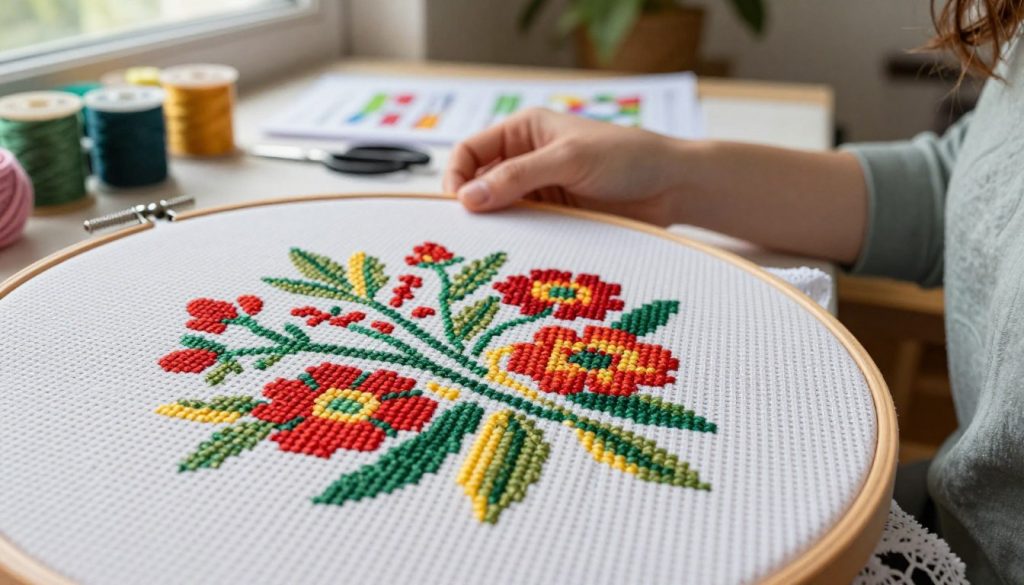
How to find total stitch count:
- If the design is full coverage, multiply the pattern width by height for total stitches.
- Look for 10×10 grid boxes in many cross stitch patterns. Count full boxes and add partials for a quick total.
- Use pattern software such as PCStitch or Pattern Keeper to export exact stitch counts, or ask the designer for the number.
- If you draft your own design, export the stitch count from your software to avoid manual errors.
Testing and measuring your personal stitch speed:
- Pick an “average” counted cross stitch sample: some color changes, no extreme confetti or huge blocks.
- Use consistent fabric, needle, and DMC floss so the test reflects real conditions.
- Time your stitching by starting a podcast episode or TV chapter and note timestamps at intervals.
- Repeat tests monthly to capture changes in mood, health, or technique.
- Try completing a small known-count design or track stitches during media to cross-check results.
Converting stitch speed into project timelines:
- Calculate stitches-per-minute from your tests. Multiply to get hourly or daily totals.
- Example math: 150 stitches in 36 minutes → about 4.16 stitches/min → roughly 250 stitches/hour.
- Divide your pattern’s total stitches by that hourly rate to estimate total stitching hours.
- Round up to allow for color changes, backstitching, beading, cross stitch gridding, thread changes, and finishing steps.
- Decide how many hours you can stitch each day to build a realistic day/week forecast.
Practical cross stitch tips:
- Include time for non-stitch tasks: bobbin winding, fixing mistakes, and framing work.
- Use gridding on large projects to save time spent counting and reduce rework.
- Prefer overestimating time for commissions or gifts so deadlines remain stress-free.
CROSS STITCH factors that affect speed: materials, techniques, and environment
Before you start stitching, small choices can make a big difference in how fast you work. This section will look at fabric and floss, needles and frames, pattern details, and habits that affect your pace. Try out different things to see what works best for you.
Fabric and floss choices
The count of your fabric affects how many stitches you can fit in an inch. Higher counts, like 36-count linen, mean more stitches and slower work. But, Aida at 14 or 16 count is usually faster.
DMC floss is popular because it’s consistent and doesn’t bleed color. But, specialty threads and metallics can fray or slip, slowing you down. Blended shades and changing colors often add time. Keep your skeins organized on labeled bobbins to save time and reduce frustration.
Needles, hoops, frames, and tools
The size and sharpness of your needles matter. Use a needle that fits your fabric count well. Replace dull needles to avoid snagging.
Using hoops, Q-Snaps, or frames can change how comfortable you are. Frames that keep the fabric tight are great for two-handed techniques. A floor stand or desk-mounted frame can help you stitch longer without getting tired.
Good lighting, a magnifier, and apps like Pattern Keeper help you plan and track your progress. Keep your tools, like snips, thread conditioners, and bobbin boxes, within reach to keep your work flowing smoothly.
Pattern complexity and stitch techniques
Stitching large blocks of one color is quick because you do the same thing over and over. But, patterns with lots of small colors slow you down because you have to thread and unthread a lot. This makes each square take longer.
Backstitching, French knots, beads, and special stitches take more time. Backstitching, for example, needs a steady hand and careful placement. Plan extra time for these details.
How you stitch matters too. Railroading and two-handed stitching can get you faster with practice. Everyone stitches differently, so try a few methods before choosing one for a deadline.
Environment and routine
Stitch in the place you usually do. If you stitch while watching TV or listening to audiobooks, time yourself then. Your usual environment will give you a better idea of how fast you stitch.
Things like interruptions, mood, sleep, and health can change how fast you stitch. Track your stitching over a few weeks to even out any ups and downs. Don’t time yourself when you’re trying to stitch as fast as possible, as this doesn’t reflect your normal pace.
| Factor | Typical impact on speed | Practical tip |
|---|---|---|
| Fabric count (Aida, linen) | Higher count = more stitches per inch = slower | Use 14–16 count Aida for faster projects; reserve 28–36 counts for detail work |
| Floss type (DMC floss vs specialty) | DMC floss is smooth and quick; metallics and blends are slower | Choose DMC floss for efficiency; test specialty threads in a small swatch first |
| Needles and maintenance | Dull or wrong-size needles slow stitching and cause errors | Keep several needle sizes handy and change them when they wear |
| Frames and hoops (Q-Snaps, stands) | Proper support reduces fatigue and improves speed | Try a frame or stand for large projects; use hoops for portable work |
| Pattern style | Large color blocks = fast; confetti and fractional stitches = slow | Plan time for confetti-heavy areas and include extra for backstitching techniques |
| Tools and organization | Disorganization adds repeated delays | Label bobbins, use a floss box, and keep scissors/snips nearby |
| Environment and routine | Distractions lower effective stitching rate | Stitch in your usual setting and track typical sessions for accurate estimates |
How to estimate time for commissions, gifts, and deadlines
When you agree to a commissioned work or a gift, time starts ticking. First, convert the pattern’s stitch count into hours using your stitches-per-hour rate. Then, add time for color changes, backstitching, finishing, framing, and a buffer for any interruptions. This simple math helps you set realistic turnaround times and keeps your cross stitch projects on track.
Setting realistic deadlines for commissions
After calculating the hours needed, turn that into weeks or months based on your weekly hours. Quote clients a timeline that includes padding for revisions and unexpected delays. Also, have a clear policy for rush fees and minimum lead times so clients understand why some cross stitch commissions take longer.
Planning for gift deadlines and events
For gifts, work backward from the event date. Test what you can finish in short lead times and be honest if a design is unrealistic. Factor finishing and framing into your schedule; leaving those steps until the last minute often causes missed gift deadlines. For beginner cross stitch, give extra time for learning curves and small mistakes.
Managing multiple projects and test stitching
Prioritize projects by size and due date. Use test stitching to estimate a new pattern before committing to clients or gift promises. Keep a running log of past work—fabric count, stitch total, and time taken—to speed future estimates. Good cross stitch organization, such as labeled bags and a project calendar, helps you stagger deadlines and avoid burnout.
| Task | How to estimate | Typical buffer |
|---|---|---|
| Stitching time | Stitch count ÷ your stitches-per-hour | 10–20% for interruptions |
| Color changes & backstitch | Add 15–30% of stitching time depending on complexity | 10% extra for rework |
| Finishing and framing | Estimate 4–12 hours based on framing method | Allow 1–2 weeks if professional framing is used |
| Multiple commissions | Sum individual estimates, then stagger deadlines | Build minimum lead times into pricing |
| Test stitching | Sample a small section to measure speed | Use results to refine full project estimate |
Ways to speed up progress without sacrificing quality
To speed up your cross stitch, make smart choices and practice often. Use shortcuts that cut down on counting and avoid redoing work. Keep your hands moving but don’t skip important steps.
Stitching techniques that can increase efficiency
Try the Danish method for rows: do half-stitches first, then the crosses on the way back. This makes your needle work more efficient and saves time.
Stitching with both hands on a stand can double your speed on big color blocks. Use railroading to keep threads flat and avoid tangles, saving time on rework.
Practical embroidery hacks and organization tips
Wind bobbins ahead of time and cut thread lengths before starting. Label your floss with DMC numbers and store them in a clear box or folder for easy access.
Use cross stitch gridding with pens or thread grids to cut down on counting errors. Apps like Pattern Keeper help track your progress and count stitches for you, making planning easier.
Keep your workspace tidy with needle minders, a project bag, and a small container for loose needles. This saves time searching for tools.
Practice, testing, and incremental improvement
Track your stitch speed with timed tests every few months. Celebrate small gains to stay motivated. Remember, you might reach a speed limit, so plan your projects accordingly.
Alternate between big projects and quick ones to avoid burnout. Practice new techniques on small pieces to improve without wasting time on your main project.
| Focus Area | Simple Action | Time Saved | Quality Impact |
|---|---|---|---|
| Thread Prep | Pre-wind bobbins and pre-cut lengths | 10–20 minutes per session | Positive — less tangling, neater work |
| Gridding | Use water-soluble pen or thread grid | Reduces major counting errors | Positive — fewer frogging sessions |
| Stitch Method | Danish/row-based or two-handed on a stand | 20–50% faster on blocks of color | Neutral to positive — requires practice |
| Tools | Needle minder, good lighting, Pattern Keeper app | 5–15 minutes saved per hour | Positive — reduces mistakes and strain |
| Practice Routine | Timed stitch tests and small practice pieces | Gradual long-term gains | Positive — improves speed and accuracy |
Common mistakes and how they add time to your project
Small errors can turn a relaxing hobby into a time sink. Miscounting, wrong fabric or needle choices, and poor thread prep lead to repeated unpicking. Heavy confetti and frequent color changes increase the chance of cross stitch mistakes and slow your progress more than you expect.
Frequent errors that slow you down
Miscounting is the top culprit. One missed square can mean frogging rows and redoing hours of work. Using a needle that is too large or a fabric with the wrong count makes stitches sit uneven. Tangled, frayed, or loosely separated floss costs time every time you thread a needle. Changing technique mid-project breaks rhythm and invites more errors.
How to prevent undoing work and time loss
Grid your fabric before you stitch to cut counting mistakes. Mark patterns with a water-soluble pen or highlighter so you track progress without guessing. Start every stitch from the same side to keep tension consistent and reduce errors in backstitching techniques. Keep spare needles in a small tin and sort threads by color with bobbins or labeled pouches to avoid interruptions.
Finishing and framing delays
Many stitchers finish the main piece then stall on the last steps. Washing, blocking, ironing, and mounting take time you must budget. If you plan to use professional cross stitch frames or a local framer, include their turnaround in your timeline. Shipping and delivery add days, so plan finishing early if your piece is a gift or commission.
When mistakes happen, follow a calm, methodical approach. Unpick carefully and repair with matching tension. Test fixes on a scrap before altering the main work. Treat finishing as part of the craft, not a sprint, and protect the hours you already invested by avoiding rushed, careless steps.
Conclusion
To plan cross stitch projects well, start by counting all stitches and measuring your stitch rate. Divide the total stitches by your stitches-per-hour or day. Then, add buffers for pattern complexity, fabric choice, and finishing.
This method is better than comparing yourself to others. It gives you a clear plan for your cross stitch projects.
Test your average speed with small designs or timing apps. Keep a log of project size, fabric count, and hours spent. Use tools like stitch calculators and Pattern Keeper.
Apply cross stitch tips like efficient thread management and consistent tension. This keeps your estimates realistic and steady.
Whether for therapy, gifts, commissions, or hobby, realistic planning prevents burnout. Choose manageable pattern sizes and include framing and finishing time.
Treat practice as progress. With steady tracking and good organization, you’ll enjoy stitching more. You’ll also have more completed work to show off.
 English