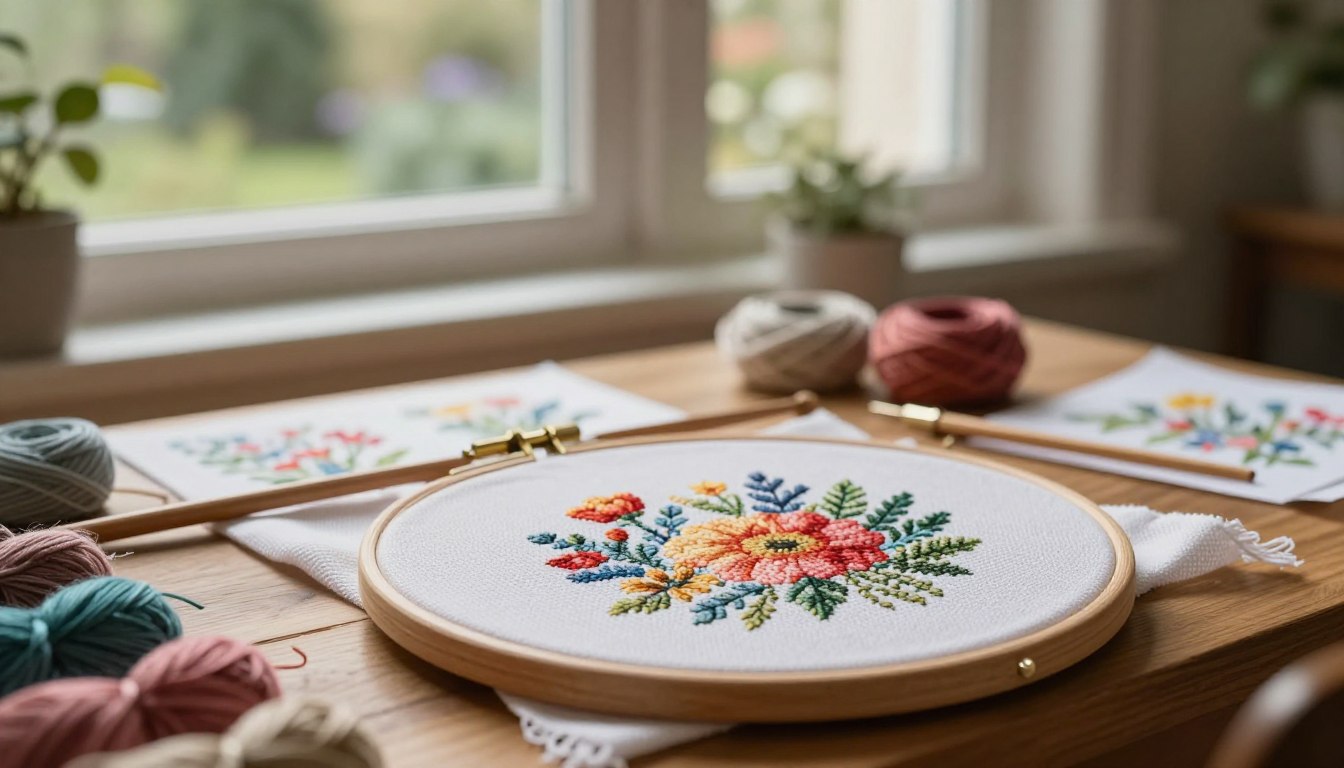
Cross stitch is a simple craft that fits well in today’s busy world. It helps you focus on counting stitches, calming your mind. This focus is key to mindfulness, making cross stitch a great way to reduce stress.
The act of making Xs on fabric calms your nervous system and lowers cortisol. Unlike other hobbies, cross stitch has clear steps and shows progress. This gives you a sense of control and helps ease anxiety.
This craft also offers a break from screens. It engages your hands and brain, promoting flow. Whether you’re new to cross stitch or returning to a pattern, it’s portable and effective for calming moments or longer sessions.
Key Takeaways
- Cross stitch supports mindfulness by focusing your attention on counting and pattern-following.
- Repetitive stitching acts as a form of cross stitch therapy that can lower stress and anxiety.
- The predictable nature of counted cross stitch restores a sense of control and progress.
- Stitching provides a tactile, portable alternative to screen time for mindful breaks.
- Cross stitch for beginners is accessible and suitable for quick relaxation or deeper flow states.
How cross-stitch promotes mindfulness and focus
Counted cross stitch helps you stay in the moment. It keeps your mind on the task at hand. This focus helps you forget worries and enjoy the work.
The pattern of X-shaped stitches calms you down. It makes your breathing slow and your hands move smoothly. This calm is like a mini-meditation, helping you feel balanced.
Stitching puts you in a flow state. Your thoughts and actions become one. This state refreshes your mind and reduces tiredness. Small projects and simple patterns make it easy to get into this state.
Use stitching to cut down on screen time. It’s great for breaks, commutes, or waiting. Switching from scrolling to stitching is refreshing. It clears your mind and helps you focus better.
Here are some tips for mindful stitching: set a timer for 10–20 minutes, choose a pattern you like, and keep projects small. These steps make stitching a calming habit that fits into your day.
CROSS STITCH as a therapeutic creative outlet
Cross stitch is a simple way to connect your hands, mind, and meaning. When you start with a hoop and thread, you create something real. Seeing your work grow encourages you and helps you overcome worries.
Whether it’s a small piece or a big project, the feeling of completion is the same. It boosts your confidence and calms your mind.

Emotional benefits of making something tangible
Creating something with cross stitch gives you an emotional anchor. You can see your progress as rows and motifs grow. This visual proof helps you feel less helpless and shows your hard work.
Many people add personal touches to their cross stitch, like birth samplers or pet portraits. These personal themes make the craft even more meaningful and emotionally rewarding.
Flow state and the mental health payoff
Stitching in a focused way can put you in a flow state. Your mind focuses on the pattern and rhythm, breaking the cycle of worry. This calm state improves your mood and offers lasting mental health benefits.
Regularly practicing cross stitch helps you find that calm state again. Using consistent projects makes it easier to get back into that peaceful place.
Using counted cross stitch to structure your relaxation time
Counted cross stitch breaks time into easy-to-manage parts. You can set goals for blocks or rows and plan short sessions. These sessions, lasting 10–30 minutes, feel rewarding and help you relax.
This structure makes it simple to create a routine for relaxation. Over time, these small sessions add up to a big part of your self-care.
Practical cross stitch tips to maximize calm and reduce mistakes
Begin by planning calmly before you start. A basic kit with Aida fabric and a simple pattern helps. Start with small designs to focus and learn easily.
Work in short sessions at first. Aim for 20–30 minutes, then take a break. This builds confidence and prevents burnout.
Beginner cross stitch basics: starting simple to avoid overwhelm
Choose patterns for beginners and start from the centre. Use hoops to keep fabric steady. Cut floss short to avoid tangles.
Mark your grid lightly to help with counting. Small steps make the craft enjoyable and mistake-free.
Common cross stitch mistakes and how to fix them without stress
Miscounting is a common mistake. Stop and re-count from the last confirmed gridline. Use a seam ripper to remove misplaced stitches.
Uneven tension and skipped stitches can ruin your work. Use consistent hand placement and short floss lengths. If a stitch is missed, tuck it out and re-stitch calmly.
Backstitching techniques and finishing touches that feel rewarding
Practice basic backstitching on scrap Aida. It helps you learn spacing and pressure. Use backstitching to outline shapes and highlight details.
Finish by trimming excess fabric and mounting in a hoop or frame. These steps create a sense of accomplishment and calm.
Choosing tools and materials to support a mindful practice
Good tools and materials make stitching calm and steady. Start with basics that reduce strain and let you focus on the rhythm of counted cross stitch. Proper lighting, a tidy workspace, and a simple routine help your practice feel effortless.
You need a few essential items to begin. An embroidery needle that fits the fabric, a hoop or cross stitch frames to keep cloth taut, small sharp scissors, and a comfortable chair will cut down on frustration. A floss organizer keeps threads neat so you stay in the flow.
Essential needles, hoops, frames, and scissors
Choose needles sized for your fabric. Tapestry needles suit Aida and evenweave. Pick a hoop or cross stitch frames that match your project size to avoid bunching. Sharp, small scissors give clean snips and protect your work.
Selecting fabric and DMC floss for comfort
Begin with 14-count Aida to ease counting and reduce eye strain. Evenweave or linen work well as you advance. Use DMC floss for consistent color and reliable strand separation. Good thread and cross stitch fabric save time and keep you relaxed.
Counted cross stitch vs. cross stitch kits
Cross stitch kits provide pattern, thread, and fabric. They end decision fatigue and offer a low-stress start. Counted cross stitch gives creative control but asks you to choose fabric, colors, and patterns. Pick the path that matches your current need for structure or creativity.
- Use a daylight lamp or magnifier if you need clearer detail.
- Keep a simple stitching kit for moments when you want quick, mindful work.
- Store DMC floss by number to speed color changes and stay centered on the stitch.
Design ideas and patterns that enhance relaxation
Choose designs that match the pace you want for stitching. Simple geometric shapes, botanical motifs, and mandala-inspired repeats invite steady, rhythmic movement. Sampler-style pieces break a project into short wins so you notice progress without feeling rushed.
Calming motifs and mindful choices
Look for cross stitch patterns that use open space and repeating units. Leaves, birds, and soft florals guide your eye and your hands. When selecting cross stitch ideas, favor patterns with clear grids so counting stays gentle and focused.
Quick projects you can take anywhere
Keep small cross stitch projects on hand for brief, restorative breaks. Key fobs, mini hoops, ornaments, and bookmarks fit a 4-inch hoop and a few thread colors. These portable cross stitch options let you stitch during commutes, coffee breaks, or while waiting.
Using color and motif to shape mood
Color choices matter as much as pattern choice. Soft blues, muted greens, and warm neutrals create calm. Try a limited palette of three or four shades to practice color therapy while you stitch.
Build a “stitch-it” pouch so you always have a low-effort project ready. Add a small Aida square, a needle minder, a couple of DMC floss colors, and a 4-inch hoop. This setup encourages consistent, bite-sized sessions that support relaxation and steady progress.
Community, social connection, and cross stitch therapy
Finding other stitchers can turn a private hobby into a shared source of comfort. You can join online stitch groups where members swap tips, post progress photos, and offer encouragement. Local stitch circles meet in libraries, craft centers, and community halls to stitch together and share embroidery inspiration in person.
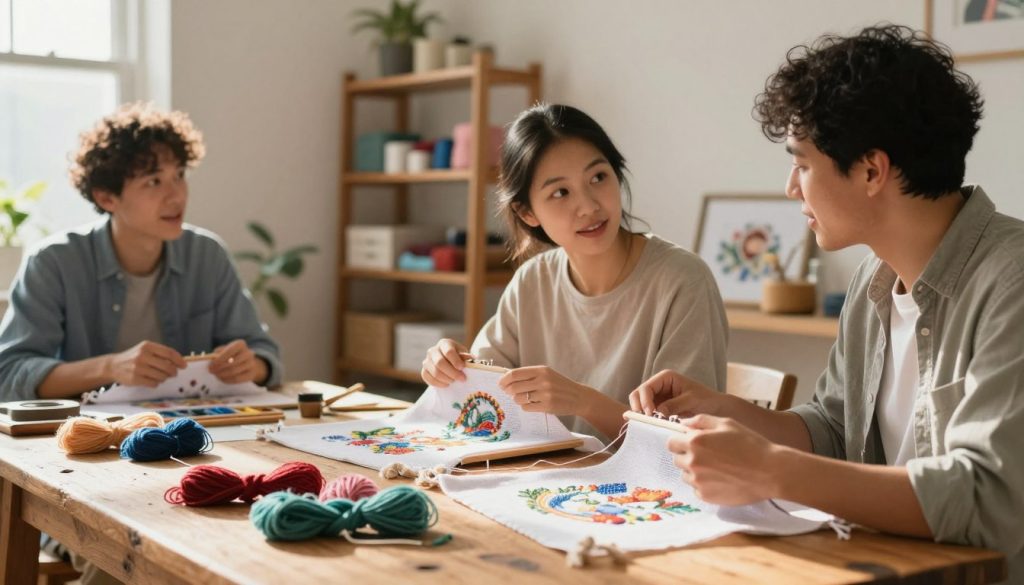
Being part of the cross stitch community helps when you need help or a mood boost. Small acts, like a quick message about a missed stitch or a photo of a finished hoop, create steady social contact. This contact helps reduce isolation and keeps you engaged with your craft and with others.
You can use local stitch circles to practice teaching or mentoring. Showing a beginner how to start a backstitch or how to read a chart gives your work new meaning. Teaching strengthens skills and builds routines that support recovery and motivation.
Try collaborative cross stitch projects or stitch-alongs to stay accountable and meet deadlines that feel gentle rather than stressful. Group pieces combine individual contributions into a meaningful whole. Shared goals spark creativity and deepen friendships across neighborhoods and time zones.
Use community resources to find free patterns, emotional support, and project ideas. Whether you choose online stitch groups or a neighborhood meet-up, the social side of stitching amplifies the therapeutic effects of the craft and keeps your practice fresh and joyful.
Organization and techniques to make stitching sustainable
Keeping your cross stitch projects organized makes them enjoyable. Start by gridding your fabric and planning a simple timeline. Small systems help avoid mistakes and keep your stitching relaxing.
Cross stitch gridding, floss storage, and project planning
Mark every tenth line with a water-soluble pen or basting thread. This makes it easy to follow your pattern. Label your threads by DMC number for quick color access.
Plan your project in small steps. Aim to complete one small motif each session. This approach reduces frustration and keeps you moving forward.
Embroidery hacks and time-saving needlework secrets
Use short floss lengths to avoid tangles. Start threads with loop-starts or waste knots for neat beginnings. A needle minder and magnetic clips save time and keep your workspace tidy.
These tips add minutes to your stitching time. They help you stay focused and enjoy your work more.
When, where, and how long to stitch for a sustainable habit
Find short, regular times to stitch. Ten to thirty minutes at lunch or twenty before bed works well. Consistent practice improves your flow and keeps stitching enjoyable.
Keep a simple log of your stitching sessions. Note what you’ve finished and what’s next. This helps maintain momentum and makes returning to your project easier.
| Tip | Why it helps | How to start |
|---|---|---|
| Grid every 10th line | Prevents miscounts and large frogging sessions | Use water-soluble pen or basting thread before you stitch |
| Label floss by DMC | Saves time when changing colors | Wind on bobbins and store in clear boxes with numbers visible |
| Short floss lengths | Reduces tangles and uneven wear | Cut 12–18 inch pieces for most stitching |
| Needle minder & pouch | Prevents lost tools and keeps workspace tidy | Attach minder to hoop and keep pouch nearby |
| Session milestones | Maintains forward motion and motivation | Plan one motif or color block per sitting |
Conclusion
Cross stitch combines focused attention, rhythmic motion, and touch to help you slow down. It makes you feel more present. You can start with counted patterns or simple kits for visible progress and a calming rhythm.
Begin with beginner patterns and basic tools to avoid feeling overwhelmed. Use techniques like clear gridding and consistent tension. Keep tips handy, like color codes and floss storage, to enjoy the process more.
Make your practice even more powerful by adding routine and community. Short daily sessions and joining local or online groups help. This way, cross stitch becomes a key part of managing stress.
 English