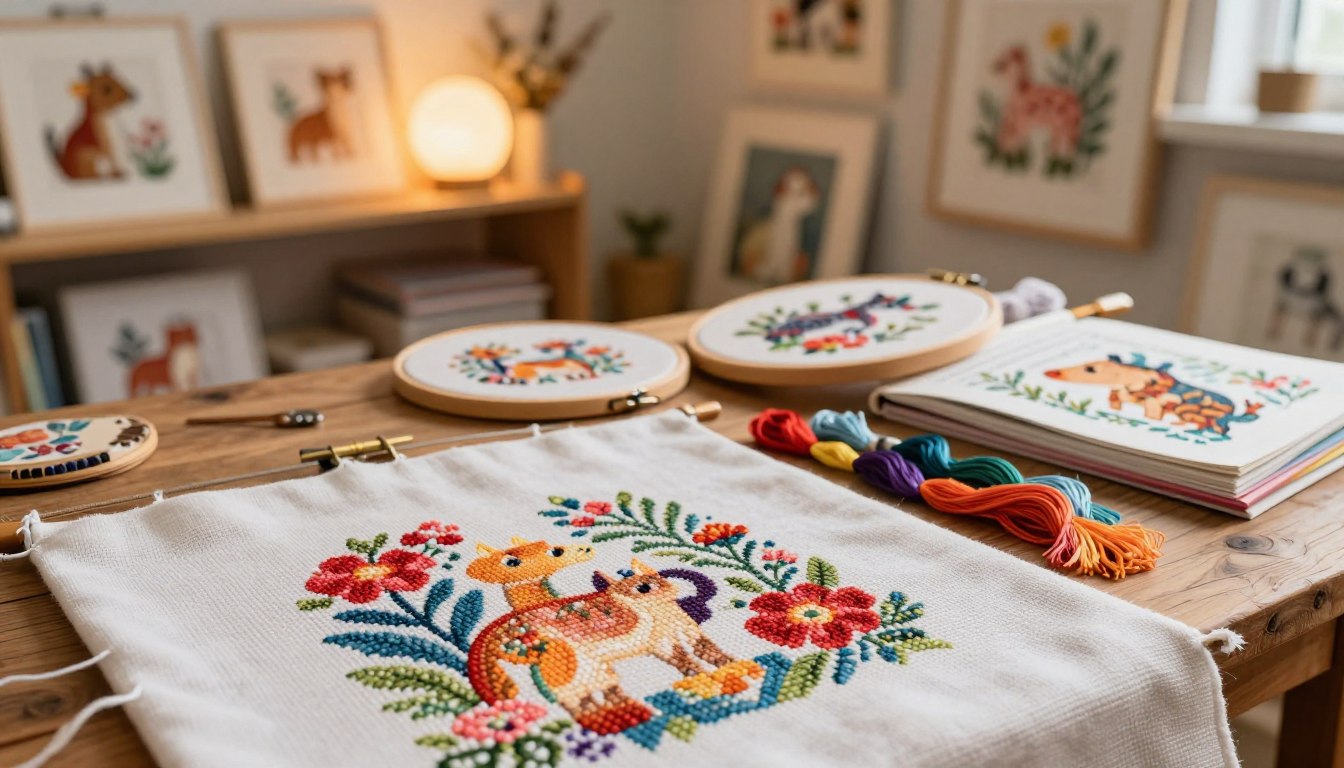
Cross stitch is a tradition that uses simple X-shaped stitches and special techniques. You’ll see full crosses, half and fractional stitches, backstitch, and textured stitches like French knots. Designers like Teresa Wentzler and Victoria Sampler use these to create beautiful pieces.
When planning your cross stitch, think about the look you want and the fabric you’ll use. Aida 14-count is great for beginners. Linen and evenweave are better for detailed heritage pieces. Some stitches need sharp needles or working over 2 threads for the best texture.
Begin by learning the basic stitches: full cross, half, quarter, three-quarter, and backstitch. This will help you tackle patterns with confidence. Using good tools and prep, like quality DMC floss and a size 24 tapestry needle, makes your stitching neater. It also prevents frustration as your projects grow.
Key Takeaways
- Cross stitch combines basic X-stitches with specialty stitches for texture and detail.
- Choose fabric by project: Aida 14-count for beginners, linen or evenweave for fine work.
- Master five core stitches to build skills for more advanced cross stitch styles.
- Specialty stitches often need sharp needles and sometimes stitching over 2 threads.
- Proper tools, gridding, and edge finishing keep cross stitch projects tidy and centered.
Understanding CROSS STITCH: basics, fabrics, and tools
Counted cross stitch is based on a simple rule. Each X-shaped stitch sits on an even grid. Patterns show you how to fill in the grid with colors and where to place them.
Charts help by listing symbols and matching them to DMC floss numbers. This makes it easy to find the right colors when shopping or replacing threads.
What counted cross stitch means and how patterns work
In counted cross stitch, you count threads or holes to place each stitch. A chart shows a grid where each square is one stitch and each symbol is a color. Most kits point out the center, and you start stitching from there to keep the design balanced.
Common fabrics: Aida, linen, and how count affects style choice
Aida fabric has visible holes and is great for beginners. A 14-count Aida is a common starting point because it suits steady hands and clear counting. Linen and evenweave have finer threads and let you work fractional stitches for curved lines and subtle shading.
Fabric count determines whether you stitch over 1 or over 2 threads. It also affects the level of detail you can achieve.
Essential cross stitch tools and materials (needles, DMC floss, hoops, frames)
Your basic kit should include tapestry needles with blunt tips, quality DMC floss, a hoop or frame, and sharp scissors. Floss comes in six strands; you split them to match fabric count and desired coverage. Good cross stitch tools save time and keep tension even through long sessions.
Preparing fabric: finding center, gridding, and edge finishing to avoid fray
Fold your cross stitch fabric twice to find the center, then mark it lightly. For large or complex designs, cross stitch gridding with water-soluble pen or thread helps you map the chart to fabric and reduces counting mistakes. Finish raw edges with a zig-zag stitch, serger, or masking tape to prevent fray before you begin.
Organizing supplies is part of good cross stitch organization. Use labeled floss cards, small storage boxes, and a simple checklist for pattern symbols. This keeps your workspace tidy and your project moving forward without lost threads or misplaced charts.
Classic full cross stitch style and ideal projects
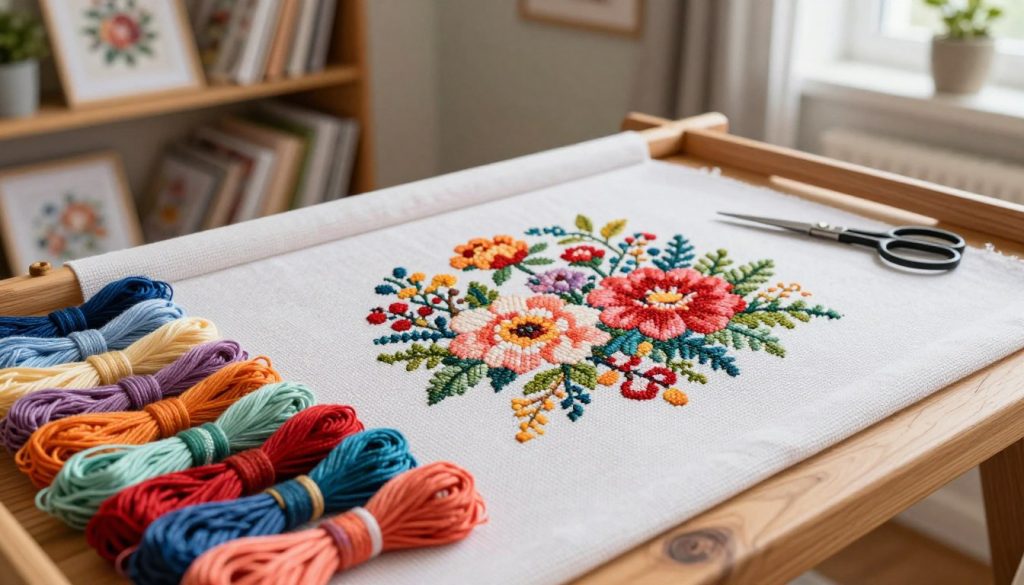
Full cross stitch is key in many charts and kits. It’s found in traditional samplers, pictorial designs, and large color blocks. Designers often start with full crosses and then add backstitch or specialty stitches for details.
When to use full crosses for bold blocks and traditional motifs
Use full crosses for solid, even color across a motif. Scenes, florals, and heritage samplers look great with full crosses. For large projects, plan sections by color to save thread and speed up stitching.
Tension and consistency tips to make full crosses uniform
Keep all top diagonals running the same direction for a neat finish. Work in rows: finish the first diagonal across a row, then do the second. This method helps with tension and creates a flat surface.
Be mindful of your pull. Too tight stitches can pucker fabric. Too loose stitches look messy. Test on a scrap to find your perfect feel.
Best fabrics and floss strand counts for full cross projects
Aida is great for beginners, starting with 14-count. Evenweave and linen are better for finer details. Choose the right needle size for your fabric to make stitching easier.
Using two strands of DMC floss on 14-count Aida is common. On higher counts, use fewer strands for cleaner coverage. For heavy coverage, you might use three strands. Adjust strand count to balance coverage and texture.
Plan large areas by stitching by color blocks, not just rows. This reduces thread waste and keeps the back neat for framing or gifting. Try these tips on your next project to improve speed and uniformity.
Backstitching techniques for definition and detail
Backstitch makes your work pop from flat to lively. It’s great for sharpening shapes and adding small details. Use it to draw clear lines on top of your cross stitch.
How backstitch enhances outlines, lettering, and facial features
Outlines become clearer with a single line. For faces, use short backstitch segments for eyes, lips, and noses. Keep lettering strokes even for clear text at any size.
Choosing thread strands and stitch length for crisp backstitch lines
Use one or two strands for the best look on Aida and linen. Shorter stitches make curves smoother. Match stitch length to fabric count for clean lines.
Common embroidery hacks for neat starts, stops, and avoiding knots
Secure thread tails by weaving under three to four stitches. Trim tails close to the fabric to avoid bulk. Keep thread lengths around 18 inches to avoid tangles.
Pause to let the thread untwist before starting a long backstitch. Good light and a small magnifier help place each stitch. These tips reduce mistakes and keep your design neat.
Specialty stitches and advanced styles for texture and embellishment
Specialty stitches add depth and interest to your work. They help lift motifs off the fabric. This draws attention to key areas of your design.
French knots, beads, and when to add beading for focal points
French knots create tiny dots that are perfect for eyes and flower centers. Adding beads to these knots adds sparkle and highlights.
Make sure to choose the right bead size for your fabric. Also, check that your needle and thread work well together. Use beads sparingly to make them stand out.
Lazy daisies, Rhodes stitch, Smyrna cross and their decorative uses
Lazy daisies make neat flower petals with a simple looped stitch. Rhodes stitch creates padded motifs like hearts and medallions. Smyrna cross adds a textured cross that’s great for heritage samplers.
Try combining lazy daisies with French knots for layered flowers. Use Rhodes stitch to highlight centers or anchors in patterns.
Algerian eyelet, diamond eyelet, Jessica stitch — creating texture in heritage designs
Eyelets like Algerian and diamond create star-like textures for traditional samplers. Jessica stitch and squat stitches make dense fills that add heritage charm to motifs.
These stitches often require working over two threads or piercing the weave. Always test your tension on a scrap to get the right look.
Designers and examples that use specialty stitches
Check out Teresa Wentzler for needlepainting with specialty stitches. Chatelaine is known for heavy beading and intricate textures. Victoria Sampler offers sampler-style fills.
FabyReilly and Shannon Christine have great floral and squat-stitch ideas. Study designer notes for tips on placement and thread choices. Start with basic stitches before trying these advanced techniques.
Fractional stitches (half, quarter, three-quarter) for curves and shading
Fractional stitches offer fine control for designs needing soft edges or realistic details. They help soften blocky pixels and create smooth lines in designs. Plan the placement of half stitch, quarter stitch, and three-quarter stitch before filling large areas.
When to use half stitches for soft backgrounds and blended areas
Half stitch creates a diagonal line across a square. It’s perfect for blending colors in skies, skin tones, or soft backgrounds. This stitch reduces color intensity while keeping the fabric texture visible.
Using quarter and three-quarter stitches to smooth edges and refine curves
Quarter stitch fills from a corner to the square’s center. It’s ideal for tight curves, tiny highlights, and delicate facial details. Three-quarter stitch, a mix of half and quarter, covers most of the square. Use it to smooth color transitions and make curved outlines look continuous.
Techniques for piercing fabric and working over 2 to execute fine details
Working over 2, or stitching over two fabric threads, gives more room for fractional stitches on higher-count fabric. Use a sharp needle to pierce the exact center for precise quarter and three-quarter stitch placement on 14-count or finer cloth.
Practice on scraps to master tension and spacing. Keep thread lengths around 18 inches to avoid twist. Good lighting and a magnifier help place tiny stitches confidently. These techniques will refine complex motifs without adding bulk.
Beginner cross stitch styles and projects to build confidence
Start with simple projects to build steady skills. A focused beginning lets you learn basics without feeling overwhelmed. Choose a small design, limit colors, and practice the key stitches that appear in most patterns.
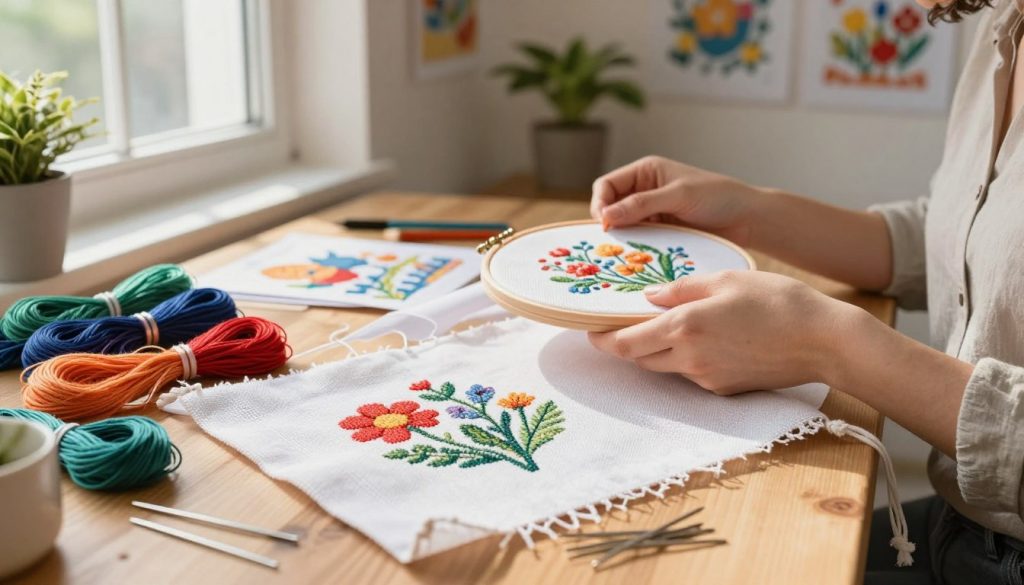
Five essential stitches every beginner should master
Master these five to cover most charts: the full cross, half stitch, quarter stitch, three-quarter stitch, and backstitch. The full cross creates solid color areas. Half and fractional stitches allow shading and soft transitions. Backstitch adds outlines and detail.
Starter projects and kits: ideal fabric counts, floss choices, and hoop/frame recommendations
Pick 14-count Aida for an easy start. It’s simple to count and fits most patterns made for cross stitch for beginners. Choose DMC floss and split strands carefully. Use tapestry needles size 24 or 26 and a 6–8 inch hoop for small pieces. Cross stitch kits are helpful because they include matched fabric, floss, a needle, and a chart that saves time and reduces guesswork.
Practical tips for beginners: lighting, tension, thread length, and avoiding common cross stitch mistakes
Work in bright, natural light or use a daylight lamp to reduce eye strain. Keep thread lengths near 18 inches to prevent tangles and wear. Maintain even tension so stitches lie flat and uniform. Secure threads by weaving under a few stitches rather than tying knots on the back.
Bind raw edges with masking tape or a zigzag stitch to stop fraying. Gridding your fabric with a removable marker helps you count without rework. Read chart legends carefully; match symbols to DMC numbers before you start.
| Need | Recommendation | Why it helps |
|---|---|---|
| Fabric | 14-count Aida | Clear grid for easy counting and quicker progress |
| Floss | DMC stranded cotton | Consistent color, wide availability in cross stitch kits |
| Needles | Tapestry size 24–26 | Blunt tips that slide through Aida without splitting fibers |
| Hoop/frame | 6–8 inch wooden or plastic hoop | Holds fabric taut for even tension and fewer mistakes |
| Scissors | Small sharp embroidery scissors | Clean cuts reduce fraying and short thread tails |
| Lighting | Daylight lamp or bright LED | Reduces eye strain and helps color matching |
Common cross stitch mistakes are easy to avoid once you practice counting, start near the center, and check your legend. Use cross stitch tools like a needle threader, highlighter for chart progress, and small storage for floss to stay organized.
Try one or two small cross stitch for beginners projects before moving to larger charts. Repeat simple motifs until your tension and stitch uniformity feel natural. With practice, your confidence will grow and more advanced styles will feel within reach.
Organizing and planning complex projects: patterns, gridding, and workflow
Complex cross stitch projects shine when you break planning into clear steps. Start by reading cross stitch charts carefully and build a DMC floss mapping list before you touch fabric. Mark the chart center and pick stable anchor areas, such as large color blocks, to begin work.
Reading charts and mapping colors
When reading cross stitch charts, match each symbol to its DMC number in the legend. Create a simple spreadsheet or printed key that lists symbols, DMC floss mapping, and how many strands you will use. This reference speeds the stitch process and reduces color swaps.
Practical gridding and counting strategies
Use cross stitch gridding to cut down on miscounts. Choose a method that suits the piece: soluble pen marks, basting thread, or a washable grid. Grid in 10×10 sections to mirror most chart blocks and make counting intuitive.
Work by color blocks when possible. Mark completed squares on a paper chart with a highlighter or use a digital pattern app to track progress. These small steps improve cross stitch organization and lower stress on long counts.
Tools, frames, and moving large pieces
For big pieces, invest in cross stitch frames like Q-snaps, scroll frames, or large stretcher bars. Move the frame over the fabric instead of shifting the fabric to keep tension even. Secure edges with tape or a binding stitch before transport.
Store works in progress in a project bag or box with a support board to prevent creasing. Keep long thread jumps to a minimum to avoid show-through. A tidy cross stitch workflow keeps threads, needles, and labeled DMC skeins close at hand.
| Task | Recommended Method | Why it helps |
|---|---|---|
| Chart prep | Make a DMC floss mapping sheet | Speeds color selection and prevents symbol errors |
| Start point | Find center; pick large color block | Provides stable anchor and reduces shifting |
| Gridding | 10×10 soluble pen or basting thread | Makes counting clear and lowers mistakes |
| Progress tracking | Highlighter on printed chart or digital app | Visual feedback keeps momentum and accuracy |
| Frame choice | Q-snaps, scroll frame, or stretcher bars | Maintains even tension for large areas |
| Transport & storage | Project bag with support board; bind edges | Protects work and prevents distortion |
| Workflow tip | Work by color blocks; keep labeled DMC nearby | Simplifies stitching and improves cross stitch organization |
Conclusion
You’ve learned about the wide range of cross stitch techniques. Start with the basics, like mastering five core stitches. Choose good supplies, like Aida and DMC floss, and use the right lighting and thread lengths.
Before you start stitching, plan your project. Read charts, grid your fabric, and organize your floss. These needlework secrets help you tackle big projects with ease.
Once you’re more confident, try new things like French knots and beads. Let your creativity guide your color choices and patterns. Cross stitch is not just a hobby, but a calming activity that brings joy and beauty to your life.
 English