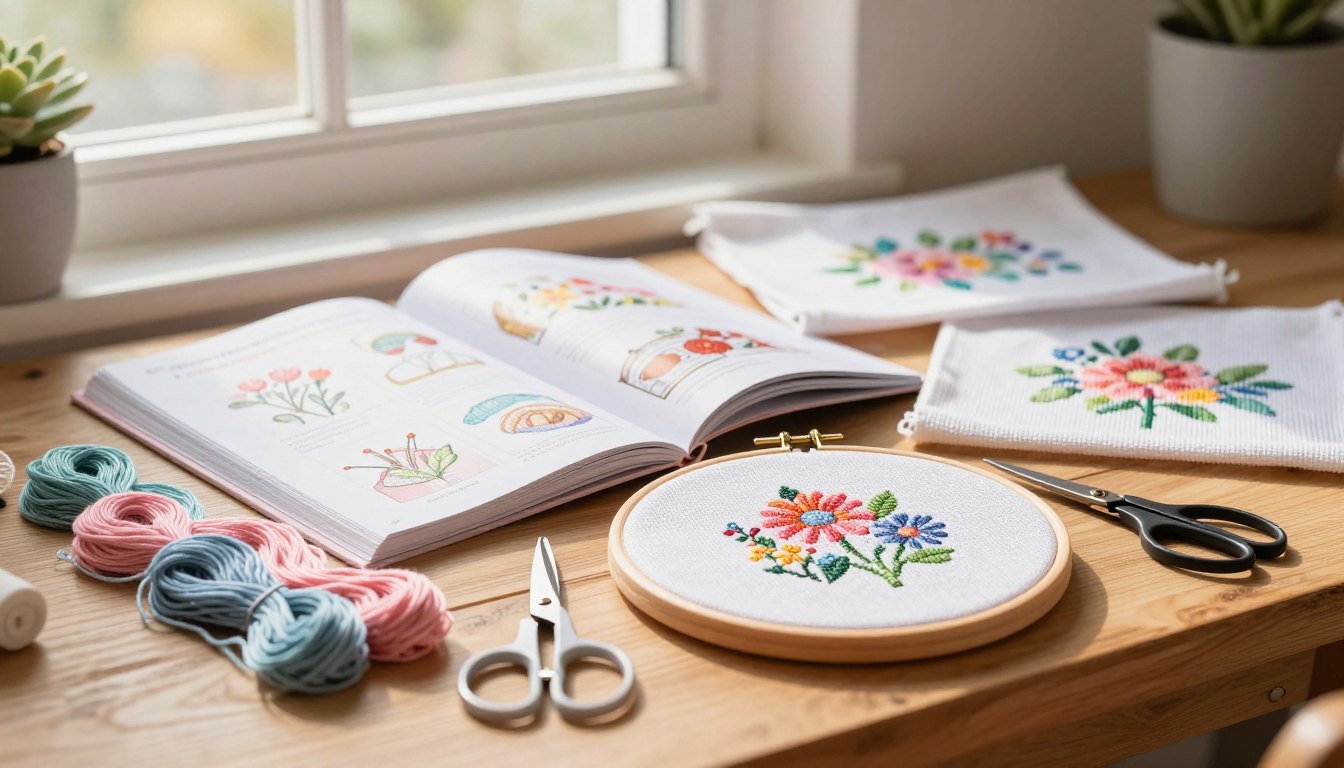
Choosing the right cross stitch project is key to success. Look for kits with clear color patterns, big color blocks, and little backstitching. Make sure they come with everything you need, so you don’t have to search for supplies.
For beginners, start with small projects, like 6×6 to 8×10 inches. Patterns with fewer than 2,000 stitches are best. They help you learn the basics, build confidence, and complete a project without feeling too stressed.
As you get better, try kits with more shading and backstitching. Then, move to advanced designs with lots of stitches and dense patterns. Subscription services like MOOD cross stitch subscription can introduce you to new projects every few months. This keeps your cross stitch journey exciting and fresh.
Key Takeaways
- Begin with complete beginner kits that include floss, fabric, needles, and clear charts.
- Choose projects around 6×6 to 8×10 inches and under 2,000 stitches to stay motivated.
- Look for large color blocks and minimal backstitching when learning new cross stitch tips.
- Move to intermediate kits with shading and backstitching as your skills grow.
- Use subscription boxes like MOOD to discover new cross stitch ideas without the guesswork.
Understanding your skill level and learning curve in cross stitch
Knowing your skill level helps you choose projects that are fun and not too hard. Start by seeing what you already know. This keeps your progress smooth and fun as you learn new things.
Definitions of beginner, intermediate, and advanced stitchers
A beginner works on small designs with big colors and little backstitch. They use 14-count Aida fabric. Projects with less than 2,000 stitches are good for beginners.
Intermediate stitchers do more detailed work, like shading and moderate backstitch. They might use 16–18 count Aida or evenweave fabric. Their projects have more color changes and need careful counting.
Advanced stitchers handle very detailed work, like intricate lines and special threads. They use linen or evenweave fabric. Their projects are bigger and more complex.
How to self-assess: techniques you should know at each level
Check if you keep your stitch direction the same. This is key for a good look. Look for stitches that are too loose or too tight, which can mess up the texture.
Beginners should be able to do full cross stitches and basic backstitch well. Intermediate stitchers need to count well, handle color changes, and do simple shading with backstitch.
Advanced stitchers should use fractional stitches, French knots, and blend threads. They need to follow dense charts and fix small mistakes without ripping a lot of fabric.
Typical stitch speed and project sizing expectations
Use a simple rule to guess how long a project will take. Divide the total stitches by how many you can do per hour. Beginners might do about 75 stitches per hour after their first project. This helps pick a project size that fits your schedule.
Beginners can expect to spend about 25 hours on a project under 2,000 stitches. Intermediate stitchers get faster as they get better. Advanced stitchers work fast but do very complex patterns, so they might spend a lot of time on a project.
Watch out for common mistakes that can slow you down. Tight stitches, reading symbols wrong, and skipping grid checks all add extra hours. Add small practice sections to your project to get better and avoid mistakes.
Choosing between counted cross stitch and stamped cross stitch kits
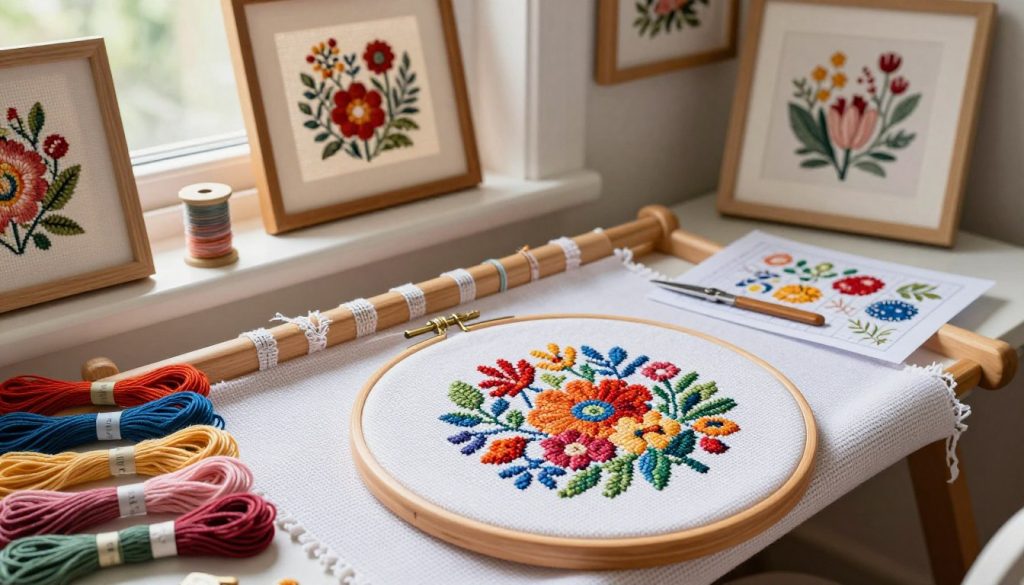
Choosing the right kit is key to your learning and fun. Think about control, speed, and the skills you want to master. Use your goals to decide between counted cross stitch or stamped cross stitch.
What counted cross stitch offers: flexibility and precision
Counted cross stitch lets you control fabric, thread, and color choices. You follow a chart and count squares on blank Aida or evenweave, so precision is crucial.
This method is perfect for those who love customizing designs and trying new techniques. You can use 14-count Aida or higher counts for more detail. Many find it rewarding for custom finishes or pattern conversions.
What stamped cross stitch offers: ease and speed for beginners
Stamped cross stitch has the pattern printed on fabric, making it easy to follow. This method reduces counting errors and speeds up your work.
Stitched pieces come together quickly, keeping you motivated. Stamped kits often use water-soluble inks for easy marking removal. They’re great for beginners who want a smooth start.
When to pick each type based on your experience and goals
If you want to learn chart reading, tweak designs, or explore complex techniques, choose counted cross stitch. It builds technical skill and offers customization options not found in printed fabrics.
For a fast, calming project that boosts confidence, go for stamped cross stitch. Many use stamped kits as a form of cross stitch therapy to relax without worrying about mistakes.
| Factor | Counted Cross Stitch | Stamped Cross Stitch |
|---|---|---|
| Best for | Customization, precision, advanced techniques | Quick results, confidence building, beginners |
| Fabric | Blank Aida or evenweave; choose count freely | Pre-printed fabric with design |
| Learning curve | Steeper; teaches counting and chart skills | Gentle; focuses on stitch placement |
| Therapeutic value | High for focused, mindful stitching | High for quick, soothing progress |
| Customization | High — change threads, size, or colors | Low — design fixed to the printed fabric |
Evaluating pattern complexity: stitch count, grid size, and coverage
Choosing a pattern is all about matching it to your time and skill level. Look at the stitch count and the dimensions of the chart. This tells you how many stitches you’ll do and how detailed the final image will be.
How to read stitch count and stitch area to estimate time and difficulty
The stitch count shows the total number of crosses in the design. Knowing this and your stitch rate helps estimate the time needed. Beginners should aim for projects under 2,000 stitches to avoid getting overwhelmed.
The grid size on the chart shows how the pattern fits your fabric. A larger grid means bigger stitches and fewer squares per inch. Make sure the chart legend matches your fabric size.
Full coverage versus partial coverage and what that means for effort
Full coverage patterns fill almost every square. They require long, repetitive stitching and careful color changes. Expect slower progress and more floss management.
Partial coverage designs leave some fabric areas open. They use backstitch or fractional stitches for details. These stitch up faster and can be less tiring, perfect for weekend projects or quick progress.
How fabric count (14, 16, 28 evenweave equivalence) affects complexity
Fabric count is the number of holes per inch. A 14-count Aida has larger stitches and makes details easier to see. A 16-count Aida tightens the design and increases stitching time per inch.
Evenweave counts like 28 are often stitched over two threads to match 14-count Aida. This keeps the stitched size similar but affects handling tiny details. Always check the pattern’s stitch count and grid size before buying fabric.
Use the pattern’s stitch count, grid size, and coverage type to decide if it fits your schedule and patience. This helps avoid leaving a project unfinished.
CROSS STITCH patterns and design selection to match your interests
Choose cross stitch patterns that align with what you love. Pick themes that make you want to pick up your hoop each day. Small projects that reflect your tastes reduce the chance you will abandon a piece.
Design categories span floral cross stitch, animal cross stitch, landscapes, quotes, and seasonal patterns. Simple samplers and geometric motifs teach basics without overwhelming you. A 6×6 or 8×10-inch finish works well for first projects.
When exploring cross stitch ideas, favor patterns under 2,000 stitches for faster progress. Full-coverage realism looks stunning but takes longer than partial motifs. Decide whether you want a showpiece for the wall or a quick gift to stay motivated.
Your personal interest matters. If nature inspires you, choose floral cross stitch or bird and wildlife motifs. If humor or sentiment moves you, search for short quotes that stitch up fast and make great gifts.
Seasonal patterns give clear milestones. Holiday motifs and seasonal themes can be completed in time for celebrations, making them practical and rewarding. Use these as confidence builders between larger projects.
Balance complexity with display intent. If you plan to frame a piece, pick a detailed chart you will enjoy finishing. For practice or supplies testing, pick smaller cross stitch ideas that let you try new stitches and colors without heavy commitment.
Materials and tools: fabric, floss, needles, hoops, and organization
Choosing the right supplies makes stitching easier and more enjoyable. Start by matching fabric and thread to your skill level. Use reliable cross stitch tools to keep tension even, prevent fraying, and speed up progress. Small habits in setup pay off when you stitch for hours.
Choosing fabric: Aida, evenweave, and linen options
Aida is forgiving and shows holes clearly, so it suits beginners. A 14-count Aida is the most common starting point. If you want finer detail, try evenweave or linen as you gain experience. Stitching over two threads on 28-count evenweave gives a finish similar to 14-count Aida but with a smoother look.
Thread quality and reputable brands
Invest in quality floss for colorfastness and smooth separation. Brands like DMC floss offer consistent dye lots and a wide color range. Quality thread reduces knotting and gives a cleaner finish when you use backstitching techniques for outlines and text.
Essential tools and practical embroidery hacks
Keep a small kit of blunt-tipped tapestry needles (sizes 24 and 26), sharp embroidery scissors, hoops or Q-snap frames, and needle threaders. Good cross stitch tools make threading and stitching less fiddly.
Use simple embroidery hacks to cut mistakes and save time. Grid your fabric with water-soluble pens to match the chart. Pre-sort DMC floss onto labeled bobbins. Clip a small binder clip to hold excess fabric while you work.
Cross stitch organization: gridding, storage, and project bags
Organize floss and patterns for faster setup and fewer errors. Store skeins in a box or on numbered cards that match your chart. Keep projects in zip pouches or project bags so threads and needles stay together.
Gridding your fabric reduces counting errors and speeds stitching. Check kit contents against packing lists before you begin. Clear cross stitch organization makes it simple to pause and resume projects without losing momentum.
Estimating time and budget for cross stitch projects
Before starting a new project, it’s good to know the costs and time involved. Planning helps you set a budget and avoid unexpected expenses. Here are steps to compare kits and buying supplies, track costs, and estimate project time.
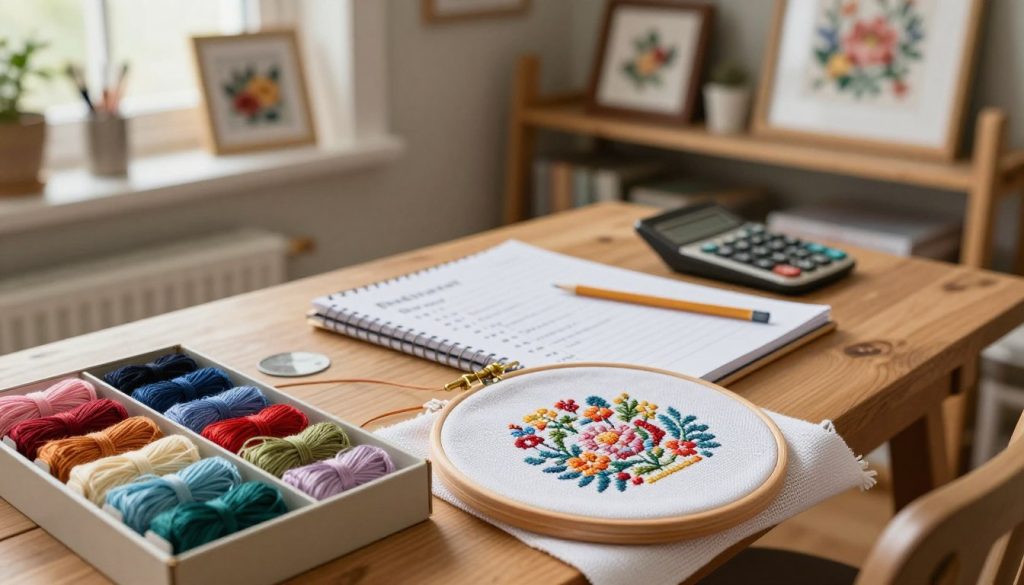
First, check what’s in a kit. Many kits from DMC or Dimensions come with fabric, pattern, needles, and floss. Kits are great for beginners as they save time and simplify shopping. But, subscription boxes can increase costs if you get items you don’t need.
Buying supplies separately lets you choose high-quality threads or special fabric. A single skein of floss costs $0.50 to $1.00 for DMC or Anchor. Compare the cost of a kit to buying each item to see which is better for your budget.
Use a small table to compare typical price points for common starter needs.
| Item | Typical Cost (US) | Notes |
|---|---|---|
| Beginner kit (14-count Aida) | $10–$25 | Includes pattern, fabric, a few floss skeins, needles |
| Individual floss skeins | $0.50–$1.50 each | Price varies by brand and specialty threads |
| Fabric (Aida by the yard) | $6–$15 | Cost depends on count and width |
| Basic tools (needles, hoop, scissors) | $5–$20 | One-time purchase for most stitchers |
To estimate project time, divide the stitch count by your rate. For example, if a pattern has 2,000 stitches and you stitch 75 stitches per hour, it will take about 27 hours. Remember to add time for backstitching and finishing touches.
Track your stitching time and stitches to find your rate. This data helps you plan better for future projects. It’s useful for setting realistic deadlines for gifts or sales.
Always budget for extras. You might need more colors, specialty threads, or finishing supplies. A 10–20% buffer in your budget covers these unexpected costs.
Choose between kits and buying supplies based on your goals. Kits are easy and save time, while buying supplies offers customization and savings for frequent stitchers. Both methods work if you plan well, considering stitch count, floss, and project time.
Finding reliable patterns, kits, and learning resources
Start by knowing what clarity looks like in a pattern. Look for charts with distinct symbols and labeled color keys. They should use DMC numbers, list stitch counts, and give finished dimensions. Kits that list fabric count and coverage help judge difficulty and time.
Where to buy quality beginner kits
Buy from specialist retailers like The Fat Quarter Shop or Needlecraft Corner. They offer well-packed beginner kits with floss, fabric, needles, and clear charts. Large craft stores such as Michaels let you inspect fabric and thread in person. They may also offer classes.
Online needlework shops give detailed descriptions of fabric count and stitch area. This helps compare difficulty levels before purchase.
Best online communities, blogs, and magazines
Join active cross stitch communities on forums and Facebook groups. Read project reviews and vet designers. Read blogs like Lord Libidan, The Twisted Stitcher, and Studio Koekoek for pattern reviews and tutorials.
Subscribe to cross stitch magazines such as Just CrossStitch or Cross-Stitch & Needlework. They offer tested patterns and seasonal ideas. Use feedback from these sources to avoid poorly charted designs.
How to choose patterns with clear charts and tutorial support
Pick patterns that show full coverage versus partial coverage and list stitch counts. Favor designs with separate color keys, readable symbols, and recommended DMC floss. Video guides or step-by-step photo tutorials are valuable for learning new techniques or help with cross stitch gridding.
Use cross stitch resources like pattern libraries and stitch dictionaries to expand skills. Read reviews from cross stitch communities before buying a kit or pattern. When possible, choose kits labeled “beginner” to ensure materials match your skill and reduce frustration.
Conclusion
Start with a kit or pattern that suits your skill level. Beginners should choose simple kits with 14-count Aida and quality DMC floss. This makes it easier to focus on your stitches.
If you’re more experienced, look for patterns with detailed charts and different stitches. This will keep your projects interesting and help you improve your skills.
Plan your time wisely by using stitch count and a realistic stitch rate. Start with patterns under 2,000 stitches and estimate 75 stitches per hour. Good tools, clear charts, and easy instructions will help you avoid mistakes and enjoy the process.
Remember, cross stitch is about being creative and manageable. Follow these tips: choose quality fabric and thread, learn one stitch at a time, and pick designs you love. Whether you’re looking for quick inspiration or a long-term project, choose something that brings you joy.
FAQ
How do I choose the right cross stitch project for my skill level?
How can I assess whether I’m a beginner, intermediate, or advanced stitcher?
What techniques should I know at each skill level?
What is a realistic stitch speed and how should I size projects?
What’s the difference between counted cross stitch and stamped cross stitch?
When should I choose counted kits versus stamped kits?
How do I read stitch count, grid size, and coverage to estimate project difficulty?
What’s the practical impact of fabric count (14, 16, 28 evenweave equivalence) on complexity?
Which design types work best for beginners?
How does personal interest affect whether I’ll finish a project?
What fabrics should I use at different skill levels?
How important is thread quality and which brands are recommended?
What essential tools and embroidery hacks speed stitching and reduce mistakes?
How should I organize floss and projects to avoid confusion?
Is it cheaper to buy kits or to buy supplies separately?
What are typical costs for kits and supplies?
FAQ
How do I choose the right cross stitch project for my skill level?
Pick a kit or pattern that matches your current skills and will keep you motivated. Beginners should choose kits labelled “beginner” or patterns under 2,000 stitches. These should have large blocks of color and minimal backstitching.
Start with projects about 6×6 to 8×10 inches on 14-count Aida. Intermediate projects add shading and some backstitching. Advanced projects include dense stitching and intricate line work.
How can I assess whether I’m a beginner, intermediate, or advanced stitcher?
Self-assess by testing core skills. Beginners should consistently make full cross stitches in the same direction. They should read basic symbol charts and avoid pulling stitches too tight.
Intermediate stitchers comfortably count on higher-count fabrics. They add backstitching and simple fractional stitches. Advanced stitchers use linen or evenweave, execute French knots, and handle high stitch counts.
What techniques should I know at each skill level?
Beginner techniques include full cross stitch, basic backstitch, and reading a simple chart. Use 14-count Aida with DMC floss. Intermediate techniques involve counting on 16–18 count Aida or evenweave.
They also use multiple stranded threads, more backstitch and partial stitches, and basic finishing. Advanced techniques include stitching on linen/evenweave (28-count over two threads), fractional stitches, and specialty threads.
What is a realistic stitch speed and how should I size projects?
Beginners commonly reach about 75 stitches per hour by the end of their first project. Use that as a baseline. For example, a 2,000-stitch pattern ≈ 26–27 hours.
Factor in extra time for backstitching, fractional stitches, and finishing. Choose projects under 2,000 stitches to reduce abandonment and ensure you can finish in a reasonable time.
What’s the difference between counted cross stitch and stamped cross stitch?
Counted cross stitch uses blank Aida or evenweave and a chart you count from. It gives you flexibility in fabric and thread choices and allows customization. Stamped cross stitch has the design printed on fabric (often with water-soluble ink).
It speeds placement and is great for absolute beginners or quicker results. Stamped kits sacrifice some customization but offer a low-stress route to finished pieces.
When should I choose counted kits versus stamped kits?
Choose counted kits if you want control, customization, and a deeper learning experience. Pick stamped kits when you want a faster, more forgiving project.
Good for therapy-style relaxations, beginners who want instant placement help, or when you prefer minimal counting.
How do I read stitch count, grid size, and coverage to estimate project difficulty?
Check the stitch count, stitched image dimensions, and whether the pattern is full or partial coverage. Higher stitch counts, dense shading, and many color changes increase difficulty and time.
Full coverage (every square stitched) requires more time and concentration than partial or motif-based designs. Use stitch count divided by your stitch rate to estimate hours.
What’s the practical impact of fabric count (14, 16, 28 evenweave equivalence) on complexity?
Fabric count equals holes per inch. 14-count Aida is ideal for beginners because holes are easy to see. 16–18 count Aida yields smaller stitches and more detail.
A 28-count evenweave stitched over two threads produces the same stitch size as 14-count Aida but a finer look. This is better suited to intermediate or advanced stitchers comfortable counting tightly spaced threads.
Which design types work best for beginners?
Beginners find success with geometric patterns, small florals, simple samplers, quotes, seasonal motifs, or small animal designs. These often use fewer colors, teach fundamentals, and finish quickly.
Pick themes you want to display or gift to stay motivated and finish the piece.
How does personal interest affect whether I’ll finish a project?
Personal interest strongly influences completion. Choose patterns that connect to your tastes—nature, pets, favorite quotes, or holiday themes—to stay engaged. Stitchers who select personally meaningful designs are far more likely to complete them and enjoy the process.
What fabrics should I use at different skill levels?
Beginners: 14-count Aida for clear holes and easy counting. Intermediate: 16–18 count Aida or evenweave as you get comfortable with finer counting. Advanced: linen or high-count evenweave (stitched over appropriate threads) for a refined finish.
Kits should state fabric count and stitched image dimensions to help planning.
How important is thread quality and which brands are recommended?
Thread quality affects colorfastness, ease of separation, and final appearance. Choose reputable brands like DMC for consistent color and durability. Quality floss resists fraying and bleeding and gives a polished result.
Good kits label DMC color numbers and pre-sort threads for convenience.
What essential tools and embroidery hacks speed stitching and reduce mistakes?
Essentials: blunt-tipped tapestry needles (size #24 or #26), embroidery scissors, hoops or frames, needle threaders, and storage for floss. Helpful hacks: grid your fabric with water-soluble pens or thread to reduce counting errors; pre-sort floss on bobbins or in labeled bags; use project bags to keep supplies together; and check kit contents against the packing list before you start.
How should I organize floss and projects to avoid confusion?
Pre-sort and label floss with DMC numbers on bobbins, use compartment boxes or zip bags, and keep a working copy of the chart with key colors highlighted. Use clear project bags or zip pouches for each project and keep needles, scissors, and a small notepad together. Gridding the fabric also reduces re-counting and mistakes.
Is it cheaper to buy kits or to buy supplies separately?
For beginners, full kits are often more cost-effective because they include pre-cut fabric, labeled floss, needles, and clear charts—removing guesswork about fabric count and color matching. Buying supplies separately gives customization but can cost more and requires more knowledge. Compare kit contents and prices before buying.
What are typical costs for kits and supplies?
Starter kits on 14-count Aida often cost under from many brands. Floss skeins retail for about
FAQ
How do I choose the right cross stitch project for my skill level?
Pick a kit or pattern that matches your current skills and will keep you motivated. Beginners should choose kits labelled “beginner” or patterns under 2,000 stitches. These should have large blocks of color and minimal backstitching.
Start with projects about 6×6 to 8×10 inches on 14-count Aida. Intermediate projects add shading and some backstitching. Advanced projects include dense stitching and intricate line work.
How can I assess whether I’m a beginner, intermediate, or advanced stitcher?
Self-assess by testing core skills. Beginners should consistently make full cross stitches in the same direction. They should read basic symbol charts and avoid pulling stitches too tight.
Intermediate stitchers comfortably count on higher-count fabrics. They add backstitching and simple fractional stitches. Advanced stitchers use linen or evenweave, execute French knots, and handle high stitch counts.
What techniques should I know at each skill level?
Beginner techniques include full cross stitch, basic backstitch, and reading a simple chart. Use 14-count Aida with DMC floss. Intermediate techniques involve counting on 16–18 count Aida or evenweave.
They also use multiple stranded threads, more backstitch and partial stitches, and basic finishing. Advanced techniques include stitching on linen/evenweave (28-count over two threads), fractional stitches, and specialty threads.
What is a realistic stitch speed and how should I size projects?
Beginners commonly reach about 75 stitches per hour by the end of their first project. Use that as a baseline. For example, a 2,000-stitch pattern ≈ 26–27 hours.
Factor in extra time for backstitching, fractional stitches, and finishing. Choose projects under 2,000 stitches to reduce abandonment and ensure you can finish in a reasonable time.
What’s the difference between counted cross stitch and stamped cross stitch?
Counted cross stitch uses blank Aida or evenweave and a chart you count from. It gives you flexibility in fabric and thread choices and allows customization. Stamped cross stitch has the design printed on fabric (often with water-soluble ink).
It speeds placement and is great for absolute beginners or quicker results. Stamped kits sacrifice some customization but offer a low-stress route to finished pieces.
When should I choose counted kits versus stamped kits?
Choose counted kits if you want control, customization, and a deeper learning experience. Pick stamped kits when you want a faster, more forgiving project.
Good for therapy-style relaxations, beginners who want instant placement help, or when you prefer minimal counting.
How do I read stitch count, grid size, and coverage to estimate project difficulty?
Check the stitch count, stitched image dimensions, and whether the pattern is full or partial coverage. Higher stitch counts, dense shading, and many color changes increase difficulty and time.
Full coverage (every square stitched) requires more time and concentration than partial or motif-based designs. Use stitch count divided by your stitch rate to estimate hours.
What’s the practical impact of fabric count (14, 16, 28 evenweave equivalence) on complexity?
Fabric count equals holes per inch. 14-count Aida is ideal for beginners because holes are easy to see. 16–18 count Aida yields smaller stitches and more detail.
A 28-count evenweave stitched over two threads produces the same stitch size as 14-count Aida but a finer look. This is better suited to intermediate or advanced stitchers comfortable counting tightly spaced threads.
Which design types work best for beginners?
Beginners find success with geometric patterns, small florals, simple samplers, quotes, seasonal motifs, or small animal designs. These often use fewer colors, teach fundamentals, and finish quickly.
Pick themes you want to display or gift to stay motivated and finish the piece.
How does personal interest affect whether I’ll finish a project?
Personal interest strongly influences completion. Choose patterns that connect to your tastes—nature, pets, favorite quotes, or holiday themes—to stay engaged. Stitchers who select personally meaningful designs are far more likely to complete them and enjoy the process.
What fabrics should I use at different skill levels?
Beginners: 14-count Aida for clear holes and easy counting. Intermediate: 16–18 count Aida or evenweave as you get comfortable with finer counting. Advanced: linen or high-count evenweave (stitched over appropriate threads) for a refined finish.
Kits should state fabric count and stitched image dimensions to help planning.
How important is thread quality and which brands are recommended?
Thread quality affects colorfastness, ease of separation, and final appearance. Choose reputable brands like DMC for consistent color and durability. Quality floss resists fraying and bleeding and gives a polished result.
Good kits label DMC color numbers and pre-sort threads for convenience.
What essential tools and embroidery hacks speed stitching and reduce mistakes?
Essentials: blunt-tipped tapestry needles (size #24 or #26), embroidery scissors, hoops or frames, needle threaders, and storage for floss. Helpful hacks: grid your fabric with water-soluble pens or thread to reduce counting errors; pre-sort floss on bobbins or in labeled bags; use project bags to keep supplies together; and check kit contents against the packing list before you start.
How should I organize floss and projects to avoid confusion?
Pre-sort and label floss with DMC numbers on bobbins, use compartment boxes or zip bags, and keep a working copy of the chart with key colors highlighted. Use clear project bags or zip pouches for each project and keep needles, scissors, and a small notepad together. Gridding the fabric also reduces re-counting and mistakes.
Is it cheaper to buy kits or to buy supplies separately?
For beginners, full kits are often more cost-effective because they include pre-cut fabric, labeled floss, needles, and clear charts—removing guesswork about fabric count and color matching. Buying supplies separately gives customization but can cost more and requires more knowledge. Compare kit contents and prices before buying.
What are typical costs for kits and supplies?
Starter kits on 14-count Aida often cost under $20 from many brands. Floss skeins retail for about $0.50 each on average (varies by retailer), needles and basic tools are inexpensive, and hoops or frames add a modest cost. Subscription boxes like the MOOD cross stitch subscription can add variety but cost more over time. Factor finishing and framing into your budget.
How do I estimate project time from stitch count?
Use your stitch rate. A common beginner baseline is ~75 stitches per hour. Divide the pattern stitch count by your stitch rate to estimate active stitching hours (example: 2,000 stitches ÷ 75 = ~26.7 hours). Add time for backstitching, fractional stitches, and finishing tasks like framing or mounting.
Where should I buy reliable beginner kits and patterns?
Buy from specialist needlework retailers online for clear descriptions (fabric count, stitch count, dimensions), from reputable kit makers, or from local craft and specialty shops where you can inspect materials. Look for kits labelled “beginner” with complete contents and clear charts.
What online communities, blogs, and magazines are best for cross stitch tips and inspiration?
Helpful online resources include Lord Libidan, The Twisted Stitcher, Studio Koekoek, Priscilla’s 2000 Blog, Stitching Dreams, Peacock & Fig, and the Fat Quarter Shop blog. Magazines like Just CrossStitch and Cross-Stitch & Needlework publish patterns and tutorials. Use community reviews and tutorials to vet patterns and learn techniques.
How do I choose patterns with clear charts and good tutorial support?
Look for patterns that list stitch count, stitched image dimensions, fabric count, and coverage details. Prefer charts with distinct symbols, labeled color keys using DMC numbers, and step-by-step instructions or QR codes linking to video tutorials. Read reviews and community feedback to confirm clarity and support.
What practical takeaways should I keep in mind before starting?
Start small with patterns under 2,000 stitches, use 14-count Aida and quality DMC floss for your first projects, and pick a design you love so you’ll finish it. Use stitch count and an estimated stitch rate to plan time, grid fabric to avoid counting errors, and buy kits that include all materials if you’re unsure. Cross stitch should be enjoyable—pick projects that balance relaxation and challenge.
.50 each on average (varies by retailer), needles and basic tools are inexpensive, and hoops or frames add a modest cost. Subscription boxes like the MOOD cross stitch subscription can add variety but cost more over time. Factor finishing and framing into your budget.
How do I estimate project time from stitch count?
Use your stitch rate. A common beginner baseline is ~75 stitches per hour. Divide the pattern stitch count by your stitch rate to estimate active stitching hours (example: 2,000 stitches ÷ 75 = ~26.7 hours). Add time for backstitching, fractional stitches, and finishing tasks like framing or mounting.
Where should I buy reliable beginner kits and patterns?
Buy from specialist needlework retailers online for clear descriptions (fabric count, stitch count, dimensions), from reputable kit makers, or from local craft and specialty shops where you can inspect materials. Look for kits labelled “beginner” with complete contents and clear charts.
What online communities, blogs, and magazines are best for cross stitch tips and inspiration?
Helpful online resources include Lord Libidan, The Twisted Stitcher, Studio Koekoek, Priscilla’s 2000 Blog, Stitching Dreams, Peacock & Fig, and the Fat Quarter Shop blog. Magazines like Just CrossStitch and Cross-Stitch & Needlework publish patterns and tutorials. Use community reviews and tutorials to vet patterns and learn techniques.
How do I choose patterns with clear charts and good tutorial support?
Look for patterns that list stitch count, stitched image dimensions, fabric count, and coverage details. Prefer charts with distinct symbols, labeled color keys using DMC numbers, and step-by-step instructions or QR codes linking to video tutorials. Read reviews and community feedback to confirm clarity and support.
What practical takeaways should I keep in mind before starting?
Start small with patterns under 2,000 stitches, use 14-count Aida and quality DMC floss for your first projects, and pick a design you love so you’ll finish it. Use stitch count and an estimated stitch rate to plan time, grid fabric to avoid counting errors, and buy kits that include all materials if you’re unsure. Cross stitch should be enjoyable—pick projects that balance relaxation and challenge.
 English