Can machines really capture the heart and soul poured into handmade cross stitches?
The idea of machine cross stitching is both new and fascinating. It makes us wonder if tech can match the care and artistry of human hands. Though AI has moved into many creative areas, hand-stitched items are unique. Despite efforts to make machines do cross stitch, technical hurdles stand in the way.
These machines can’t work on aida fabric, which is widely used, due to their design. Also, they cost over $1000, so they’re not common like hand stitching. For now, the love and detail in traditional cross stitch work exceed what machines can do.
Key Takeaways
- 100% of cross-stitch patterns are currently created using the stab and stitch method manually.
- Machine cross stitch designs often use linen fabric due to technical limitations.
- Machines attempting cross stitch start at a price point of $1000, limiting their accessibility.
- Handmade cross stitch kits and techniques still offer a unique personal touch that machines can’t replicate.
- Current machine cross stitch technologies face challenges with fabric and thread types.
The Evolution of Cross Stitch: From Handcrafted to Machines
The history of cross stitch tells a story of lasting beauty. It began around 500 AD in Egypt and has since captivated people for more than 1500 years. From the 6th to 8th centuries, tea was traded for these finely embroidered pieces. This shows how important the craft was in past economies.
In 1509, cross stitch arrived in England thanks to Catherine of Aragon. It quickly became a favorite pastime there. This was just the start of its worldwide popularity.
Jump to the 1980s, and cross stitch started a new chapter. Kits, pattern books, and special threads became widely sold. Thanks to online marketplaces like Etsy, anyone could sell their stitched creations. Even during the COVID-19 pandemic, cross stitch was praised as a peaceful pastime at home.
The Rise of AI in Art
In our era, AI is reshaping art, including cross stitch. It has changed how we think about the use of machines in this craft. The Industrial Revolution paved the way by making patterns available to many through printing. And now, special software lets us turn any image into a cross stitch pattern. This opens up new creative doors for stitching artists.
Current Machine Cross Stitch Technologies
The latest in machine cross stitch is impressive, although it has its limits. These machines can work on fabrics like linen but not as well on the classic aida fabric. Despite their ability to cross stitch, they’re more of a novelty than a necessity. The traditional, handmade beauty of cross stitch lives on, still beloved by enthusiasts.
How Machines Are Changing the Cross Stitch Landscape
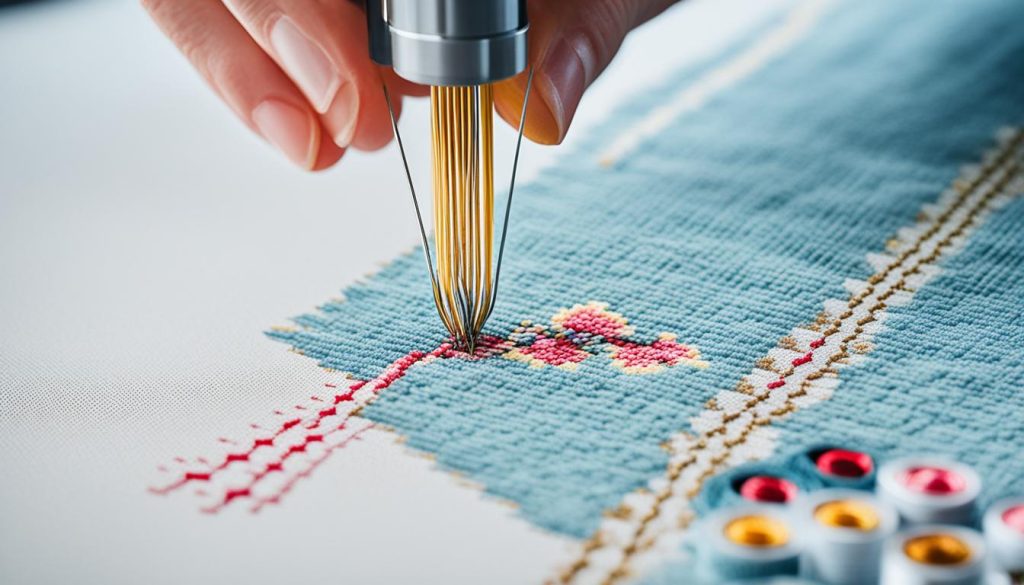
Machine cross stitching brings new opportunities and challenges to cross stitching. It uses technology to create art that looks like it’s done by hand. Yet, the use of machines in crafting has its pros and cons. This includes perks like making things faster but also some quality issues.
Advantages of Machine Cross Stitch
One big upside to machine cross stitch is how fast it can make patterns. It’s a lot quicker than doing it by hand. This speed not only saves time but also makes sure every piece looks the same. This is because the machine doesn’t get tired or make mistakes.
| Handmade | Machine-Made | |
|---|---|---|
| Production Speed | Slow | Fast |
| Consistency | Variable | High |
| Customization | High | Limited |
Limitations and Challenges
However, using machines in cross stitch also comes with its own troubles. One of these is matching the beauty of handcrafted pieces. Machines can sometimes fail to deliver the same level of detail and style. They might have trouble with some fabrics and keeping the threads just right. This can lead to issues like twisting threads and the fabric not holding together well.
When we talk about handmade versus machine-made, it’s often about the touch and feel. Handmade items have an extra something, a unique feel and look. Skilled crafters can adjust their work on the spot to fix any small issues. Machines might not be able to do this as well.
Understanding Machine Cross Stitching Techniques
To grasp machine cross stitching, it’s key to know the techniques. Counted cross stitch is vital. It’s about how many stitches there are in an inch, which we call cross stitch count sizes.
Count Sizes Explained
On machines, we usually find 14, 16, and 18 counts. Each count size brings out different designs and stitch densities, impacting how it looks in the end.
- 14 count is best for light fabrics to prevent too much pile-up of stitches.
- 16 and 18 counts are great for thick fabrics. They make designs look full and detailed.
Picking the right count size matters. Scenics look great on 16 or 18 counts. But florals or abstracts might go for 14 or 16 for that classic feel.
Thread and Fabric Choices
The thread and fabric you pick make a big difference. You might use 40wt polyester or rayon for most things. For 14-count projects, choose thicker 30wt cotton. For the fabric, use linen, denim, or cotton/poly mixes for best results.
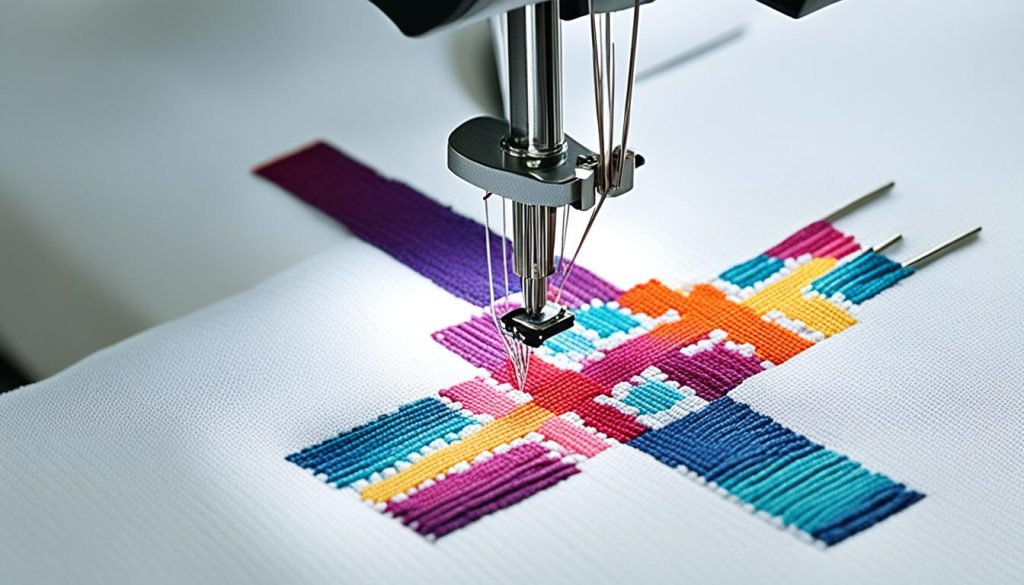
Cross stitching by machine doesn’t get much faster, because it’s often based on our personal speeds. It can be tricky, leading to uneven stitches, twists in thread, and some messiness. Those who do lots of it might get hand cramps. But, “railroading” can make stitches neater, even if it slows you down a bit.
Stabilizing Your Fabric
Stabilizing your fabric well is a must to keep your stitches looking good. There are different methods depending on the fabric. Choose your embroidery backing wisely, and using water-soluble films can help your stitches show up better without sinking into the fabric. Don’t use tear-away backing to avoid harm to your project.
Picking the right needle and fabric setup helps your project last and keep its fine details. This is key whether you’re making something to hang on your wall or trying a new craft project. Getting these details right truly improves your final piece.
Comparing Hand Cross Stitch vs. Machine Cross Stitch
Hand cross stitch and machine cross stitch have different qualities. Things like quality, looks, speed, and how they’re used matter. This helps us see why both techniques are special.
Quality and Aesthetics
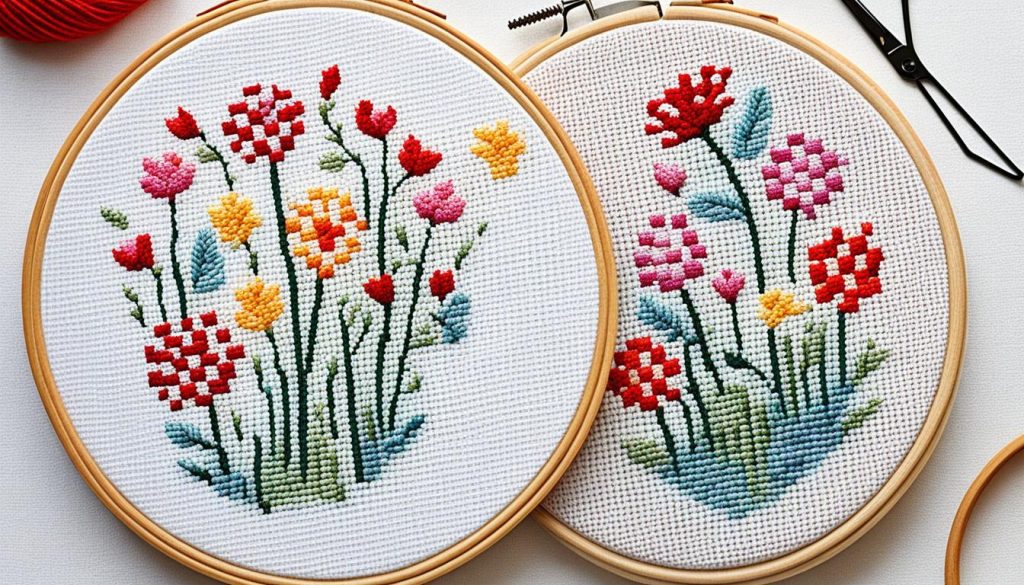
Many people think that hand cross stitch is the best. This is because it’s made by hand and each piece is unique. The beauty of hand-stitched pieces is in the special creativity of the person making it.
On the other hand, machine cross stitch is more consistent in its appearance. Yet, it lacks the special touch that handmade pieces have.
Speed and Efficiency
Machines can finish cross stitch work much faster than people can. This makes them great for big projects or when you need lots of the same thing. Using a machine is also easier for those who can’t stitch by hand.
But, this speed sometimes means losing the unique charm of handmade items.
Unique Applications and Use Cases
Hand and machine crossstitching have very different uses. Hand-stitched pieces are perfect for personal gifts or special decorations. This is because they have a personal quality that machines can’t copy.
Machines are better when you need many of the same thing. They’re often used for things like repetitive patterns or big projects.
Choosing between hand and machine crossstitching depends on the project. Think about what you want the final piece to look like. Whether it’s a custom project or something that needs to be made fast, each method has its benefits. Knowing these can help you make something truly special in cross stitch.
Conclusion
The debate between machine and hand cross stitching is ongoing. Yet, hand-stitched items shine with their unique qualities and personal touch. We explored how detailed a cross-stitch project can be in just three sessions. It was interesting that a yellow stitch was added to personalize the cat’s face. This tiny project showed that efficiency is key in cross stitching.
Cross stitching has been loved for years, and for good reason. It helps us focus and remember better, making it both fun and beneficial. Many find it calming and a great way to deal with stress. Besides being artful, these creations are treasured gifts that last for generations. They are made with care and help both young and old focus, which adds joy to life.
While machines may speed things up, they can’t make the same impact as handmade work. The hand cross stitch community is vibrant, with lots of helpful resources. They share old and new techniques, keeping the craft alive. This shows that the love and effort in each stitch are what truly matters in cross stitch, staying timeless and valued.
 English