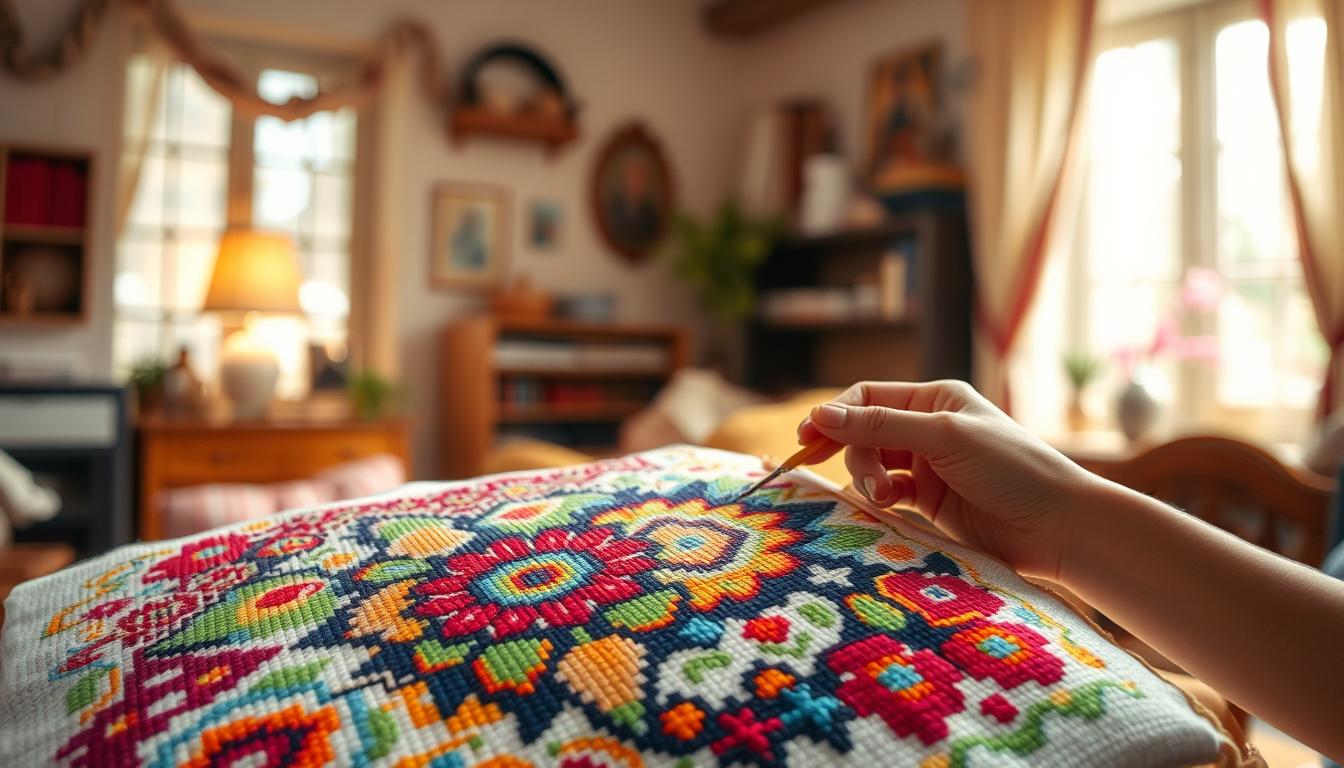
A needle and fabric might seem small, but they can greatly impact your stress levels. Cross stitch for beginners offers a calming effect. The repetitive actions help slow your breathing and distract you from worries.
It’s all about focusing on the task at hand. Counting stitches and following patterns are key. This focus is at the core of cross stitch therapy.
Short sessions of 15–30 minutes are perfect for an evening routine. These brief times activate your body’s relaxation system. They lower your heart rate and clear your mind before sleep.
With regular practice, you’ll see improvements in your mood and sleep. Your body will produce more serotonin and dopamine. This leads to better sleep and a sense of accomplishment.
Cross stitch also helps you disconnect from digital screens. It offers a hands-on, tangible experience. Beginner kits and online classes make it easy to begin.
Local craft shops and stitch communities provide support. Simple tips can help you create a peaceful space. This keeps your practice enjoyable and consistent.
Key Takeaways
- Cross stitch offers meditative, rhythmic movements that reduce anxiety and promote present-moment focus.
- Short nightly sessions (15–30 minutes) support relaxation and better sleep through physiological stress reduction.
- Beginner cross stitch kits and tutorials lower the barrier to entry and build confidence quickly.
- Cross stitch therapy doubles as a digital detox and a tactile way to unwind before bed.
- Consistent practice increases serotonin and dopamine, and helps sustain emotional resilience.
Why Cross Stitch Works as Stress Relief
When you start with a needle and thread, simple actions change your focus. The repetitive stitching creates a steady beat that calms your thoughts. This focus gives you control and predictability, lowering tension and helping you breathe more slowly.
The meditative rhythm of repetitive stitches
Following a pattern anchors your mind in the present. Counting squares and repeating motions is like a breathing exercise. This rhythm is a cue to relax, making it a practical way to calm your mind.
How flow state reduces cortisol and anxiety
Spending 20–30 minutes on a small project can put you in flow. In this state, you stop worrying about the past or future. Your heart rate drops, and stress hormones decrease, reducing anxiety and helping you relax before sleep.
Neurochemical benefits: dopamine and serotonin boosts
Finishing a row or completing a motif gives you a sense of accomplishment. These small wins release dopamine, boosting your mood. You get lasting calm from cross stitch therapy, combining creativity with low effort.
- Use counted cross stitch for clear goals and easier tracking.
- Keep notes of progress to amplify small achievements.
- Learn basic cross stitch tips to avoid interruptions from simple cross stitch mistakes.
How I Built a Simple Evening Stitching Routine
Start small and steady to make stitching part of your nightly wind-down. Set aside 15–30 minutes each evening. Use this time to stitch a few rows or finish a motif from a beginner cross stitch kit. Short, regular sessions build momentum and give you small wins that lift mood and lower stress.
Setting a short daily practice: 15–30 minutes
Pick a time that fits your life. Fifteen minutes feels easy to start. Twenty to thirty minutes gives enough focus to make visible progress on most cross stitch patterns. Use a kitchen timer or a phone alarm to keep the session bounded so stitching stays relaxing and not another task on your list.
Choosing a calming space and rituals
Create a cozy corner with a soft lamp and a warm drink like herbal tea. Keep a small basket for your hoop, needles, and floss so you can sit and stitch without searching for tools. Simple rituals—lighting a candle, brewing chamomile, or choosing a single pattern from a box—signal your brain that it is time to relax.
Avoiding screens: a digital detox before bed
Turn off screens at least 20 minutes before you stitch to lower blue light exposure and calm your mind. Cross stitch for beginners works well as a low-tech evening habit that replaces scrolling. Try small cross stitch ideas like floral motifs or moons; these projects are compact, satisfying, and ideal for unplugged routines.
For consistency, rotate easy cross stitch patterns and kits from brands like DMC or Dimensions. Subscription boxes and ready-to-stitch kits give fresh options and keep your routine interesting without decision fatigue. This approach makes cross stitch routines sustainable and approachable for those new to the craft.
CROSS STITCH as Mindfulness Practice
When you pick up a needle, you open a simple doorway to calm. The tactile pull of fabric and floss brings your attention into the moment. This small shift can interrupt worry and quiet a busy mind, turning counted cross stitch into a practical form of cross stitch therapy.
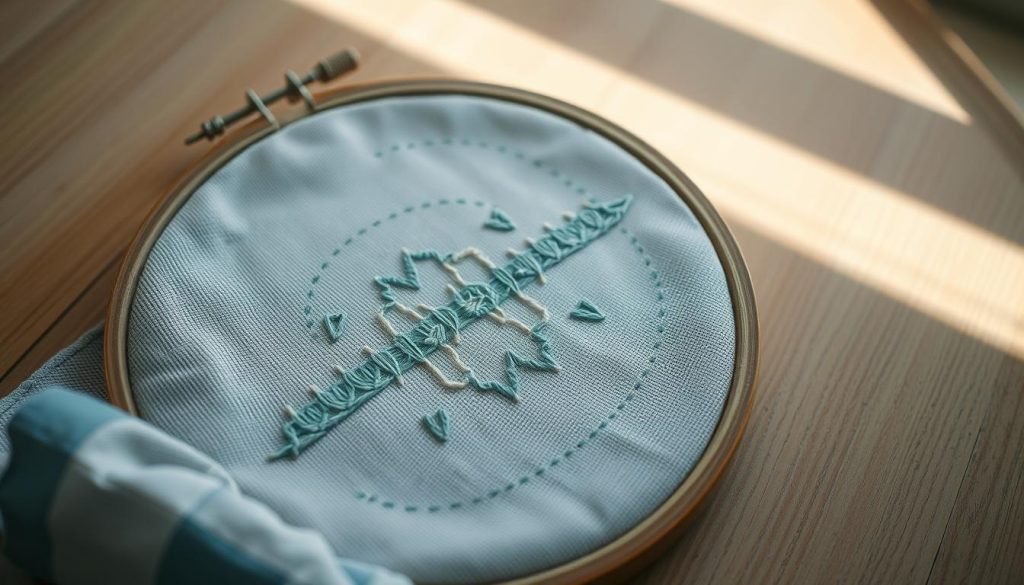
You can use measurement and rhythm to anchor attention. Counting stitches forces a steady tempo and narrows focus to one tiny task at a time. This habit trains present-moment awareness without pressure, making even complex cross stitch patterns feel manageable.
Repetitive hand motions engage your parasympathetic response. As you stitch, breathing slows and heart rate eases. Treating needlework as active meditation reveals needlework secrets that help you recover from stress and build a reliable nightly ritual.
Designs serve as gentle guides for concentration. Following a pattern gives structure while letting your mind rest inside clear steps. That structure decreases mental clutter and helps you redirect racing thoughts into a calm, creative task.
Habitual stitching improves emotional regulation over time. Daily practice sharpens focus, increases patience, and strengthens resilience. Many stitchers report that regular projects offer sustained relief, blending embroidery inspiration with practical benefits for mood and cognition.
Social threads can add deeper support. Sharing progress in a local group or online stitch-along enhances accountability and connection. Those interactions extend the therapeutic value of cross stitch therapy and create a safety net when you need encouragement.
| Mindful Action | What You Do | Immediate Benefit |
|---|---|---|
| Counting Stitches | Track each cross or row while stitching | Focuses attention, reduces rumination |
| Following Patterns | Use clear cross stitch patterns with color blocks | Provides structure, eases decision fatigue |
| Repetitive Motion | Maintain steady tempo with simple motifs | Activates calm, lowers stress markers |
| Daily Habit | Set short, consistent stitching windows | Builds resilience and emotional control |
| Community Sharing | Join stitch-alongs or post progress | Increases support and keeps you motivated |
Beginner Cross Stitch Tips That Helped Me Relax
Starting needlework became easier when I chose the right tools and projects. Short, clear tutorials and kits for beginners kept me calm and happy. I picked projects that could be finished in a weekend to feel a sense of accomplishment and build confidence.
Choosing beginner cross stitch kits
Look for kits with a clear chart, pre-cut fabric, and easy instructions. Brands like Dimensions and Mill Hill have calming patterns and step-by-step guides. Simple patterns with big blocks of one color make counting easier and help you relax.
Essential cross stitch tools
Get a few key tools before starting: blunt needles, an embroidery hoop, and sharp scissors. Use 14-count Aida fabric for your first projects; it’s forgiving and makes stitches easy to see. Keep a needle minder and a light nearby to avoid eye strain.
DMC floss basics
Use quality thread like DMC floss for smooth stitching and consistent colors. Start with a few colors to practice tension and color changes. Use three strands for 14-count Aida unless the pattern says otherwise; it gives good coverage and a neat finish.
Avoiding cross stitch mistakes
Mark the fabric and chart centers before stitching. This helps prevent mistakes and reduces rework. Work in small sections and check the back for loose loops. If you miscount, use a short stitch or an erasable marker to correct it.
Small routines that cut frustration
Set a timer for 15–30 minutes to create a calming evening habit. Keep track of your floss to avoid running out. If you get stuck, try a one-color block or a backstitch line to keep your mind relaxed.
Where to find help
Local craft shops and online communities offer great advice. Look for video tutorials from experienced instructors for tricky stitches. A little help can turn early mistakes into fast learning and relaxation.
Techniques That Improve Calm and Sleep Quality
Simple cross stitch techniques calm your mind with a steady task. They reduce worries and help you focus on the moment. Try these methods to improve your calm and sleep.
Gentle counted cross stitch and how it slows your mind
Counted cross stitch involves following a grid and tracking stitches. It breaks the cycle of thoughts and brings a sense of calm. Completing a pattern boosts your mood and makes the task rewarding.
Backstitching techniques and finishing touches for satisfaction
Backstitching adds definition to your work. It makes progress clear, which increases satisfaction. Small achievements in stitching build confidence and reduce frustration.
Working with cross stitch fabric and hoops for comfort
The right fabric is key for comfort. Aida and evenweave fabrics feel different. Choose what feels good under your needle.
Use good scissors, a comfortable hoop, and quality needles. Soft lighting and a supportive chair make stitching a calming ritual. These details help you relax and prepare for sleep.
| Focus Area | Practical Tip | Expected Benefit |
|---|---|---|
| Counting method | Work in 10–20 stitch blocks | Short bursts of attention reduce mental clutter |
| Backstitch finishing | Add backstitch edges after each motif | Visible progress increases satisfaction |
| Fabric choice | Select Aida for ease or evenweave for finesse | Better hand feel and fewer eye breaks |
| Hoop and ergonomics | Use a comfy hoop and ergonomic needles | Less hand strain, longer relaxed sessions |
| Essential tools | Scissors, needle minder, tidy floss system | Smoother workflow, fewer interruptions |
Choosing Projects: Cross Stitch Ideas That Promote Relaxation
Choose projects that match your schedule and mood. Small cross stitch projects offer quick wins and steady progress. Seasonal patterns let you stitch in sync with the seasons, making it feel fresh and meaningful.
Beginners should start with compact kits. A tiny sampler or simple floral pattern builds confidence and shows results in one evening. These options reduce frustration and keep you excited to stitch more.
Themed patterns can lift your mood and calm your mind. Opt for cottagecore or bedtime scenes like moons and clouds. These designs create soothing visuals and can become part of your bedtime routine.
Switch projects to avoid burnout. Work on a detailed piece and a comfort project at once. This mix keeps stitching interesting and prevents it from feeling like a chore.
Carry small projects for easy stitching on the go. This way, you can stitch during commutes or travel. Having multiple projects keeps your embroidery inspiration flowing, even in short breaks.
Organization and Embroidery Hacks to Keep Stitching Stress-Free
Good organization makes stitching feel easy. A few smart choices will cut counting errors, speed setup, and keep your momentum. Start with a simple plan, then add tools that fit your space and rhythm.
Cross stitch gridding and planning to reduce mistakes
Marking a grid on your fabric gives you a visual map. You will spend less time recounting and more time stitching. Use water-soluble pens or light thread to mark every ten squares so complex patterns stay manageable.
Printable planners and time calculators help estimate how many hours a project will take. That prediction keeps sessions short and steady, which reduces frustration and protects your evening routine.
Floss organization tips and floss usage calculators (DMC, Anchor)
Sort threads by brand and number. Keep DMC floss on labeled bobbins or in clear boxes so you can grab colors quickly. Group frequently used shades together to speed progress.
Use a floss usage calculator before you buy. A calculator for DMC or Anchor will tell you how many skeins a project needs. That prevents mid-project shortages and saves money.
Using frames and storage to keep projects ready and inviting
Choose cross stitch frames or hoops that suit your posture and lighting. An adjustable frame reduces hand strain so you stitch longer without discomfort. Store active projects in zipper pouches or shallow cases to protect threads and keep needles safe.
Set up a dedicated spot with easy access to tools, a needle minder, and a small lamp. An inviting setup reduces friction and makes it more likely you will return to your work each evening.
Social and Emotional Benefits from the Stitching Community
Joining other stitchers is more than just sharing patterns. It’s about connecting with a community that offers support and help. This community is full of encouragement and practical advice.
Posting progress photos or updates in a group thread helps you stay on track. It gives you the motivation to finish projects and keep stitching regularly.
Joining stitch-alongs, online groups, and local meetups
Begin with an online forum, a Facebook group, or a shop night at Michaels. These places are great for asking questions about DMC floss, fabric, or pattern charts. Live stitch-alongs help you pace your work, making it less overwhelming when trying new ideas.
Sharing progress for accountability and encouragement
Sharing your work in progress and finished projects gets you feedback that boosts your confidence. You’ll get tips and praise that makes your achievements feel important. This exchange often leads to new friendships and a stronger stitching habit.
Stories of recovery and mental health support through needlework
Many makers see needlework as a form of therapy. Designers like Amy Kallissa and Lizi Klavins have talked about stitching through tough times. Their stories highlight how crafting can be a source of emotional support.
Being part of a community offers inspiration and new ideas when you’re stuck. You learn new techniques, discover colors, and find themes that match your mood.
In groups, you find compassion, shared knowledge, and reminders to keep crafting. This support helps reduce feelings of loneliness and boosts happiness for many stitchers.
Advanced Cross Stitch Techniques to Deepen Relaxation
Once you get the hang of the basics, advanced techniques add a new layer of interest. They keep your mind active without making you feel stressed. This turns long projects into peaceful rituals.
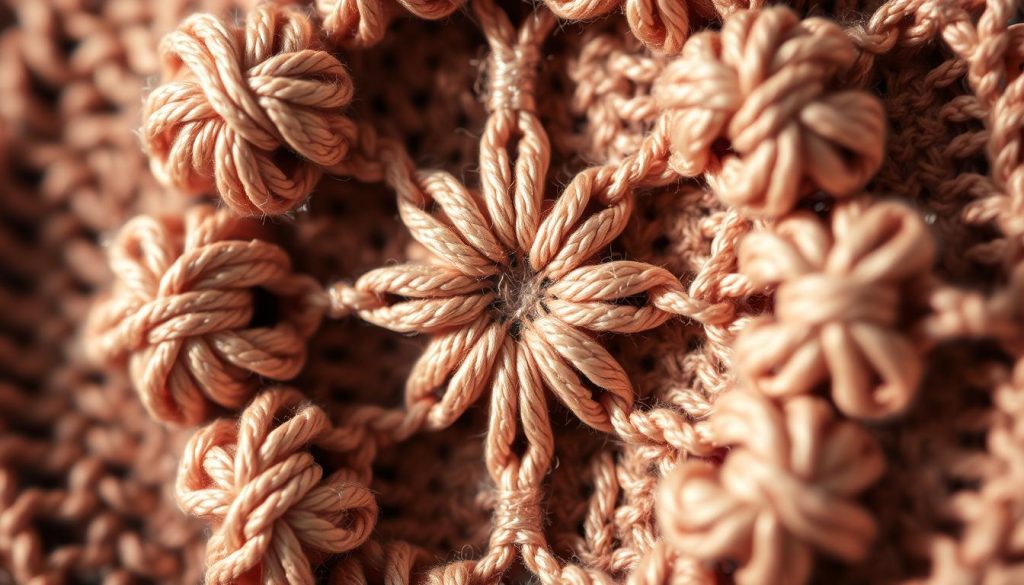
Layering textures makes each piece a small achievement. Start with French knots on scrap fabric until they’re tight and even. Then, mix them with special stitches for raised motifs that invite touch and calm attention.
Confetti stitches need patience and focus. Work them in short sessions and follow tutorials for thread management. Break big confetti areas into smaller parts to avoid tangles and keep frustration down.
Colour blending softly expresses mood. Choose calming colours like soft pastels or warm tones. Blend nearby shades for smooth transitions. Test blends on small swatches to see the mood before starting a big panel.
Try intermediate cross stitch patterns on samplers. Use small sections for new skills, like French knots or confetti. This builds confidence and reduces overwhelm when tackling bigger designs.
Plan your progress with time blocks. Set aside 20–40 minutes for tasks like practising French knots or colour blending. These blocks help keep your focus and make complex techniques easier.
Conclusion
Cross stitch is a simple way to reduce stress and sleep better. It combines mindful repetition, tactile work, and visible progress. This makes it more than just a hobby.
Stitching for 20 to 30 minutes can lower cortisol and boost mood. It releases dopamine and serotonin, helping you relax before bed.
You can start with beginner kits and small projects for your nightly routine. Enjoy a calming ritual with tea, low light, and a screen-free hour. This turns stitching into a digital detox.
Practical tips like choosing a comfy hoop and organizing floss make it easier. Starting with clear patterns helps avoid frustration.
Make stitching social for extra support. Join stitch-alongs and local groups to deepen benefits and stay accountable. Cross stitch is portable and affordable, fitting into busy lives and long-term wellness plans.
Keep your stitching short, consistent, and joyful. This way, you can stitch away stress, sharpen focus, and enjoy real creative rewards.
 English