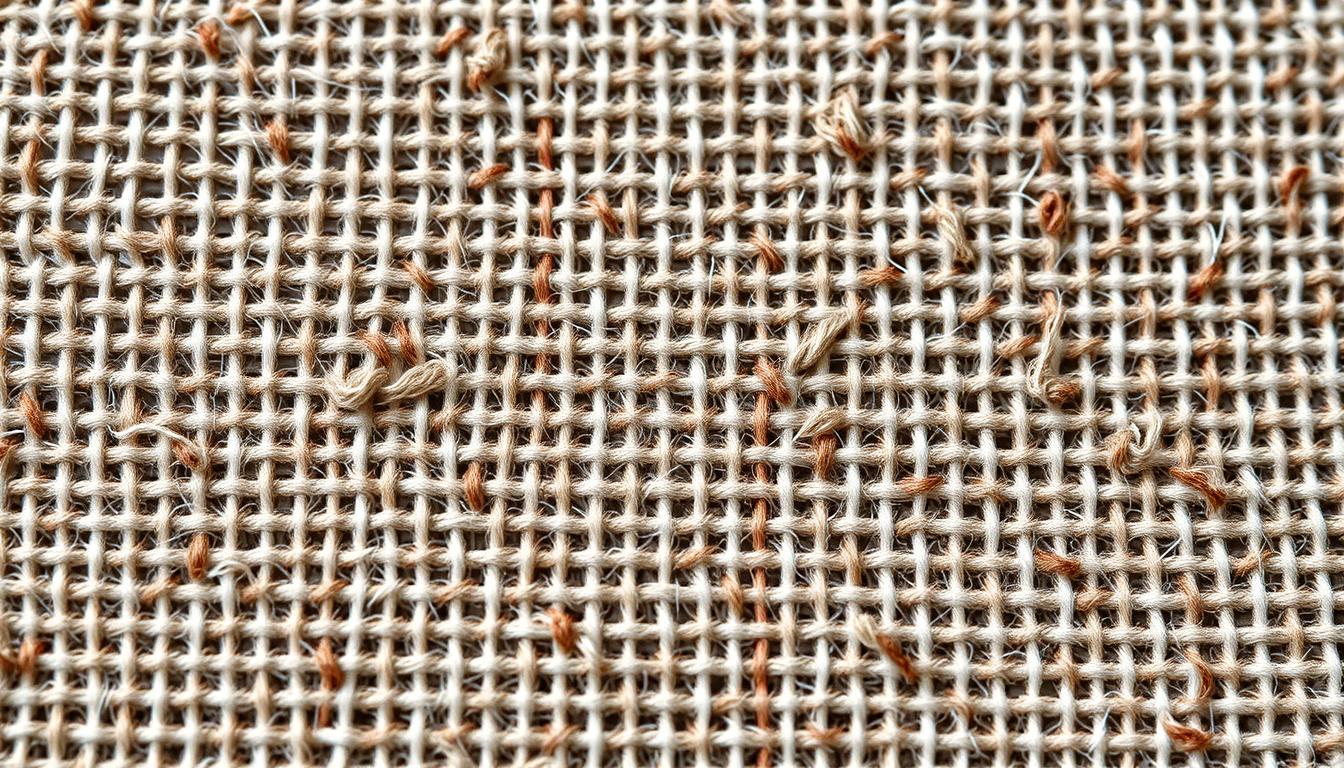
You’ve opened your project and found a glaring error. Or maybe several small cross stitch mistakes from past sessions. Take a breath. This guide helps you fix these issues without starting over.
First, assess the damage calmly. See if the problem is a single misplaced stitch, a knotty back, a spilled drink, or a miscount across a larger area. Counted cross stitch gives you structure. Use that structure to choose the least-damaging fix.
Across the article, you’ll learn practical cross stitch tips. You’ll learn about unpicking, the whiteout pattern editing method, stitching over loose threads, patch-on-aida repairs, stain removal, and backstitching corrections. Each tactic focuses on fixing problems without restarting. You’ll learn how to integrate repairs so your finished piece looks intentional.
Remember: the house is not on fire. Act deliberately, test cleaning methods on a scrap fabric, and prioritize fixes that keep your project moving forward. By using these targeted techniques, you’ll finish projects you love without undoing everything you’ve already stitched.
Key Takeaways
- Assess the issue before you act to protect fabric and floss.
- Choose fixes that minimize damage: stitch over, unpick, or edit the pattern.
- Keep a scrap for testing cleaning products on DMC floss and aida.
- Use backstitching and small repairs to hide or integrate mistakes.
- Focus on finishing: practical fixes save time and reduce stress.
Take a Breath: Mindset and Immediate Steps After a CROSS STITCH Mistake
When you see a problem, stop. Take a deep breath and don’t pull threads. This keeps your fabric from getting damaged and saves thread for repairs. It’s like a moment of calm in cross stitch therapy, helping you think clearly and avoid panicking.
Stopping right away stops knots from getting worse and keeps threads straight. If you pull on a snag, your fabric might warp and get holes. Saving thread is key, especially with special threads like DMC. This pause is good for your fabric and your time.
Assess the damage: small mistake versus large area errors
Check the problem closely. A small mistake or a tiny stain is easy to fix. But a big error or a wrong color might need more work. Look at it under bright light and from different distances.
Deciding when to accept imperfection versus fix it (done vs perfect)
- See if the error is visible from afar. If not, it might be okay to leave it.
- Think about deadlines and gifts. If time is short, small flaws are okay.
- Consider how fixing it will make you feel. If it’s stressful, it’s better to accept it.
Try simple fixes before you commit. See if you can fix a few stitches without messing up more. For big repairs, plan your steps carefully. This way, you avoid making more mistakes.
For beginners, fix only what bothers you most. Leave the rest for now. This approach helps you learn without getting overwhelmed. Enjoy the process and keep moving forward, even if it’s slow.
Fixing Knots and Tangles on the Back: Embroidery Hacks to Save Time
Knots and tangles slow you down and make your work bulky. Follow simple steps to make knots smaller, save thread, and keep things neat. These tips will help you work faster and avoid rethreading DMC floss too often.
Begin with gentle tension. For small knots, pull the threads toward the hoop and tighten like a shoelace. This often pushes the knot into the fabric, preventing it from snagging later. It also saves thread, saving you time and reducing waste.
How to safely reduce knot bulk without cutting essential threads
Work in good light and use a magnifier if needed. Loosen tangled fibers with a needle point or seam ripper tip. If cutting is needed, only trim the knot’s core. Cutting stray strands at the center leaves long tails for stitching over.
When to trim and how to leave maximal free thread for stitching over
Trim only when knots risk tangling more thread or when you’ll stitch over them. Leave at least an inch of tail. Longer tails let you stitch over the end, securing it under nearby stitches and preventing loose ends from showing.
Techniques for stitching over loose threads and hiding ends under neighboring stitches
After reducing knots and trimming, incorporate remaining tails under future stitches. Stitch over a loose strand or tuck the tail under three to four stitches. Use a blunt tapestry needle to ease tails under without splitting strands.
Good tools make the job easier. Keep sharp scissors, a pointed seam ripper, and a needle threader ready. Organize your DMC floss by number and store skeins flat or on bobbins to prevent tangles. Strong organization reduces knots and lets you focus on stitching.
When a knot is hard to fix, accept small back imperfections that won’t show on the front. Use neat end finishes by pushing tails under stitches as you would with regular thread endings. This keeps the back tidy, lowers future tangles, and fits with practical embroidery hacks that save time.
Removing Stains and Spills from Cross Stitch Fabric
Spills can happen to anyone. But, you can act fast to protect your cross stitch. This way, you keep your DMC floss colors bright. Start calmly and work methodically to save your cross stitch projects from small accidents.
Immediate steps when you spill tea, coffee, or drinks on aida
Blot the spill gently with a clean white cloth or paper towel. Press lightly to lift liquid out of the fibers. Avoid rubbing because that spreads the stain and pushes dye deeper into the cross stitch fabric.
If the drink has sugar or pigment, rinse the stained area under cool running water from the back of the fabric. Hold the soaked area flat so stitches do not tug. For large wet areas, support the hoop or frame to prevent distortion.
Safe washing methods for unfinished projects and what to avoid (no ironing yet)
Use cool water and a mild soap such as baby shampoo or gentle dish soap. Work the soapy water through the stained area with light pressure from the back. Rinse until water runs clear.
Do not agitate aggressively. Vigorous scrubbing will distort stitches and stretch the aida. Avoid chlorine bleach and strong solvents that can fade DMC floss and weaken fabric. Never iron while damp; let the project dry fully first.
Products and home remedies that are safe for DMC floss and counted cross stitch fabrics
Test any cleaner on a scrap of the same fabric and floss or an inconspicuous corner. Oxygen-based stain removers may work if they pass a colorfastness test. Mild dish soap and baby shampoo are usually safe for DMC floss.
For stubborn spots, apply a tiny amount of diluted cleaner with a cotton swab, then rinse. Lay the piece flat on a clean towel to dry and reshape gently. If you must press, place a press cloth over the dry back of the fabric and use low heat only.
Follow these cross stitch tips to protect finished and in-progress work. With quick action and careful testing, most stains on aida and threads can be reduced without harming your counted cross stitch projects.
Missed or Miscounted Stitches: Practical Ways to Repair
Small miscounts are common in counted cross stitch. You can often fix them without unpicking large areas by choosing the right repair method. Read these quick options and pick the one that fits the scale of the error and your patience level.
Spot fixes
If you skipped a single stitch, add the correct color into the empty square. Blend surrounding threads by making your stitch lie flush with neighbors. At normal viewing distance, a single filled stitch usually disappears.
Use the same strand count and tension you used originally. This way, the texture matches the rest of the piece.
Pattern editing and whiteout technique
When a miscount creates a mismatch, redraw the affected portion of your printed or digital cross stitch patterns. Mark the last correct row, then re-map symbols from that point onward so the design reads correctly. This “whiteout” approach works well with complex cross stitch patterns when you want to preserve stitched sections.
How to plan the edit
Before you stitch forward, grid the area on your pattern and on fabric. Cross stitch gridding with basting or a washable fabric pen helps you visualize the new route. Mark the current stitched area, sketch the new path, and test a tiny sample if needed.
When frogging is best
For larger miscounts that warp motifs, unpicking may be the cleanest fix. Work from the last known correct row backward. Use a seam ripper or small scissors to lift stitches gently.
Pull floss tails out slowly to avoid snagging Aida or evenweave fibers.
Frogging cleanly
Remove loose threads and trim excess tails. Keep remaining thread ends tidy so you can re-secure them when you restitch. After unpicking, re-press the fabric lightly with the project face down on a towel to flatten any distortion before continuing.
Preventive steps
- Apply cross stitch gridding early to reduce future miscounts.
- Use a high-quality printed copy of complex cross stitch patterns for marking progress.
- Adopt simple cross stitch techniques like counting from a known reference point rather than estimating across large sections.
Wrong Stitch Placement and Large Area Errors: Creative Solutions
When a whole block of your project goes wrong, you have choices. You can repair, replace, or rework it. First, think about how much time you have and the fabric’s condition. Small fixes can keep you moving forward on your cross stitch projects.
But, bigger errors need careful planning. This way, the fabric stays strong and the design looks great.
Fixing large areas without damaging the fabric takes patience. Start by working from the newest stitches back to the mistake. Use a hoop to keep the fabric steady and fine embroidery scissors or a seam ripper to remove stitches one at a time.
When the error is big and visible, think about using a patch-on-aida. Cut out the damaged area carefully. Make sure the replacement patch matches the fabric count and color to keep the weave even.
Finish the patch edges with a narrow zigzag or a whipstitch on the backing. This stops fraying before you sew it in.
Attach a pre-stitched or blank aida patch by aligning the weave and color. Then, stitch it in place. Surround the patch with existing stitches so it blends in. This method is good when unpicking would harm the fabric.
You can also turn mistakes into design moments by editing the pattern. Change a petal shape, add a leaf, or adjust shading. Use simple edits that fit your original pattern and colors.
Choose between unpicking, patching, or editing based on two things. Which option keeps the fabric intact, and which keeps you enjoying the project? Many makers find the best approach is a small repair with a creative tweak. This saves time and keeps the piece beautiful.
For future projects, apply these lessons early. Use grid fabric, keep color notes, and test patch-on-aida on scrap. These steps help avoid mistakes and make managing your cross stitch projects easier.
Backstitching Techniques and Using Outlines to Hide or Correct Mistakes
Smart outlining can save a tricky spot. Backstitching techniques help make edges sharp, drawing attention away from small errors. Always test on a scrap before fixing the real piece.
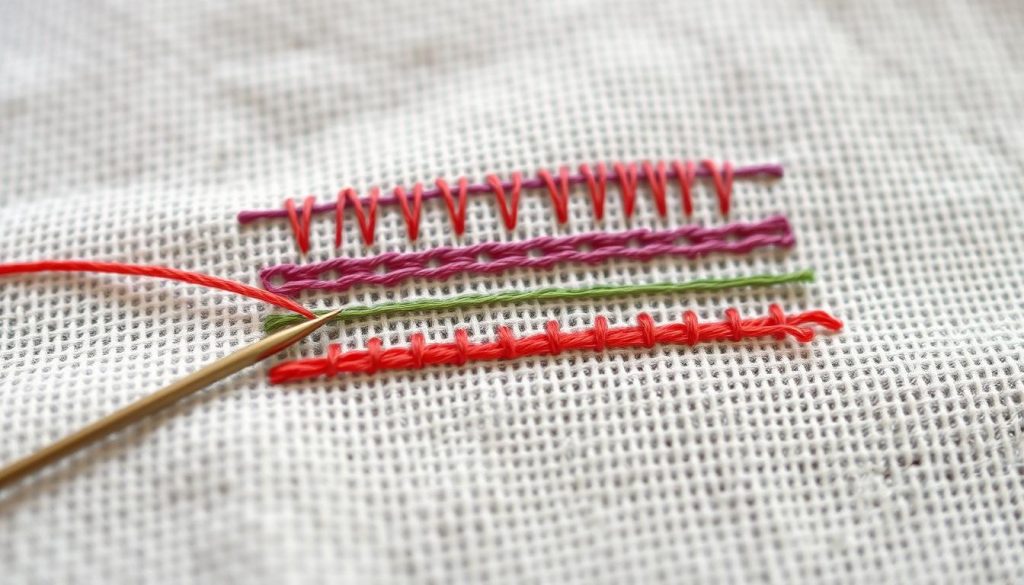
How backstitching can disguise miscolored or miscounted areas
Outlines shift focus from small flaws. A backstitch along the edge can look like a design choice. This fix works well with many patterns and saves the fabric from heavy unpicking.
Choosing contrasting or blended backstitch colors for correction
Use a bold color for a clear line. Choose a shade that blends for a subtle fix. Test DMC threads on scrap fabric to see if the contrast works.
Tips for clean backstitch lines over repaired areas
Stitch slowly and keep tension even over fixed spots. Use one strand for thin lines and two for thicker ones. This secures the repair and prevents fraying.
Plan your cross stitch frames early. Knowing how much outline will show helps decide whether to hide or highlight a mistake with backstitching.
Tools and Organization to Prevent Future Disasters: Cross Stitch Tools and Tips
Good habits and the right gear can prevent mistakes. Start by putting together a kit with all you need in one place. This makes it easier to find what you need and avoid mistakes when stitching.
Essential kit items to keep handy
Always have sharp embroidery scissors and a fine seam ripper for fixing mistakes. Don’t forget a needle threader, quality needles, and a tape measure. A hoop or frame and a task light or magnifier are also helpful. These tools help you fix small problems quickly and avoid bigger mistakes.
Practical cross stitch gridding methods
Pre-gridding your fabric is a great way to avoid counting errors. Use a removable water-soluble fabric pen or stitch thin thread lines. This method saves time and makes stitching less stressful.
Fabric prep and sizing tips
Use a cross stitch calculator to cut fabric to the right size. Leave extra for framing. Finish edges with masking tape or a zigzag stitch to prevent fraying. Well-prepared fabric means fewer surprises while stitching.
Organizing DMC floss and patterns
Sort DMC floss by number on labeled bobbins or in clear bags. Keep current skeins, a needle, and scissors in a small pouch. This keeps your work organized and prevents mistakes.
Workspace rules that protect projects
Make a dedicated stitch area. Keep food and drink away. Store floss and needles safely from pets and kids. Teaching others to respect your space helps avoid accidents.
| Problem | Tool or Practice | Why it helps |
|---|---|---|
| Tangled skeins | Numbered bobbins or small resealable bags | Keeps DMC floss organized by number and prevents knotting |
| Miscounted blocks | Water-soluble fabric pen or thread grid | Clear visual guides cut counting errors and speed up stitching |
| Fraying edges | Masking tape or zigzag machine stitch | Preserves fabric integrity during long projects |
| Small mistakes that need repair | Fine seam ripper and quality needles | Allows precise unpicking and clean restitching without damage |
| Poor lighting and eye strain | Task light or magnifier | Improves stitch accuracy on high-count and detailed counted cross stitch |
Beginner Cross Stitch Troubleshooting: Common Mistakes and Simple Fixes
Starting a new pattern can be overwhelming. But, with a few simple steps, you can fix common issues like tension, misplaced stitches, and uneven Xs. This way, you won’t have to rip out big parts of your work. Use these tips to save time and keep your fabric looking great.
Starter mistakes: tension issues, uneven stitches, and skipped squares
Uneven tension can make your Xs look off and your fabric pucker. Try to relax your grip and practice steady stitches. This helps you maintain a consistent rhythm.
For uneven stitches, pick one direction and stick to it. This keeps your texture even across the piece.
Skipped squares occur when you lose your place. Use a washable pen or thread markers to mark every ten squares. This helps you stay on track and avoid mistakes.
Quick beginner-friendly fixes that don’t require ripping everything out
To fix a single missed square, just remove the wrong stitch. Use a sharp needle to carefully lift and re-stitch the correct square. A hoop helps keep the area stable while you work.
If a thread is too tight, use a needle to redistribute the slack. This way, you don’t have to rip out big sections of your work.
How to use smaller projects and multiple WIPs to build confidence and reduce panic
Keep small patterns ready for quick wins. These tiny projects teach you the basics without taking up too much time. Plus, they’re easy to carry around.
Working on multiple projects at once can help you avoid getting stuck. Switching between them keeps you motivated and prevents rushing, which can lead to more mistakes. Over time, you’ll make fewer errors and enjoy stitching more.
- Quick checklist: use a hoop, grid the fabric, mark key rows, and follow one stitch direction.
- Tool tip: a blunt tapestry needle, DMC floss organizer, and a washable pen cut down errors fast.
- Time tip: stitch while you wait and choose patterns you love to stay calm and consistent.
Design Hacks and Creative Salvage: Turning Errors into Embroidery Inspiration
Turn a stitching mistake into a unique feature with smart design hacks. View the error as a starting point. A misplaced color or block can become a motif, texture, or accent, adding personality to your work.
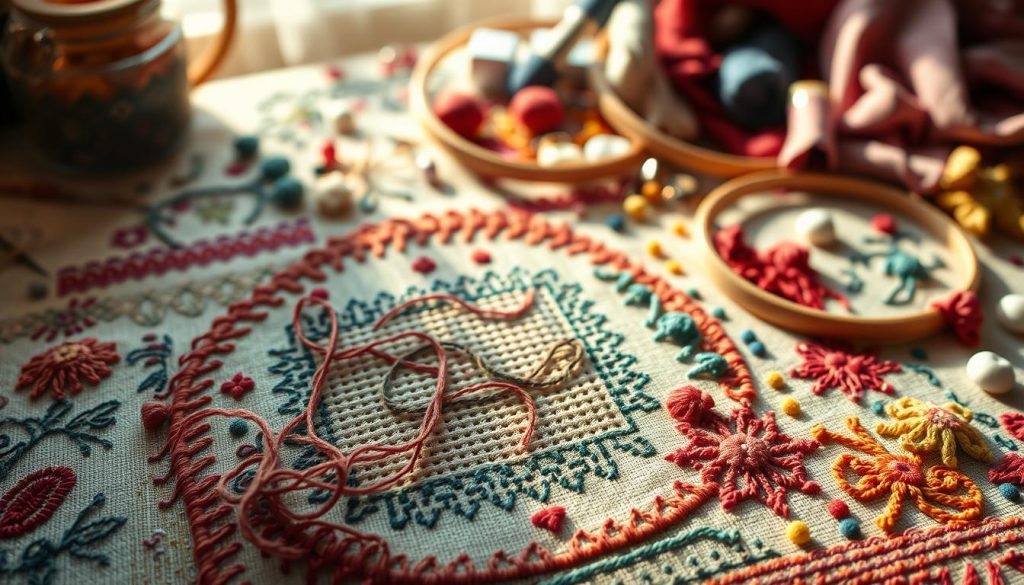
Here are some practical tips to fix problems and keep moving on your project.
Incorporate mistakes into new motifs and accents
Turn errors into small flowers, stars, or leaves. Use tiny motifs to cover up a miscount. This makes the fix look intentional and adds new ideas for embellishment.
Blend corrections with half, quarter, and specialty stitches
Half stitch and quarter stitch can smooth out color changes. Specialty stitches add texture, hiding uneven lines and color joins. French knots, seed stitch, and satin stitches make repairs look like part of the design.
Use texture and accents to distract and enhance
Add beads, French knots, or backstitch highlights near repairs. These accents draw the eye and enrich the surface. They provide inspiration while hiding fixes and adding interest.
Finishing and framing strategies
Choose mats and frames that draw attention away from repairs. A deep mat, floated mount, or creative hoop can highlight the best part of your piece. Framing can make small fixes invisible to most viewers.
Accepting small flaws changes how you see your work. Many stitchers find that unique imperfections add character, making the piece feel handcrafted and unique.
| Problem | Design hack | Recommended technique |
|---|---|---|
| Miscolored block | Turn into a motif | Stitch a tiny flower or star over the block using half stitches and French knots |
| Jagged color transition | Blend with specialty stitches | Use quarter stitches, satin stitch accents, and seed stitch fills to smooth the edge |
| Small hole from frogging | Textural fill | Apply beads and French knots grouped as a cluster, then backstitch a stem or outline |
| Large repaired area | Frame strategically | Float the work in a deep mat or select a decorative cross stitch frame that crops the repaired zone |
CROSS STITCH Therapy: Managing Perfectionism, Time Pressure, and Stitching Stress
Stitching should make you feel better, not worse. When you see a mistake or feel rushed, take a deep breath. This pause helps you focus on enjoying the process, not just the end result.
Mindset shifts
Learning to accept mistakes makes your work more personal. Most errors are hard to see from a distance. Remember, striving for perfection can take away the fun and slow you down.
Protect your stitch time
Think about why cross stitch is important to you. Treat your stitching time as you would a workout or a call. This mindset helps you stay energized and finish projects without feeling guilty.
Time-saving strategies
Carry small projects for stitching during appointments or in traffic. Work on different pieces to keep things interesting. Load digital patterns on your phone to avoid interruptions.
Practical tips that save minutes
- Use a small project hoop for short sessions.
- Pre-sort DMC threads into bobbins to cut time hunting colors.
- Work same-color blocks in one go to reduce thread changes.
Avoid destructive frogging
Ask yourself if a mistake really matters. If it’s not noticeable, just finish it. This approach saves time and keeps you from getting burned out.
Set realistic goals
Set achievable deadlines for gifts. If a deadline is too tight, choose a simpler design or a different gift. Small changes help you stay on track and keep enjoying cross stitch.
Use these tips to turn stress into progress. Treating stitching as therapy helps you build calm habits, save time, and enjoy more of your creations.
Conclusion
You’ve learned how to fix CROSS STITCH mistakes without starting over. Use knot management, safe stain removal, and spot fixes. You can also edit whiteout patterns, unpick, patch, and backstitch carefully.
These tips help you keep your fabric and floss safe while making progress. This way, you can rescue your projects without losing your mind.
To avoid mistakes in the future, organize your DMC floss and grid your fabric. Keep your tools handy. Simple habits like using sharp scissors and storing thread neatly can save you time and effort.
With the right techniques and a calm attitude, you can fix most mistakes. Turn them into design choices. This way, you can finish projects you’re proud to show off.
 English