
You started with a needle and hoop, hoping to relax. But your project was uneven and slow. This guide is for you, a beginner in the United States. It will help you go from making mistakes to creating beautiful pieces.
I’ll share practical tips and secrets that helped me. You’ll learn about mindset, core counted cross stitch principles, and tools. I’ll also talk about real-world supplies like DMC floss and popular hoops and frames.
Discover how to avoid common mistakes and organize your threads and patterns. Learn to stitch faster with simple embroidery hacks. Plus, find out how to choose colors and designs that stand out.
Follow these steps and you’ll see improvement quickly. You’ll get better at tension, backstitching, and finishing. Your work will look professional.
Key Takeaways
- Cross stitch glow-up is possible with targeted practice and the right supplies.
- Focus on core counted cross stitch principles before complex techniques.
- Use DMC floss and quality hoops to improve consistency and finish.
- Simple organization and gridding hacks speed up progress and reduce errors.
- Regular, mindful stitching improves skill and delivers real needlework rewards.
Why I Started Cross Stitch and What Changed My Results
Starting with a simple line and square, I watched a picture come to life stitch by stitch. This simple act hooked me. Counted cross stitch gave me clear goals and a soothing rhythm. Small projects gave me quick wins.
Finishing a DMC-charted sampler made the chart come alive. Seeing colors align in a tiny floral pattern turned routine into visible progress. These moments made cross stitch for beginners something I could finish and love.
Below are the mistakes I made early on and the fixes that saved future projects.
The moment I fell in love with counted cross stitch
Watching a blank grid turn into a scene felt magical. You notice progress each evening you stitch. Completing a small sampler or a simple floral pattern proves patience and care pay off.
This steady payoff sparked my search for new cross stitch ideas and steady embroidery inspiration.
Common beginner cross stitch mistakes I made and how you can avoid them
These errors cost time but are easy to fix once you know them.
- Starting without centering — center fabric before stitching to avoid running out of space.
- Inconsistent tension — practice even tension exercises to keep Xs uniform.
- Wrong needle or fabric count — use tapestry needles with Aida and match needle size to fabric count.
- Skipping gridding — grid before you start to reduce miscounts and wasted stitches.
- Ignoring DMC floss legends — follow floss legends carefully to match colors and symbols.
- Neglecting backstitching — add backstitching for definition and sharper details.
How shifting your mindset improves progress and enjoyment
Perfectionism stalled my projects. Switching to a process focus made stitching fun again. Set small daily targets like 10–20 minutes or a fixed number of stitches.
Track progress in a stitch journal to see growth across sessions. Celebrate wins such as finishing a color block. Join supportive communities for feedback and motivation, for example Facebook groups or Reddit r/CrossStitch.
Choose projects that balance challenge and achievable satisfaction to fuel both skill and creativity. Let cross stitch ideas and embroidery inspiration guide your next counted cross stitch piece.
| Issue | Cause | Quick Fix |
|---|---|---|
| Off-center design | Not finding fabric center | Fold fabric twice to find center, mark with a removable clip |
| Uneven Xs | Inconsistent thread tension | Practice on scrap Aida; stitch and adjust tension each row |
| Wrong tools | Using sharp or wrong-size needles | Use tapestry needles sized for your Aida count |
| Frequent miscounts | Skipping grid lines | Grid fabric with water-soluble pen or use thread gridding |
| Color mismatches | Ignoring floss legends | Reference DMC floss numbers and sort by symbol before stitching |
| Flat details | Omitting backstitching | Add backstitching after main blocks to sharpen edges |
CROSS STITCH: Core Principles Everyone Should Know
Mastering the basics makes your work cleaner and faster. This section covers reading charts, matching floss legends, and essential techniques. These will help you create professional-looking pieces.
Understanding pattern charts and symbols
Pattern charts turn pixels into stitches. Each square on the grid equals one stitch. Filled blocks usually show full cross stitches.
Symbols point to colors where blocks become hard to read. Grid lines mark every ten stitches to help you count and stay centered.
Multi-page charts show how pages join at the edges. Repeats get boxed or noted with brackets to save space. Backstitch lines appear as thin dashed or solid lines and use a separate key.
Use highlighter tape or erasable highlighters to mark progress. This way, you never lose your place.
For complex patterns, apps like Pattern Keeper can display pages and let you mark symbols digitally. This reduces mistakes on large designs and speeds up stitching across color blocks.
Basics of reading floss legends and DMC floss numbers
Floss legends map symbols to thread colors and tell you how many strands to use. A legend lists the symbol, the brand color number, and the strand count. DMC floss numbers are the most common reference in modern patterns.
If a DMC floss shade is out of stock, use a convertor tool or compare a printed color card. Test substitutes on scrap fabric to confirm the tone and coverage. Note the strand count: most Aida work uses two strands; linen projects might call for three or one.
Essential counted cross stitch techniques to master early
Start every stitch with a consistent method so your top stitches slant the same way. Pick one direction for the first diagonal and keep it uniform across the project. This simple habit makes rows look tidy and light reflect evenly.
Secure thread ends with reliable starts and finishes. Use the loop method for even strands, a tiny stitch start when working with single strands, or a waste knot for long runs. Learn at least two methods so you can adapt to different threads and fabrics.
Work in manageable color blocks. Complete sections of the same shade before moving on. This reduces tangles and keeps your needlework efficient. Keep tension even; too tight pulls the fabric, too loose leaves gaps.
Practice these core principles alongside clear cross stitch patterns and trusted DMC floss charts. Good habits in reading floss legends and applying cross stitch techniques will save time and improve every piece you make.
Choosing the Right Cross Stitch Supplies and Tools
Choosing the right materials makes stitching smoother and more enjoyable. This guide will help you pick the best fabric, tools, and organize your DMC floss. This way, you can spend more time stitching and less time searching for threads.
How to pick the best cross stitch fabric for your project
For beginners, 14-count Aida is a good choice. It has clear holes and you can work faster without a magnifier.
If you want more detail, try 16- or 18-count Aida or evenweave and linen. These options are better for advanced projects with finer stitches.
Make sure to cut your fabric with extra space. Add 2–3 inches on each side to protect your work when framing.
Aida usually doesn’t need washing before starting. But, evenweave and linen might need a test wash. Always block and wash your finished work as needed.
Must-have cross stitch tools: needles, hoops, frames, and scissors
Begin with tapestry needles in sizes 24–28. They have blunt tips that prevent splitting fibers. John James and Tulip make reliable needles.
Good scissors make trimming easier. Use curved embroidery scissors or fine-point snips from Gingher or Kai for precise cuts.
Hoops and frames affect tension and comfort. Plastic hoops are portable and good for short sessions. Q-Snap frames by Dimensions or scroll frames are better for large projects.
Keep a few specialty items handy. A metal needle threader, thread snips, and a magnifier or task lamp are useful. These tools can save time and reduce frustration.
Organizing DMC floss and threads for faster stitching
Organizing your threads cuts set-up time. Use bobbins labeled with DMC numbers to store stranded cotton by shade.
Clear floss boxes or binder pages help organize threads by project. Zip-top bags or small plastic drawers protect skeins and make them easy to access.
Sort threads by DMC number or by project palette. Number order is helpful when patterns list many similar hues. Palette grouping is useful for stitching by color blocks.
Cut pre-measured lengths of 18–24 inches to avoid tangles and waste. Use floss bobbins, a FlossAway ring, or simple cards to manage skeins during long sessions.
With the right fabric, tools, and organized DMC floss, your stitching will be faster and more enjoyable. These small changes can greatly improve your stitching quality and speed without adding complexity.
Preparing Your Project: From Pattern to Fabric
Starting a project involves a clear plan. Choose a pattern that suits your pace and patience. Consider the stitch density, color changes, and fractional stitches.
Beginners should pick small samplers or DMC kits with few color changes. For skill-building, try patterns with moderate color shifts and some fractionals. This will challenge you without overwhelming you.
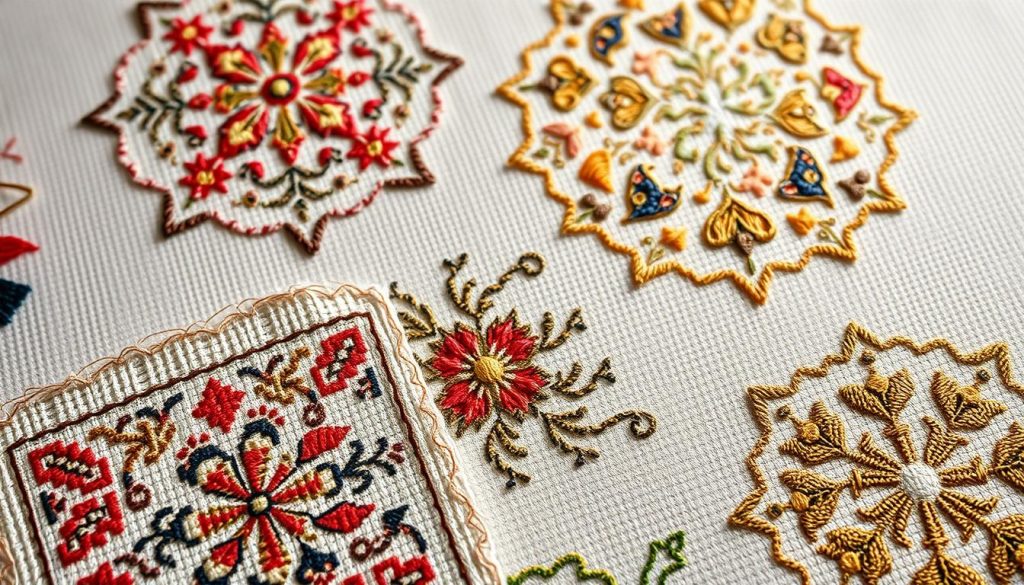
How to choose cross stitch patterns that match your skill level
Read the pattern synopsis before buying. A dense image means long counting sessions. Patterns from designers like My Big Granny or DMC kits note difficulty and thread counts.
Match the pattern to your recent projects. If you finished cleanly, try a pattern with more color blocks or fractional stitches. If you struggled, stick to simpler patterns with basic stitches and clear charts.
Transferring and centering patterns on fabric
To find the fabric center, fold the cloth into quarters and mark the intersection. Match this point to the chart center symbol. Count from clear reference points on the chart, not directly on the fabric.
Use a water-soluble pen or tailor’s chalk for light guidelines. Pre-printed fabrics are handy for kits but limit flexibility. If transferring a complex motif, mark only critical reference lines to avoid clutter.
Gridding techniques and cross stitch gridding hacks to save time
Gridding prevents miscounts. Choose a method that fits your project size. A simple basting grid in contrasting thread gives a guide that can be removed.
Use a 10×10 grid to match most charts and speed up navigation. Temporary options include water-soluble pens or a Hera marker for faint lines. Washable grid tape works for short-term projects.
If you prefer digital tools, use pattern apps to mark progress. Only grid heavily when the pattern has many small color sections or dense backstitching.
Try light reference lines instead of full grids for a cleaner finish. Mark key vertical and horizontal anchors to divide the design into blocks. This reduces over-gridding and keeps you moving steadily.
| Task | Best for | Tools | Why it helps |
|---|---|---|---|
| Small sampler selection | Beginners | DMC starter kits, simple charts | Limits colors and fractionals to build confidence |
| Pre-printed fabric | Quick kits, gift projects | Kit fabric with printed motif | Saves counting, ideal for fast finishes |
| Basting 10×10 grid | Large or multi-color patterns | Contrasting thread, long needle | Prevents miscounts and isolates blocks |
| Water-soluble pen/Hera crease | Temporary guides | Washable pen, Hera marker | Easy to remove, keeps fabric clean |
| Digital marking apps | Complex projects, remote tracking | Tablet or phone, pattern app | Highlights progress and reduces re-counting |
Stitching Techniques That Transformed My Work
Your stitches tell a lot about your work, more than just color or pattern. Making small changes in your stitches can make a big difference. Focus on rhythm, thread length, and the order you stitch to see big improvements fast.
Consistent Xs: creating even tension and neat rows
Start every full cross stitch the same way. Choose one direction for the first diagonal, like bottom-left to top-right. Keep this pattern for every stitch to get uniform slants.
Use short thread lengths of about 18–24 inches to avoid fraying and uneven pull. Cut longer strands only when you need large runs of color. Practice on scrap Aida, stitching straight rows to train your hand to keep consistent tension.
Keep your wrist relaxed and let the fabric sit in a hoop or frame. When tension stays steady, you will see even Xs and flatter areas where colors lie smoothly.
Backstitching techniques for sharp outlines and details
Backstitching creates crisp edges and readable details. Plan your path before you stitch and do backstitch after you fill color areas so lines follow the filled shapes perfectly.
Use one strand of floss for delicate lines and two strands for bolder definition. For contrast, consider quality stranded cotton such as DMC or a perle cotton for a pronounced outline. Avoid crossing textured zones; choose routes that preserve motifs.
Finishing touches: fractional stitches, French knots, and more
Fractional stitches smooth curves and allow fine shaping. Half, quarter, and three-quarter stitches work best when your fabric tension is steady and your needle is thin enough to pass cleanly through the weave.
French knots add tidy dots and eyes. To make consistent French knots, pass the needle up, wrap the thread 1–2 times around the needle, hold the wraps tight, then insert the needle close to the entry point and pull through gently. Test your knot count on scrap until size matches the design.
Try chain stitches and seed stitches for texture. Practice each specialty stitch on a scrap before adding them to your main piece so you can match style and scale without risking the finished work.
Embroidery Hacks That Speed Up Progress
Small changes can save hours. Use simple embroidery hacks to keep projects moving. These tips focus on thread management, needle threading, lighting, ergonomic supports, and fixing cross stitch mistakes.
Thread management shortcuts and needle threading tips
Pre-sort bobbins by DMC number before starting. Label each bobbin and store matching skeins in small zip bags to avoid tangles. Pre-cut several 18–24 inch lengths of frequently used colors to avoid stopping mid-stitch.
Use a floss dispenser or a bobbin box to pull one skein at a time. When using two strands, try the loop method to secure the start without knots. Weave thread tails under nearby stitches to lock ends and keep the back tidy.
Keep multiple threaded needles in a magnetic pincushion for common colors. A wire needle threader or the Clover twist type speeds up threading, especially with finer tapestry needles. Experiment with a pen grip versus a pencil grip to find which lets you stitch faster with steady tension.
Using magnifiers, lighting, and ergonomic supports
Good light changes everything. Choose an LED daylight lamp to reveal true colors and reduce eye fatigue. Adjustable magnifiers, such as those from Donegan, make tiny stitches easier without leaning forward.
Ergonomic supports protect your body during long sessions. Pick an adjustable chair with lumbar support or use a lap stand to raise your work. Polarized reading glasses help older eyes, and following the 20-20-20 rule gives regular relief to reduce strain.
Quick repairs for common cross stitch mistakes
Spot and fix cross stitch mistakes fast. Use a small seam ripper to remove wrong stitches cleanly. A sharp tapestry needle can tease out threads without enlarging fabric holes. Count back to a known grid point before restitching to avoid repeat errors.
If floss frays or discolors, replace the strand or test a gentle re-dye on a scrap. Always try repairs on fabric scraps when possible. These quick fixes preserve your time and prevent long redo sessions.
Tip: Combine these methods to save time and protect your work: pre-sorted threads, multiple threaded needles, proper lighting, and a few smart tools will turn slow afternoons into productive stitching sessions.
Design and Color Choices to Make Your Piece Pop
Good design makes a project unforgettable. You’ll learn how to pick colors and blend them to add depth. Use these tips to change cross stitch patterns or create new ones that show your style.
Color selection strategies using DMC floss palettes
Begin with a DMC floss card or online palette viewer. Compare shades side by side. Choose a main color, a secondary color, and an accent to balance your design.
Use contrast for focal points. Pick analogous colors for a soft look. Add a complementary color for a bold accent.
Make test swatches on your fabric. Swatches show how colors look under your lighting and with your fabric.
Blending and shading techniques to add depth
Blend by stitching with two strands from different DMC floss numbers together. This creates a smooth midtone without harsh jumps.
Use intermediate shades for gradients. Cross-hatching with alternating rows of two colors adds textured shading that looks good from afar.
Read shading cues in your pattern and plan thread changes to limit waste. Test transitions on a swatch to refine stitch order before starting the full piece.
Adapting patterns and creating your own cross stitch ideas
Changing a palette is the easiest way to personalize a pattern. Swap colors for seasonal tones, remove or add backstitch for cleaner or more detailed looks, or combine motifs from two patterns to make something new.
Try beginner-friendly tools like PCStitch, WinStitch, or free online converters and phone apps that turn images into counted charts. Edit small test sections before altering a whole pattern.
As you practice color selection and blending techniques, you will move from copying patterns to confidently creating original cross stitch ideas that pop.
Organization Tips for Ongoing Cross Stitch Projects
Good cross stitch organization saves time and keeps your work crisp. Use clear systems that match how you stitch. A few simple habits prevent lost threads, faded patterns, and stalled projects.
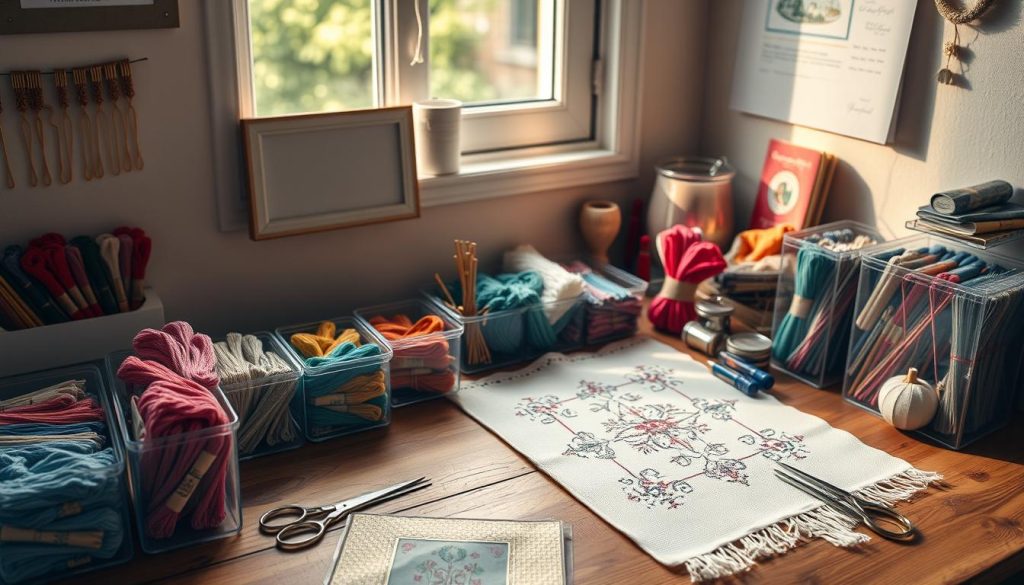
Setting up a project binder or digital folder for patterns
Create a project binder with printed patterns, a shopping list, floss legends, and progress photos. Add a template page that records start date, fabric type and count, DMC palette, and a finish target. Use pockets for grid-marked copies so cross stitch gridding stays accurate.
If you prefer digital-first, organize cloud folders on Google Drive or Dropbox. Use Pattern Keeper or Evernote to manage versions and notes. Tag files by fabric count and project name so you can pull patterns quickly.
Storing and labeling floss, needles, and small tools
Choose clear storage: bead-style plastic drawers, tackle boxes, or Smythson-like boxes with labeled compartments. Label each compartment with the DMC number, project name, and skein status like used or unused.
Keep needles and small tools on a magnetic board or pegboard near your workspace. For active pieces, carry a small portable caddy so you never lose a needle between sessions. These steps cut time wasted hunting supplies and make stitching flow.
How to plan cross stitch projects to avoid overwhelm
Estimate stitch count and time by testing your stitch-per-hour rate over one hour. Break large patterns into weekly zones. Set realistic goals like one to two hours, three times a week, or aim for a fixed number of squares per sitting.
Rotate projects to prevent burnout. Use a simple schedule: Week 1 focus on central motif, Week 2 add borders, Week 3 fill background. This keeps momentum and preserves pattern accuracy when using cross stitch gridding.
Apply these systems across cross stitch projects to reduce lost time and protect your work. Small routines and clear labels turn scattered materials into a smooth, repeatable workflow.
How Framing and Finishing Elevate Your Needlework
Showing off your cross stitch with care can really make a difference. It keeps colors bright, threads safe, and turns a simple sampler into a treasured keepsake. Here, you’ll find tips and steps for framing, mounting, washing, and finishing your work. This will help your piece shine.
Choosing cross stitch frames and hoops for display
Think about what you want your finished piece to say. Glass framing gives a sleek look. Floating mounts show off fabric edges and add a modern touch. Decorative hoops are great for small designs and have a cozy feel.
For hoop framing, pick quality wood for a rustic look or painted hoops to match your room. Shadow boxes are perfect for pieces with beads or trims. For long-lasting framing, go to trusted U.S. framers like Michaels or independent shops that use acid-free materials.
Mounting, washing, and blocking techniques for a polished finish
Start by washing and blocking to remove oils and flatten stitches. Use lukewarm water and a mild detergent like Woolite. Soak the piece gently for 10–15 minutes without scrubbing.
Rinse well in clear water until all suds are gone. Press out excess water by sandwiching the work between towels and applying light pressure. Never wring the fabric to avoid distorting stitches.
To block, pin the damp piece to a clean board or towel, stretching it to square the design. Let it dry completely. Blocking evens out tension and removes small wrinkles before mounting.
For mounting, use stretcher-mount on acid-free foam board. Center the fabric and secure edges with linen or cotton tape. Work from the center out to avoid distortions. Lacing is good for delicate fabrics: thread strong cotton through edges in a crisscross pattern and tighten gradually.
Simple framing tips to protect and showcase your masterpiece
Prevent sagging by adding an inner mounting board or cross-grain backing. Create a small gap between fabric and glass with spacers. This prevents threads from pressing against glazing over time. Choose UV-protective glass or acrylic to reduce fading of DMC floss colors.
Include a sealed backing to keep dust and pests out. For heirloom pieces or frames with mixed-media elements, consider professional framing. This ensures archival mounting techniques and conservation-grade materials are used.
Good finishing boosts the value and lifespan of your work. Whether you choose hoop framing for casual display or custom framing for a gallery wall, proper washing, blocking, and mounting will make your needlework look intentional and refined.
Cross Stitch as Therapy: The Mental Benefits of Needlework
Your hands move in a steady rhythm. This rhythm helps you focus and relax. Studies show that repetitive crafts like cross stitch can improve your mood and reduce anxiety.
Start by tracking your feelings. Write down how you feel before and after stitching for 20 minutes. Use a habit app or a simple journal to see your progress.
How stitching reduces stress and improves focus
Repetition calms your mind. Each stitch you complete releases dopamine, making you feel good. This can help you stay present and reduce worries.
Try a breathing exercise at the start. Breathe in for four counts, out for four counts while stitching. This can help you focus better and feel more grounded.
Creating a mindful stitching routine for better results
Having a routine helps you see results faster. Begin with a quick warm-up: check your needle, smooth threads, and get comfortable. Stitch for 25 minutes, then take a five-minute break.
Choose good lighting and a comfy chair. End with a gratitude note about something you improved. Set achievable weekly goals to keep stitching enjoyable.
Sharing work with the community for motivation and feedback
Sharing your work boosts motivation and creativity. Post a photo on Instagram or join Reddit r/CrossStitch. Local guilds and Stitch ’n’ Bitch meetups offer feedback and support.
Feedback helps you learn faster by pointing out small mistakes. It also inspires you with new ideas and techniques from others.
| Practice | What to do | Expected benefit |
|---|---|---|
| Short timed sessions | 25 minutes stitching, 5 minute break | Improved focus and reduced fatigue |
| Warm-up ritual | Needle check, thread prep, posture reset | Faster entry into mindful stitching |
| Breath pairing | Four-count breaths during first five minutes | Lowered heart rate, clearer concentration |
| Mood logging | Record mood before and after sessions | Visible evidence of mental health benefits |
| Community sharing | Post on Instagram, Reddit, or attend a guild | Motivation, skill growth, embroidery inspiration |
| Feedback loop | Ask for constructive tips from experienced stitchers | Faster improvement and higher confidence |
Project Ideas and Challenges to Take Your Skills Further
Start with short, focused projects to build your skills and confidence. Mix guided kits with small original patterns to keep you going. This section offers practical projects, step-ups for intermediate stitchers, and weekly prompts.
Beginner picks
- Small samplers: alphabet rows or motif samplers that finish quickly.
- 4–6 inch florals: single-color or 2–3 color designs that teach shading.
- Bookmarks and tiny houseplant motifs: fast, portable pieces for practice.
- Kits from Dimensions or DMC, and curated Etsy kits: they include DMC floss and clear patterns.
Step-up challenges
- Multi-page patterns with heavy backstitching to improve line work.
- Realistic portraits using blended shading and multiple thread lengths.
- Landscape scenes on evenweave: focus on long-distance color changes.
- Large seasonal samplers with fractional stitches and many color shifts.
- Specialty techniques: try beading, metallic accents, or simple goldwork to expand your toolbox.
Monthly structure to stay consistent
- 30-day stitching streak: aim for a short daily target so progress feels steady.
- Color-themed months: blue month, botanical month, or neutral month to explore palettes.
- Small motif-per-week plan: one tiny animal, one flower, one quote, one geometric repeat.
- Track with photos and a stitch journal to measure technique and speed gains.
Here’s a plan to move from simple to complex projects. Use it to choose your next cross stitch ideas and map your path through challenges.
| Stage | Project Examples | Skills Built | Timeframe |
|---|---|---|---|
| Starter | Alphabet sampler, bookmark, 4″ floral | Even tension, color changes, following chart | 1–2 weeks |
| Lower intermediate | Multi-motif sampler, small portrait, botanical | Blending, backstitching, basic fractionals | 2–6 weeks |
| Intermediate | Landscape on evenweave, seasonal sampler | Large color blocks, page navigation, shading | 6–12 weeks |
| Advanced | Full portrait, beaded piece, mixed-media sampler | Fractional stitches, specialty threads, complex backstitch | 3+ months |
Choose one or two projects from each level to create a learning arc. Use prompts and monthly formats for fresh ideas. Challenge yourself with defined goals to make intermediate techniques routine.
Conclusion
You’ve learned how a messy start can become a beautiful piece with the right focus. Learning to read patterns, using quality materials, and practicing stitches are key. These skills, along with some embroidery hacks, will help you work faster and make your work look better.
Start with a small project or a simple DMC kit. Set up your workspace and grid your fabric before you begin. Practice your stitches and stitch a little each day to keep moving forward. Use tips like organizing your threads and choosing the right needles to avoid problems.
Make long-term habits a part of your routine. Keep a project binder or a digital folder, organize your floss, and join monthly challenges. Share your work with others for feedback and encouragement. As you get better, come back to this guide for more tips and tricks.
 English