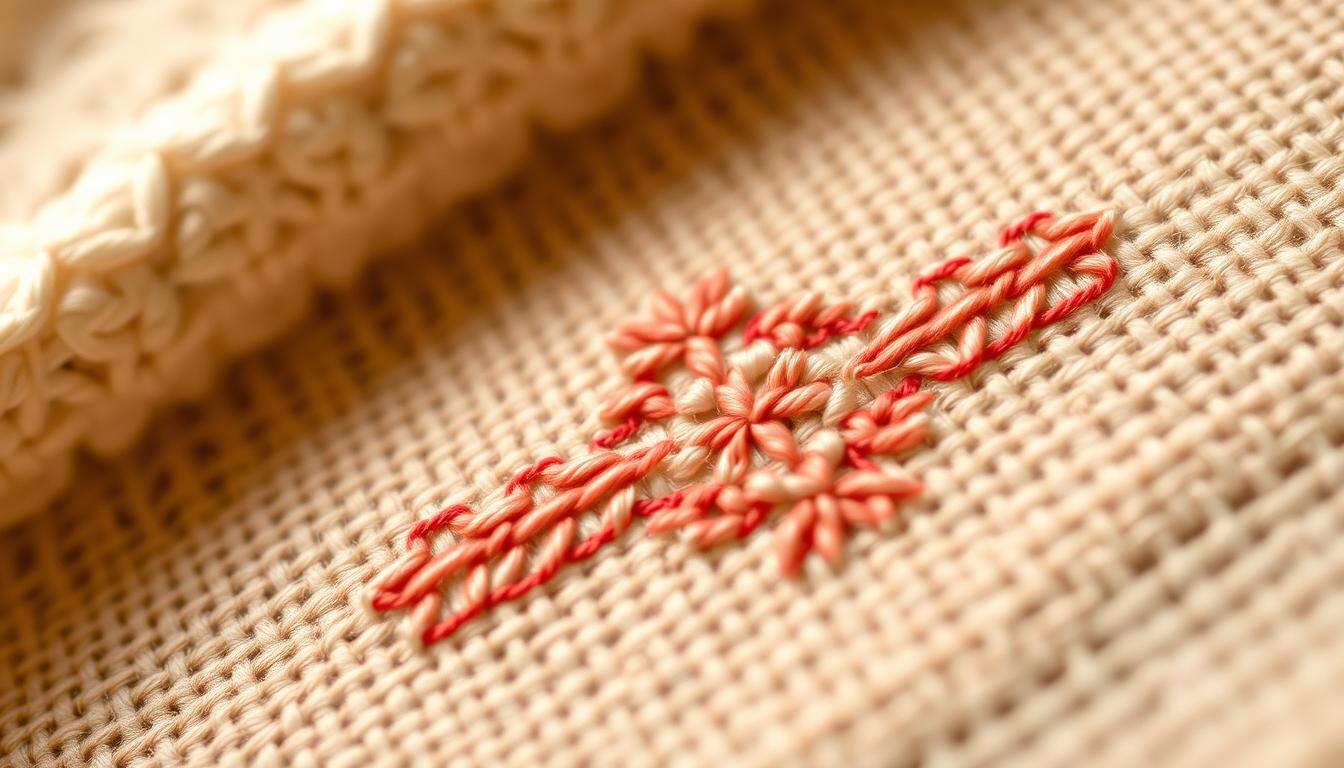
Cross stitch and hand embroidery can make simple items look fancy. With just a needle, DMC floss, and Aida cloth, you can create beautiful pillowcases, wall art, and gifts. This guide offers easy cross stitch tips and ideas for quick, calm projects.
It covers the basics of cross stitch and fast ways to build confidence. You can find ready-made designs online, making it easy to start stitching. Adding a few key stitches, like backstitch, will make your work look sharp and professional.
This guide is for beginners and experienced stitchers in the United States. It focuses on quick, efficient ways to look like a pro. You’ll learn about patterns, tools, and finishing touches that save time.
Key Takeaways
- Cross stitch is an accessible craft that quickly produces professional-looking results.
- Use downloadable patterns to speed project setup and increase variety.
- Master a few core stitches, especially backstitch, for crisp detail.
- Adopt simple organization and finishing methods to save time and improve polish.
- Focus on efficient workflows and selective tools to make cross stitch projects feel effortless.
Why a Lazy Approach Can Still Look Professional
Working smarter can lead to polished results. Start by choosing key cross stitch techniques that make a big impact. Use backstitch for sharp lines, satin stitch for smooth areas, and French knots for texture.
Reframing “lazy” as efficient and focused
Think of “lazy” as choosing where to put your effort. Focus on key areas and keep backgrounds simple. Use fewer colors where contrast is most important.
This way, you can create professional-looking pieces quickly. You’ll also practice reliable cross stitch techniques.
How mindful shortcuts save time without sacrificing quality
Use ready-made patterns and color palettes to save time. Pre-sorted DMC floss packs and printable charts make planning easier. Choose stitching paths that reduce thread breaks.
These embroidery hacks keep your work neat and avoid common mistakes. They save time and effort.
Cross stitch therapy and the calm benefits of simplified workflows
Stitching can be therapeutic. Slow, careful work reduces stress and shows progress. Limiting techniques and repeating motions builds muscle memory and brings calm.
Practical tips: choose a few essential stitches, simplify colors, and focus on key areas. These steps keep your work organized and satisfying. Use focused effort to create expert-looking pieces with less effort.
Essential cross stitch tools that do the heavy lifting
Start with a few core items for beautiful results. The right needle, quality DMC floss, and a forgiving fabric are key. They make basic stitches lay flat and keep your work neat.
Good scissors and tidy storage save you seconds. These seconds add up to hours across projects.
Must-have needles, DMC floss, and easy-to-use scissors
Choose needles by size to match your fabric count. Sharps and tapestry needles both have uses. Tapestry needles glide through Aida while sharps handle evenweave.
DMC floss is the industry standard for consistent color and strength. Pick stranded cotton for most counted cross stitch. Keep a spare skein for touch-ups.
Buy a pair of micro-tip embroidery scissors for crisp ends. Clean cuts reduce fraying and keep your backstitch neat.
When to invest in quality: hoops, frames, and MaggieFrame alternatives
Budget hoops work for small pieces, but heavy use benefits from sturdy cross stitch frames. Frames keep even tension so your stitches sit right on the fabric.
MaggieFrame magnetic hoops are popular for garment work. Strong magnets spread pressure and prevent hoop marks. If you want alternatives, try wide-surface hoops or other magnetic frames that avoid localized compression.
Affordable organization: floss boxes, bobbins, and project bags
Labeling saves time. Use floss boxes and labeled bobbins so you can find DMC floss at a glance. A simple system cuts seconds spent searching and reduces color-mix mistakes.
Keep one project bag per active piece. A small bag holds pattern, needles, thread, and scissors. Rotating a few tidy projects keeps you productive without clutter.
Beginner cross stitch wins: starting small with big impact
Start with basic stitches and small projects to build confidence. Try stitching a small sampler on scrap before using cross stitch fabric. This helps you practice and get a feel for the fabric.
Choose patterns with bold shapes and few colors. Digital bundles from DMC or The Frosted Pumpkin Stitchery are great for beginners. They offer patterns that are quick to finish.
When picking fabric, think about speed and visibility. Aida counts are key: 14-count is forgiving and fast, while 16–18 counts offer finer detail but are slower. Keep your fabric tight in a hoop to avoid puckering.
Use colors wisely to hide small mistakes. Patterns with clear outlines or large color blocks look great even if your stitches are not perfect. Sticking to three to five colors means fewer thread changes and faster work.
Simple finishing touches can make a basic piece look great. Outline key elements with backstitch for crisp edges. Then, mount in a hoop or add a lightweight backing for cushions and wall hangings. Invisible hand stitching around the edge makes a neat back for gifting.
Having the right tools is important. A small iron, thin batting, and clean trim can transform a sampler. For framed pieces, use acid-free mounting and a simple mat for a gallery look without needing framing skills.
| Choice | Why it helps | Best for |
|---|---|---|
| 14-count Aida | Visible grid, faster stitching, forgiving for learning | Quick samplers, beginners starting out |
| 16–18-count Aida | Finer detail, more professional look, slower pace | Small motifs with detail, stitchers moving up |
| Bold, limited-color patterns | Reads well at small sizes, reduces thread changes | Fast projects, gifts, practice pieces |
| Backstitch outlining | Creates crisp edges and definition | Polishing motifs, lettering, borders |
| Hoop mounting or simple backing | Quick display option, minimal finishing skills needed | Wall hangings, cushions, beginner presents |
CROSS STITCH
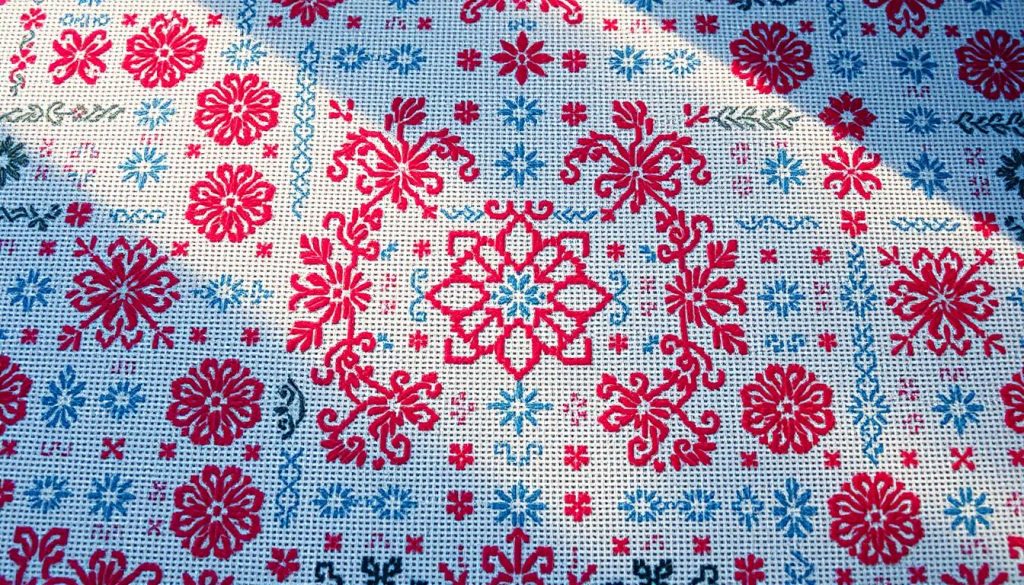
Counted cross stitch offers a structured approach that’s easy to follow. You learn basic stitches and count squares. This makes big designs seem achievable, even if you stitch quickly.
Why counted cross stitch is perfect for lazy stitchers
It uses clear grids and repeatable blocks. This means less guessing and more stitching. By choosing repeat patterns, your work becomes a rhythm. This pace lowers frustration and reduces mistakes.
Using a small color palette and repeating motifs makes your work look professional. Brands like DMC offer consistent floss for true color repeats. This is a smart way to achieve polished results with less effort.
Grid vs no-grid: cross stitch gridding hacks to speed progress
Grids break down large projects into smaller squares. Use removable fabric markers for quick marks on Aida. For a less invasive option, insert contrasting thread as temporary grid lines. Both methods reduce miscounts and save time.
Digital printouts that match your fabric count let you work section by section. If you prefer no-grid, choose smaller, repeatable blocks. This way, you can track progress visually and avoid many reworks by planning stitch paths ahead.
Pattern selection: pick designs that hide small mistakes
Good pattern selection is key for lazy stitchers. Choose designs with bold shapes, large color blocks, and repeating motifs. These elements hide tiny errors and make stitching faster.
Look for patterns with built-in texture, like variegated floss suggestions or repeated geometric fills. Strategic backstitch outlines help define edges and hide minor flaws. This reduces visible mistakes without extra effort.
Time-saving embroidery hacks and needlework secrets
Make your setup easy to start with. Keep charts and a tablet with stitch dictionaries nearby. This quick reference helps avoid mistakes and speeds up problem-solving.
Thread shortcuts: pre-threading, waste knots, and DMC floss tricks
Pre-thread several needles before starting. This one step cuts down on interruptions. Use loop-start methods for backstitch or small runs to avoid many ends. For longer runs, tie a tidy waste knot to secure a start that you can remove later.
Use DMC floss tricks like working with bundled skeins and keeping a labeled floss card. DMC’s color consistency makes swapping a brand match simple. Pre-threading matching shades limits mistakes and speeds up color changes.
Efficient stitching paths to reduce thread breaks and ends
Plan your path by stitching logical blocks of the same color before jumping to isolated motifs. Work rows or columns in a way that minimizes long thread jumps across the fabric. This tactic lowers the number of thread breaks and loose ends you must weave in later.
Aim for consistent tension each stitch. Even tension prevents puckering and keeps repairs rare. If you must cross large empty areas, consider anchoring threads under nearby stitches instead of cutting and re-starting constantly.
How to use printed and digital stitch dictionaries for fast reference
Keep a small printed stitch dictionary at your station for quick flip-throughs. Use digital libraries like Sarah’s Hand Embroidery Picture Dictionary or Mary Thomas-style references on a tablet for searchable images and video timestamps. These guides help you identify stitches fast and reduce trial-and-error.
Combine video tutorials with timestamped clips for tricky techniques you revisit. Save images of core stitches and your preferred cross stitch techniques on a reference board. This setup makes learning new fills and trims a matter of minutes, not hours.
Backstitching techniques that elevate simple projects
Backstitching can make small projects look professional. It creates clean lines that outline shapes and letters. You can also add details like veins or stems easily.
Using backstitch for crisp outlines and lettering
To do backstitch, start by going up at point 1, down at point 2, up at point 3, and back to 1. This keeps the line smooth. Use a light pencil or fabric marker to draw guides before stitching.
Choose the right thread thickness for small letters. Thinner threads work best on 14-count Aida. Keep your stitches even to avoid puckering and uneven letters.
Combining backstitch with satin stitch and French knots for depth
Frame satin stitch with a neat backstitch border. This separates solid colors from the background. Add French knots inside for texture and focus.
Use backstitch to anchor French knots. Stitch the outline first, then add knots. This keeps the design clean and easy to read.
Common cross stitch mistakes with backstitch and how to fix them
Watch for uneven tension, misaligned lines, and thick thread. These mistakes make outlines look amateur. If a line is off, unpick it carefully and restitch with even spacing.
Practice even spacing on scrap fabric before your project. DMC and Anchor offer video tutorials and step-by-step guides for help.
Smart pattern hacks: make cross stitch patterns work for you
Make any chart easier by choosing strong compositions and clear shapes. Look for cross stitch patterns with bold forms and wide color blocks. These designs help simplify color palettes without losing contrast or impact.
Simplifying color palettes for faster stitching and professional contrast
Identify the main planes of a design: foreground, midground, and background. Use one or two shades for each plane. This speeds stitching and keeps depth.
Use backstitching to sharpen edges and recover lost detail after simplifying color palettes. A single dark thread outlining a shape can look professional, even with fewer hues.
Adapting commercial patterns to fit your time and skill level
Resizing motifs and combining blocks from separate sets are simple pattern adaptations. You can remove small motifs, merge adjacent color areas, or convert multi-color sections into a single blended tone.
When adapting a commercial chart, keep a printed reference and note changes. Mark which symbols you merged and list thread substitutes beside the pattern. This makes stitch sessions faster and cuts decision time.
Using digital tools and printouts to plan efficient stitch sessions
Use tablet PDFs and zoom features to inspect tricky areas before stitching. Digital cross stitch tools like pattern editors, layered printouts, and annotation apps help plan sessions.
Make a simple agenda: mark completed blocks, set a stitch-count goal, and print a reduced-color version of the chart. Digital stitch dictionaries and short video references speed substitutions and teach quick fixes.
| Hack | What it saves | How to apply |
|---|---|---|
| Simplify palettes | Time and thread changes | Select 2–3 shades per plane, use backstitch for definition |
| Pattern adaptation | Complexity and stitch count | Resize motifs, merge color blocks, combine pattern panels |
| Digital planning | Decision time and mistakes | Use PDFs, annotate layers, print marked pages for sessions |
| Thread substitution | Cost and stash bloat | Use DMC lookup tools or apps to pick close matches |
| Session agendas | Start/stop friction | Set small goals, mark completed grids, rotate projects |
Organization systems for the chronically lazy stitcher
Make your hobby fun by keeping things simple and easy to follow. A quick routine helps you start and finish faster. This way, you spend more time stitching and less time searching.
Project planning: keeping a small queue of rotating projects
Work on three or fewer projects at a time. This keeps you moving and avoids feeling overwhelmed. Switch them out weekly for steady progress without clutter.
Use project bags or modular kits for easy swaps. Write a brief note with fabric details, start date, and colors. This helps with planning and gets you back to stitching quickly.
Floss management: labeling, storage, and DMC floss lookup tips
Label bobbins with DMC numbers and store them in clear boxes. This makes them easy to find. Organize by palette or project to save time. Keep a simple cross-reference sheet for substitutes and blends.
Have a printed DMC floss lookup or a saved pattern folder on your tablet. This saves time when you need a match or to reorder. Good floss management means fewer tangles and lost shades.
Workspace setup: keep what you need within arm’s reach to stay productive
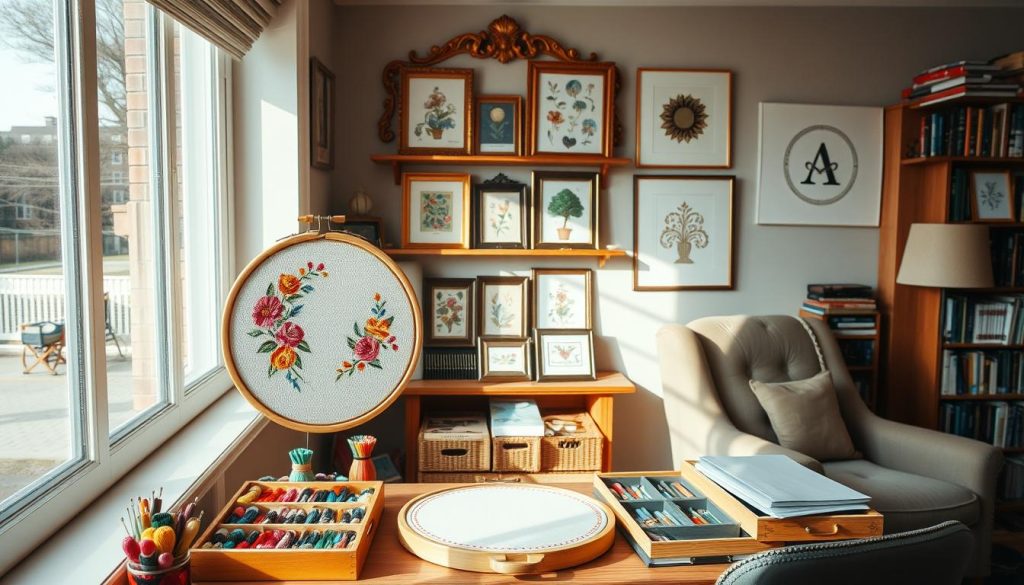
Set up a compact station: needles in a tin, scissors on a magnetic pad, hoop or frame ready, and patterns on a tablet or printout. A small waste bag keeps your surface clean.
Place a light and a small tray for finished threads. A well-organized workspace means fewer distractions and more stitching.
| Focus | Action | Benefit |
|---|---|---|
| Project planning | Keep three rotating projects; use labeled project bags | Maintains momentum; simplifies decisions |
| Floss management | Label bobbins with DMC numbers; store in clear boxes | Speeds DMC floss lookup; prevents tangles |
| Workspace setup | Keep needles, scissors, hoop, tablet, and waste bag close | Reduces interruptions; boosts stitching time |
| Quick reference | One-page cross-reference for substitutions and reorders | Makes reorders simple; preserves color consistency |
| Modular kits | Use digital patterns and ready kits for fast turnover | Shortens prep time; increases finished pieces |
When to use advanced techniques to fake expertise
Use a few targeted stitches to make your work look like it came from an expert studio. Pick one or two focal areas and invest a little extra time there. Small embellishments attract the eye and hide simpler fills elsewhere.
Combining smooth fills with tiny textured accents can instantly upgrade your work. Satin stitch fills a shape cleanly and looks polished on motifs like leaves and petals. French knots add pinpoint interest for centers, eyes, and berries without a big time commitment.
More complex stitches work well when used sparingly. Bullion knots add knobby texture to florals. Woven wheels create a raised rosette that reads as craftsmanship. Practice these on scrap fabric first so you keep your main piece tidy.
Thread choices affect the result as much as technique. Thread blending gives soft shading without full charted color work. Put two strands from different colors through the needle or layer passes to create gradual depth that reads like careful shading.
Use tools that make advanced stitches easier. A Milliner’s needle helps with bullion knots and consistent wraps. Watch a short video tutorial for rhythm and tension when making woven wheels. Learning wrap counts saves time and reduces frustration.
Apply these cross stitch techniques selectively on focal points only. Keep the rest of the canvas in simple cross stitch to preserve speed. This approach lets you fake a high level of expertise while finishing projects faster.
| Technique | Best Use | Tool Tips | Time Cost |
|---|---|---|---|
| satin stitch | Smooth fills for leaves, petals, and banners | Short, parallel passes; work from edge to edge | Low to medium |
| French knots | Flower centers, eyes, small textured dots | Use pearl cotton or two strands of floss; secure tension | Low |
| bullion knots | Stamens, textured stems, decorative trims | Milliner’s needle; count wraps; practice on scrap | Medium |
| woven wheels | Raised rosettes and focal clusters | Create even spokes; weave consistently for neatness | Medium to high |
| thread blending | Subtle shading and color transitions | Combine two strands in the needle or layer passes | Low |
| cross stitch techniques (combo) | Balanced projects that read professional | Use simple stitches overall; add advanced accents | Variable |
Finishing and framing like a pro with minimal effort
You want clean results without a lot of fuss. Start with proper cross stitch finishing at the hoop. Keep tension even to prevent puckering. When moving to a frame, gently re-tension the fabric and avoid overtightening.
Hoop-to-frame transitions
Before framing, outline raw edges with a backstitch. This stabilizes the weave. If using a hoop, press the fabric with a warm iron and damp cloth to remove impressions.
Use a MaggieFrame or magnetic hoop to stitch. This reduces pressure points that cause hoop marks.
Quick mounting and backing techniques
For cushions and small wall hangings, use a neat backing. This hides seams and adds structure. Apply an invisible stitch around the edge to attach a lining, or use fusible interfacing for extra body.
Hoop-mounting with a tidy back can be a modern display without a frame.
Using ready-made cross stitch frames and simple matting
Ready-made cross stitch frames save money on custom framing. Choose a frame size that fits your stitched area or pick a larger frame with simple matting. This creates a professional border.
Digital pattern sizing and project kits from brands like DMC help plan dimensions. This makes framing cross stitch straightforward.
Mounting techniques that are quick and sturdy include lacing the fabric onto an acid-free board. Use portrait mounting corners for temporary displays. For a retail-quality presentation, use affordable mats and ready-made frames. This gets a clean shop window finish without expensive framing services.
Stitching for garments and larger projects with minimal fuss
Working on clothes and big pieces can feel risky. But, small changes in technique make a huge difference. Keep tension consistent and plan motifs where fabric handling is easiest. This reduces distortion and keeps your work looking crisp.
Hooping delicate fabrics and avoiding distortion
When hooping delicate fabrics, use wide-surface hoops or a low-tension method. This spreads pressure evenly. Move the hoop rather than stretching the cloth to fit. Test on a scrap of the same fabric to confirm tension before you stitch on the garment.
Tool choices that prevent mistakes on clothing
Choose magnetic hoops for their gentle, uniform clamping. Brands like MaggieFrame are praised for broad contact. This cuts hoop marks and reduces puckering in knits and silks. Pair magnetic hoops with appropriate stabilizers; tear-away backing works for light to medium weight, while cut-away stabilizers suit stretchy fabrics.
Project examples: small motifs that elevate garments
Pick small, high-impact placements such as collars, cuffs, pocket accents, or yokes. Tiny motifs let you practice cross stitch on clothing without long setup times. Use fine needles and matching thread size to avoid holes and keep motifs subtle yet polished.
| Project | Best Hoop | Stabilizer | Needle & Thread |
|---|---|---|---|
| Collar monogram | MaggieFrame magnetic hoops | Medium tear-away | Size 70/10 embroidery needle, stranded cotton |
| Cuff motif | Wide-surface wooden hoop | Light cut-away | Sharp low-profile needle, polyester thread |
| Pocket accent | Small magnetic hoop | Adhesive stabilizer sheet | Embroidery needle 75/11, cotton blend |
| T-shirt chest logo | Magnetic hoop or multi-hoop system | Heavy cut-away | Ballpoint needle for knit, rayon or polyester thread |
Keep a checklist: test stabilizers on scraps, match needle to fabric, and move the hoop rather than stretching the garment. These small steps make garment embroidery predictable and pleasant.
Conclusion
CROSS STITCH can be a calm and efficient hobby. You can create professional-looking pieces without long, stressful sessions. Focus on a few key techniques like basic crosses and backstitch for crisp edges.
Use DMC floss for consistent colors. A magnetic hoop, like a MaggieFrame-style, is great for working on garments. This setup makes your work look clean and defined.
For quick help and inspiration, turn to digital pattern libraries, video tutorials, and stitch dictionaries. Simplify your color palette to stitch faster. Organize your floss and projects for quick setup.
Choose pre-made designs that hide small mistakes. These tips save time and keep your work quality high.
For a big impact, use advanced techniques like satin stitch or French knots. Start with Aida cloth and simple designs for beginners. Add backstitch for definition as you get more confident.
This way, you enjoy the meditative benefits of embroidery while creating stunning pieces.
Keep your projects small and rotate a short queue of them. Use the right tools and resources to make every step easier. With mindful shortcuts and key techniques, your work will look professional and inspired.
 English