
Want to stitch faster and get a cleaner finish? Focus on one thing: railroading with good thread management and steady tension. This trick improves your coverage, cuts down on thread twist, and makes simple patterns look great.
Begin with railroading before adding special stitches or fabrics. Learn to split and lay floss neatly. Choose the right DMC skein and tapestry needle for your fabric. These details are key for both beginners and pros.
This guide is for stitchers in the United States. It shows how to use this method for simple to complex patterns. Start by mastering one intermediate technique, then improve your thread handling. Finally, expand your skills with frames, tools, and finishing steps like gentle washing and blocking.
Key Takeaways
- Railroading plus good thread management transforms stitch coverage and uniformity.
- Begin with one intermediate habit before adding parking or fractional stitches.
- Use reliable tools like DMC floss and tapestry needles for consistent results.
- Stable tension and neat laying make even beginner projects look professional.
- Finishing steps—washing, blocking, framing—preserve the polished look you create.
Why this one cross stitch tip transforms your work: expert-level results from one habit
Just one habit can change everything. By mastering railroading and thread management, you’ll see better stitches and less twist. This makes your work look neater and more even.
Stitchers say it makes backstitching easier and edges cleaner. It also helps with dark fabrics and light threads.
Experts like StitchCraft and The Spruce Crafts say start with one method. This technique is a great place to begin. It helps with other stitches too, making your work smoother.
Try it on a small piece first. See how it works on busy parts and dark fabrics. It’s a simple change that makes a big difference.
Combine it with good habits like trimming thread and using DMC floss. These tips together will make your stitches look amazing.
Here’s a table to help you decide where to use this tip first. It shows how it fits with other tips.
| Situation | Immediate Benefit | Why it Works |
|---|---|---|
| Light threads on dark fabric | Improved opacity and fewer visible gaps | Railroading separates strands so each lay flat, boosting coverage |
| Metallic or specialty threads | Less fray and a smoother surface | Intentional thread management reduces snagging and twist |
| Confetti-heavy patterns | Faster, cleaner transitions between colours | Organized thread handling keeps stitches tidy and consistent |
| Backstitch and detail work | Clearer outlines and sharper detail | Even stitch height creates a stable ground for fine lines |
Understanding thread management: the foundation of professional cross stitch
Good thread management is key to every project. It ensures your stitches are flat and even. This makes learning and keeping your work polished from start to finish easier.
Why thread handling matters for coverage and tension
Your thread’s behavior affects how even and smooth your stitches look. Bad handling can lead to gaps and uneven tension. This makes your work look less professional.
Ideal thread length and preparation
Cut your thread to about the length of your finger to your elbow. This length is perfect for sewing without tangling. When dividing strands, pull from the end with the color number.
To split strands smoothly, free 2–3 cm at one end. Hold that section between your knees, then gently pull. This method avoids twisting and knots as you stitch.
Choosing quality floss like DMC vs. cheap alternatives
Choose brands like DMC, Anchor, and Madeira for the best floss. Their floss is smooth, strong, and colorfast. It works well with Aida and evenweave fabrics and doesn’t tangle easily.
You can mix metallic with cotton strands for a sparkly look. Use the right tools and needles to keep your work clean and organized.
Using practical tools makes cross stitch easier. Needle minders, magnetic strips, and labeled bobbins help keep things tidy. These tools speed up your work and help you improve faster.
| Task | Recommended Tool | Why it helps |
|---|---|---|
| Separate strands cleanly | Hands + knee hold | Prevents knots and reduces twist when pulling from the skein end |
| Maintain even tension | Embroidery hoop or scroll frame | Stabilizes fabric so stitches lie flat and coverage stays uniform |
| Organize threads | Labeled bobbins, floss box | Simplifies cross stitch organization and speeds color changes |
| Align strands for railroading | Laying tool or large blunt needle | Helps separate and flatten strands for a sleek finish |
| Keep needles and parked threads safe | Needle minder, magnetic strip | Reduces loss and keeps your setup tidy during complex work |
Railroading: the expert tip many stitchers swear by (the core technique)
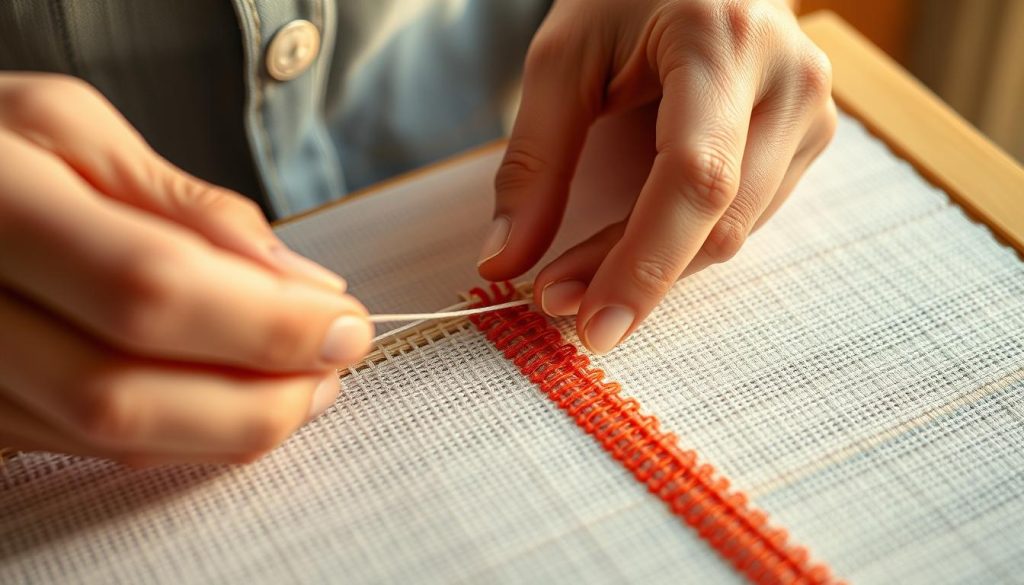
Railroading is a simple move that makes your counted cross stitch look professional. It keeps each embroidery strand parallel, making the surface smooth and even. This results in cleaner coverage and fewer visible twists, giving your work a pro finish.
This technique works best for crisp top arms on crosses or stitching light thread on dark fabric. Many cross stitch techniques struggle with coverage, but railroading fills gaps and reduces shine or gap problems with metallics or thin floss.
What railroading is and why it produces a professional finish
Imagine two or three strands laid side by side like tiny rails. When they sit flat, light reflects evenly, making your stitches blend into a uniform field. This evenness hides fabric showing through and removes fuzzy texture caused by twisted strands.
This embroidery hack is especially useful on dark linens, DMC metallic blends, and any counted cross stitch where a crisp, competition-level look matters. You’ll notice fewer gaps and less thread twist right away.
Step-by-step how to railroad while you stitch
Bring your needle up for the first half of the cross. Before pulling tight, slide a laying tool or a second needle between the strands and nudge them so they sit side-by-side.
Pull the stitch snug so the strands settle flat. Complete the second half of the cross and repeat for the top arm if you want the cleanest line. For metallic threads, railroad both arms to cut down on fray and twist.
Practice on a small motif or a focal area to build speed. Mixing this tip with parking and good thread length choice will speed up your workflow as you get comfortable.
When to prioritize railroading and when to skip it
Prioritize this technique for light-on-dark work, metallics, thin threads, or any project that needs a high-end finish. It’s a go-to embroidery hack for show pieces and gifts.
Skip or simplify railroading on huge single-colour blocks when speed matters more than a mirror-smooth surface. Avoid it on very loose tension where using a laying tool is awkward, or when you want a softer, textured look.
Keeping even tension: tools and habits that complement the tip
Keeping even tension makes stitching easier and neater. Small habits and the right tools help keep fabric flat and threads smooth. This reduces puckering and makes your work look consistent.
Use frames, hoops, and scroll frames to stabilize your fabric. A consistent hoop or wooden frame holds fabric taut. This ensures each stitch sits the same way. For large projects, scroll frames are excellent because they show more of the working area and cut down on repositioning. Try a Q-snap or a traditional wooden frame to find what feels best for you.
Check tension often until it becomes habit. Look at your stitches every few minutes or after each small block. Many stitchers tighten when they focus on a tricky motif. If you sense change, stop and relax your grip. Switching to a different needle size can make the pull feel more natural through the fabric.
Pace your stitching to avoid fatigue. Take short breaks, stretch, and use a daylight lamp or magnifier to ease eye strain. Fatigue makes you pull tighter without realizing it. Treat stitching as cross stitch therapy: slow, mindful sessions keep your hands steady and your tension even tension across the cloth.
Work in small grids to monitor progress and tension. Stitching in 10×10 blocks helps you notice shifts early. This grid method pairs well with parking systems and makes railroading more predictable. It also reduces miscounts and keeps threads organized when you use dedicated cross stitch tools.
| Tool | Best for | Why it helps tension |
|---|---|---|
| Hoop | Small to medium projects | Easy to reposition, keeps a tight working area for precise stitches |
| Wooden or Q-snap frame | Medium projects and those who prefer stable edges | Distributes tension evenly around the fabric, lowers edge roll |
| Scroll frames | Large or long-term projects | Exposes more area, reduces need to move fabric, supports consistent even tension |
| Magnifying daylight lamp | Fine-count fabric and long sessions | Reduces eye strain so you avoid over-tightening while concentrating |
| Quality needles (e.g., John James) | All project types | Smoother glide through fabric reduces tugging and thread twist |
Parking and thread organisation for complex CROSS STITCH patterns
Dealing with many colours in cross stitch can be slow without a good system. Using a parking method speeds up work, reduces colour changes, and prevents hard-to-fill holes.
Begin by working in 10×10 squares. Park threads only in the next one or two sections. This keeps threads tidy and makes your work look neat.
How parking multiplies efficiency on multi-colour or confetti-heavy designs
Confetti stitches in photo-like motifs mean constant thread changes. Parking lets you leave needles ready for the next spot. This saves time and keeps your stitching smooth.
Use parking for small motifs and scattered colours. For big blocks, a colour-by-colour approach might be faster. Mixing both methods keeps your projects moving.
Practical parking setup and tools
Start with 2–3 parked threads to get the hang of it. As you get better, you can park more. But be careful not to tangle 10–15 threads.
Use a fabric strip on the edge for more parking space. Mark your grid with highlighter tape or a washable pen. This helps you keep track and avoid mistakes.
Combining parking with railroading
Prepare parked needles by separating strands. This makes railroading easier when you return. It ensures even coverage and smooth stitches in busy areas.
Using both parking and railroading speeds up your work and improves the finish. This combo is perfect for complex patterns with many colours and tiny stitches.
Fabric, needles, and counts: matching materials to technique
Choosing the right materials is key to your project’s success. Start by picking fabric that matches your skill level and desired detail. The right choices affect tension, coverage, and how well techniques work together.
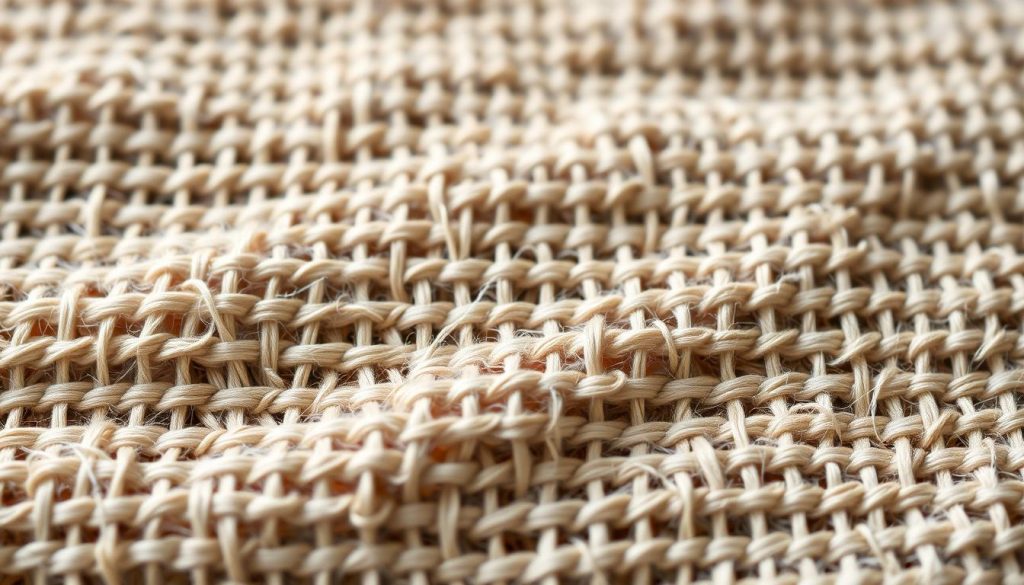
Beginners should start with low-count Aida, like 8–10 count, for easier stitching. As you get better, move to 14-count Aida. For a finer look, try evenweave or linen, stitching over two threads to mimic 14-count Aida. Colored Aida adds contrast, and dissolvable Aida lets you stitch on clothes and remove the fabric later.
Use tapestry needles with blunt points for standard stitching. For 14-count fabric, size 24 needles are best. For higher counts, sizes 26–28 work better. If a needle is too big, change sizes. Special tools help with clean stitches and easier railroading.
Fractional stitches add detail in corners and curves. Start with the full diagonal of a three-quarter stitch, then add the quarter. Railroading works on the top arm or both arms of fractional stitches. But be careful not to distort the stitches. When two quarter stitches share a square, stitch the dominant color first or use a half stitch if outlining with backstitch later.
Your thread, fabric count, and needle choice all work together. Premium floss like DMC is more reliable than cheaper options. It resists fraying and makes railroading and even tension easier. Choose combinations that match your pattern’s detail and your cross stitch ideas.
Use the table below to compare common fabric and needle pairings against skill level and technique needs. This quick reference helps you choose setups that support railroading, clean fractional stitches, and steady tension.
| Skill Level | Recommended Fabric | Needle Size / Type | Technique Fit |
|---|---|---|---|
| Beginner | 8–10 count Aida; colored Aida for contrast | Size 22–24 tapestry needles | Easy counting, large holes; suitable for basic railroading and simple cross stitch ideas |
| Intermediate | 14-count Aida; 28-count evenweave stitched over two | Size 24 tapestry needles; laying tool optional | Good balance of detail and ease; supports fractional stitches with careful railroading |
| Advanced | Linen or high-count evenweave; specialty grounds | Size 26–28 tapestry needles; specialty needles for thread separation | High detail, precise fractional stitches; railroading for neat coverage where safe to use |
| Garments / Alterations | Dissolvable Aida; stabilisers | Appropriate tapestry needle size for fabric count | Temporary ground for stitching directly on clothing; must match needle to garment weave |
Finishing, blocking, and framing to preserve that expert look
After you finish stitching, a good finish is key to keeping your work looking sharp. Start by washing your cross stitch in cool water with a gentle detergent. Make sure the detergent is safe for delicate items. Rinse well until the water is clear, then gently press out excess water without wringing.
Begin blocking while the fabric is still a bit damp. This helps fix any shape or tension issues. Pin the piece face-down on a clean towel or blocking mats, stretching it gently to square the corners. Use rust-proof pins and let it dry completely before moving on. This step prevents puckers and ensures the design lies flat in frames.
When pressing, place the piece face-down on a thick towel to protect the stitches. Use a moderate iron setting and lift the iron instead of sliding it to avoid stretching. If you notice pinholes or uneven threads, gently rub them with your fingernail or the edge of a ruler to fix the fabric threads. Only re-dampen if the fabric is colorfast.
Choose framing that protects the fibers and highlights your work. Use acid-free mounting boards, like archival comic book board, for affordable protection against discoloration. Self-stick acid-free options are good if the archival claim is verified. For a tight finish, use the lacing technique: center the piece, fold the edges to the back, and stitch them with strong sewing thread instead of tape or glue.
Affordable framing can still look professional. Opt for a slightly deeper frame to fit the fabric thickness. Consider using spacer strips to prevent glass from pressing on the stitches. If framing at home, you’ll need a frame, acid-free backing, sewing thread, pins or blocking mats, and a rotary cutter to trim the backing board cleanly.
For display versus documentation, remove the glass to take photos without glare. Replace the glass for dust and sunlight protection when hanging. If your piece shows heavy warping or stains, wash, block, and partially dry it before pressing and lacing into frames for the best look.
Common CROSS STITCH mistakes and how this tip prevents them
Many stitchers face common problems that can ruin their work. These issues can be avoided with good thread management, consistent tension, and a simple railroading method. This method combines other skills to help you avoid mistakes.
Miscounting and scattered confetti stitches
Miscounting often happens when you jump around on the fabric. To avoid this, work in 10×10 grid sections. Mark the areas you’ve finished with a highlighter or pencil so you don’t repeat them.
Use parking for different colors to reduce mess on the back of the fabric. This makes your work neater and prevents mistakes.
Uneven coverage and visible thread twist
Uneven coverage and visible twist happen when your threads spin or tension changes. Railroading helps keep your stitches even. Choose good quality DMC floss and cut it to the right length to avoid fraying and twisting.
When you have fractional stitches, stitch the main diagonal first. Skip railroading for delicate shapes. These small changes help keep your stitches even and reduce the need for fixing mistakes.
Tangling and frequent knotting
Long threads and poor preparation lead to tangles and knots. Cut your threads to the right length and separate them before threading. The knees technique helps split strands cleanly.
Use parking and a magnetic needle minder to keep threads organized. Better organization means fewer interruptions, which reduces the chance of knots and messy backs.
Troubleshooting tips
- If your tension varies, check your hoop or frame choice and try a different needle size.
- Improve lighting and take short breaks to reset muscle tension and focus.
- Practice backstitching techniques on scrap fabric to refine your finishing without disturbing coverage.
Conclusion
Mastering railroading is key to improving your cross stitch. It’s all about managing threads and keeping tension even. Start by using the right thread length and separate strands before stitching.
Choose quality floss like DMC. Pair it with the right tapestry needles and fabric count. These basics make a big difference in your stitches and colors.
Start with one new technique at a time. Practice railroading on a small area first. Use good materials and a frame or hoop to keep tension steady.
Once you get the hang of it, try parking for color changes. Experiment with fractional stitches. Then, work on finishing steps to protect your work.
Finishing is important to keep your work looking great. Wash gently, block to even tension, and press from the back. Use lacing or archival mounting for framing.
Remember, cross stitch is both a craft and a way to relax. Use these tips to improve your work while keeping it enjoyable. It’s perfect for both beginners and those looking for embroidery inspiration.
 English