Do your CROSS STITCH sessions turn into a mess of knots? You’re not alone. Tangled DMC floss and snarled threads can mess up your focus and undo hours of work. This guide will show you how to stop it.
Most tangles start before you even pick up the needle. Creased skeins, long untrimmed lengths, and strands that remember twists are common culprits. With a few simple habits, you can avoid most tangles and knots.
In this article, you’ll find clear tips for beginners. You’ll learn how to prepare DMC floss, choose the right thread length, separate and rejoin strands, and use water or conditioners safely.
By following these methods, you’ll spend less time fixing tangles. You’ll enjoy smoother stitching, cleaner backs, and better finishes on your projects.
Key Takeaways
- Tangles often begin with how you handle a DMC floss skein before stitching.
- Shorter, tested lengths and proper strand separation reduce twisting.
- Simple thread conditioning and stroking habits relax fibers and prevent kinks.
- Tools like bobbins and cards help organize floss and cut waste.
- Knowing when to untwist or cut saves time and preserves project quality.
Why Your Floss Tangles: the Physics and Common Causes
Understanding thread tangling physics can help you avoid tangles. Small bends in floss create a lasting waviness called floss memory. This memory makes the strand curl back toward kinks as you pull it through cross stitch fabric.
When a thread stored on a bobbin or in a skein has creases, each pass through fabric rubs against those kinks. The fiber seeks its bent shape and forms loops that can tighten into knots. This explains many common cross stitch mistakes that look random but stem from stored bends.
Longer thread lengths raise the chance of twisting and kinking. More length means more opportunity for rotation as you stitch. Repeated hand motion adds torque, so a long strand can coil like a rope. Many stitchers follow a rule of thumb: shorter lengths reduce tangles and save time spent untangling.
Multiple strands grouped together tend to amplify twist. When the strands move as one, any rotation affects the whole bundle. Strand-level friction between fibers increases resistance. Static charge in dry rooms or from synthetic blends raises cling and snagging, worsening the problem.
Cross stitch fabric and your technique matter for how fast twist forms. Tight tension, dense Aida, or a needle that is too small drags on the thread. That extra drag accelerates wear and encourages loops to form into knots. Adjusting fabric tension and choosing the right needle reduces friction and thread damage.
Practical outcomes follow from these mechanics. Cut shorter lengths, remove stored creases before stitching, and separate strands to lower unified twisting. Use simple anti-static measures and match needle size to your fabric to limit resistance through the weave. These steps address thread tangling physics and help you avoid frequent cross stitch mistakes while using better cross stitch techniques.
| Cause | What Happens | Quick Fix |
|---|---|---|
| Floss memory from storage | Persistent waviness that forms loops and knots | Spoil the skein, dampen slightly or straighten by hand |
| Long thread lengths | More rotation and coiling during repeated motions | Work shorter cuts, 18–24 inches per stitcher preference |
| Multiple strands used together | Amplified twist and uneven tension | Separate strands before joining and match ends |
| Strand friction and static | Increased snagging and resistance through fabric | Use humidifier, anti-static spray, or mild conditioner |
| Fabric interaction and needle mismatch | Excess drag, faster wear, and knot formation | Adjust hoop tension and choose correct needle size |
Preparing DMC Floss and Other Threads to Prevent Tangles
Before you start stitching, take a moment to prepare the skein. Proper handling of the floss skein saves time and reduces knots. It also keeps colors true. Gentle handling at the start prevents snarls later and fits well into any cross stitch routine.
How to release thread correctly from a DMC skein
Find the paper tag with the long number and look for the short tail tucked beneath it. Gently pull that tail; do not yank from the middle of the bundle. Pulling from the numbered tail releases the strands one by one and prevents the skein from collapsing into loops.
When you slide the tail out slowly, the thread keeps its shape. This reduces the chance of forming nests or tight kinks that lead to knots while you stitch.
Why finding the tail with the number tag matters
The numbered tag marks where the manufacturer threaded the floss after dyeing. Pulling from that end maintains the skein’s tension and avoids deforming its coil. If you pull from the wrong place, the skein can twist and «memorize» bends that later become stubborn tangles.
Proper tail-first release extends the life of DMC floss by lowering friction and wear. Your floss storage stays neater and you spend less time untangling during a session.
Winding options: bobbins, cards, and hanging storage pros and cons
Choose the winding method that matches your workflow. Each option has tradeoffs for portability, protection, and ease of use.
| Method | Pros | Cons |
|---|---|---|
| Plastic or cardboard bobbins | Compact, labelable with DMC numbers, easy to carry for classes or retreats | Can crease floss if wound too tightly; tight winding may set bends that lead to tangles |
| Floss cards (stiff cardstock) | Flat storage, fast to wind, good for short-term projects and clear cross stitch organization | Avoid very tight wrapping; long-term storage can compress strands and create memory bends |
| Hanging storage (rings or clips) | Allows strands to relax and straighten, reduces waviness, great for large collections | Requires space; clips must be gentle to prevent marks on delicate floss skeins |
When you wind, keep tension light. Label each bobbin or card with the DMC number for fast color matching. Good floss storage plus correct skein handling cuts down on repair work and improves every stitching session.
Finding the Ideal Thread Length for Smooth Stitching
Choosing the right floss length is key for smooth stitching. Many start with 20 inches (about 50 cm). This length helps avoid twisting and makes handling easier.
Use your forearm to measure. A good rule is to cut slightly less than two forearms, around 1.7. This method is simple and helps you find a comfortable length.
Guidelines for cutting length
Start with 20 inches of thread. If you stitch fast or with both hands, you might need a bit more. But if you stitch slow or have tight tension, cut it shorter to avoid twisting. Remember, these are just guidelines, not strict rules.
How to test and adjust length
Test the length on a small sampler first. If you get tangles or kinks, trim 4 inches (10 cm) and try again. Adjust based on your stitching speed, fabric, and technique until it works for you.
Tradeoffs to accept
Short threads mean less tangles and wear, but more starts and ends. Longer threads mean fewer starts, but more risk of twist and frays. Choose what works best for you.
Beginners, start with 20 inches and adjust as needed. If tangling is a problem, cut a bit at a time. Find a balance that keeps your thread in good shape and your stitching fun.
Separating Strands and Rejoining to Reduce Tangling
Working with DMC floss is like handling a six-ply cotton rope. When strands stay together, they twist and kink as one. Learning to separate strands helps avoid tangles in your stitching.
Start by gently pulling the strands apart one by one. Move slowly to avoid fraying and losing sheen. Once separated, choose the right number of strands for your stitch and lay them flat.
For two- or three-strand groups, match an end of one strand with the opposite end of another. This cancels out their twists. Flip one or two strands upside down before aligning them. This increases independence and reduces twisting.
Be gentle when handling each strand. Pulling or yanking can cause fuzzy ends and weaken the fiber. Slow separation keeps the floss smooth and easy to use.
Choose strand counts based on fabric and pattern needs.
- One strand: Use on high-count fabrics and for fine detail or backstitching to avoid bulk.
- Two strands: The standard for 14–18 count Aida or linens, giving balanced coverage.
- Three to four strands: Best for lower-count fabrics or when a pattern calls for denser coverage.
- All six strands: Rare in counted cross stitch, reserved for heavy surface embroidery or specialty effects.
| Strand Count | Common Use | Fabric Examples | Effect on Twist |
|---|---|---|---|
| 1 | Fine detail, backstitch | 28–32 count linen, high-count Aida | Minimal bulk, low unified twist |
| 2 | Standard coverage | 14–18 count Aida, general linens | Balanced coverage, moderate independence |
| 3–4 | Denser coverage, textured areas | 11–12 count Aida, lower-count linen | Increased body, higher chance of twist if not opposed |
| 6 | Surface embroidery, heavy fills | Embroidery canvases, specialty linens | Strong unified twist unless conditioned or split |
Practice the matching and flipping technique on scrap fabric before you apply it to a pattern. You will notice fewer snarls while working through complex cross stitch patterns and longer uninterrupted stitching sessions on cross stitch projects. These small changes to strand separation will give you smoother stitching and better control of thread behavior.
Thread Conditioning and Water Treatment Methods
Getting your floss ready before stitching can prevent tangles and make the process smoother. A short, focused routine can relax fibers. Always test any treatment on a scrap first. Also, be careful when working with dyed or specialty threads.
Water treatment floss is a simple method that works well for cotton and many over-dyed threads. Place a damp sponge in a water-tight container like a small film canister or plastic box. Lay a short strand across the sponge and press gently with your thumb.
The moisture and pressure relax the bends and help the strand straighten. Let the thread dry before stitching for the best results.
Keep the container in a sealed plastic bag near your projects to avoid leaks and stains. Air the sponge occasionally to prevent mold. Your floss does not need to stay wet while you stitch. Straightening and then drying gives a lasting reduction in waviness.
Commercial options can speed up this process. A popular thread conditioner reduces static, increases glide, and gives a slight strengthening effect that cuts down on tangles. Many stitchers find it makes long sessions easier on the fingers and eyes.
Beeswax is a traditional choice that lowers friction and can stop twisting. Use it sparingly. Beeswax can leave a faint residue on fabric and might change the thread’s surface sheen. Test a treated strand on a scrap before applying it to your project.
Thread Heaven is known for its balance of glide and protection. It tends to be safer than wax when it comes to visible residue. Some stitchers prefer to avoid chemical treatments and stick to water methods and simple stroking as an embroidery hack for natural-feeling results.
When working with DMC over-dyed floss or silk and other specialty threads, exercise caution. Over-dyed fibers can bleed or shift color when wet. Reports show many stitchers use gentle water treatment without issue, but you should always test leftover strands first. If dye runs or the thread changes texture, stop and choose a dry conditioning option.
If you want a quick reference, consider this comparison:
| Method | Main Benefit | Drawback |
|---|---|---|
| Water + sponge | Relaxes and straightens strands with no coating | Risk with over-dyed or silk threads without testing |
| Thread Heaven | Improves glide, reduces static, minimal residue | Some avoid chemical treatments |
| Beeswax | Reduces friction and static for quick passes | Can leave residue or stain fabric if overused |
Use these embroidery hacks in small steps. Test on scraps, protect stored projects from moisture, and choose a method that fits your materials and comfort level. That approach keeps your work neat and your stitching time more enjoyable.
Thread Gymnastics: handling habits that stop tangles
Good handling habits can really improve your stitching. Think of thread gymnastics as simple motions to relax, straighten, and protect your floss. These moves are easy to add to your cross stitch therapy or embroidery sessions.

Stroke and straighten: When starting a new length, gently pet the strand between your finger and thumb. This helps ease memory kinks and reduces waviness. Repeat this motion a couple of times while stitching to keep your line smooth.
Let it hang: When you pause, let the floss hang freely for a few seconds. Gravity helps the strand untwist, reducing tight spirals from hand movements. Many stitchers find this best every 5–10 stitches.
Set small goals: Stitch a segment or short row, then stop to untwist. Aim for two to three untwist points per thread length. This keeps twist from building up without breaking your stitch rhythm.
Needle choices matter: Use hand embroidery needles with an eye large enough for your strand count. An eye that pinches the fiber speeds wear and invites tangles. Match needle size to your fabric and strand count for balanced results.
Two-handed and steady pace: When possible, stitch with two hands or alternate hands on a frame to avoid constant directional bias. Work at a comfortable pace. Rushing makes you pull and twist more, which breaks good cross stitch habits.
Below is a quick reference to compare common needle and handling choices you can test on your next project.
| Action | What it fixes | How to do it |
|---|---|---|
| Stroking the floss | Memory kinks, waviness | Run strand between fingers 1–3 times at start and periodically |
| Letting floss hang | Twist buildup | Pause every 5–10 stitches or at row end and let thread hang for 5–10 sec |
| Using larger-eye needles | Fiber pinching and abrasion | Choose a needle size suited to fabric and strand count so floss passes freely |
| Alternating hands/two-handed stitching | Directional twist bias | Switch hands or use both hands on a frame to balance motion |
| Planned pauses | Over-twisting from long runs | Set stitching goals and untwist 2–3 times per thread length |
CROSS STITCH Techniques and Habits That Minimize Knots
Good habits at the needle keep your work tidy and reduce time spent fixing cross stitch mistakes. Choose start and end methods that secure the thread without bulky knots. Use consistent stitch direction and short thread runs to keep tension even.
Small adjustments prevent snags when you follow complex cross stitch patterns or add backstitching techniques later.
Start and end methods that avoid bulky knots
Weave thread tails under four to six existing stitches on the back instead of tying knots. This holds securely and keeps the front smooth. Use a temporary waste knot only when a thread must be anchored at a fabric edge; remove it after a few rows.
When finishing, bury the tail under stitches along the path so the join is invisible and flat.
Maintaining consistent stitch direction to reduce back tension
Decide on your top-stitch slant and keep it the same across the whole design. Consistent stitch direction balances tension and stops one side from pulling tighter than the other. This balance lowers friction on the backside and cuts down on tangles and wear.
Avoiding carrying floss across long distances and other common mistakes
Do not carry long strands across open areas; they can show through lighter fabrics and create knots. Break the thread and restart where needed, using short joins or end-and-start weaving. Pick a needle that fits the thread without forcing it.
Keep hands clean and avoid parking the needle in fabric for long periods. These small practices prevent common cross stitch mistakes and preserve the sheen of DMC and other brands.
Practical checklist to reduce knots
- Weave starts and finishes under several stitches rather than tying knots.
- Use short thread lengths matched to your stitching pace and the pattern.
- Keep top-stitch direction consistent through each section of cross stitch patterns.
- End and restart instead of carrying long floats across the back.
- Choose proper needle size and store tools to avoid thread damage.
Remember, the back of a piece needs to be functional more than perfect. Preventing tangles at the source saves time and keeps your final design crisp when you apply backstitching techniques or add fine details later.
Tools and Organization to Keep Floss Tangle-Free
Good cross stitch organization is key to keeping threads tidy and stitching smooth. Start by organizing your current projects. Group threads by project, label DMC numbers, and store them away from dust and sunlight.
Use specific tools to cut down on handling time and keep floss in great shape. Keep needle minders and small embroidery scissors handy. A magnet needleminder is perfect for resting a threaded needle while checking the pattern. Sharp, tiny scissors help prevent fraying when trimming ends.
Balance portable storage with careful winding. Floss cards and plastic bobbins are great for labeled, portable organization. Avoid winding floss too tight, as it can kink threads. Leave a short tail tucked under the wound section and mark the DMC number clearly on each card.
Cross stitch gridding helps reduce long carries that lead to tangles. Use water-soluble pens, masking, or thread gridding to mark your fabric. This breaks the pattern into smaller areas, reducing the need to handle each color multiple times.
Choose frames that fit your stitching style. Cross stitch frames and scroll frames support two-handed stitching. This even out directional tension and lowers twist. Hoops are good for small pieces but can limit two-handed movement and increase strand rotation.
Protect threads with thoughtful storage. Use dry, labeled containers or clear zipper bags to keep skeins and floss cards safe from moisture and dust. If using a water container, double-bag the cloth or sponge to avoid leaks that can stain threads or fabric.
Keep a small kit of repair tools near your work area. A spare needle, a bit of beeswax or Thread Heaven, and a compact pair of scissors can fix issues quickly. Storing these tools with the related floss for each project reduces searching, lowers handling, and preserves thread quality.
Troubleshooting: How to Fix Tangled or Knotted Floss Without Ruining Your Project
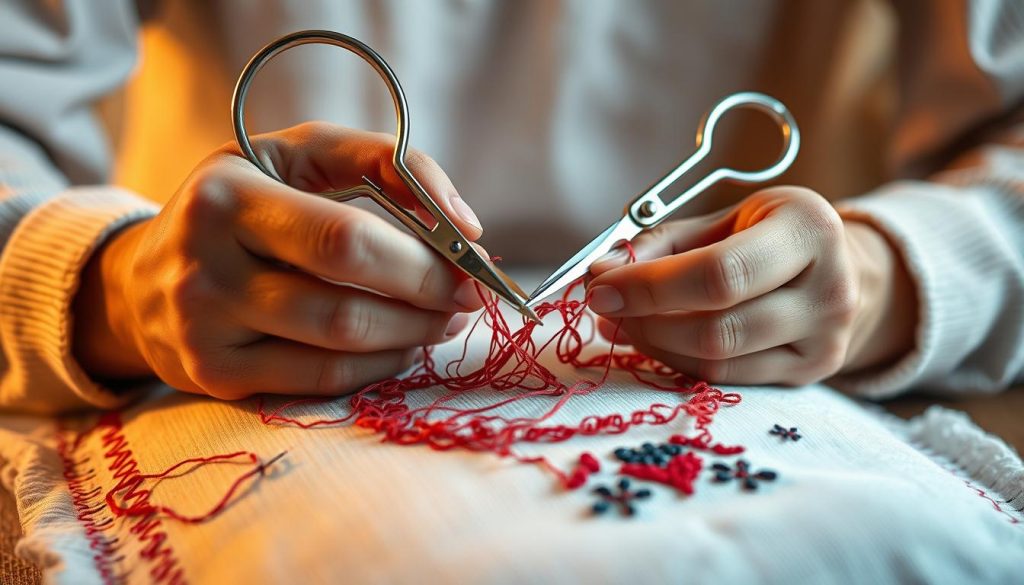
Small loops and tight knots can be annoying. Catch them early to save time and thread. Run a finger over the fabric back to spot loops before they tighten.
When you see a forming loop, insert the needle into the loop and pull upward. Or give the needle a gentle swing to loosen it. This trick often prevents a messy nest and reduces the need for cross stitch repair later.
Loose loops can be teased free in seconds. But waiting until they become knots can pull on nearby stitches. Practice this early-detection habit to avoid common cross stitch mistakes and keep your work tidy.
Large nests need careful decisions. If the tangle covers only a few inches and the threads show no fuzzy wear, try untangling with a pin, a fine needle, or tweezers. Work slowly while keeping tension minimal so you don’t tighten knots further. This is often the best path for small jams and for situations where cross stitch repair is possible without cutting.
If the nest is pulled tight, spans many threads, or the floss is abraded, cutting and restarting is usually safer. Forcing worn or frayed thread can break fibers and harm the fabric or surrounding stitches. Cut the damaged section out, secure the remaining ends, and start a fresh length to avoid further harm.
Repairing thread wear needs gentle tools and good technique. Swap to needles with larger eyes to reduce needle-eye friction. Consider using a conditioner such as Thread Heaven when wear becomes noticeable. If DMC floss shows fuzz, breakage, or thinning, stop and replace that section. Trying to stitch with compromised DMC floss repair only creates lumps and more repair work later.
When you add new thread, weave the tail under several existing stitches to anchor it. Avoid bulky knots that sit on the surface. This method secures starts and ends cleanly and keeps the front smooth. Good joining techniques help you recover from cross stitch mistakes without visible patches.
Many fixes are avoidable with steady handling and attention. Follow preparation steps and habits discussed earlier to prevent tangles. Use these troubleshooting moves when trouble appears and you’ll limit damage, reduce the need for cross stitch repair, and learn to fix tangled floss quickly and confidently.
Conclusion
Most tangles come from simple causes. These include storage memory in the skein, cutting lengths that are too long, and unified strand twist. Also, rough handling plays a part. You can fix these issues with clear steps.
Start by releasing DMC floss from the numbered tail. Then, test a 20-inch length and shorten it if needed. Separate and rejoin strands by matching opposite ends. You might also consider a gentle sponge water treatment or a light conditioner.
These actions, along with good cross stitch tools and tidy storage, can reduce knots. This makes your work faster and more enjoyable.
Adopt habits that reduce twist in the floss. Let it hang occasionally, stroke it before threading the needle, and pause to untwist as you stitch. Use bobbins, floss cards, and proper hoops or frames for larger patterns.
These cross stitch techniques are helpful for both small beginner projects and big ones. They protect the thread from wear, making your finished work look cleaner.
Try the practical steps on your next project: find the tail, test 20 inches, separate strands, and apply a light water or conditioner treatment when needed. Pair these habits with a modest set of cross stitch tools for smoother stitching. Slow, mindful stitching and good organization lead to better results and more calm in cross stitch therapy and embroidery inspiration.
 English