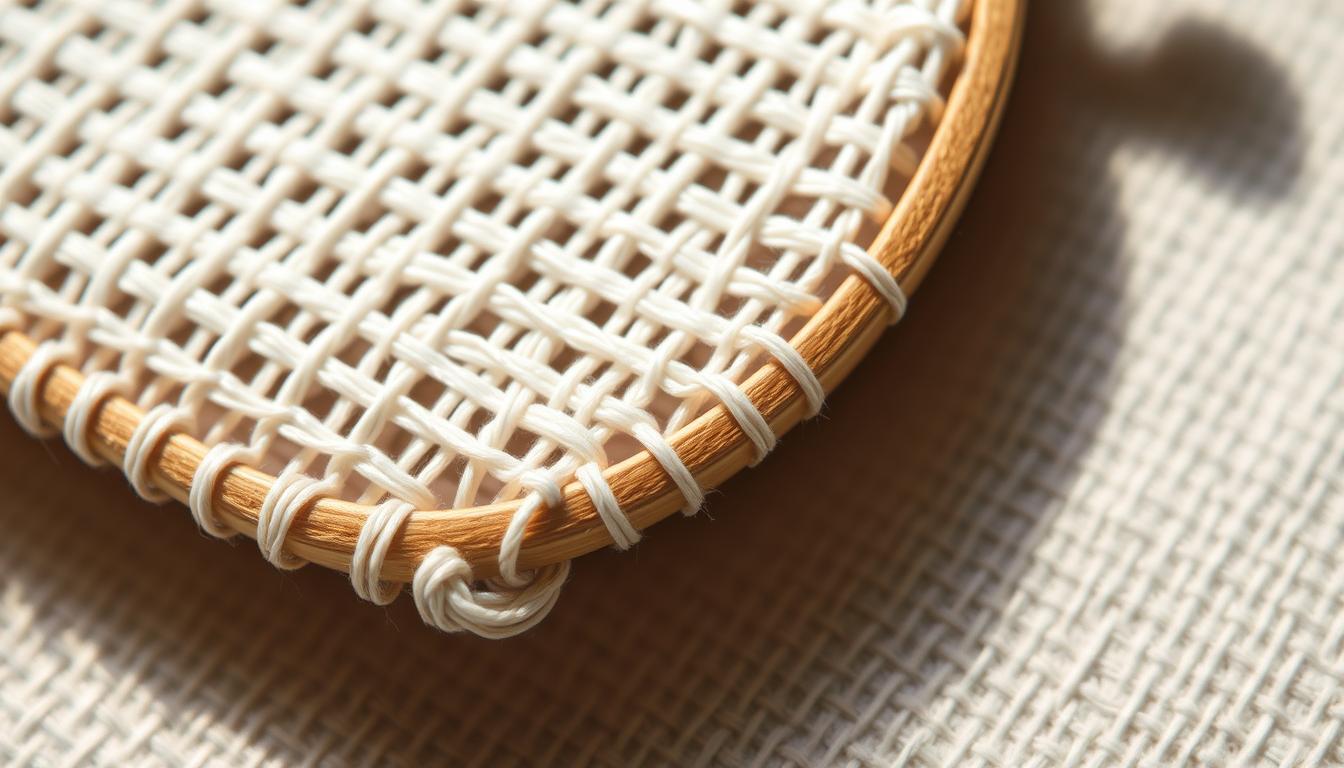
Getting better at CROSS STITCH means treating tension as a skill, not a problem. Think of it like strength training’s “time under tension.” A steady pace for each stitch makes your fabric look better and hurts your hands less. This simple change is a game-changer.
It’s time to stop ignoring tension and start managing it. Experts say two or three big tension problems can make or break your work. These are hoop tightness, how hard you pull each thread, and how the fabric feels under your hand. Knowing these issues helps you practice where it counts.
The Mind + Matter + Moves framework is your guide. Mind is about your habits and patience. Matter is about your materials like Aida, linen, DMC floss, and needles. Moves is about your stitch technique and pace. Use all three, and your stitching will get better fast, making fewer mistakes and looking better.
Key Takeaways
- Use controlled stitch tempo—time under tension—to improve consistency and reduce strain.
- Pinpoint two to three tension issues you face most often and work them deliberately.
- Apply the Mind + Matter + Moves framework to organize your practice and tools.
- Small adjustments to hoop tension and thread pull make major visual differences.
- These cross stitch tips work for cross stitch for beginners and experienced stitchers alike.
Why Tension Matters in Needlework: Benefits and Common Problems
Good tension is key to making a project special. It keeps fabric and thread steady, making stitches even and colors true. This makes finishing easier and avoids mistakes that add extra work.
What perfect tension does for your finished piece
Perfect tension makes your work look sharp and even. Your stitches are straight, and patterns line up perfectly. This makes your work last longer and look better.
How inconsistent tension ruins cross stitch patterns and embroidery projects
Bad tension messes up your design. It can make fabric pucker and stitches look uneven. This makes your work look amateur and makes fixing it a big job.
Common cross stitch mistakes related to tension and how they manifest
Puckering means you pulled too tight or used a small hoop. Rushing or changing grip mid-row can make stitches loose. Uneven lines often come from not starting or ending stitches right.
| Problem | Visible Sign | Quick Fix |
|---|---|---|
| Puckering | Fabric gathers around dense motifs | Loosen hoop tension, use a larger frame, or block after completing the area |
| Loose Stitches | Gaps and uneven coverage | Adopt a slower stitch rhythm and check needle size for your thread |
| Raised or Sunken Stitches | Pattern proportions change, texture imbalance | Match thread count to fabric and practice consistent stitch direction |
| Uneven Backstitch | Wobbly outlines and misaligned details | Secure thread ends properly and maintain equal pull on each pass |
| Grid Misalignment | Pattern elements shift off-count | Recount often, use temporary gridding, plan color changes |
Use these tips to fix tension problems. Focus, the right materials, and steady technique are key. This way, you’ll make progress and keep your projects looking great.
Understanding the Mechanics of Tension: Mind, Matter, and Moves
Tension in needlework comes from three main sources: your mindset, the materials you use, and your stitching motions. By understanding these elements, you can find out what causes uneven tension. This knowledge helps you improve your control and discover needlework secrets.
Mind refers to your thoughts and feelings while stitching. Rushing to finish can lead to overpulling the thread. Fear of redoing a section might cause you to pull stitches too tight. Identify the emotion or habit behind your uneven tension and work on changing it.
Time under tension (TUT) in cross stitch techniques means treating each stitch as three phases: pull, settle, adjust. Slow down these phases to build a better connection between your mind and muscles. Short, focused sessions help you practice control without getting tired.
Matter is the physical aspect: the fabric, thread, and needle you choose. Different fabrics like Aida, evenweave, and linen react differently to tension. Thread types, such as DMC floss, work smoothly with sharp needles, while metallics or silk need gentler tension.
Choosing the right needle size and thread thickness is key to avoid bunching or loose loops. Compatible materials reduce the need for hand compensation, lowering the risk of permanent distortions.
Moves are the actions that turn your intention into stitches. Your grip, stitch direction, tempo, and posture affect the final tension. Holding the needle too close to the eye tightens your wrist. Slumping shoulders can tire your hands and cause uneven pulling.
Adopt a steady tempo that emphasizes the TUT phases. Keep your stitches consistent by using the same entry and exit points and keeping your wrist relaxed. Small posture adjustments, like sitting with both feet flat and your fabric at eye level, reduce hand strain and uneven pulling.
| Area | Common Issue | Practical Fix |
|---|---|---|
| Mind | Rushing causes overpull and tight stitches | Use short timed sessions and count the pull-settle-adjust phases |
| Matter | Wrong fabric or thread creates puckering or loose loops | Match cross stitch fabric count to needle and use DMC floss or suitable thread for smooth glide |
| Moves | Tension varies with grip, tempo, and posture | Standardize stitch direction, relax grip, and adopt steady tempo for consistent pull |
| Combined | Fatigue and habit compound tension errors | Rotate short practice drills focusing on one tension at a time and track improvements |
Essential Cross Stitch Tools That Control Tension
Getting the right tools is key for steady tension. Choose items that let you stitch slowly and deliberately. This ensures each cross gets the same amount of tension.
Small changes in your setup can solve common problems. These include frame slippage and thread tangles.
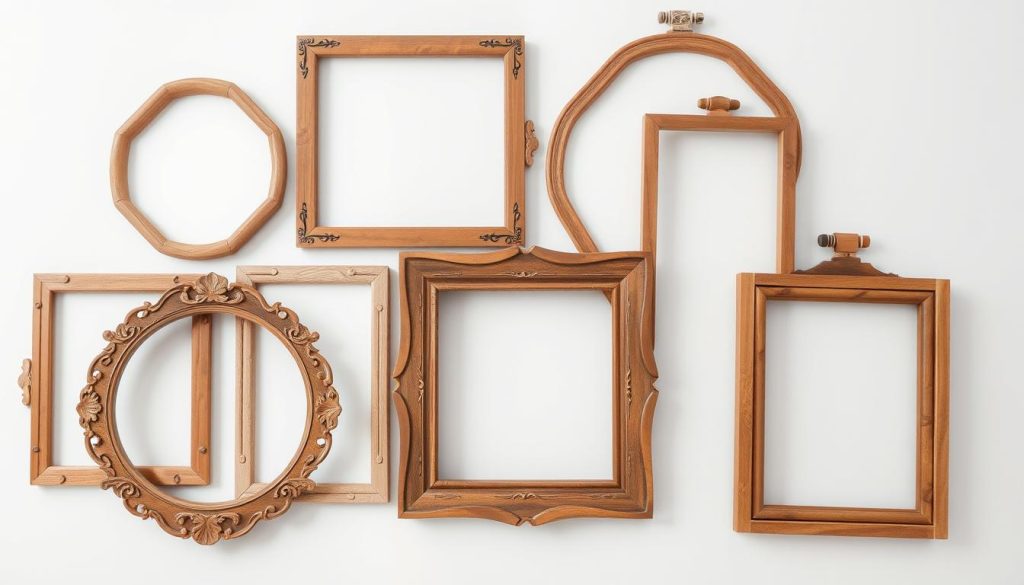
Hoops, frames, and Q-snap systems: choosing the right cross stitch frames for stability
For small projects, wooden or plastic hoops work well if tightened evenly. For bigger pieces, Q-snap systems or stretcher bars keep fabric flat. This ensures your pull stays uniform.
Choose a frame that fits your project size and fabric type. Q-snap frames hold edges without pinching, reducing distortion. Stretcher bars spread tension evenly across the canvas, reducing the need for adjustments during long sessions.
Needles, DMC floss, and thread management: tools that reduce snags and uneven pull
Use needle sizes that match your fabric count to avoid forcing stitches. DMC floss is a reliable choice. Separate your strands and keep the strand count consistent to prevent variable pull.
If you use metallics or silk, try a larger-eyed needle or a gripper needle to cut friction. Sharp point needles glide through tight weaves with less drag. This helps keep each stitch even.
Accessories for cross stitch organization and consistent tension (clips, magnets, bobbins)
Organize your threads on bobbins and a floss box to prevent knots and sudden tugs. Magnetic clips, binder clips, or elastic bands can anchor fabric edges on frames. This prevents areas from shifting while you stitch.
Needle minders and small sharp scissors speed your workflow. Moving less between tasks helps you avoid tightening stitches out of haste. Good cross stitch organization reduces interruptions and supports steady tempo.
| Problem | High-impact tool | Why it helps |
|---|---|---|
| Frame slippage on large pieces | Q-snap frame or stretcher bars | Distributes tension evenly and prevents local puckering |
| Uneven pull from thread tangles | Bobbins, floss box, and thread conditioner | Keeps strands separated and reduces friction during pull |
| Stitch drag with specialty threads | Gripper needle or larger eye needles | Reduces snags and smooths the thread path through fabric |
| Local fabric shift at edges | Magnetic clips or elastic edge anchors | Secures margins so the stitching area stays stable |
| Rushed stitching and tension spikes | Needle minder and quality small scissors | Speeds small tasks so you keep a calm, consistent tempo |
Choosing the Right Cross Stitch Fabric to Maintain Even Tension
Choosing the right cross stitch fabric is key to a smooth stitching experience. The fabric’s resistance helps you maintain even tension. This makes your stitches consistent and avoids surprises in long projects.
Counted cross stitch fabrics vary, affecting your stitching. Aida is great for beginners because it’s easy to see and stable. For more detail, evenweave and linen are better, but they require more control.
The fabric count impacts your thread choice. On finer fabrics, too many strands can make stitches too thick. On coarser Aida, too few strands can make patterns look sparse.
It’s important to match your thread to the fabric count. This ensures your stitches are even and flat. Always test a small swatch before starting a big project.
Prep your fabric to avoid distortion. Wash and iron it before stitching to prevent shrinkage, especially with linen. Stretching the fabric before starting helps keep it even and prevents bias.
Be proactive about tension issues. If fabric bias or shrinkage is a problem, choose a different fabric or plan how to stabilize it. This keeps your design looking as intended throughout.
Technique Fixes: Stitching Methods Professionals Use
Start with a steady routine. Use the same hoop tension and sit in a comfortable chair. Hold your hands in the same way each time.
Repeating the same actions each session helps. Tempo is key; control how long your needle is in and out. This ensures each stitch has the same tension.
Hold the hoop so the fabric is tight but not too tight. Let your nondominant hand hold the extra fabric. This keeps your work flat and prevents puckering.
How to hold your fabric and hoop for steady tension
Use a ritual for tightening the hoop. Place the inner hoop on a flat surface and center the fabric. Then, press the outer hoop down and pull the edges evenly.
Rest your wrist on the frame to steady your needle. This reduces accidental extra pulls.
Consistent stitch direction and backstitching techniques to balance tension across motifs
Follow a consistent stitch path. Make all lower-left to upper-right crosses first, then complete the return half. This evens out thread lay and creates uniform texture.
Save backstitching for filled areas. This avoids tugging on solid blocks. When backstitching, keep tension light. Treat outlining as a gentle frame rather than a structural pull.
Use the same thread length and anchor method for each outline. This produces even, clean edges.
Using cross stitch gridding and pattern planning to prevent uneven pulling
Grid the fabric in manageable sections before stitching. Work alternating zones instead of filling one dense block at once. This distributes pull and reduces distortion around color changes.
Plan color shifts so dense areas are interleaved with lighter ones. Break large solid fills into smaller passes. Stitch neighboring colors in rotation. This keeps cloth balanced and avoids heavy local tension.
| Problem | Adjustable Habit | Practical Fix |
|---|---|---|
| Puckering near dense motifs | Filling one block at a time | Alternate adjacent blocks using cross stitch gridding; stitch in passes |
| Uneven outlines | Backstitching too early or tightly | Finish filling first; use consistent backstitching techniques with light tension |
| Variable stitch size across project | Changing hoop tension and hand position | Set a ritual for hoop tightening and hold excess fabric with nondominant hand |
| Loose areas after long breaks | Inconsistent tempo and needle entry times | Adopt a steady tempo; control needle entry/exit timing for uniform stitch pull |
Cross Stitch Patterns and Design Choices That Reduce Tension Issues
Good pattern planning keeps your fabric flat and your work even. Start by mapping heavy areas so you do not stitch one dense block all at once. Use pacing based on time under tension: stitch a mix of dense and open sections to give the fabric time to relax between pulls.
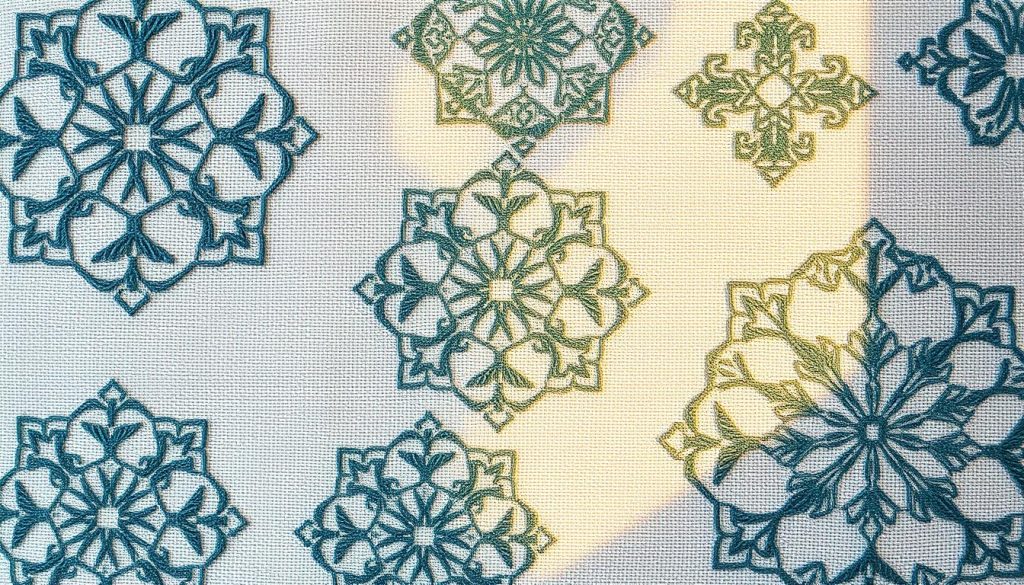
Pattern layout strategies to avoid concentrated pulling in dense areas
Break large fills into sub-sections and stitch them in an alternating sequence. This prevents local puckering when many stitches sit next to each other. Grid the design into manageable blocks and rotate between them so tension balances across the whole piece.
Spacing, color changes, and fractional stitches: planning for balanced tension
Keep open spacing between motifs to reduce stress on delicate fabric. Plan color changes to minimize long floats and frequent thread switching. Fractional stitches demand precise pull; use fewer strands or a finer fabric when a design relies on many fractional stitches.
How to adapt cross stitch ideas and projects to fabric and floss limitations
Adjust strand count and stitch size if a fabric feels fragile or a specialty floss is bulky. Convert heavy fills into half-stitches or cross-hatching to preserve the look while easing tension. When using metallics or silk, stitch in short sections and anchor often to avoid uneven pulls.
Identify two or three critical tension zones in your design—dense fills, blended color areas, and specialty threads—and plan sequencing to control them. With these cross stitch ideas, your cross stitch projects will sit flatter and look more uniform without changing the design’s intent.
Practical Embroidery Hacks for Troubleshooting Tension
When tension issues arise, you need quick fixes to save time and your work. Start by checking the fabric tension in the hoop. Make sure the thread thickness matches the fabric count. Also, see if the uneven pulls are isolated or widespread.
These steps help you decide if a quick fix will work or if you need to re-stitch a section.
Quick fixes for puckering, loose stitches, and distorted motifs
Loosen the hoop and re-tension the fabric to fix local puckers. If puckering doesn’t go away, remove a few stitches and re-stitch with care. For loose stitches, trim the tails and weave them flat across the back before tightening the next stitches.
When motifs look skewed, check the stitch direction around them. Gently nudge the thread alignment with the needle tip.
When to re-stitch versus when to block or press your work
Use the TUT (time-under-tension) rule to judge your effort. If tension errors come from rushing, slow down and correct future rows. Re-stitch when a motif is visibly distorted, color placement is wrong, or puckering survives re-tensioning.
Choose blocking or low-heat steam pressing for general smoothing and minor puckers. Always test on a scrap first. Avoid wet-blocking metallic threads or delicate silks. For DMC stranded cotton, a damp cloth and low heat usually work well.
Embroidery hacks from pros: anchoring, starting/ending threads, and smoothing techniques
Use loop starts for even anchors on long runs and waste knots when the loop method won’t work. Weave in ends with even, flat passes along existing stitches to prevent bumps. Split stranded floss when a lighter pull is needed and use a thread conditioner like Thread Heaven or beeswax on specialty threads to cut friction and even tension.
| Issue | Quick Fix | When to Re-stitch | Pro Hack |
|---|---|---|---|
| Puckering | Loosen hoop, re-tension fabric, gently re-stitch affected area | Puckering persists after re-tensioning and blocking | Damp-block with pressing cloth if fiber allows |
| Loose stitches | Weave in ends and snug adjacent stitches | Loose runs that create visible gaps or pattern drift | Use loop start or secure waste knots for cleaner anchors |
| Distorted motif | Realign threads with needle and re-stitch small sections | Shape or color placement is incorrect | Grid pattern before stitching to prevent misplacement |
| Specialty thread pull | Split strands, use thread conditioner, reduce stitch length | Thread frays or damage from repeated tension fixes | Test specialty threads on scrap before large areas |
These starter cross stitch hacks help you avoid common mistakes while building confidence. Treat tension work as part of cross stitch therapy. Steady, small adjustments train your hands and calm frustration. With practice, you’ll spot make-or-break tension issues faster and choose the right repair path for each project.
Developing Consistency: Exercises and Routines for Beginner Cross Stitch
Start small and steady. Practice like a short workout: warm up, drill specific moves, then cool down. This helps build the fine motor control needed for beginner cross stitch. Use timed reps to improve how you enter the fabric, pull the thread, and release tension.
Choose simple samplers on Aida cloth with DMC floss and one needle size. Work alternating filled blocks and open areas. This lets you feel how fabric count and strand thickness change pull. Record stitch counts, strand lengths used, and seconds per stitch to track progress over weeks.
Adopt a steady tempo and a time-under-tension mindset. Count one-two per stitch or use a slow metronome to hold each pull for a set beat. This habit helps you control the two or three key tensions that affect results most. Short daily sessions of 15–30 minutes add up quickly.
Practice projects should be bite-sized. Try a 10×10 stitch sampler, a small motif, and a narrow border. Repeat these drills until pulls feel uniform. These controlled exercises work as cross stitch therapy, calming your mind while sharpening your touch.
Use a simple checklist for each session: fabric type, floss brand, needle size, tempo target, and a note on tension issues. Habit formation works when you pair fixed cues—same time of day, same setup—with a clear, short routine. That makes steady improvement feel natural.
Track progress with a compact table below. Log stitch type, tempo, and tension notes. Over time you will see which cross stitch tips moved the needle on your control and which habits to keep repeating.
| Practice Drill | Duration | Materials | Tempo (sec/stitch) | Goal |
|---|---|---|---|---|
| 10×10 even block | 15 min | Aida 14, DMC 2 strands, size 24 needle | 2–3 | Even tension across filled area |
| Open grid sampler | 20 min | Aida 14, DMC 1-2 strands, size 24 needle | 3–4 | Consistent pull on single stitches |
| Mixed fill and border | 25 min | Evenweave, DMC standard palette, size 24 needle | 2–4 | Balance between dense and sparse areas |
| Tempo control drill | 10 min | Aida 16, DMC 2 strands, size 26 needle | 3 (metronome) | Muscle memory for entry and release |
| Reflection & log | 5 min | Notebook or app | — | Record tension notes and next session focus |
Advanced Tips from Professionals: Mastering Complex Tension Scenarios
When your project has different fabrics, special threads, or takes a long time, you need a solid plan. Start with small test swatches to check the thread counts, needle size, and stitch tension. Practice focused time-under-tension on delicate areas to keep stitches even and reduce wear on special threads.
Find the top tension risks in your design—like mixed counts, dense motifs, or fabric stretch over time. Making design compromises can help avoid trouble. Stagger dense sections, add spacer stitches, or stitch stabilizer strips behind high-traffic areas to keep the whole piece flat and readable.
For metallic threads and silk, use shorter thread lengths and gentler needles like crewel or sharps. Apply a softening product such as Thread Heaven to reduce friction and kinking. Work slowly with metallic threads and rotate strands if you see uneven wear.
When working with challenging canvases, choose frames that permit re-tensioning over time. Q-snaps and stretcher bars let you tighten fabric as edges loosen. Check tension every few sessions and document thread lots to maintain consistent color and texture across months.
Long projects can develop tension drift. To restore balance, re-stretch where possible and use careful blocking. If distortion affects motifs, selectively unpick and re-stitch those areas rather than overworking the surrounding fabric. Prioritize fixes where design clarity matters most.
Mixing media or multi-count areas calls for clear cross stitch techniques. Test how different threads sit on each count and adjust strand number to match coverage. Keep a simple log of needle sizes, thread lengths, and stitch tempo so you can reproduce results throughout the piece.
Use a practical routine: practice targeted exercises for problem zones, plan stitch order to avoid concentrated pulling, and schedule regular tension checks. These advanced cross stitch tips will help you handle specialty threads, complex layouts, and extended timelines with control and confidence.
Conclusion
Mastering CROSS STITCH tension is all about planning. First, shape your mindset. Then, choose materials that fit your goals. Practice moves carefully.
Use the Mind + Matter + Moves framework to find habits that throw off your work. Pick the right fabric, needle, and tools for even stitches. Techniques like consistent stitch direction and controlled pull help build muscle memory.
Tension isn’t the problem. It’s how you manage it that matters. Small changes, like using a Q-snap frame or adjusting hoop pressure, can make a big difference. Add simple embroidery hacks for starting and ending threads, and you’ll avoid puckers and loose stitches.
Practice targeted exercises and keep a steady tempo to get better. Use cross stitch tips for organizing your work. Keep tools handy to stitch smoothly. With these techniques and hacks, you’ll go from beginner to confident stitcher.
 English