CROSS STITCH is more than just a craft. It’s a quiet path to mindfulness. When you start with a needle and DMC floss, the simple act of stitching calms your mind. This focus helps reduce stress and scattered thoughts.
Beginner cross stitch kits are all you need to start. They include fabric, thread, a needle, and a simple pattern. You don’t need fancy tools or a lot of time. Short sessions of 15–20 minutes can fit into a busy schedule.
These sessions help build a habit that supports better sleep and concentration. They also help you feel calmer.
The value of cross stitch for beginners is in its rhythm and repetition. Each stitch is predictable and slow. This helps you enter a flow state where problem-solving fades and presence takes over.
Over time, this hands-on practice strengthens your fine motor skills. It can feel like a restorative ritual rather than a task with a deadline.
Key Takeaways
- Cross stitch supports mindfulness by giving your attention a simple, steady task.
- A basic beginner cross stitch kit is enough to begin cross stitch therapy.
- Short, regular sessions (15–20 minutes) offer mental and emotional benefits.
- Rhythmic stitching helps you enter flow and reduces stress.
- Cross stitch is portable and low-tech, making it an accessible stress relief tool.
How cross stitch promotes mindfulness and reduces stress
When you pick up a needle, simple actions guide attention. Counting squares, threading a strand of DMC floss, and following a chart invite steady focus. These tasks use the same mental muscles as basic meditation, so your mind shifts into the present moment and leaves daily worries behind.
Mindfulness in motion: focus, counting, and present-moment awareness
Counted cross stitch asks you to mark one X at a time. Each small decision—where to place a stitch, which color to use—keeps your attention anchored to the fabric. This narrow attention window lowers mental clutter and makes it easier to return to calm when distractions occur.
Repetition as moving meditation: how rhythmic stitching calms the nervous system
Repeating the needle’s motion can mirror the rhythm of breathing. Repetition as meditation helps slow heart rate and steady breathing by creating a predictable, gentle pattern you can follow. The steady cadence of stitches pulls the nervous system toward relaxation and sustained focus.
Neurochemical benefits: reduced cortisol and increased serotonin and dopamine
Clinical observations from healthcare settings show needlework can lower stress hormones like cortisol. At the same time, completing small goals in a project boosts serotonin and dopamine, which improves mood and reduces anxiety. These neurochemical shifts make mindful stitching an effective strategy for stress relief and better sleep.
Use cross stitch techniques that favor rhythm over speed. Simple patterns and consistent stitch style support flow. Try short sessions of focused stitching each day and watch how regular practice strengthens your ability to settle into the present.
Why CROSS STITCH is uniquely suited to mindful practice
The feel of needle, the weave of fabric, and the sheen of DMC floss bring you into the moment. When you lift a needle and pass a thread, your attention settles on small, repeatable actions. This tactile engagement calms racing thoughts and roots you in the present.
Tactile engagement: fabric, DMC floss, and the grounding effect of hands-on work
Working with cloth and thread gives your hands steady tasks to focus on. The texture of fabric and the smooth strands of DMC floss provide sensory cues that steady breath and attention. You notice color, tension, and tiny details, which shifts your mind away from worry and toward simple, reliable sensations.
Structured creativity: patterns, counted cross stitch, and a predictable process that restores a sense of control
Counted cross stitch and clear patterns give you a roadmap. You follow a grid and place each stitch with intent. That predictable process makes creativity less chaotic and more manageable. You feel a measured sense of accomplishment as motifs grow and mistakes stay easy to correct.
Choose cross stitch ideas that match your mood. Start with small designs to build confidence, then try more complex patterns when you want a longer, absorbing session.
Portability and low-tech appeal: a screen-free break you can carry anywhere
Small kits and minimal supplies make stitching easy to take on trains, to coffee shops, or into a waiting room. Cross stitch offers a digital detox you can tuck in a bag. When you open a compact project, you trade a glowing screen for thread, fabric, and a calm pace.
| Mindful Benefit | What You Use | How it Helps |
|---|---|---|
| Grounding | Cross stitch fabric, DMC floss | Sensory feedback keeps attention anchored to the present |
| Order and Focus | Counted cross stitch, cross stitch patterns | Clear steps reduce overwhelm and build steady progress |
| Practical Portability | Small kits, needle, hoop | Screen-free activity you can carry anywhere for short resets |
| Creative Flexibility | Varied cross stitch ideas and color choices | Adaptable challenge level supports calm flow and sustained interest |
Getting started with mindful cross stitch for beginners
Mindful stitching starts with simple choices. Find a quiet spot, gather your supplies, and see your project as a calming ritual. You don’t need much to feel the peace of cross stitch.
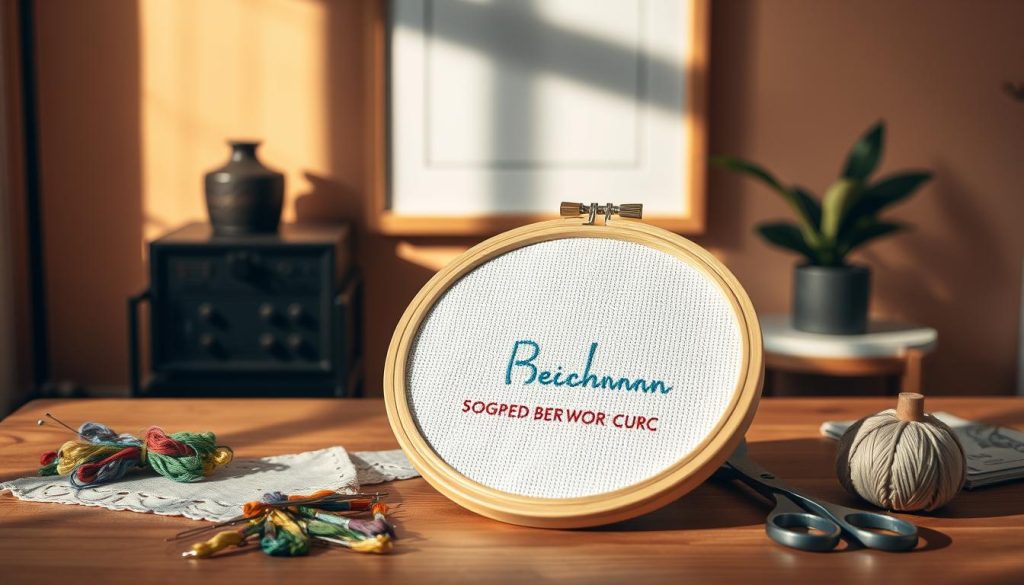
Choosing a beginner cross stitch kit: fabric, needles, hoop or frame, and DMC floss
Look for a starter kit that lists what’s inside. Good kits from DMC or Dimensions have Aida fabric, floss, a needle, and a pattern. These basics help you start without spending a lot.
Use 14-count Aida for easier counting and clear holes. Choose a blunt tapestry needle, size 24 or 26, to avoid snags. A hoop or small frame helps keep your stitches even.
Simple cross stitch patterns and cross stitch ideas that encourage focus
Start with small, calming projects that finish quickly. Try floral motifs, single-color icons, and simple samplers. They teach counting and rhythm while showing steady progress.
Switch between detailed and simple patterns to keep things interesting. Mixing motifs helps you practice stitches and keeps your practice peaceful.
Setting up a calm stitching space and short routines to build habit
Make a dedicated space without screens or clutter. Use comfy seating, a table lamp, and a small pouch for your supplies. Keep a tray or box nearby for your hoop, scissors, and pattern.
Try stitching for 15–20 minutes a day. Start with deep breaths and check your tension. See each stitch as a breath and each row as a heartbeat to build a habit.
| Item | Why it helps | Beginner recommendation |
|---|---|---|
| Cross stitch kit | Contains essentials so you can start right away | Choose a kit labeled “beginner” from DMC or Dimensions |
| Aida fabric | Clear grid makes counting easier | 14-count Aida in a light color |
| Needles | Blunt tips reduce splits and keep stitches smooth | Tapestry needle size 24–26 |
| Hoop or frame | Keeps fabric tension even for consistent stitches | 6–8 inch wooden or plastic hoop |
| Floss storage | Reduces tangles and saves time | Small pouch or bobbins labeled with DMC numbers |
| Project choice | Matches your mood and builds confidence | Mix of simple cross stitch patterns and one small sampler |
Cross stitch techniques that enhance meditative flow
Start with a calm approach to your craft. Small, steady choices in stitch method and planning keep you centered. Use simple routines that let your hands move without strain and your mind settle into steady rhythm.
Consistent stitch technique
Keep your motions minimal. An economy of motion favors short, efficient hand movements that preserve pace and reduce tension. When you stabilize your form, the repetitive action becomes meditative. Practicing consistent cross stitch techniques builds muscle memory. That memory supports a calm, predictable flow so you focus on the present rather than on correcting errors.
Backstitching techniques and small details
Work small additions like outlines or French knots in short segments. Learning backstitching techniques gradually adds interest without breaking your rhythm. These details invite close attention and steady breathing while sharpening concentration. Treat each outlining pass as a mini-focus exercise that strengthens your skill set and deepens mindful attention.
Gridding and counted cross stitch strategies
Use cross stitch gridding to mark columns and rows before you begin. Water-soluble pens or basting threads make rechecking simple. Counted cross stitch benefits from clear, visible guides that reduce mistakes. Fewer corrections keep you in flow and stop interruptions that raise stress. When your pattern and grid work together, you can stay present and enjoy longer stretches of calm stitching.
- Plan short blocks of time and stick to them.
- Keep tension even and hands relaxed.
- Use light for detail work to prevent eye strain.
Practical cross stitch tips to keep your practice relaxing
Start with simple systems to avoid searching and fuss. Have your tools and threads ready for a smooth session. Small routines and smart storage keep your desk tidy and your mood calm.
Embroidery hacks for organization: floss sorting, bobbins, and storage
Sort floss by color and label bobbins with DMC numbers. Use clear plastic boxes or zip pouches for small kits. A binder with plastic sleeves keeps charts and floss handy.
Keep essentials in a small caddy for easy access. This saves time and lets you focus on stitching.
Cross stitch tools that minimize friction: frames, magnifiers, and ergonomic needles
Choose frames that hold even tension to avoid puckering. A spring-frame or scroll frame is comfortable for long sits. Use a small LED magnifier for high-count fabric.
Ergonomic needles and quality DMC floss make stitching smooth. Keep a needle minder, threader, and scissors handy for quick fixes.
Avoiding common cross stitch mistakes that disrupt flow
Miscounting and skipping grid lines can break your flow. Grid your fabric before starting. Highlight areas as you finish them or use a digital app to track progress.
Check your work often to catch small mistakes. Use a blunt tapestry needle and sharp scissors for neat fixes. Quick corrections help you stay calm and focused.
Design choices to support a meditative stitching experience
Choose designs that make stitching calm and steady. Use quiet colors and simple shapes to avoid too much stimulation. Your choices greatly affect how relaxing the experience is.
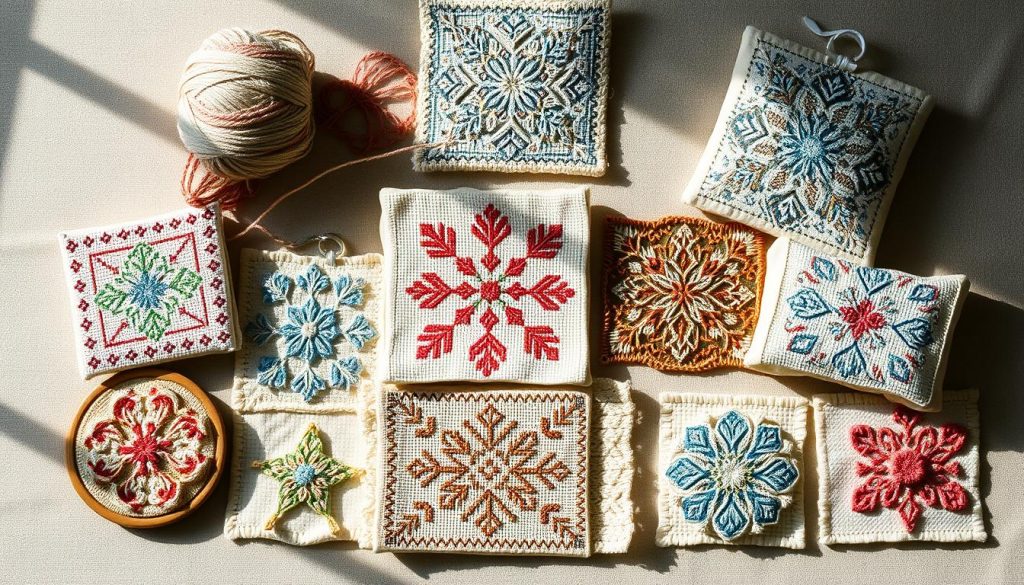
Selecting calming palettes and motifs
Opt for muted blues, soft greens, and warm neutrals to reduce visual stress. Small botanicals, gentle waves, or simple shapes offer a calm focus.
Look for “minimal” or “scenic” cross stitch patterns for peaceful stitching. These designs help you stay focused and avoid feeling overwhelmed.
Project size and pacing choices
Choose project sizes that match your desired mood. Small pieces offer quick satisfaction and calm. Larger samplers require more concentration.
Break big designs into nightly goals to manage pacing. This method keeps you engaged without feeling rushed. Mix quick motifs with longer ones to stay motivated.
Using intention and affirmation stitching
Stitch phrases or symbols that reflect your intentions. Each stitch becomes a focused act.
Affirmation stitching combines manual work with a mindful goal. It boosts your inspiration and makes stitching a soothing ritual.
- Color tip: Test palette swatches before committing.
- Size tip: Keep one project under 50 x 50 stitches for fast satisfaction.
- Intention tip: Choose a single short phrase for clear affirmation stitching.
Social and emotional benefits of mindful stitching
Stitching can be a quiet, private habit or a lively shared pursuit. Joining a local stitch group or online forum connects you to a cross stitch community. This community lessens isolation and sparks friendly exchange.
Community and connection
Stitch groups and social platforms connect you with like-minded people. You share cross stitch ideas, ask for help, and celebrate small wins. These interactions build trust and give you a supportive space to show progress.
Sense of achievement
Completing a project shows immediate, visible results of your effort. Finished cross stitch projects remind you of your focus and skill. This tangible result boosts your mood, increases self-esteem, and reinforces calm routines.
Using stitch-alongs and peer support
Stitch-alongs offer structure and gentle accountability. Working on the same pattern with others, you share tips, troubleshoot mistakes, and celebrate milestones. Regular group sessions or social media threads help you stay on track with your cross stitch therapy.
| Benefit | How it helps | Examples |
|---|---|---|
| Connection | Reduces loneliness and fosters camaraderie | Local guild meetings, Facebook groups, Ravelry forums |
| Motivation | Shared goals increase follow-through | Monthly stitch-alongs, Instagram challenges |
| Skill growth | Peer feedback speeds learning and refines technique | Tutorial exchanges, live demos in groups |
| Mood boost | Finished pieces provide pride and calm | Completed cross stitch projects displayed at home |
| Creative spark | Exposure to diverse cross stitch ideas fuels new work | Pattern swaps, collaborative sampler projects |
Advanced mind-body benefits: cognitive and physical gains from regular stitching
Stitching more than just a hobby. It sharpens your focus, steadies your hands, and offers a mental workout. This fits easily into your daily routine.
Improved focus, concentration, and potential benefits for ADHD
Stitching helps you stay focused. It channels restless energy into a steady task. ADHD and cross stitch pair well, as stitching breaks tasks into manageable steps.
Fine motor skills and hand-eye coordination preserved through needlework
Needlework keeps small muscles active. It strengthens fine motor skills and improves hand-eye coordination. Working on details like French knots and color changes keeps your dexterity sharp.
Long-term mental health benefits and possible protection against cognitive decline
Stitching mixes logic and creativity, stimulating the brain. This supports mental resilience over time. Experts say creative practices like stitching can prevent cognitive decline by keeping skills sharp.
- Cross stitch benefits include attention training and tactile engagement.
- ADHD and cross stitch can work together to create structure and calm.
- Fine motor skills get a gentle workout with each needle movement.
- Hand-eye coordination improves as you match thread, fabric, and pattern.
- Cognitive decline prevention gains come from long-term, varied mental tasks.
Integrating cross stitch into a mindfulness routine
Make stitching a small, daily habit you can keep. A short cross stitch routine of 15–20 minutes helps lower stress and builds momentum without pressure. Consistency brings steady gains in mood, sleep, and focus.
Begin with a brief centering practice before you touch the needle. Use simple breathing techniques or a one-minute guided pause to settle your mind. Treat each stitch as a breath to anchor attention and enter flow faster.
Rotate projects to match how you feel. Pick calming, simple patterns when you want rest. Choose counted cross stitch or more detailed charts when you want challenge and skill growth. Keeping two or three works-in-progress keeps you engaged without guilt.
Use these cross stitch tips to shape your practice: set a timer for short daily rituals, sit in a consistent spot, and prepare your tools for a friction-free session. Small habits add up into a reliable ritual you look forward to.
Below is a compact guide to help you plan weekly sessions based on mood, time, and goal. Adjust the mix to fit your life and notice how the routine supports presence and well-being.
| Goal | Session Length | Pattern Type | Mindful Focus |
|---|---|---|---|
| Quick calm | 10–15 minutes | Simple motif | Breathing techniques and steady rhythm |
| Daily consistency | 15–20 minutes | Small counted cross stitch piece | Short daily rituals and habit building |
| Skill building | 30–60 minutes | Complex pattern | Focused technique and deliberate pacing |
| Relaxed flow | Variable | Rotate simple and detailed | Match mood, reduce pressure |
Conclusion
Cross stitch is a simple way to bring mindfulness into your life. The act of stitching creates a calming rhythm. This helps lower stress and improves focus.
By stitching a little each day, you can see big changes. Your mood, sleep, and concentration will improve. This makes cross stitch therapy a great choice for many.
Studies show that cross stitch can change your brain chemistry. It can lower stress hormones and boost happy ones. Starting is easy with beginner kits and tools from brands like DMC.
Begin with simple projects for calm nights or detailed ones for focus. Keep inspiration handy with pattern books or lists. This way, cross stitch becomes a daily source of calm and creativity.
 English