
Welcome. If you love CROSS STITCH, you’re in the right place. Here, you can plan your next creative goals. We have a curated list of 25 patterns, tools, and sources to help you finish your projects.
Meg Black’s Witchy Stitcher book is a great start. It has clear instructions and demo patterns. You’ll learn how to read charts, count stitches, and choose fabric. Each design includes stitch counts, sizes, and fabric notes. The book also shows finished pieces to help you imagine your projects.
Next, know where to shop. Major retailers and magazines like Just CrossStitch have great resources. They categorize patterns, sell threads and fabrics, and list new releases. Use these to find kits, stamped projects, and downloadable patterns for quick wins.
Lastly, gather your essentials. You need a pattern, fabric, thread, and needle. Add an embroidery hoop or Q-Snap, needle minders, grime guards, and a magnifier for better stitching. Tools like floss boards, project bags, Thread Magic, and beading needles let you stitch more, from samplers to bead-embellished pieces.
Key Takeaways
- You’ll follow a 25-pattern cross stitch bucket list to boost skill and finish more projects.
- Meg Black’s Witchy Stitcher is a strong beginner resource with clear demos and measurements.
- Retailers and magazines are great for seasonal cross stitch patterns, kits, and supplies.
- Start with the essentials—pattern, fabric, floss, needle—and add tools like Q-Snaps and needle minders.
- Choose a balance of quick projects and skill-builders to keep motivated and growing.
Why You Need a Cross Stitch Bucket List for Your Needlework Journey
Creating a cross stitch bucket list gives your hobby direction. It turns scattered projects into a plan. This helps you pick patterns that build skills and keep stitching fun.
Your bucket list can be practical. Choose patterns from a trusted pattern book. These show stitch counts and fabric types, reducing frustration.
Retailers and magazines group projects by difficulty. This lets you pick targets that match your experience.
Benefits of setting stitching goals
Goals help you measure progress and celebrate milestones. Listing specific projects makes tracking easier. This reduces abandoned works and boosts satisfaction.
Well-defined goals also guide your tool purchases. If a pattern requires specialty threads or beads, plan ahead. This saves money and prevents surprises.
How a bucket list motivates cross stitch therapy and habit building
A structured list turns stitching into a habit. Setting small, achievable targets encourages regular practice. This builds momentum and keeps you going.
Stitching can relieve stress and focus the mind, which is the essence of cross stitch therapy. Quick wins from small projects reinforce the calming routine. Using ergonomic tools supports longer sessions with less strain.
Using a bucket list to explore cross stitch techniques and counted cross stitch projects
Design your list to include skill-focused items. Add projects that teach backstitching, railroading, or working with metallics. Include at least one counted cross stitch piece that forces you to plan grids and manage large stitch counts.
Organize goals to progress from beginner cross stitch basics to advanced methods. Practice new techniques intentionally. This hands-on approach accelerates learning and makes each pattern a purposeful step in your journey.
CROSS STITCH Classics Every Stitcher Should Know
Classic sampler designs teach basic skills for every project. Start with small motifs that mix counted work with simple outlining. These pieces introduce backstitching techniques and keep things simple.
Look for pattern books with clear photos and stitch breakdowns. Just CrossStitch and Witchy Stitching are great for beginners. They include stitch counts and fabric recommendations, making samplers easier to start.
Floral and home motifs help you learn about tension and shading. Use aida or linen that matches the stitch count. Practice small flowers, wreaths, and icons to improve thread control and shape.
Use reliable threads for consistent color and coverage. DMC floss is a favorite among stitchers for its colorfastness and range. Keep your threads organized on a floss board or thread keeper to avoid tangles.
Try cross stitch kits to learn pattern reading and material selection. Kits from established retailers include pre-sorted DMC floss, needles, and instructions. Stamped kits and downloadable cross stitch kits offer guided practice in mastering backstitching techniques.
Invest in laying tools and a sharp tapestry needle for backstitches. Practice consistent stitch length and anchoring for crisp borders and lettering. Good backstitching makes simple motifs look polished.
When choosing a project, compare fabric types and stitch counts to your skill level. Larger count linen offers finer detail but requires patience. Aida with a moderate count is faster and helps refine backstitching techniques.
Must-Stitch Patterns for Beginner Cross Stitch and Skill Building
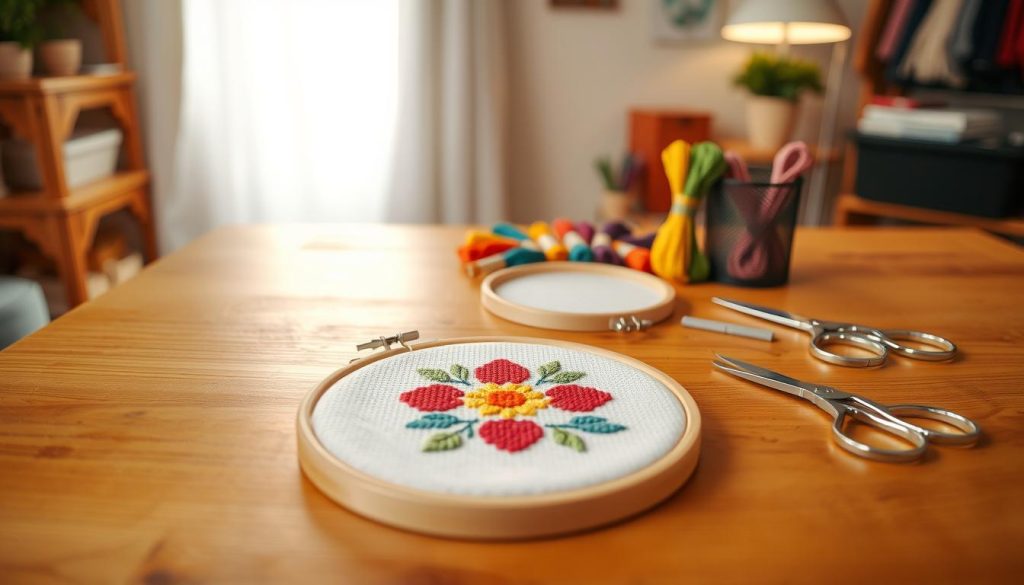
Begin with small, clear patterns to learn chart reading and counting. Dover Publications and Annie’s offer great demo patterns for beginners. These patterns teach you to make neat Xs and avoid common mistakes.
Look for kits labeled “beginner” or “easy”. Choose small ornaments, samplers, or single-motif designs. Michaels and Joann have reliable kits from Dimensions and DMC that include everything you need. Working on small pieces keeps you motivated while you learn.
Simple motifs to practice basic stitches and avoid common cross stitch mistakes
Begin with motifs like hearts, stars, or tiny florals in one or two colors. Practicing these helps avoid tangles and keeps your stitches even. Simple color blocks teach you to complete full crosses, not half stitches or uneven rows.
Focus on thread entry and exit points to avoid knots. If you see uneven stitches, carefully unpick and re-stitch them. This habit helps you avoid mistakes and improves your work.
Demo pattern walkthroughs inspired by accessible how-to guides
Follow a demo that shows each step: prepare fabric, grid, stitch background blocks, and finish backstitching. Guides from Melissa Leapman and Janlynn-style booklets guide you through each step. You’ll learn to read symbols and match floss numbers before tackling bigger projects.
Try a timed mini project: set aside an hour to complete chart reading and one motif. Short sessions boost confidence and teach you to pace yourself. Over time, demo patterns reveal needlework secrets like consistent stitch direction and efficient thread usage.
Beginner cross stitch tips: fabric choices, needle size, and gridding basics
Start with 14- or 16-count Aida to make counting easier. Use a blunt tapestry needle in size 24 for 14-count and 26 for 16-count. These tools fit the holes and protect fibers while you stitch.
Use cross stitch gridding to keep your place. Mark a removable fabric-safe pen or use a waste-lining method to create 10×10 blocks. Gridding cuts miscounts and makes complex charts manageable.
Hoops and Q-Snaps keep tension even and reduce puckering. Organize thread on floss boards or in small baggies to avoid color mix-ups. A needle threader and a small pair of sharp scissors speed up progress and improve neatness.
Below is a compact comparison to help you choose starter projects and tools for steady skill building.
| Focus | Recommended Items | Why it helps |
|---|---|---|
| Easy motifs | Small samplers, seasonal ornaments | Short projects build confidence and teach basic stitches |
| Kits | Dimensions, DMC, Janlynn beginner kits | Include charts, floss, needles to reduce guesswork |
| Fabric | 14- or 16-count Aida | Larger holes simplify counting and stitching |
| Needles | Tapestry needles size 24 or 26 | Blunt tip protects yarn and fits fabric grid |
| Gridding | Removable fabric-safe markers, waste-lining | Prevents miscounts and saves time on corrections |
| Tension tools | Hoop, Q-Snap | Keep even tension for uniform Xs |
| Organization | Floss boards, baggies, needle threader | Reduces tangles and speeds stitching |
Whimsical and Themed Patterns for Creative Embroidery Inspiration
Discover patterns that spark curiosity and challenge your skills. Look for motifs in seasonal catalogs, craft magazines, and books like Witchy Stitching. These sources offer solid cross stitch ideas that blend mood and technique. They also teach you about color balance and layout.
Begin with small, quirky motifs and then move to larger samplers. You can find holiday and novelty collections in stores. Browse Halloween sets or tarot patterns for new ideas. Each choice adds to your pattern library and shows how themes influence stitch choices.
Try a witchy cross stitch sampler to learn about color contrast. Dark aida can hide details, so test a swatch first. Swap floss shades to add depth and ensure motifs are clear on different backgrounds.
Use themed projects to practice placement and negative space. Sketch out motifs on graph paper or in a digital editor. This helps avoid awkward borders and improves composition for both framed pieces and wearable crafts.
Adapt designs for cross stitch on clothing by using waste canvas or water-soluble stabilizer. Stitch small tarot patterns onto denim jackets or tote bags for a personal touch. For delicate fabrics, use finer needles and lighter thread counts to avoid bulk.
Experiment with specialty threads and bead accents to give classics a new twist. Use beading needles and invisible thread when adding charms. Stick to two or three strong colors to keep detailed witchy or tarot motifs clear.
When picking your next project, aim for variety. Mix quick, quirky motifs with complex tarot patterns. This keeps your momentum and expands your technical skills and cross stitch ideas for future projects.
Advanced Cross Stitch Projects to Challenge Your Technique
When you start on bigger projects, planning is key. You need to figure out fabric and thread needs for large pieces. Look for pattern books from DMC and Leisure Arts for reliable estimates.
Break down long projects into smaller parts. Number your pages and mark what you’ve done. Store threads in labeled bags to keep things organized.
Add beads and special threads for extra texture and sparkle. Use special needles and products to handle metallic threads better. Practice backstitching on a swatch to keep your lines sharp.
Choose the right tools for your project size. A scroll frame helps with big pieces, while Q-Snaps are good for mid-size. A floor stand or lap cradle can make stitching easier on your back.
Keep your threads organized with thread keepers or labeled bobbins. Use tools to lay threads smoothly and keep your stitches even. Double-check your work to avoid mistakes.
Think about how you’ll display your finished piece early on. Choose a sturdy frame or professional framing to protect it. Use the right materials for mounting to keep your work looking great for years.
Here’s a quick guide to help pick the right support for your next project.
| Project Size | Recommended Support | Key Benefit |
|---|---|---|
| Small (under 6″ square) | Hand hoop or small Q-Snap | Lightweight, portable, quick finishes |
| Medium (6″–18″) | Q-Snaps or lap frame | Stable tension, good portability |
| Large (over 18″) | Scroll frame or floor frame | Manages fabric bulk, keeps long-term tension even |
| Beaded or metallic-heavy | Beading needle, thread conditioner | Reduces breakage and improves bead placement |
Learn new techniques slowly. Start with a small sampler before adding them to big projects. This way, you’ll make fewer mistakes and feel more confident in your work.
Tools, Supplies, and Embroidery Hacks to Make Projects Easier
Start with a short list of reliable supplies for your next project. Pattern books help you choose the right cross stitch fabric and DMC floss. Michaels, Joann, and 123Stitch offer full kits for convenience.
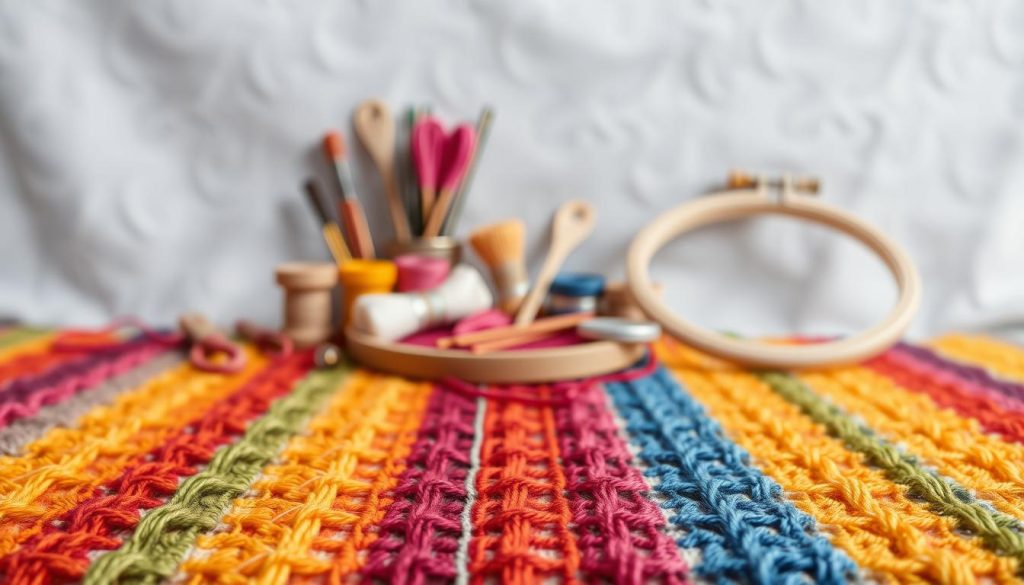
Choose tools that fit your project size. Small pieces work well on a 6″ hoop. Larger designs need Q-Snaps or a scroll frame. Sharp scissors and a reliable needle threader save time when changing colors.
Use needle minders to prevent lost needles and grime guards to protect fabric edges. Magnifiers and daylight lamps reduce eye strain on dense stitches. Keep beading needles and YLI Invisible Thread for beadwork and fine details.
Organize threads for quick access. Use wooden thread keepers, floss boards, and labeled baggies for DMC floss skeins. Project bags with clear windows help spot the right WIP. A needlebook stores spare needles safely.
Try small hacks to speed up stitching. Thread conditioners like Thread Magic help with metallics and reduce tangles. Use magnetic boards to hold patterns and place needle minders. Lightboxes make counting on dark fabrics easier.
Plan tool choices based on project type and fabric. For evenweave and linen, use shorter needles and a frame to prevent distortion. Aida may need a hoop and blunter needles. Matching tools and fabric prevents frustration and keeps you stitching longer.
Below is a compact comparison to guide purchases and organization for typical projects.
| Item | Best For | Why It Helps |
|---|---|---|
| Q-Snap | Large counted cross stitch | Holds fabric taut without distortion and fits larger projects |
| Hoop (6″–8″) | Small motifs and quick finishes | Portable and simple to use for short sessions |
| Needle minders (magnetic) | All stitchers | Prevents lost needles and keeps them handy between sessions |
| Grime guard | Long projects and display pieces | Protects fabric from oils and dirt from hands |
| Wooden thread keepers / floss boards | Organized stash and multicolor projects | Keeps DMC floss sorted by number or color family for fast access |
| Project bags with clear window | WIP rotation and storage | Stores supplies, pattern, and fabric together while showing contents |
| Thread conditioner (Thread Magic or beeswax) | Metallics and foils | Reduces fray and static, improves thread glide |
| Magnifier + daylight lamp | Fine detail and long sessions | Reduces eye strain and improves color matching under true light |
How to Plan and Prioritize Your 25 Patterns Bucket List
Start by making a list of goals for variety and growth. Choose quick finishes for instant joy, small projects to build confidence, and big ones to challenge you. This mix keeps your projects fun and educational, keeping you excited to stitch.
Choosing a balanced mix
Start with kits for ornaments and small motifs to get going. Then, add samplers and themed pillows for more skills. Aim for a big project like an heirloom sampler or a large stocking as your goal. Seasonal patterns help keep your projects fresh and interesting.
Estimating fabric size and stitch count
Always follow the pattern’s fabric and stitch count advice. Convert stitch counts to inches for your fabric. Make sure to add extra for framing or hooping. Use a grid on large fabrics to avoid mistakes and make stitching easier.
Create a schedule, track progress, and rotate WIPs
Make a schedule that fits your free time. Use a journal, photos, or a WIP tracker to follow your progress. Store threads and fabric in labeled bags for easy access.
Switch between projects to avoid getting tired. Use Q-Snaps or a scroll frame to keep pieces safe. Plan your time between quick projects and ones that improve your skills to stay motivated.
| Project Type | Example | Typical Stitch Count | Planning Tip |
|---|---|---|---|
| Quick finish | Ornament kit | 200–800 | Keep threads in a small pouch and set aside two evenings. |
| Skill builder | Sampler or themed pillow | 1,000–5,000 | Use pattern stitch counts to choose fabric and practice backstitching. |
| Long-term masterpiece | Heirloom sampler or large counted piece | 10,000+ | Grid fabric, plan framing, and schedule regular rotation to avoid fatigue. |
| Seasonal project | Holiday stocking | 2,000–8,000 | Plan around holidays and start early to allow finishing time. |
| Practice piece | Color-block sampler | 500–2,000 | Use as a test bed for new threads, beads, or specialty stitches. |
Use these tips to make a bucket list that matches your schedule and goals. See your list as a guide that changes as you grow. Keep your projects in sight and within reach to keep your stitching journey exciting.
Common Pitfalls and Cross Stitch Mistakes — And How to Fix Them
Even the most careful stitchers can make mistakes. Small errors can quickly become big problems if not caught early. This guide offers quick fixes for common issues like frogging, thread problems, and comfort. This way, you can enjoy your cross stitch projects without stress.
Spotting a misplaced stitch? Work slowly and carefully. Use a seam ripper or thread pick to remove stitches one at a time. Hold the fabric gently to avoid stretching it.
Long-term projects need good thread management. Cut threads to 18–24 inches long. Use floss boards or small zip bags to keep colors separate. Treat slippery threads with Thread Magic or beeswax to prevent tangles.
Some patterns don’t show well on dark fabrics. Check the pattern book and kit instructions for fabric colors and stitch counts. Good contrast helps avoid mistakes and makes charts easier to follow.
Finishing errors often come from miscounting. Lightly mark grid lines on fabric or use washable pens. Always check the pattern pages and finishing notes for correct dimensions, especially for framed pieces.
Fixing tangled threads is easier with shorter threads and more frequent re-threading. Needle threaders are great for short threads. For beading, use fine beading needles and precondition threads to keep them smooth.
Good lighting is key for accuracy and speed. Use a daylight-balanced lamp aimed at your work. Add a magnifier for small counts or dark fabric. A lightbox helps with backlighting on tight fabric.
Good posture is important for your neck and hands. Sit with your feet flat, shoulders relaxed, and work at eye level. Use an adjustable stand or Q-Snap to keep your piece steady. Take breaks every 30–40 minutes to rest your eyes and stretch your fingers.
Below is a compact troubleshooting table that compares common mistakes with quick fixes and tools to keep on hand.
| Common Problem | Quick Fix | Helpful Tools |
|---|---|---|
| Miscounted area or wrong symbol | Carefully frog only affected stitches; re-count from marked grid line | Seam ripper, thread pick, washable fabric pen |
| Damaged or stretched fabric after unpicking | Support fabric edge while unpicking; re-tension in hoop or frame | Embroidery hoop, Q-Snap, embroidery scissors |
| Tangled or fuzzy floss | Shorten working lengths and condition thread before use | Thread Magic, beeswax, floss bobbins |
| Poor visibility on dark fabric | Use daylight lamp, magnifier, or lightbox for contrast | Daylight-balanced lamp, LED magnifier, lightbox |
| Hand or neck pain from long sessions | Adjust seating and tool height; take regular breaks and stretch | Ergonomic chair, adjustable stand, timer for breaks |
Conclusion
You now have a clear path from simple samplers to ambitious masterpieces. Use high-quality pattern books like Witchy Stitching and seasonal magazines like Just CrossStitch. These sources offer cross stitch ideas that balance quick finishes, skill builders, and long-term projects.
Pair those patterns with DMC floss, aida or linen, and reliable needles. This way, your work will feel smooth and intentional.
Turn your cross stitch bucket list into daily practice by planning fabric sizes and estimating stitch counts. Rotate WIPs to keep things interesting. Cross stitch tips like using Q-Snaps, scroll frames, floss boards, and needle minders make larger projects manageable.
The right embroidery hacks and organization systems reduce mistakes and keep you stitching regularly.
Approach the list as a mix of learning and self-care. Treat stitching as cross stitch therapy while you refine backstitching, colorwork, and specialty-thread techniques. When you run into snags, use the frogging and thread-management fixes covered earlier.
Stay focused and motivated. With a thoughtful plan and the tools outlined, you’ll build skill, finish meaningful pieces, and enjoy the creative benefits of every stitched pattern on your bucket list.
 English