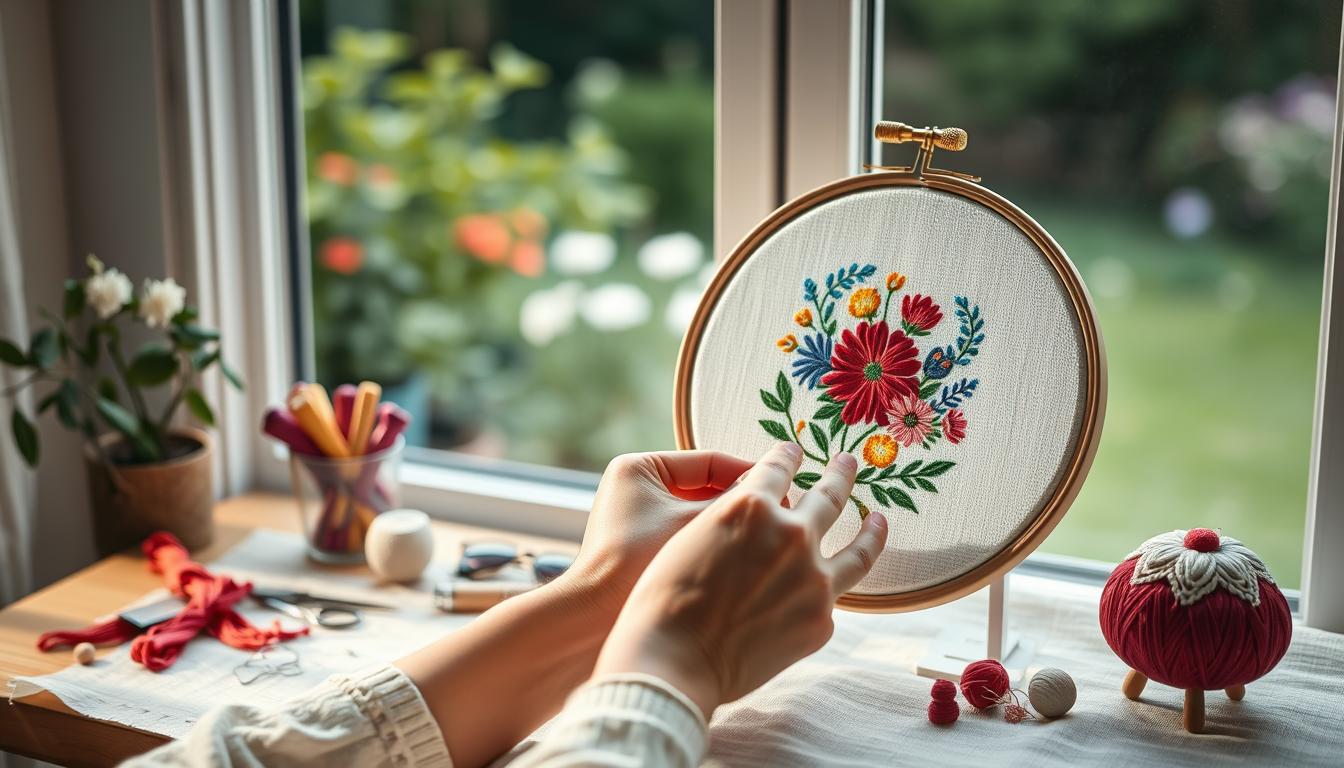
Returning to cross stitch or starting it for the first time is easy. You can switch to comfy clothes and listen to an audiobook or podcast. This simple habit can calm your busy day and make cross stitch a key part of self-care.
Projects can be small or big, finished in one evening or over weeks. Starting with a simple pattern lets you see progress and stay motivated. These tips help keep your routine focused on mental rest and creativity.
Cross stitch is more than a craft; it has many benefits. The rhythmic motion relaxes you, improves focus, and acts as a form of therapy. For beginners, start with a simple pattern and short daily sessions to build lasting habits.
Key Takeaways
- Cross stitch fits easily into daily routines and can become a calming habit.
- Start with a small project to see progress and build confidence.
- Regular stitching offers tangible cross stitch benefits for relaxation and focus.
- Using audio—like podcasts or audiobooks—can enhance your stitching routine.
- Cross stitch for beginners can be an accessible step toward mindful self-care.
- Simple cross stitch tips, such as short sessions and easy patterns, boost consistency.
The surprising mental health benefits of cross stitch
When you pick up a needle and thread, you start a simple ritual. This ritual can steady your day. Small, repeatable stitches create a predictable rhythm.
This rhythm can lower racing thoughts. It makes uncertainty feel more manageable.
Working on visible progress helps, especially when you return to a project after a break. You get continuity and a sense of completion from each stitched square. Those wins add up and support emotional balance.
How focused repetition reduces anxiety
Counting stitches and following a pattern gives your mind a clear, limited task. This focus narrows attention away from worry. It brings your mind to the present moment.
Short, timed sessions of repetitive stitching can reduce signs of stress like an elevated heart rate. Use simple cross stitch patterns and set modest goals. When you finish even a small block, your brain rewards you with calm.
These micro-achievements are practical cross stitch tips. They help you manage anxiety without feeling overwhelmed.
Engaging the mind: mindfulness and flow states while stitching
Stitching invites mindfulness through touch, sight, and rhythm. As you count and place each X, your awareness settles into the work. This state closely matches flow, where time fades and attention stays on a single task.
Counted cross stitch is especially effective for this. The grid keeps you anchored and gives the mind a steady pattern to follow. Pair stitching with slow breathing for a deeper meditative effect that enhances focus and presence.
Evidence from hobby and mental health research
Studies on crafts show that repetitive, patterned activities help reduce cortisol and support lower heart rates. Research finds that hobbies which demand sustained attention can foster flow and improve mood.
Therapeutic programs now include creative practices, and cross stitch therapy is gaining recognition for its low barrier to entry. You do not need expensive gear to experience benefits; basic supplies and consistent short sessions are enough to start improving wellbeing.
How CROSS STITCH improves cognitive function
Cross stitch is a fun way to use many mental skills at once. It requires you to track colors, count stitches, and plan your next move. This makes it great for your brain while keeping it fun.
Fine motor skills and hand-eye coordination
Doing cross stitch helps strengthen your fingers and wrists. It also improves your ability to do small tasks. Plus, it makes your hand-eye coordination better over time.
Memory, planning, and pattern recognition gains
Working on cross stitch patterns helps you remember instructions. It builds your working memory as you compare the cloth to the chart. Planning which color to use next also improves your executive function.
Looking at the chart and spotting repeating motifs sharpens your pattern recognition. Your visual-spatial skills get better when you predict how stitches will form an image.
Practical tips to boost cognition through practice
Start with small projects and get more complex as you feel more confident. Use gridding and counted cross stitch to challenge your memory without feeling overwhelmed.
Choose techniques that focus on repetition, like sampler motifs and repeating patterns. Mix simple patterns with ones that require color changes to improve your planning flexibility.
| Practice | What it trains | How to apply |
|---|---|---|
| Small sampler projects | Working memory and sequencing | Complete 4–6 small motifs in a week, then increase size |
| Gridding counted work | Pattern recognition and error reduction | Draw a light grid on Aida before stitching to map sections |
| Repeating motifs | Visual prediction and speed | Choose cross stitch patterns with mirrored or repeated elements |
| Complex color changes | Planning and attention switching | Work one color at a time across sections to reduce mistakes |
| Timed stitch sessions | Focus and sustained attention | Set 20–30 minute rounds with short breaks between |
Cross stitch as a stress-relief practice and therapy
Using cross stitch as a way to relax after a long day is a great idea. The rhythmic motion of stitching can slow down your heart rate and calm your mind. Adding deep breathing to your stitching can make it even more effective at reducing stress.
Why rhythmic stitching calms your nervous system
The repetitive motion of stitching signals to your body that everything is okay. This steady pace can help activate your body’s relaxation response, similar to walking or gentle yoga.
Using cross stitch as a self-care routine
Create a calming ritual for yourself. Wear comfy clothes, set up soft lighting, listen to your favorite podcast, and stitch for 15 to 30 minutes. These small, regular sessions can help improve your mood and support self-care.
Resources for cross stitch therapy and support groups
Look for craft therapy programs at local centers, clinics, and mental health organizations. Online groups on Facebook and Ravelry offer support and inspiration to keep you going.
Local classes with certified art therapists or experienced instructors can teach you new techniques and patterns. Search for “craft therapy” or “stitching groups” in your area to find what suits you best.
Physical health perks from needlework and posture
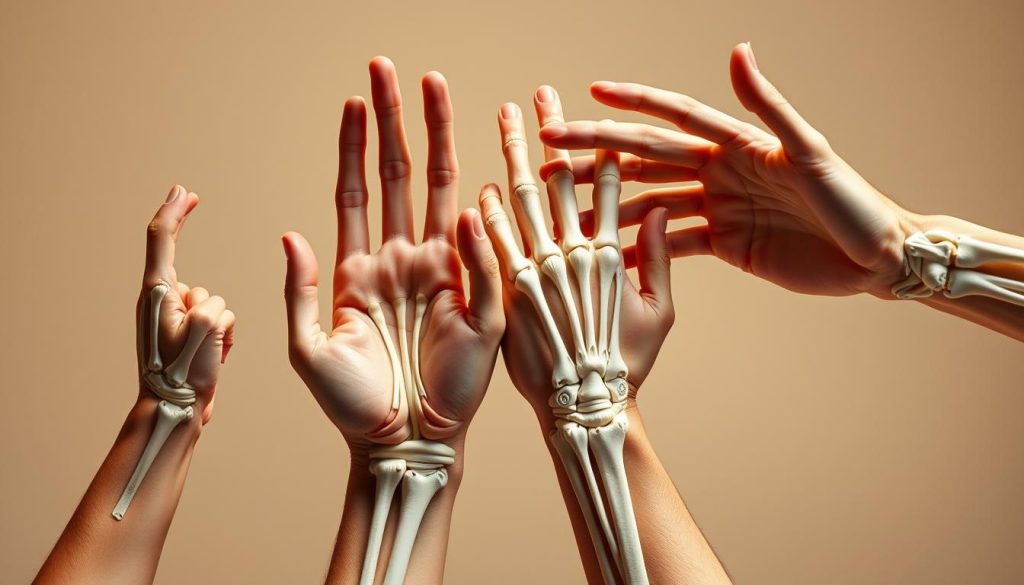
Needlework is more than just making pretty things. It involves short, frequent movements of the hands. These movements help keep fingers and wrists flexible and strong.
Small movements that support dexterity and joint mobility
Needlework, like threading a needle or making tiny crosses, improves hand coordination. It keeps tendons active and reduces stiffness. Think of stitching as a gentle workout for your hands.
Ergonomic tips: posture, cross stitch frames, and seating
Use cross stitch frames or hoops that keep fabric tight. This prevents you from gripping too hard. Choose a chair with good back support and keep your feet on the floor. Hold tools like needles and scissors with relaxed fingers to avoid unnecessary tension.
When to take breaks and stretch to avoid repetitive strain
Remember to take breaks every 20–30 minutes. Stand up, shake your hands, and do some wrist bends. Add finger stretches, shoulder rolls, and gentle neck rotations to ease tension and prevent repetitive strain.
Use tools that feel comfortable in your hand. Consider adjustable lap stands or an Ott light to avoid hunching. Small changes to your setup can protect your posture and make stitching enjoyable for years.
The social and emotional benefits of the cross stitch community
When you share a restart post or a progress photo, you connect with a community of makers. This simple act brings you closer to people who celebrate your small victories. They also share cross stitch ideas to keep your projects exciting.
Online stitching groups like Facebook communities, Instagram hashtags, Ravelry threads, or TikTok stitching circles offer quick feedback and encouragement. Local stitch groups meet in places like yarn shops, libraries, and community centers. Here, you get to know people and share your projects.
Practical steps help you build these connections. Post your progress regularly, join themed stitch-a-longs, and attend workshops or craft nights. These actions help you make friends and stay motivated.
Sharing your embroidery work boosts your confidence. Positive feedback and helpful tips from others make you feel valued. They also inspire you to try new things in cross stitch.
Being part of a cross stitch community fights loneliness. Regular contact with fellow stitchers makes you feel less alone. It gives you reasons to keep stitching, even on tough days.
How starting with beginner cross stitch improves confidence
Starting small is a fast way to win. Beginner cross stitch teaches skills for bigger projects. This growth boosts confidence and encourages you to try new patterns.
Choose patterns with few colors and clear grids. DMC or Dimensions kits offer pre-sorted floss and easy instructions. These projects help you avoid frustration and see progress.
Common mistakes in cross stitch are easy to fix. Miscounts, skipping gridding, wrong fabric size, knotting thread, and unsecured ends cause delays. Practice basic stitches, use a hoop or frame, and check counts often to avoid these errors.
Use this step-by-step plan for a smooth first project.
- Pick a small kit or a simple counted cross stitch pattern with large blocks of color.
- Prepare fabric and hoop. Center the design using a grid or the fold method.
- Thread a needle with DMC floss. Keep strand lengths short and separate strands as needed.
- Start in a small area, stitch in tidy rows, and check counts frequently.
- Finish with any backstitching or a border, then wash and press if required.
Try a small floral or geometric motif as your first project. These options show results quickly. You learn counting, tension control, and basic finishing without overwhelming time or materials.
| Choice | Why it helps | Tip to avoid mistakes |
|---|---|---|
| Small kit (DMC) | Pre-sorted floss and clear instructions make setup simple | Follow included chart and separate strands before threading |
| Simple counted pattern | Large color blocks speed progress and reduce miscounts | Grid fabric or mark center before starting |
| Hoop or frame | Keeps tension even and reduces thread knotting | Don’t overtighten; rehoop if fabric distorts |
| Short stitching sessions | Prevents fatigue and improves accuracy | Set 20–30 minute goals and take short breaks |
As you complete a few small cross stitch projects, your confidence grows. That confidence makes tackling complex patterns feel achievable. Enjoy the craft and learn from mistakes rather than letting them stop you.
Mindful techniques: cross stitch patterns and meditative practice
Choose patterns that ease decision fatigue and invite slow progress. Repetitive motifs, natural scenes, and mandala-like designs let you settle into a steady rhythm. Simple color palettes keep your focus on motion and breath, not on constant choices.
Selecting patterns that promote relaxation
When you pick a design, favor predictability. Floral repeats or geometric borders give clear, repeatable actions. These cross stitch patterns create tiny wins every row, which helps you relax and stay engaged.
Gridding, counted cross stitch, and focusing techniques
Use cross stitch gridding to mark sections before you begin. A water-soluble pen or basting thread reduces mistakes and saves time. Gridding plus counted cross stitch encourages steady attention and cuts down on frustration.
Work in short sets of focused stitches. Limit distractions, set a gentle timer, and watch how your breathing slows as you follow the grid. This focused method makes it easier to reach a flow state during a session.
Combining backstitching techniques with breathwork
Reserve backstitching techniques for slower, mindful moments. Try a simple rhythm: inhale while you complete four stitches, exhale during the next four. That pacing helps regulate your nervous system.
Pair stitching with other soothing habits. Wear comfortable clothes, play soft audio, or sip herbal tea to deepen the meditative practice. These small rituals turn a craft session into a calming routine you look forward to.
Practical cross stitch tips for maximizing health benefits
Making small changes can turn cross stitch into a self-care habit. These tips help you work faster, reduce stress, and stay focused. They make your stitching sessions more enjoyable and calming.
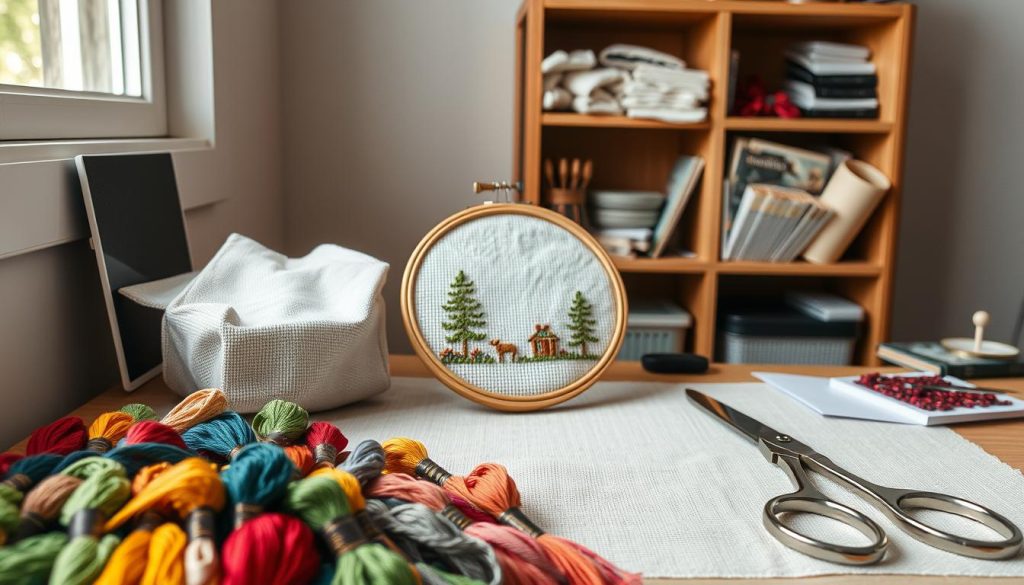
Organizing supplies for a stress-free session
Sort DMC threads by number on bobbins or in a clear floss organizer. Label your needle cases and use a small tackle box for scissors, thimbles, and spare hoops. Store patterns in a clear folder or a notes app for easy access.
Use a dedicated stitching basket for all your supplies. This basket makes it easy to start stitching whenever you have time.
Embroidery hacks for efficiency and enjoyment
Pre-sort floss into bundles for each project to save time. Use Thread Heaven to condition threads and prevent tangles. Prepare multiple needles with common colors for quick changes.
Try a magnetic needle minder to keep needles in sight. Use a binder clip as a makeshift hoop holder when your hands are busy. These hacks make setup faster and keep you focused on stitching.
How to schedule stitch time into a daily routine
Set aside 15–30 minutes after daily routines like breakfast or dinner. Treat these times as non-negotiable self-care. Short, regular sessions help make stitching a habit that reduces stress.
Plan your stitching with simple ideas for quick wins. Save bigger projects for weekends. Keep a habit journal to track your progress and stay motivated.
- Tip: Listen to podcasts, audiobooks, or guided breathwork while stitching for extra relaxation.
- Tip: Switch between projects to match your mood and available time.
Tools and materials that support comfort and longevity
Choosing the right supplies makes your cross stitch practice more comfortable and lasting. Opt for tools that reduce hand tension and help maintain a steady rhythm. Good tools let you focus on the stitch, not on fixing mistakes or fighting fatigue.
Needles are crucial. Use blunt tapestry needles in sizes 24–26 for common 14–18 count Aida fabric to reduce snagging. For higher-count cross stitch fabric, smaller needle sizes give crisper results and less strain on your fingers.
Frames and stands save your wrists. Frame options range from wooden hoops to professional scroll frames and Q-Snap systems. Choose cross stitch frames that match project size so you can sit more naturally and keep good posture during long sessions.
Fabric choice affects stitch speed and eye comfort. Aida fabric offers clear squares and easy counting, making it ideal for beginners and quick projects. Evenweave gives a smoother texture and works better for fractional stitches and detailed designs.
Floss quality changes the outcome. DMC floss gives consistent color and strength. You will have fewer breaks and less splitting when you use reputable brands, which keeps sessions calm and efficient.
Store threads the right way. Label bobbins, use floss boxes, or keep zip pouches so colors stay bright and untangled. Organized storage speeds up the start of each session and helps your DMC floss last longer.
Balance your kit. A compact set that includes the right needles, a suitable frame, a dependable piece of cross stitch fabric, and quality DMC floss will keep projects enjoyable and sustainable.
| Item | Why it helps | Practical tip |
|---|---|---|
| Needles (tapestry 24–26) | Reduced fabric snagging, smoother stitching | Match needle size to fabric count for comfort |
| Cross stitch frames (Q-Snap/scroll) | Improves posture, frees both hands | Choose size to cover most of your largest projects |
| Aida fabric | Easy counting, beginner-friendly | Use 14–16 count for comfortable eye strain |
| Evenweave | Smoother texture, better for fractional stitches | Pick higher counts for finer detail |
| DMC floss | Consistent color, fewer breakages | Store on labeled bobbins or in zip pouches |
From hobby to hobby-therapy: building lasting healthy habits
Starting a new habit is all about making small, consistent choices. You can tie short stitch sessions to daily routines, like morning coffee or evening TV. This makes building habits feel less daunting.
Turn short sessions into sustainable habits
Begin with just five to fifteen minutes of stitching each day. Small victories add up. Finishing a motif or a row gives you a clear sign to keep going. This steady pace turns casual interest into a reliable habit.
Set achievable project goals
Pick cross stitch projects that fit your schedule and energy. Quick projects like samplers, bookmarks, and ornaments give you a sense of accomplishment. For bigger projects, break them into smaller parts to see progress and stay motivated.
Track progress and celebrate milestones
Keep a simple progress chart, photo log, or journal to track your work. Seeing your progress boosts your brain’s reward system. Celebrate small wins with a new stitch kit or a display for your finished pieces.
Habit loops work when you have a cue, action, and reward. Link stitching to daily activities like meals, breaks, or bedtime. Over time, these short sessions create a calming, creative habit in your daily life.
Your cross stitch goals should be flexible. If a pattern doesn’t work, change it and move forward. Restarting is part of building habits. See each restart as a chance to learn and keep moving forward.
Real-life examples and restart stories that show benefits
Stitchers you know share short routines that prove cross stitch helps daily life. A dated note from 3/4/2025 describes a simple restart. It includes morning threads, an afternoon break, and evening stitching in comfy clothes with an audiobook.
Personal routine snapshot: You can stitch on the commute if you are a passenger, pick up a hoop after work, or set a 30-minute “stitch hour” before bed. Little pockets of time add up. Short sessions make maintaining a cross stitch routine realistic for busy days.
Personal routine snapshot: If you keep a small project in your bag, you will find chances to work on cross stitch projects while waiting for appointments. Quick progress motivates you to return to larger pieces without pressure.
Case study: restarting after a break: One stitcher restarted with a large sampler and worried it would overwhelm her. The act of returning gave structure to her day and boosted confidence. You can restart cross stitch by breaking a big pattern into color blocks and celebrating each finished square.
Case study: restarting after a break: Restarting often reconnects you with why you began. The mental lift shown in real stories supports cross stitch for mental health by providing a calm ritual and a visible record of achievement.
Fitting projects into a schedule: Use 10–20 minute microhabits to keep momentum. Quick ornaments, tiny samplers, and focused color blocks count as progress. These small wins help make cross stitch for beginners feel rewarding from the first session.
Fitting projects into a schedule: Plan one small cross stitch project each month or reserve a weekly cross stitch routine slot. This keeps motivation high and proves that even brief, regular stitching improves mood and focus.
Conclusion
In this CROSS STITCH conclusion, we see how simple it is to start again. Cross stitch is not just a hobby; it’s a way to calm your mind. It helps you focus and can be a part of your daily routine with small projects.
Remember, it’s never too late to pick up a needle. You’ll feel calm and relaxed as you stitch.
Let’s look at the benefits of cross stitch. It improves your thinking, fine motor skills, and hand-eye coordination. It also helps you plan better by following patterns.
Stitching with the right tools can also be good for your body. It reduces strain and keeps your joints moving. Plus, joining a community of stitchers can help fight loneliness.
Ready to start? Use a guide to pick the right materials and tools. Begin with simple projects to get into the flow. Learning tricks like managing thread can make your stitching smoother.
Make stitching a part of your self-care routine. Set aside time, organize your supplies, and stitch with friends. This way, cross stitch can become a regular part of your life, improving your mental and physical health.
 English