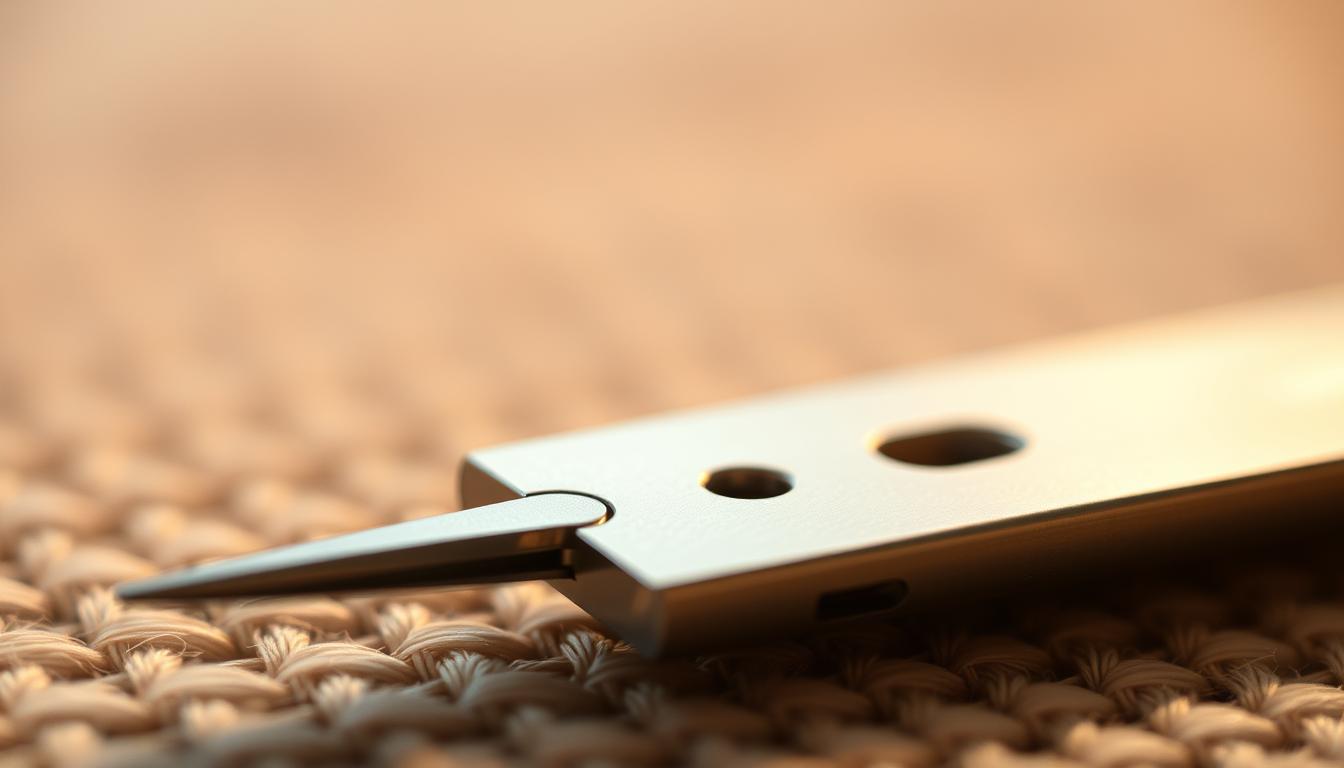
If you’re new to cross stitch or have been doing it for years, one small tool will make a big difference. It’s only about $5, fits in your project bag, and works great with other tools like scissors and needles. It’s a must-have for any stitcher.
During the pandemic, many turned to needlework for peace and focus. Beginner cross stitch projects and local needlepoint shops were big helps. They offered tutorials, kits, and supplies. This tool helps avoid mistakes that can slow down and cost more in your projects.
You can find it in local needlework shops and online. When you look, you might see cookie prompts and options to opt out of analytics. This article explains how the $5 tool saves time, cuts down on errors, and makes your projects neater and faster.
Key Takeaways
- This inexpensive tool costs about $5 and fits with standard cross stitch tools.
- It helps both beginner cross stitch stitchers and experienced makers avoid common mistakes.
- Local needlepoint shops and online stores stock it; expect cookie prompts while browsing.
- Using it saves time and money over correcting repeated errors and improves finishes.
- It works well alongside DMC floss, hand-dyed threads, and typical starter kits.
What the $5 Tool Is and Why It’s a Stitcher’s Secret Weapon
The $5 tool is a small gadget that solves common problems for stitchers. It can be a needle threader, counting pin, or a magnetic minder replacement. Its shape and name change, but its function remains simple and reliable.
Quick product description and common names
Most versions are made of metal or thin plastic. A needle threader helps thread your needle. A counting pin marks rows on your fabric. A magnetic minder keeps your needle safe.
Each item is small and fits in your cross stitch kit.
Why it costs around $5 and where to buy it (local shops, online retailers, LNS)
Its simple design and mass production keep the price low. You can find these in multipacks at Joann and Michaels. Online marketplaces also sell them, with easy checkout.
Local needlepoint shops offer hands-on advice. Shops like Needlepoint.com and Needle Nook of La Jolla carry affordable essentials. They also provide kitting and guidance to avoid waste.
How this inexpensive tool compares to pricier cross stitch tools and gadgets
High-end gadgets include LED magnifiers and ergonomic frames. These offer advanced features and comfort. The $5 tool doesn’t replace these benefits.
However, the $5 tool provides immediate value. It fixes common problems like threading and marking. For many, its utility is worth more than an expensive gadget.
| Feature | $5 Tool | Higher-End Gadget |
|---|---|---|
| Primary benefit | Solves a single, common problem (threading, marking) | Multiple features: magnification, counting, ergonomics |
| Cost | $3–$8 | $40–$300+ |
| Portability | Small, easy to stash with cross stitch supplies | Often bulky, best kept in a dedicated space |
| Learning curve | Minimal; immediate use | May need setup or practice |
| Where to buy | Local needlepoint shops, chain craft stores, online retailers | Specialty retailers, manufacturer websites, select LNS |
| Best use with | Everyday work with DMC floss and misc threads | Large, detailed projects or vision support |
How the Tool Solves Common Cross Stitch Problems
When you grab a simple $5 tool, you get more than a gadget. It’s a tiny solution for everyday problems. It saves time, protects thread, and makes your work calmer and more precise.
Eliminating common cross stitch mistakes with the tool
Common errors include miscounts, loose threads, and dropped stitches. This tool helps mark rows or hold threads steady. It reduces miscounts and saves you from rework.
It also helps spot thread shortages early, avoiding mid-project problems. Use it at the start to grid key points and prevent mistakes.
Simplifying counted cross stitch and backstitching techniques
Counted cross stitch is less stressful with this tool. It marks fabric or guides your needle, speeding up counting. For backstitching, it keeps lines straight and tension even.
This results in crisp outlines on faces, letters, and motifs. You’ll finish backstitch details with cleaner edges and fewer starts and stops.
Reducing eye strain and improving precision on detailed cross stitch patterns
High-count fabrics and tiny motifs demand focus. This $5 accessory reduces eye strain and improves lighting. It guides the needle and stabilizes threads, improving stitch placement and reducing fatigue.
This steadiness makes dense or intricate patterns more enjoyable, not exhausting.
- Mark once, stitch confidently: fewer rip-outs and faster progress.
- Consistent tension: neater finishes on portraits, alphabets, and florals.
- Better pacing: less time fixing cross stitch mistakes, more time enjoying the craft.
How to Use the $5 Tool in Your Cross Stitch Workflow
Place the tool where you can easily find it without looking. You can keep it in your project bag, on a needle minder, or clipped to your cross stitch frames. This helps avoid bad habits later, especially when moving from kits to charts.
Follow a simple routine to speed up your work and avoid mistakes. First, prep your threads and set up your fabric in your chosen frame or Q-Snap. Then, use the tool as you switch colors. Work in short sessions to check your tension and alignment.
Step-by-step how-to guide for beginners and experienced stitchers
- Thread prep: separate the number of strands recommended for your fabric count. Fold DMC floss or hand-dyed thread to the proper thickness before using the tool.
- Needling: pass the folded thread through the tool, then guide it through the needle eye. This speeds repetitive threading when switching colors on counted designs.
- Starting point: begin at a clear grid intersection. Use the tool to maintain a steady rhythm of stitches and to reduce skipped crosses.
- Routine checks: every 30–60 minutes glance at the fabric on your cross stitch frames to confirm grid alignment and even tension.
Best practices when switching between DMC floss and hand-dyed threads
- Test a scrap for colorfastness before stitching. Hand-dyed threads may bleed; DMC floss usually stays true.
- Adjust tension slightly with delicate hand-dyed fibers. Use the tool gently to avoid fraying or fuzzing.
- Store hand-dyed and DMC floss separately in labeled bobbins. Keep the $5 tool with the thread assortment to speed color changes.
Tips for integrating the tool with your existing cross stitch tools and frames
- Use the tool alongside Q-Snaps, scroll frames, or stretcher bars. Keep it handy on your frames so you can thread quickly without breaking posture.
- Swap tapestry needles when you change fabric mesh. The tool works with different needle sizes and keeps transitions smooth.
- Carry a small project bag with the tool, a few spare needles, and a bobbin of DMC floss. Portability preserves consistency in your cross stitch workflow.
When you follow online guides or buy tools from trusted retailers, expect cookie banners. Buy from reputable stores and local needlework shops to avoid low-quality copies. Use the $5 tool early in your routine to build good habits for advanced cross stitch techniques.
CROSS STITCH: Specific Techniques Enhanced by the Tool
A cheap tool can change how you tackle tough parts of a pattern. It makes counting faster, keeps threads steady, and makes finishing easier. Here’s how it can help with cross stitch gridding, backstitching, and different fabrics and counts.
How it helps with cross stitch gridding and counting stitches
Small plastic counting pins or a compact magnifier can mark a 10×10 grid fast. This saves time and cuts down on mistakes, especially on expensive fabrics. A washable fabric marker makes grid lines easy to add and remove on various fabrics.
Switching between 14–18 count fabrics is quicker with the tool. On 14-count Aida, you need fewer pins. On 18-count linen, the magnifier helps you see intersections without eye strain. This keeps your work neat and your stitch counts right.
Improving backstitching techniques and neat finishes
The tool helps keep thread steady for cleaner lines when outlining. It holds a single strand in place while you angle your needle. This prevents puckering that can ruin designs.
Try using different needle sizes for each fabric and guide longer backstitches with the tool. You’ll get smoother curves and sharper details. For tiny lettering, the magnifier ensures precise backstitching for crisp outlines.
Using the tool on different cross stitch fabric types and counts
Lower-count fabrics are easier for beginners, while higher counts require precision. The tool helps focus on threads and holes, making it easier to work on any count.
For evenweave and linen, use a thin needle and gentle tension. On Aida, use a blunt needle and fewer passes to avoid splitting fibers. The tool works across all counts, helping you keep stitches even.
| Technique | Tool Use | Best Fabric / Counts | Outcome |
|---|---|---|---|
| Gridding | Counting pins + washable marker | 14–18 count Aida, linen | Faster layout, fewer re-counts, safer on hand-dyed fabric |
| Precise counting | Compact magnifier | 16–18 count evenweave and linen | Accurate stitch counts, reduced eye strain |
| Backstitch outlines | Thread guide or small clamp | Aida and evenweave | Neater outlines, consistent tension |
| Tiny lettering | Magnifier + fine needle | 18 count linen, high-count Aida | Crisp details, legible small text |
| Switching thread types | Needle threader + tool for tension | All fabric types | Smoother transitions between DMC and hand-dyed threads |
Real-Life Examples and Mini Case Studies from Stitchers
Many stitchers shared stories of how a small, affordable tool changed their work. These stories come from forums, local needlework shops, and community groups. They talk about beginners moving past kits and veterans using the tool in different projects.
Beginner cross stitch experience:
Posts show that starting with Dimensions kits is cost-effective. But, buying a small $5 helper early saves money. It helps avoid wasting fabric and extra threads.
One stitcher compared using a $15 kit with separate fabric and extra floss to learning on charts after buying the tool. They found fewer mistakes and faster progress from kits to independent charts.
Seasoned stitcher perspectives:
Experienced stitchers see the tool as a constant friend in their projects. They use it with different fabrics and counts. They say it makes backstitching neater, starts and stops cleaner, and saves time on corrections.
Longtime members of Facebook groups and Etsy sellers agree. They say one reliable small item is better than many specialty gadgets.
Before-and-after scenarios:
Before using the tool, some stitchers often reworked panels and used a lot of thread. After getting the $5 helper, they made fewer corrections and worked faster on detailed patterns.
Pandemic-era hobbyists who taught themselves also loved it. They praised its portability and simple function for stitching in small spaces or while traveling.
These stories show the practical benefits of using this tool. They can inspire new cross stitch ideas and help plan which pieces from your stitcher stash to tackle next.
Maintenance, Storage, and Organisation for Long-Term Use
Keeping your $5 tool in good condition saves time and avoids frustration. Simple habits can extend its life and keep your projects on track. Here are some easy steps you can follow without needing special equipment.
Wipe metal parts with a soft cloth after each use to remove oils and lint. For magnifier frames and small metal heads, use a cotton swab with a drop of rubbing alcohol to clean without harm. If your tool has moving parts, apply a tiny bit of sewing machine oil and then wipe off any extra.
Always keep tools dry and away from humid places. Moisture can cause rust and shorten their life. Replace cheap needles and small parts often to avoid snags on delicate fabric.
Storage ideas that fit your cross stitch organization
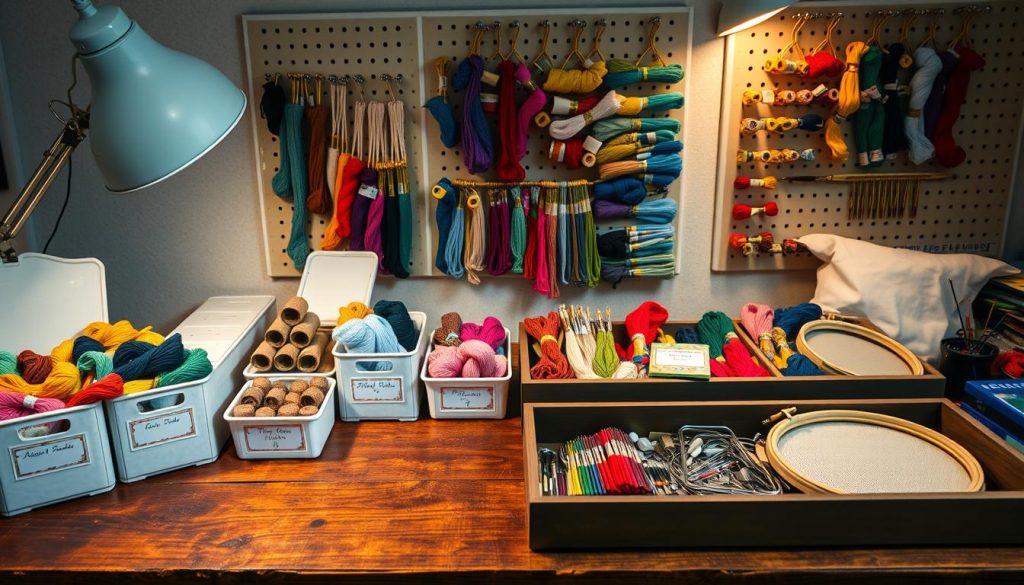
Use a clear project bag for easy access to stitching. A single bag can hold your stitcher kit, scissors, needle minder, spare needles, and the $5 tool, so you won’t have to search for them. Label pouches by project or thread family for quicker setup.
Invest in stackable plastic boxes or a small craft cart for your cross stitch stash. Store threads in bobbins or boxes with dividers. Keep often-used items near your favorite chair; seasonal or finishing supplies can go in a separate bin.
Keeping duplicates or backups cheaply
Buy duplicates during sales at Joann or Michaels so a lost gadget won’t stop your progress. Many useful extras cost under $5, making it easy to build a practical stitcher kit without spending a lot. Store backups in a small zip tube inside your main project bag.
For easy travel, include a compact needle threader, spare tapestry needles, and a tiny bead tube in your travel pouch. Local needlework shops often sell small kitted extras that fit this approach.
- Clean metal parts regularly
- Store tools in a clear project bag for portability
- Buy duplicates during sales to protect projects
- Organize threads and notions to grow your cross stitch stash sensibly
Other Affordable Embroidery Hacks and Complementary Tools
You can create a small, affordable kit that makes stitching more fun and efficient. Start with a few cheap tools that work well with the $5 tool. These tools help with common tasks, improve your stitching, and reduce frustration during long sessions.
Needle threaders, small scissors, and a basic needle minder are cheap. A simple magnifier or clip-on light helps with small details. Use clear boxes and floss organizers to sort skeins. These small buys help with better stitch count, neat threads, and smoother finishing.
Try these practical embroidery hacks to save time when switching threads or fabrics:
- Pre-sort floss by project into labeled bobbins so you grab the right color fast.
- Use short, reusable fabric scraps to test tension and color before cutting into your main piece.
- Bundle extra thread purchases during sales to keep supply costs low and avoid project delays.
Pair the $5 tool with an inexpensive needle threader and compact scissors to reduce repetitive fiddling. These simple changes speed up threading, prevent knots, and let you focus on technique. When you stitch more smoothly, your techniques improve and seams look cleaner.
Cross stitch therapy became popular during the pandemic because it calms busy minds. It offers portable, low-tech relief that fits in a tote. The right tools make sessions less stressful, so the calming benefits last longer.
Using the $5 tool with the right items makes stitching more enjoyable. Faster threading and easier counting lower stress and increase project satisfaction. This mental ease shows up in better tension, fewer mistakes, and more consistent finishing.
Below is a compact comparison of common companion buys to help you choose what fits your kit and budget:
| Tool | Typical Price | Main Benefit | Best Use |
|---|---|---|---|
| Needle threader | $2–$5 | Speeds threading fine needles | Frequent thread changes, thin needles |
| Small embroidery scissors | $3–$10 | Precise snips, reduces fraying | Cutting threads close to fabric |
| Needle minder | $4–$12 | Keeps needles safe and visible | Portable stitching, crowded workspaces |
| Floss organizer bobbins | $3–$8 | Pre-sorts colors, speeds setup | Multi-color projects, kits |
| Clip-on magnifier/light | $8–$20 | Reduces eye strain, improves clarity | High-count fabric, late-night stitching |
| Fabric marking pens (grout-free) | $4–$9 | Quick grid marks that rinse out | Gridding and planning complex pieces |
Try a few hacks and see how they change your workflow. Small investments and smarter organization can make stitching more enjoyable. Over time, these improvements lead to calmer sessions and better finishing.
Where to Buy, What to Look For, and Avoiding Cheap Pitfalls
Finding the right $5 cross stitch tool is not just about luck. You need value, durability, and a seller who backs their product. Start by visiting local needlepoint shops for hands-on advice and easy returns. If shopping from home, compare online listings and read reviews before buying.
Trusted sellers and where to look
Check out craft chains like Joann for consistent stock and easy returns. Specialty stores like Needlepoint.com offer expert advice on kitting and finishing. Online, look at seller ratings and shipping policies. Use local shops for expert advice or to test tools before buying.
Key features and specs to check
Look for clear product measurements and material details. Metal tools last longer than plastic. Check for a strong spring, compatible needle sizes, and focal strength for magnifiers. Make sure counting pins fit your fabric count. Photos that show scale or a hand holding the tool help.
How to read listings and spot value
Scan descriptions for measurements, materials, and fabric counts. Look for listings with multiple photos and verified reviews. Reading multiple reviews helps spot common issues like broken springs. Spending about $5 on a well-reviewed tool is better than buying cheap items that break.
Quick checklist before checkout
- Confirm seller return policy and shipping times.
- Verify material and measurements in the listing.
- Compare cross stitch supplies online prices across sellers.
- Read at least three verified buyer cross stitch reviews.
- Consider buying from a local needlepoint shop if you want expert advice.
Conclusion
One small, affordable tool can make a big difference in your stitching. It cuts down on mistakes, makes backstitching quicker, and boosts your confidence in moving to charts. Use online resources, video tutorials, and local shops like JoAnn to learn and avoid low-quality copies.
When you start your kit, add that $5 tool to your list. Include scissors, tapestry needles, and a needle minder. Shopping smart and supporting local needlework shops can save you money and improve your work. This approach offers practical tips that save time and money.
For both beginners and experienced stitchers, the right tool makes stitching more fun. Always carry it with you and join community groups for pattern advice and inspiration. That simple buy will pay off by making your work cleaner and faster.
 English