The cross stitch challenge is taking over social media. It started with a simple idea: push your comfort zone and stitch every week. You don’t need fancy stuff to start. Just Aida fabric, a basic needle, and DMC floss are enough.
Small experiments help you learn faster. Try metallic DMC Diamant threads, test hand-dyed aida, or work on a plastic canvas sampler. This way, you can see what works best for you. Starting with tiny patterns is low-risk and easy to switch if needed.
Cross stitch is great for beginners. Once you learn the “X” stitch, you can find kits for under $10 on Etsy. Joining neighborhood craft nights or Zoom sessions makes it social. It helps you stay on track and makes progress steady.
This article will guide you through the viral cross stitch trend. We’ll cover how to join, setting realistic goals, tools and techniques, and more. You’ll learn about clever challenge ideas, pattern sources, practical hacks, finishing tips, and the mental-health benefits of stitching with a community.
Key Takeaways
- The cross stitch challenge grew because it combines creativity, routine, and community.
- Try small experiments—metallic threads or hand-dyed fabric—to expand skills safely.
- Cross stitch projects are affordable and accessible for all ages.
- Joining online groups and scheduled stitch times boosts consistency.
- This guide will show tools, goals, patterns, and finishing tips to help you succeed.
Why the Cross Stitch Challenge Went Viral
The challenge became popular because stitchers dared to be different. They used hand-dyed aida, metallic threads, and gold-plated needles. These choices made their work stand out on phone screens.
These bold moves turned simple designs into eye-catching posts. They filled feeds with embroidery inspiration.
What sparked the trend online
Virtual meet-ups and Zoom stitch-alongs showed progress every week. Hobbyists shared small tests and technique experiments. This kept the momentum going.
Designers like Peacock & Fig showed off creative uses of French knots and special threads. Their work made pieces really stand out.
Emotional and practical reasons people joined
People joined for peace and the joy of creating something real. Cross stitch is affordable, with starter kits costing little. You can learn a basic stitch fast and make many items.
These items, from banners to lampshades, look great on social media.
Examples of shareable successes
Small projects got the most attention. Those using variegated or metallic thread, or a hand-dyed aida background, did well on Instagram and Pinterest. These quick successes gave the community new ideas and inspired others.
How to Join the Challenge and Set Realistic Stitching Goals
Joining a cross stitch challenge is easy. Just sign up on Facebook groups, Instagram, or The Cross Stitch Club. You can join free events like the Summer Stitching Challenge. This way, you meet others who stitch at your pace.
Choose a group that’s active and has a good vibe. Look for groups with pattern swaps and meet-ups. Local libraries and centers also host meet-ups for more support.
Begin with small projects to build confidence. Start with tiny patterns or affordable kits. This way, you avoid mistakes and get quick wins.
Setting achievable stitching goals
Make your goals clear and measurable. Aim for 20 minutes of stitching daily or finish one color block each session. These goals help you see progress and stay motivated.
Keep track of your progress. Use a journal, app, or calendar to log your stitching. This way, you can adjust your goals based on your progress.
Accountability methods that work
Find a stitching buddy or join a club for regular check-ins. Meet up in person or online to stitch together. This keeps you on track.
Look for organized meet-ups from cross stitch clubs. Add these to your calendar. Sharing your progress online adds friendly pressure to stay on track.
Follow these steps: find a community, pick a small project, set goals, and choose an accountability method. This will help you stay consistent and enjoy your stitching journey.
CROSS STITCH: Basics to Get Started Quickly
Begin with a simple checklist for your first project. The right tools and a clear pattern make learning fun. Make sure your workspace is clean and well-lit before starting.
Essential items to have on hand
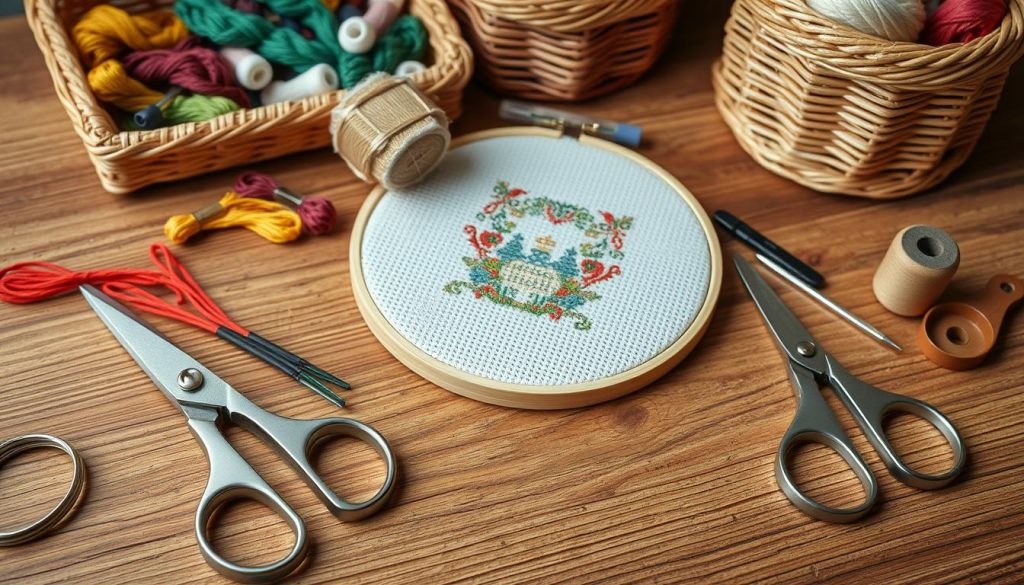
You’ll need good needles, micro scissors, and bright light to avoid eye strain. Gold-plated needles make fabric work easier and reduce splits. Double-eyed needles help when using multiple strands of DMC floss.
Use a small hoop or Q-snap frame to keep your fabric steady. A needle minder is handy for keeping needles from getting lost. Start with a simple kit or buy DMC floss by the skein for consistent colors.
Beginner techniques worth learning first
The basic X stitch is key in counted cross stitch. Keep your stitches even to ensure a neat front and back. Backstitching outlines shapes and adds detail.
Gridding helps avoid counting mistakes. Use a washable grid on your fabric to track your progress. Railroading keeps stitches flat, making your X’s even on aida.
How to choose fabric and your first pattern
Begin with aida in a medium count, like 14 or 16, for easy stitches. Choose a fabric count that matches your pattern. Use a light-colored fabric to show thread colors well.
Start with a small pattern from a trusted designer. Look for beginner kits on Etsy or in craft stores. As you get better, try hand-dyed aida or specialty threads like DMC Diamant for extra sparkle.
| Item | Why it helps | Beginner tip |
|---|---|---|
| Gold-plated needles | Reduce splitting, glide smoothly | Buy sizes 24–26 for 14–16 count aida |
| Micro scissors | Clean, precise thread cuts | Reserve for floss to avoid dulling |
| DMC floss | Consistent color and strand strength | Separate strands gently to avoid fray |
| Aida fabric | Easy-to-count weave for beginners | Start with 14-count neutral aida |
| Hoop or frame | Keeps fabric tension even | Use a small hoop for compact projects |
| Needle minder | Prevents lost needles during breaks | Magnetic styles work well on metal hoops |
| Gridding tools (washable pen) | Reduces counting errors on large pieces | Grid in 10×10 blocks to match charts |
Challenge Ideas to Push Your Skills
Try new things to make your stitching better. Start with small, focused experiments. Pick one idea, make a tiny sampler, and see what’s hard and what’s easy.
Try something you think you might hate
Try a technique you’ve been scared of, like French knots or metallic thread. Start with a small swatch to learn fast without big mistakes. Designer Peacock & Fig shows how French knots can add texture to your work.
Technique-focused mini-challenges
Do week-long drills to focus on one technique. For example, spend three days on floss railroading, two days blending threads, and two days on backstitch variations. Set goals like “one week of railroaded stitching” to track your progress.
Creative prompts and theme packs
Use themed prompts to keep you going. Try a summer stitching set, a color-focused pack, or a designer-curated motif collection. These can include daily stitch targets or a month-long plan with check-ins. They help you try new things and stay on track.
Patterns, Designers, and Where to Find Inspiration
Start your challenge by letting materials guide you. Pick an interesting thread or a textured fabric. Then, search for cross stitch patterns that complement those colors and fibers. This approach turns pattern curation into a creative hunt, not a chore.
Follow established cross stitch designers who push technique and style. Names like Peacock & Fig showcase inventive uses of specialty threads and texture. Etsy shops and designer shops on Instagram are rich sources of fresh ideas and free motif packs you can adapt for challenge pieces.
Use a simple system to sort ideas by skill level. For beginners, pick small counted cross stitch patterns with clear motifs and few colors. For intermediate work, choose charts that add backstitching and a couple of specialty stitches. For advanced projects, select designs that require gridding, multiple thread weights, or complex color transitions.
Where you look matters for steady embroidery inspiration. Pinterest boards, Facebook stitching groups, and Instagram hashtags reveal trends, finishing ideas, and makers who post step-by-step photos. Save posts you like, then cross-reference them with pattern difficulty and fabric count to match your current goals.
Try this quick pattern curation checklist:
- Start with a thread or fabric that excites you.
- Match design complexity to your skill level and fabric count.
- Favor counted cross stitch patterns for precise planning.
- Follow reputable cross stitch designers for technique tips.
- Collect finishing ideas so stitched motifs become usable items.
Curating patterns this way keeps your challenge varied and manageable. You end up with a balanced mix of projects that build skill, spark creativity, and deliver visible progress each week.
Practical Tips, Hacks, and Needlework Secrets
Small changes can make a big difference in your needlework. Use quality tools like gold-plated needles and micro scissors. They make stitching easier. Try DMC Diamant metallic threads for a shiny look. Test their slipperiness before adding them to your project.
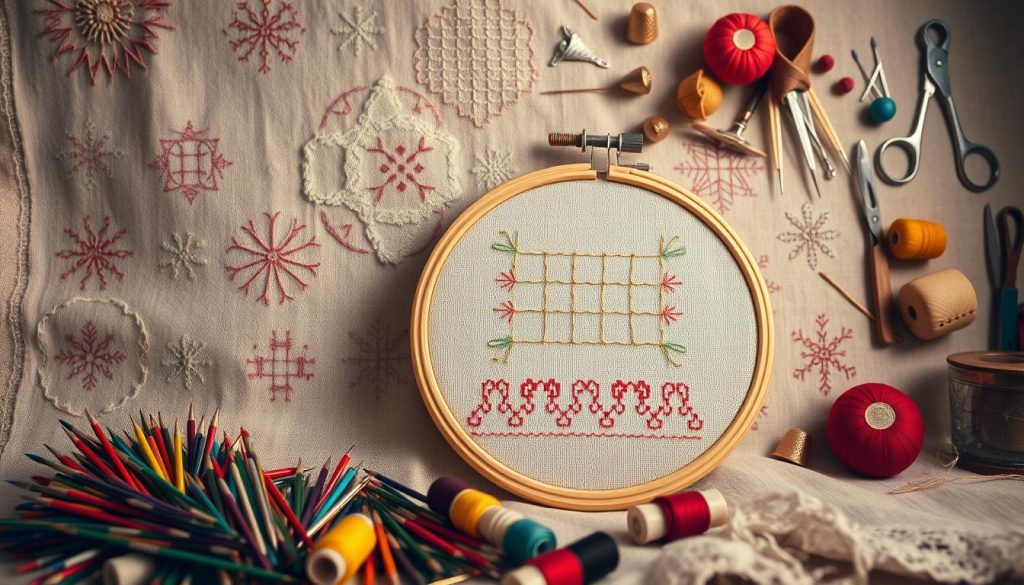
Embroidery hacks can save you time and make stitching more enjoyable. Pre-wind bobbins for DMC floss and label them by color. Use double-eyed needles or a needle threader to speed up setup. Keep fine tweezers nearby for trimming stray fibers and pulling tiny tails.
Good cross stitch organization helps you pick up where you left off easily. Store your work in progress (WIPs) in clear zip bags or stackable containers. Add a clipboard with a printed grid and a checklist for daily goals. Kits under $10 are great for quick wins when your stash feels overwhelming.
Use cross stitch gridding to avoid costly mistakes. Mark your fabric with a water-soluble pen or tack a lightweight thread grid before starting. Gridding helps keep your center aligned with the pattern and reduces rework.
Keep a routine to avoid common setbacks. Scheduled meet-ups or online groups give you accountability and keep you going. Track your progress on a calendar and set short, achievable goals to prevent giving up.
Watch for frequent cross stitch mistakes and fix them early. If you miscount, undo only the affected rows instead of ripping across a block. For uneven tension, practice railroading and even-stitch methods on a scrap first. When a stitch type frustrates you, like French knots, limit their use or practice tiny motifs until you gain confidence.
Here are quick cross stitch tips for smoother sessions:
- Use a hoop or Q-snap to stabilize fabric and maintain tension.
- Keep threads separated and labeled for faster color swaps.
- Work in natural light or a daylight lamp to reduce mistakes.
- Rotate simple tools—needle minders, thread nets, and bobbin boxes—to streamline your workflow.
Adopt these practical needlework secrets to stitch with less stress and more joy. Small habits, reliable tools, and smart planning turn tricky projects into steady progress.
Finishing, Framing, and Sharing Your Work Online
When you finish a piece, small experiments can turn a sampler into a showpiece. Try stitching onto hand-dyed Aida for a sea or galaxy effect. Trim and mount motifs on plastic canvas for useful items. Combine several small motifs into tea towels, zip pouches, or pillow panels to expand finishing ideas for your challenge pieces.
Finishing ideas for challenge pieces
Keep finishes simple for beginners. Use a clean backing, press lightly, and edge with ribbon or bias tape for a neat look. For more adventurous finishes, try inset panels in wooden trays, stitched patches on canvas totes, or stitched magnets. Specialty threads and metallics pop when you add a subtle painted wash to the fabric before mounting.
Framing and display tips for cross stitch frames
Choose a frame or mount that complements your fabric tone and stitch density. Stretch the fabric evenly over a backing board and use linen tape to secure corners. For large pieces, floating frames prevent compression and show the fabric edge. Consider banners, lampshades, or shadow boxes when a classic frame feels too formal. Proper stretching and backing protect your work and keep the design flat over time.
How to photograph and post your progress
Use consistent lighting and a clean background to highlight texture. Natural light near a north-facing window reduces harsh shadows. Photograph close-ups to show specialty threads, then take a straight-on shot for the full design. Schedule progress photos during meet-ups to capture stages and keep momentum.
When you share cross stitch online, use clear captions and hashtags tied to your group or challenge. Post before/after images and detail shots to show techniques and materials. Regular updates driven by accountability groups help build engagement for your cross stitch projects.
Mental Health, Community, and the Benefits of Participating
Joining a stitch challenge can change how you spend quiet time. You get small wins that boost your mood and ease tension. This mix of progress and calm is key to mindfulness cross stitch and other calming needlework.
Cross stitch as therapy and self-care
When you start stitching, the repetition of tiny Xs quiets your mind. Regular sessions act like short meditations, lowering stress. This is why people call stitchwork cross stitch therapy.
The power of community and accountability
You don’t stitch alone when you join groups on Facebook, Ravelry, or local guild meetings. A supportive cross stitch community keeps you motivated. They offer practical advice on tools and techniques.
Weekly meet-ups and shared progress posts create accountability. This turns good intentions into new habits.
How the challenge builds skills and confidence
Challenges push you to try new materials and methods. Trying gridding, railroading, or specialty threads expands your toolkit. Each completed project boosts your confidence and encourages you to try bolder designs.
Below is a compact comparison to help you weigh the main benefits and practical outcomes of joining a stitch challenge.
| Benefit | Mental Effect | Skill Outcome |
|---|---|---|
| Mindfulness cross stitch | Promotes calm and focus in short sessions | Improves concentration and pattern reading |
| Cross stitch therapy | Reduces anxiety and negative rumination | Builds patience and steady hand control |
| Cross stitch community | Offers social support and shared celebration | Accelerates learning through tips and critiques |
| Cross stitch benefits | Enhances mood with visible progress | Refines techniques like blending and backstitch |
| Cross stitch confidence | Strengthens self-efficacy after finishes | Encourages experimenting with complex patterns |
Take a small step today: set a 15-minute habit, join a virtual stitch night, or try a new thread. Those tiny choices add up into better skills, deeper connection, and lasting cross stitch benefits for your well-being.
Conclusion
Start small to make cross stitch a lasting habit. Try new materials, designers, and tools. Experiment with different fabrics and threads.
Use gridding to cut down on errors. Simple tips can make progress steady and fun.
Cross stitch is affordable, social, and calming. Join challenge groups for fun. Pick a kit for guided practice if you like.
Set realistic goals to keep moving forward without feeling too much pressure.
Accountability is key. Find hobby partners, join local clubs, or meet online. Share your progress with clear photos and thoughtful finishes.
This sharing inspires others and grows the challenge into a community. It builds skills, confidence, and calm. Now, it’s your turn to join the cross stitch challenge and see where it takes you.
 English