If you love cross stitch, you know one mistake can ruin hours of work. Mistakes like using long threads or stitching with oily hands can damage your fabric. You might lose a special linen or a hand-dyed Aida, costing you time and money.
Long threads can cause fabric to weaken and get damaged. Dirt or oils from your hands can stain the fabric. Also, using the wrong fabric can make your stitches uneven and hard to fix.
This guide will help you avoid these common mistakes. You’ll learn about test-stitching, choosing the right thread and fabric, and keeping your workspace clean. You’ll get tips on handling DMC floss, upgrading your tools, organizing your stash, and doing stitch tests. These tips will help both beginners and experienced stitchers protect their fabric and improve their work.
Key Takeaways
- Small habits — clean hands, clean hoops — prevent permanent fabric stains.
- Keep thread lengths moderate to avoid abrasion and weakened floss.
- Test-stitch on scrap fabric before committing to expensive linen or hand-dyed Aida.
- Match fabric type to technique: counted fabrics for counted work, looser cloth for freehand.
- Invest in quality DMC floss and basic tools to save money and fabric in the long run.
Why You Should Care About Common Cross Stitch Mistakes
Small mistakes in cross stitch can cause big problems. They can lead to fabric damage, weak threads, and stubborn stains. These issues can shorten the life of your work.
Long threads can knot and dull, while cheap hoops can distort tension. Sloppy starts also waste time as you have to unpick and redo them.
Planning ahead can save you money. Expensive fabrics and floss like DMC alternatives are costly. A single mistake on these can mean wasted material and lost hours.
Use practical tips to avoid these mistakes. Trim thread to the right length, secure starts well, and test tension before starting a big area.
Your stitch quality and finish depend on your tools and routine. Cheap hoops and blunt needles can cause uneven pull and pucker. Low-quality floss can lead to uneven sheen and color muddling.
Good embroidery hacks include investing in a reliable hoop and using quality DMC threads. Regularly replacing needles helps keep stitches even and smooth.
Rushing can make your craft worse. When you hurry, knots and twisty stitches increase. You’ll waste time fixing errors that careful, patient stitching would have prevented.
Slow down for better results. Focus on rhythm and accept that steady hands make cleaner results and a calmer mind.
Simple upkeep is important for stitchers in the United States. Wash hands before stitching, use a grubby-guard or a clean pillow beneath your work, and store fabric flat in acid-free sleeves. These habits preserve color and prevent grime transfer that ruins even perfect stitching.
Practical organization can help you save money. Track your stash, label floss by brand and color, and keep receipts for special fabrics. Clear inventory prevents duplicate purchases and reduces the chance that you’ll start a project with the wrong materials.
Using these tips can keep costs down and quality up. Creative benefits follow when mistakes drop. You gain clearer lines, truer colors, and confident curves that bring embroidery inspiration to life.
Try small embroidery hacks like test-stitching tricky blends and keeping a tidy thread binder. These habits sharpen technique, speed up finishing, and let cross stitch therapy become a reliable, rewarding practice.
CROSS STITCH: Test-Stitching and Pattern Prep
Never skip the stitch sample when using new fabric or designs. A quick test helps you see how the fabric behaves and how threads look. It also saves your fabric and ensures your project turns out right.
How to create a stitch sample for tricky fabrics
Start by cutting a piece from the same fabric you’ll use. Make a square that matches your pattern’s stitch density. Try out special stitches like woven roses or bullion knots to see how they work. Mark the center and test if the fabric takes ink or pencil marks well.
When to trust digital swatches and when to test-stitch
Use software like WinStitch for layout and symbol checks. But, don’t just trust what you see on screen. Compare the digital colors with a DMC shade card before buying floss. For important colors, like in sales or gifts, do a small test-stitch to check the contrast and color.
Checklist for pattern prep
- Test-stitch a sample on intended fabric; record tension and stitch count.
- Verify chart symbols, conversions between brands, and clarity for stitchers.
- Prewash and press fabric if required; mark center and apply cross stitch gridding for counted pieces.
- Label and inventory floss; ensure you have enough DMC shades before starting.
- Photograph the finished test-stitch for reference and for listings when you sell cross stitch patterns.
Long Threads and How They Damage Your Work
Long threads might seem handy, but they can cause problems. They can make your thread wear out faster and dull its color. Cutting your thread to a shorter length helps avoid twists, abrasions, and knots.
This keeps your DMC floss looking bright and your specialty threads in top shape.
Use a length that’s about your underarm plus half again. This is usually 12–20 inches (30–50 cm) for most people. This length helps prevent arm fatigue and reduces the risk of thread twists and messy knots.
Some stitches, like woven roses, can handle longer threads. For these, you can safely use double the usual length while keeping the tension even.
Ideal thread length and exceptions
Measure from your fingertip to your underarm, then add half that. This gives you a 12–20 inch working length for regular counted cross stitch.
For metallics, silk, or specialty threads, keep lengths shorter. These fibers wear out faster. Use longer lengths only for surface work that doesn’t pierce the fabric repeatedly.
Practical tips to avoid knots and abrasion
Work slowly to avoid twists and snarls. Take breaks to let the thread unwind naturally between stitches. If you feel tension, untwist the strand.
Keep your hands clean and free of lotion or food residue. Dirt increases friction and stains both fabric and thread. Wash your hands or use a light hand wipe before starting.
Consider thread conditioners for metallic or specialty yarns, but use them sparingly. For regular DMC floss, get better results by re-threading often and using short lengths.
- Trim damaged or knotted sections; do not force them through the fabric.
- If a knot cannot be freed, cut and restart to avoid weak patches or muddled color.
- Run the thread gently through your fingers to feel wear before each pass.
By following these embroidery hacks and needlework secrets, you can reduce wear and keep your work looking crisp. You’ll find fewer repairs, less fabric distortion, and a cleaner finish when managing long threads correctly.
Starting with Too-Difficult Projects and How to Avoid That Trap
Starting with a hard pattern can slow you down. Choose projects that make you feel good about your skills. Look for patterns with clear charts, few color changes, and lots of the same color.
This helps you learn rhythm and tension without getting frustrated.
Use counted fabrics like 14- or 16-count Aida for easy stitch sizes. If you like freehand, pick stable cotton, muslin, or calico to avoid puckering. Small samplers are great for learning stitch size, neat starts and stops, and even tension.
They also keep your supplies simple.
How to pick the right beginner-friendly cross stitch patterns and projects
Start with patterns that have big symbols and a simple color palette. Avoid dense backstitch or satin-stitch areas at first. Look for projects labeled as kits or “starter” pieces from brands like DMC or Anchor for reliable materials and clear instructions.
Choose designs under 1000 stitches to finish quickly. Try floral samplers, simple motifs, or small seasonal ornaments to build your skills. These projects let you practice evenly without wasting time on complicated blending or specialty threads.
How a stitch test prevents wasted fabric
Make a small stitch sample on your chosen fabric before you commit. A quick test shows how the hoop behaves, whether colors read the same as on-screen, and if the fabric puckers under tension. This prevents costly mistakes on large pieces or treasured garments.
If you design or sell patterns, test-stitch to catch symbol errors, color mismatches, or layout problems. A test reveals real-world issues that digital mockups hide, saving fabric, time, and customer frustration down the road.
Choosing the Wrong Fabric for Freehand and Counted Techniques
Before starting a project, picking the right material is key. The wrong cross stitch fabric can stretch, snag, or show unwanted texture. This choice affects how your stitches sit and how your finished piece looks.
For freehand and surface embroidery, everyday cottons are best. Muslin and calico give you grip and predictable tension. Old pillowcases, cotton tea towels, and nonelastic sheets are good for practice. They are inexpensive and forgiving while you test ideas and refine cross stitch techniques.
Avoid fabrics that stretch or are too thin. Stretch-knits and flimsy synthetics distort under hoop pressure. This makes stitch placement hard and can lead to puckering. Using fragile fabric wastes time and thread when you could be practicing on sturdier cotton or linen.
Counted cross stitch needs a different approach. Use Aida or evenweave when your design depends on exact counts and neat, square crosses. These fabrics give predictable spacing for each stitch and cut down on counting errors when you follow charts.
Hand-dyed or printed Aida can look great, yet color variation may change how a pattern reads. Test-stitch a small sample if you plan to use specialty Aida. This helps you judge contrast and decide whether the fabric complements your palette or competes with it.
Match fabric to the style you want. Choose counted fabrics like Aida and evenweave for pixel-like, chart-based designs. Pick muslin, calico, or plain cotton for organic shapes and freehand work that calls for fluid curves and varied stitch types.
| Use Case | Recommended Fabrics | Why It Works |
|---|---|---|
| Counted cross stitch, charted patterns | Aida, evenweave | Uniform weave ensures accurate stitch counts and neat squares |
| Freehand surface embroidery and casual practice | Muslin, calico, cotton tea towels | Affordable, sturdy, and forgiving under hoop tension |
| Specialty or textured projects | Hand-dyed Aida, printed Aida | Unique visual effects but test-stitch for color and contrast |
| Avoid for most stitching | Stretch-knits, flimsy synthetics | Elasticity and thinness cause distortion and poor stitch placement |
When you change fabrics, adjust your hoop or frame tension and your needle choice. Small tweaks keep your stitches even. This protects the fabric and preserves the shape of every cross stitch technique you use.
Long Stitches and Tension Problems That Distort Fabric
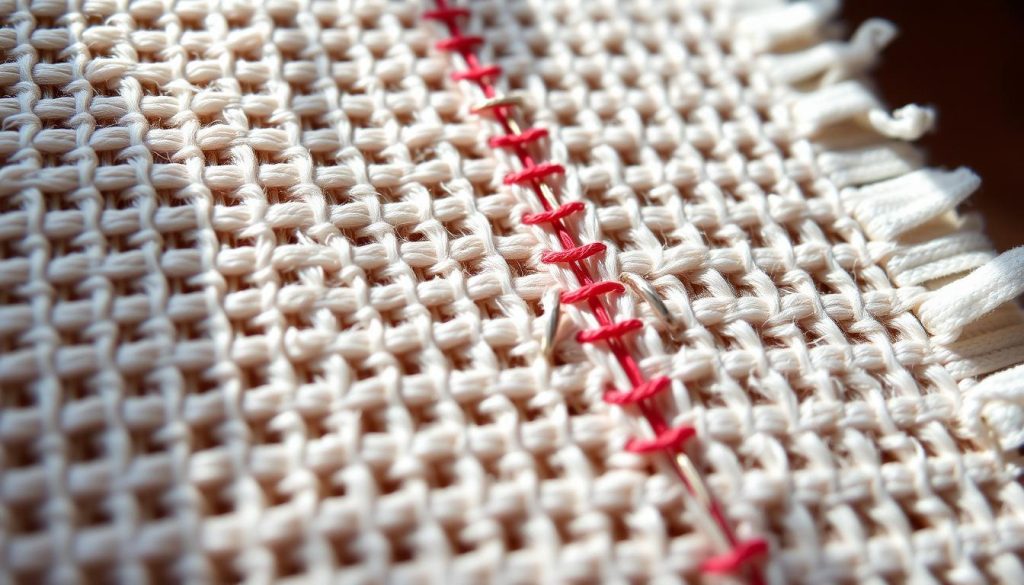
Long stitches can change your piece’s look and warp the cloth if tension slips. Watch your stitch length and keep tension even to keep curves smooth and prevent puckering. Use backstitching on outlines to control shape without stretching the weave.
Recommended stitch lengths and tension tips
For surface work with two to three strands, aim for stitch length under 1 cm (about 1/3 inch). Shorten stitches to 2–3 mm (0.1 inch) for curves to keep lines round and fluid. Long stitches can straighten curves, making rounded shapes look triangular. Shorter stitches smooth out stems and chain-stitch lines.
Keep tension steady. Too tight and the fabric puckers. Too loose and stitches sag. Good tension gives a uniform look and protects the fabric. Use backstitching techniques to match tension and avoid visible seams.
How to test and fix tension issues
Test on a small sample patch before starting the main work. Stitch a few crosses or a line of stems, then remove the hoop to see if the cloth distorts. If it puckers, relax the hoop or switch to a Q-snap frame for even tension.
If tension varies across a project, unhoop and re-center the fabric. Tighten the hoop in small steps while smoothing the fabric with your fingers. For stubborn distortion, add a stabilizer or choose a sturdier backing. Low-quality bamboo hoops often fail to hold steady tension; try a brand like HoopArt or a metal screw frame instead.
When long stitches have already caused trouble, unpick and restitch with shorter lengths. Learn stitch-by-stitch fixes for stem stitch, chain stitch, and satin areas. Practicing cross stitch techniques on scraps makes it easier to spot problems early.
| Problem | Quick Test | Fix |
|---|---|---|
| Puckering around stitches | Remove hoop and view fabric flat | Loosen hoop, rehoop in increments, use Q-snap |
| Sagging or loose stitches | Lift work away from frame and check stitch tautness | Tighten tension slightly, restitch with consistent stitch length |
| Triangular-looking curves | Compare long curve to sample with shorter stitches | Restitch curves using 2–3 mm stitches for smoother line |
| Uneven tension across panel | Measure tension at several points after removing hoop | Re-center fabric, retighten in small increments, consider stabilizer |
| Hoop slips or loosens | Check hoop grip after 15–30 minutes of stitching | Upgrade to a quality hoop, such as HoopArt or metal frames |
Impatience: Rushing Through Projects and What It Costs You
Rushing through a piece turns cross stitch therapy into a source of stress. When you hurry, you make avoidable cross stitch mistakes like skipped stitches, uneven tension, and excess knots. These errors eat up time and harm the fabric and finish quality.
Use simple cross stitch tips to slow your pace. Set session limits, count out a fixed number of stitches per sitting, and keep your hands clean to protect fabric. Treat stitching as a deliberate practice rather than a race.
Breaks help you catch problems early. Let a design sit overnight, then review with fresh eyes. Short pauses reduce thread twist and accidental tugging that create knots and distortion.
Techniques to slow down and improve quality
- Adopt a steady rhythm: stitch in blocks and mark completed areas on the chart.
- Use grime guards and wash-hands routines to avoid oils and dirt transfer.
- Practice mindful stitching: focus on one motif at a time to cut down on mistakes.
- Check progress frequently to correct tension issues before they spread.
Time estimates and realistic expectations
Small motifs may take a few hours. Dense sections or satin stitch can take days. Plan projects over weeks or months based on detail level and finish work like washing, ironing, and framing.
Include test-stitching and fabric prep in your schedule. Good time management for cross stitch prevents last-minute rushes for gifts and reduces errors that arise from hurried work.
Use embroidery hacks such as marking the fabric grid, using quality lighting, and tracking hours per session. These ideas improve flow and help you predict completion times more reliably.
When you slow down, the hobby returns to being calming instead of damaging. Your results get better, your fabric lasts longer, and the practice of cross stitch therapy stays rewarding.
Poor Tools and Cheap Materials That Ruin Fabric and Results
Choosing the wrong kit or using cheap materials can damage your fabric and waste time. Upgrading to better cross stitch tools can greatly improve your work. It protects your fabric, sharpens your skills, and makes stitching more fun.
Starter essentials
Start with sharp embroidery scissors, quality needles, and a stable hoop or Q-snap. Cheap bamboo hoops can slip, dent, or leave marks. A metal or well-made plastic hoop keeps tension steady and reduces rehooping. Add a needle threader and a grime guard to protect fabric edges while you stitch.
Organization that saves time
Use project bags, DMC travel boxes, and labeled floss bobbins to keep threads tidy and reduce tangles. Storage trays and magnetic needle minders help prevent lost needles and stray stitches. Binder clips or the roller method help manage excess fabric under a grime guard without creasing your work.
Recommended extras
Invest in a DMC shade card to match colors before you start. Thread conditioner helps specialty threads glide and reduces fraying. A good lighting and magnification setup prevents eye strain and improves accuracy when working with high-count fabric.
Why quality DMC floss and tools matter
Premium DMC floss and brands like Anchor keep sheen even and resist breakage. Cheaper threads tend to twist, knot, and abrade, causing shade shifts across long lengths. This wear creates muddy color blends in detailed areas.
Cross stitch upgrades for reliability
Swapping low-cost supplies for well-made needlework supplies reduces mistakes. A solid hoop prevents distortion, durable needles cut fewer snags, and better floss means fewer breaks. For sellers and designers, test-stitching with real threads avoids customer complaints and ensures charts stitch as intended.
Beginner cross stitch tools to start with
If you are new, focus on a small, quality kit. Include good scissors, a few needle sizes, a sturdy hoop or Q-snap, basic floss like DMC, and a grime guard. These simple choices prevent common problems and make learning faster.
Practical upgrade checklist
- Replace slipping hoops with metal or reinforced Q-snaps.
- Swap bulk bargain floss for branded DMC floss for consistent color.
- Add a shade card, thread conditioner, and brighter task lighting.
- Use travel boxes and bobbins to keep needlework supplies organized.
Organisation, Stash Management, and Fabric Cleanliness
Starting with a plan for your materials is key to good cross stitch organization. A tidy workspace means less time searching and more stitching. Small habits help protect your fabric and thread from damage.
Keeping a thread inventory is simple. Use a Google Sheet or a printed list to track DMC numbers and quantities. This stops you from buying the same thread twice and makes preparing your kits faster. Label your bobbins and sections in plastic or wooden boxes to keep your stash organized.
Using dedicated project kits saves time. Each kit should have the pattern, pre-wound bobbins, and a small needle packet. This method keeps your thread organized and accurate when you return to a project.
A grime guard is a cheap way to protect your fabric. It fits over your hand or hoop to prevent oils and dirt from damaging your work. You can also use it to keep extra fabric clean between stitching sessions.
Wash your hands before and after stitching to avoid leaving marks on your fabric. Oily skin can cause stains that are hard to remove. If you fold fabric under the hoop, do so with clean hands and a fresh grime guard to avoid stains.
Iron and wash your finished pieces before framing to remove oils and lint. Use gentle soap and low heat to restore the fabric’s hand and color. This gives your work a professional look without damaging the threads or backing.
Needle storage is important for safety and efficiency. Use magnetic needle minders on your work surface for active needles. Store extra needles in labeled containers to prevent rust and loss. Thread a needle through the grime guard as a temporary holder while stitching.
Keep scissors, threaders, and tweezers in a project pouch. Binder clips or small clamps can hold rolled fabric in place under the grime guard. A dedicated workspace helps prevent cross-contamination and keeps your stitching accurate.
For long-term stash care, separate hand-dyed floss from commercial skeins. Store completed kits, charts, and leftover thread in archival bags to protect their color and fiber. A well-organized stash and reliable needle storage reduce stress and help your work last longer.
Conclusion
Start with a simple habit: test-stitch before you commit. A small sampler saves fabric and shows how a color or thread behaves. This check prevents common cross stitch mistakes and keeps your piece looking as intended.
Cut threads to 12–20 inches to reduce knots and abrasion, and keep stitches short for smooth curves. Use quality materials like DMC floss, sturdy hoops, and grime guards. Good tools and organization protect your work and make cross stitch projects more enjoyable.
Slow down. Treat stitching as a deliberate craft—patience reduces errors and preserves both thread and fabric. Simple embroidery hacks such as a clean-hands routine, a thread inventory, and a small stitch test will change how you approach cross stitch techniques.
Ready for action: make a stitch test, build a thread inventory, adopt a grime guard, and upgrade any slipping hoops. Follow these steps and you’ll avoid the most common cross stitch mistakes and finish stronger projects every time.
 English