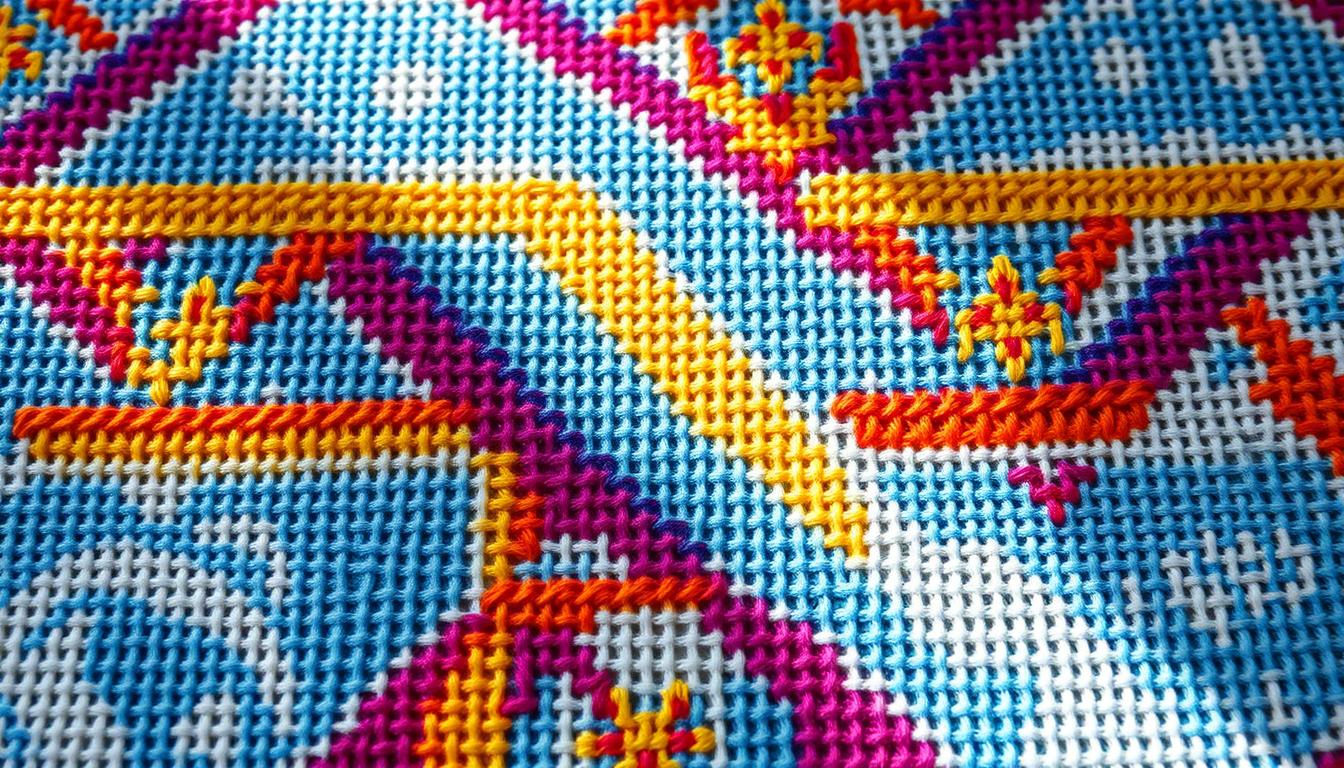
Many stitchers stop at framing their finished cross stitch. But washing can remove oils, dirt, and creases that dull your work. A gentle wash can make your stitches plump, reduce fabric show-through, and bring back color contrast.
You don’t need fancy equipment for great results. Just test for bleeding threads and use a mild detergent. Most cross stitch projects do well with hand-washing and rinsing until the water is clear. Even tough stains like hand-oil halos and travel grime can be fixed with vinegar, baking soda, or OxiClean.
Learning cross stitch tips means understanding prep and testing too. Use reputable fabrics like Aida or linen and colorfast floss from brands like DMC. For beginners, a cautious approach protects your work and gives a cleaner, crisper finish.
Key Takeaways
- Washing removes invisible oils and dirt that cause long-term deterioration.
- Hand-washing and repeated rinsing preserve stitches and restore fabric appearance.
- Test threads, beads, and fabrics for colorfastness before full washing.
- Simple spot treatments (vinegar, baking soda, OxiClean) can rescue many stains.
- Use gentle methods for counted cross stitch and follow proper drying and pressing steps.
Why Washing Finished Cross Stitch Projects Matters
Washing a finished piece does more than clean it. It removes invisible hand oils that sit on fibers and slowly cause discoloration. These oils can form shiny halos where your hands rested. Left untreated, they weaken threads and fabric over years. Using practical cross stitch tips before and after washing prevents common cross stitch mistakes that shorten a piece’s lifespan.
Invisible oils and long-term deterioration
Your hands leave oils every time you handle a project. Oils attract dust and grime, which burrow into fibers and break down linen and cotton. Regular gentle washing preserves fiber strength and keeps colors true. Many needlework secrets point to spot treatment with a Tide pen or gentle pre-soak when you see oily halos.
Removing dirt, stains, and travel grime from cross stitch projects
Even careful stitching can show dirt from storage or travel. A mild soak and repeated rinsing until the water runs clear lifts embedded grime without stretching your work. Stubborn spots may need targeted treatment. Use tested embroidery hacks like dilution tests and short soaks to avoid excess fading.
How washing plumps stitches and restores fabric appearance
A wash followed by careful blotting and pressing restores stitch tension and fabric drape. Threads relax, giving motifs a fuller, cleaner look. Many stitchers call this the final “awakening” of a piece. Practicing these needlework secrets during long projects keeps your hands fresh and your stitches neat as you go.
| Issue | What Washing Does | Quick Tip |
|---|---|---|
| Hand-oil halos | Removes oils that discolor and weaken fibers | Pre-treat with a small amount of gentle detergent; rinse until clear |
| Hoop marks and grime | Softens and lifts embedded dirt from prolonged handling | Soak briefly, avoid scrubbing; sluice under running water |
| Flattened or dull stitches | Plumps threads and restores crispness after wash and press | Roll in a clean towel to remove excess water, then press from the back |
| Travel stains | Reduces discoloration from packing and transit | Spot-test first; use gentle enzymatic treatments if safe |
| Long-term yellowing | Lightens gradual discoloration when combined with safe pretreats | Repeat gentle washes periodically; avoid harsh bleaches |
Preparing Your Piece: Inspection and Testing
Before washing your finished piece, take a close look at every part. This step saves time and prevents damage. You’ll check thread ends, knots, and the security of stitches. You’ll also test colorfastness for threads, fabric, and beads. A few simple checks let you wash with confidence.
Check thread ends, knots, and secured stitches before washing
Look at the back of your work to make sure thread ends are secure. Avoid visible knots as they can come undone in the wash. If a thread tail is short, weave it under stitches or use a small backstitch to secure it.
For pieces worked on an embroidery hoop or q-snap, remove tension before washing. This helps prevent distortion.
Testing colorfastness of threads, fabric, and beads
Color bleeding is a risk with hand-dyed fibers and some beads. Use a wet-scrape test: dampen a thread scrap and press it onto white fabric or paper. If color transfers, treat the thread as non-colorfast.
For DMC and Anchor cotton floss, most colors are stable. But metallics and hand-dyed skeins need extra caution. Specialty fibers like silk or wool require following manufacturer guidance and separate testing.
Spot-test an unnoticeable area and separate supply tests
Choose an inconspicuous corner for a spot test before full washing. Apply a little water or mild detergent, blot with a white towel, then check for dye transfer or fabric reaction. Test beads and trims on their own to prevent surprises.
When in doubt, wash suspect pieces alone. Avoid combining with other items to prevent cross-transfer of dyes.
Using basic cross stitch tools like a magnifier, good lighting, and a blunt needle makes inspection easier. If you’re a beginner, these checks will help you learn about cross stitch gridding and fabric behavior. Treat every new floss or fabric the same way until you confirm it is safe to launder.
Choosing Safe Cleaning Supplies and Soaps
Choosing the right cleaners is key to keeping your work safe and bright. You need gentle products that remove oils and dirt without harming fibers or fading threads. Think of this step as part of your cross stitch supplies kit; a small, careful selection will protect months of stitching and preserve your cross stitch patterns.
Mild detergents recommended: Orvus, Fairy Liquid, or gentle dish soap
Choose a mild soap for delicate fabrics. Orvus Quilt Soap is a favorite among stitchers. Fairy Liquid and gentle dish soaps work well for many cotton and linen projects when used sparingly. Make sure to dissolve any product fully in water before you introduce your piece to prevent spots or residue.
What to avoid: wool detergents, harsh bleaches, and starch
Don’t use wool detergents on cotton or linen; they can leave a film that attracts grime. Strong bleaches will weaken fibers and can strip dye from DMC floss or printed areas. Avoid starch on finished needlework; starch alters texture and may stress stitches over time.
When to use OxiClean, vinegar, baking soda, or a Tide pen for spot treatment
For stubborn stains, try targeted treatments first. A Tide pen is handy for small travel or food spots before soaking. OxiClean can lift heavy biological stains when used carefully and rinsed well. Vinegar or a baking soda paste helps neutralize odors and mild discoloration. Always test a tiny, hidden area first, and keep a Shout Color Catcher sheet nearby if you worry about dye transfer from unfamiliar fabric or threads.
| Cleaner | Best Use | What to Watch For |
|---|---|---|
| Orvus Quilt Soap | General soaking and gentle cleaning of linen and cotton | Use low concentration; rinse thoroughly to remove all soap |
| Fairy Liquid / Gentle Dish Soap | Light dirt, hand oils, and quick rinses for cross stitch pieces | Choose unscented formula; dilute well to avoid residue |
| Tide To Go Pen | On-the-spot pre-treatment for food and travel stains | Not a replacement for full wash; treat then launder if needed |
| OxiClean (oxygen bleach) | Heavy set stains like pet accidents or old food marks | Test colorfastness first; follow product directions and rinse well |
| White Vinegar & Baking Soda | Neutralizing odors and lifting mild discoloration | Avoid mixing strong acids and bases directly; always rinse |
| Shout Color Catcher | Prevent dye transfer when washing mixed items | Use as an extra precaution with hand-dyed fabrics or unknown dyes |
Water Temperature and Washing Methods for Best Results
Getting the temperature and technique right is key. Use cold to lukewarm water to protect your fabric and dyes. Heat can cause bleeding, puckering, or shrinkage, ruining your work.
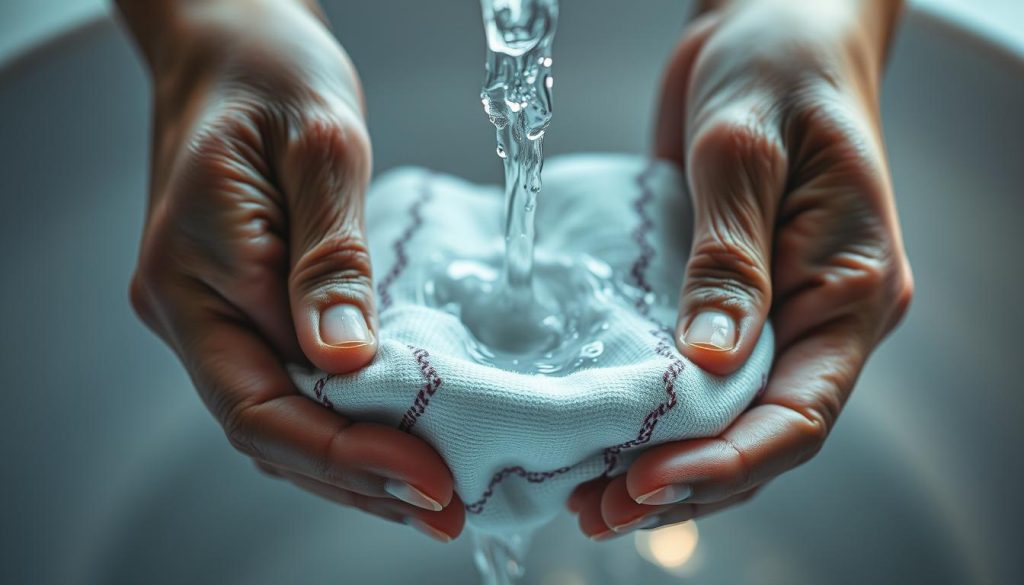
Set up two containers: one with cold clear water, one with lukewarm soapy water. First, wet your piece in the cold bowl to settle threads. Then, move it to the soapy bowl. Gently sluice by lifting and lowering the fabric to loosen dirt without rubbing too hard.
Support the wet weight at all times. Hold the fabric by its edges or a folded corner to avoid stretching counted work. Never twist or wring; instead, press excess water between two clean towels. This keeps your embroidery care effective and gentle.
Pre-soaking suspect threads in a mild vinegar solution can help set dyes. But, prewashing may slightly dull vibrant hand-dyed colors. Test a scrap or an inconspicuous area if you use hand-dyed floss. These small trials preserve colorfastness and protect your design.
Machine agitation is too rough for counted cross stitch and delicate linen or evenweave. The drum motion, spin force, and uneven wet weight can distort tension and shift stitches permanently. Stick to hand-washing cross stitch pieces to keep edges straight and stitches plump.
Use a small plastic wash tub placed inside the sink to avoid contact with residues. Tepid water means barely warm, not hot. Sluicing and very light agitation by hand remove soil while preserving texture. Rinse under cool running water until it runs clear to finish the process.
| Step | Water Temp | Action | Why it Matters |
|---|---|---|---|
| Pre-wet | Cold | Submerge briefly to settle threads | Prevents sudden dye movement and shock to fibers |
| Soak | Lukewarm (barely warm) | Sluice gently in soapy water up to 1 hour | Loosens dirt without scrubbing; respects cross stitch techniques |
| Rinse | Cool running | Rinse until water is clear | Removes soap and loosened grime for proper embroidery care |
| Dry remove | Room temp | Press between towels, air dry flat | Supports fabric weight and preserves stitch tension |
| Dye-set option | Cold vinegar soak | Short pre-soak for suspect floss | Helps colorfastness but may dull hand-dyed shades |
Hand-washing cross stitch is both practical and therapeutic. Many stitchers find it calming and connective. Treat each wash as part of ongoing embroidery care for lasting results.
Handling Different Fabrics: Aida, Evenweave, Linen, and Hand-Dyed Options
Every fabric type needs its own care plan. Aida, evenweave, linen, and hand-dyed linens may look the same, but they react differently to water and movement. It’s important to clean them based on their fiber and dye type.
Aida washing can remove starch, making it softer. Brands like Zweigart pre-shrink and size their Aida. But, the starch will soften after the first soak. You might need to adjust how you mount and finish it.
evenweave care is more delicate. These fabrics lose starch and show their true drape when wet. Use cold water and gentle movement. Roll out excess water with a clean towel to keep the fabric tight.
Linen is very delicate, especially antique or hand-loomed pieces. They can get distorted if wet. Spot-clean first. If you must soak it, support it flat and use short, gentle rinses.
Hand-dyed fabrics need extra care. Many dyers, like Weeks Dye Works, take steps to make colors last. Always test a small area first. If dye bleeds, avoid full immersion and use cold water and mild detergent for spot cleaning.
Printed fabrics are also tricky. The inks on top of the fibers can run with water. Don’t soak them. Use dry cleaning solvents or spot cleaning as recommended by the maker to avoid smudging the design.
When deciding between soaking and spot cleaning, choose spot cleaning for delicate linens and special dyes. Use a clean white cloth, a little gentle soap, and blot from the edge toward the stain. Rinse the cloth often and limit contact time to prevent dye from spreading.
Below is a quick reference to help you decide at a glance.
| Fabric | Common Risk | Recommended Action | Notes |
|---|---|---|---|
| Aida | Loss of starch and firmness | Cold soak, gentle press, consider light re-starching | Aida washing softens hand; brands like Zweigart are pre-shrunk |
| Evenweave | Distortion if over-handled | Minimal agitation, towel roll dry, careful pressing | Follow evenweave care to preserve weave regularity |
| Linen | Weave stress and slippage | Spot-clean when possible; support flat if soaked | Fragile linens respond poorly to heavy agitation |
| Hand-dyed fabric | Unstable dyes and bleeding | Colorfast test; cold rinse; use color-catcher or spot-clean | hand-dyed fabric care varies by dyer; test first |
| Printed fabrics | Surface inks running | Avoid immersion; spot-clean or consult cleaner | Do not wash printed inks; treat with extreme caution |
Dealing with Different Thread Types and DMC Floss
When working with threads, it’s important to know how to handle each type. Cotton floss from big brands is usually easy to work with. But silks, wools, metallics, and hand-dyed threads need more care. You should test them before washing to keep your work safe and colors bright.
Colorfastness checks for common cotton brands
Begin with a wet-dab test on a folded white paper towel. Brands like DMC floss and Anchor floss usually pass this test. They can handle a gentle cold water wash. But if dye bleeds onto the towel, treat the thread as non-fast.
When to avoid full washing
Silks can lose their shine and may bleed, so test them first. Wool can felt if it gets too wet or agitated. So, only spot clean wool threads to avoid damage.
Handling metallics and delicate threads
Metallic threads need to be handled with care. Just a light swish in cold water is enough. For threads like blends, rayon, or hand-dyed skeins, test a small piece first. This way, you avoid any surprises.
Prewashing methods for suspect threads
If you’re unsure about a thread’s colorfastness, prewash a small piece. Soak it in a mild vinegar solution. Use cold water and gentle motion for delicate fibers. Some hand-dyed colors might soften a bit if excess dye is removed.
Beads, Embellishments, and Bleeding Beads
Beads and other embellishments add sparkle and depth to your cross stitch. It’s important to plan when to add them to keep colors true. Many seed and craft beads aren’t colorfast, so treating the fabric before adding embellishments can save time and heartache.
Test beads before adding them. Place a few on a damp white cloth and press gently. If dye transfers, mark those beads as risky. Do not add them to the finished piece until after a safe wash and full drying.
Why beads often aren’t colorfast and how to plan your finishing order
Many cheap glass or plastic beads use surface dyes that run when wet or exposed to steam. Plan your finishing order so washing happens before beadwork when possible. Add beads after laundering and pressing, unless using sealed, quality beads or beads specified as colorfast.
Spot treatments for bleeding beads: isopropyl alcohol and paint fixes
If beads bleed on your fabric, act fast. Rinse with cold water until the water stays clear. Color-catcher sheets help reduce transfer during this step.
Dab a high-concentration isopropyl alcohol on the stained area with a cotton swab to lift stray dye. For small, stubborn marks on white fabric, a tiny dab of diluted white acrylic paint can mask the stain without harming surrounding stitches. Test any treatment on a scrap first.
Strategies: wash before adding beads or use sealed/quality beads
You have three practical paths. First, wash and dry the entire piece before beading. Second, use sealed beads from brands like Miyuki or Toho, which tend to be more colorfast. Third, accept clustered bleed as a design element and rework or replace beads where needed.
| Issue | Quick Fix | Best Practice |
|---|---|---|
| Color transfer from beads | Rinse in cold water; use color-catcher sheets | Test beads; wash before beading; choose Miyuki or Toho |
| Localized stain under beads | Dab isopropyl alcohol; repeat rinses | Spot-test on scrap; use diluted white acrylic for white fabric |
| Beads bleed after framing | Remove frame, rinse carefully | Complete cross stitch finishing and final wash before framing |
| Clustered bead problems | Leave as-is or remove and replace damaged beads | Plan bead layout; secure with quality thread and sealed beads |
Keep beadwork care tools nearby: tweezers, glass bead mats, a spare needle, and a small dish of distilled water for testing. With careful planning, your cross stitch embellishments will enhance the piece without risking dye migration during routine care.
Practical Stain Removal and Rescue Techniques
Before you start a rescue, take a moment to assess the spot and the fabric. Light grime and hand-oil halos need different care than set-in food or pet accidents. A careful inspection helps you choose the right method for cross stitch rescue without risking color run or fiber damage.
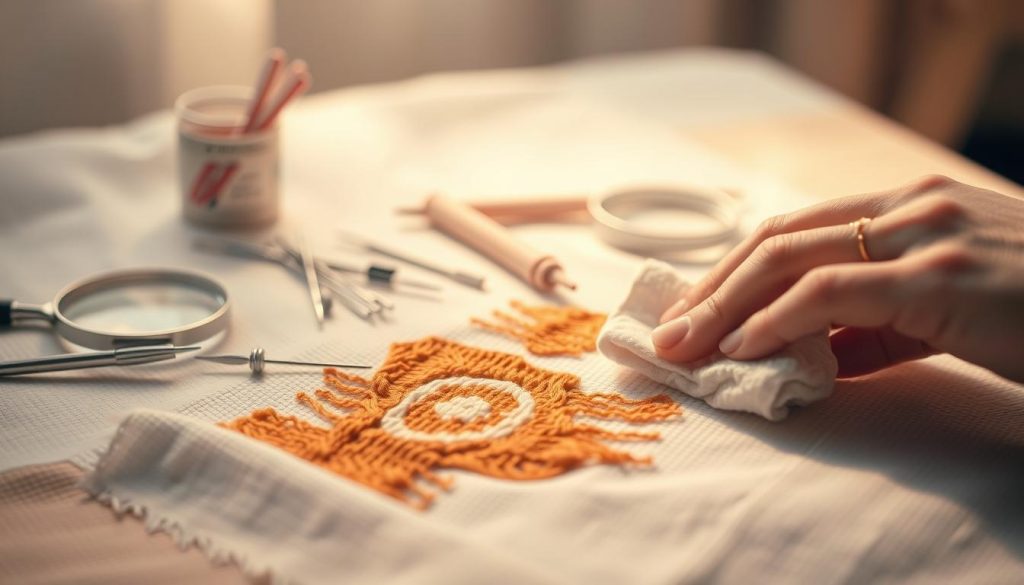
For routine stain removal for embroidery, begin with the gentlest options. Use a small dab of mild dish soap like Fairy Liquid in tepid water and sluice the area gently. A soft baby toothbrush or a badger-hair shaving brush works for light agitation. Test a hidden corner first to confirm colorfastness.
Pet stain removal often needs stronger treatment. Start with enzymatic pre-treats designed for protein stains, following the product instructions and testing first. OxiClean for embroidery has proven effective on many pet and food stains when used as a soak. Mix according to label directions, soak in a white wash tub, and repeat rinsing until water runs clear.
For stubborn hand oils, a pre-treatment with a Tide To Go pen or a mild surfactant can lift residues before soaking. Baking soda and white vinegar make useful spot remedies for some marks. Apply sparingly, let sit briefly, then rinse thoroughly. Avoid mixing vinegar and OxiClean directly; test combinations on scrap fabric.
When heavy-duty laundering is needed, keep water tepid and use a gentle soap. Do not wring or twist wet fabric. Soak, gently sluice, then lay flat to dry. Multiple wash cycles may remove persistent oil, but accept that deep-set stains sometimes remain. If removal fails, consider creative fixes such as embroidery overlays or framing choices that minimize the flaw.
Always rinse until no residue remains. Residual cleaners can attract dirt and alter fibers over time. With care and the right products, your cross stitch rescue efforts will restore pieces without harming threads or fabric.
Rinsing, Drying, and the Towel Method
After washing, rinse embroidery until the water runs clear. Hold the wet piece with both hands to avoid stretching. Use cool to lukewarm water to protect the colors and threads.
Rinse embroidery well, changing water as needed. Lift the work by its edges to let gravity help. If it feels heavy, pause and support it to avoid distortion.
Place a clean white towel flat. Put the stitched piece face down on it, then roll it gently. Press with your hands or step on it briefly to remove moisture without twisting threads.
Your author-recommended “happy dance” is simple: roll in a fluffy white towel, stand on the roll to extract water, then unroll and ease the piece back into shape. This method protects the stitch plumpness and cuts drying time.
Air-dry needlework flat on a dry towel or mesh drying rack to finish. Arrange the fabric to its original shape, smoothing gently with your fingers. Keep it away from direct sun and humid basements to prevent fading and mildew.
For heavier pieces, use multiple layers of terry towels under the work when pressing face down. If a small section remains damp, clip corners to a padded hanger or lay flat until fully dry. Never store or frame until the piece is bone dry.
Maintain cross stitch organization by keeping labeled towels and a dedicated drying area. This keeps projects clean and speeds up the routine when you need to dry cross stitch items frequently.
Ironing, Pressing, and Preparing for Framing
After cleaning and drying your piece, treat pressing as a gentle step. It protects the stitch shape and keeps fibers healthy. Use a soft cushion, a steady hand, and a plan for drying before framing.
Pressing setup
Use at least four terry towels on a table for a soft bed. Place your needlework face down on a clean towel. Cover the back with a cotton muslin square. No steam; it flattens fibers and can set stains.
Iron technique
Set the iron to cotton/linen for most Aida, evenweave, and linen. Test on a scrap if you have one. Press by lowering the iron, holding for a second or two, then lifting. Avoid dragging across stitches. This keeps embroidery texture intact while smoothing the fabric.
Protecting stitch volume
Press from the back to avoid direct heat on the needlework face. The towel cushion maintains stitch volume and helps with ironing without crushing. Do not use starch; it weakens threads and alters tension over time.
Final drying and checks
Leave the piece slightly damp after pressing. Clip the top edge to a skirt or trouser hanger. Let it hang in a dry, ventilated spot for a few hours or overnight. A bone-dry piece prevents mildew and makes mounting easier and more secure.
Preparing for framing
Before framing, check for moisture, stray threads, or missed spots. Make minor adjustments now rather than after mounting. Proper finishing needlework ensures the stitched areas stay full and the fabric remains flat in the frame.
| Step | Action | Why it matters |
|---|---|---|
| Soft bed | Use 4+ terry towels under the piece | Maintains stitch plumpness and prevents flattening |
| Pressing cloth | Cover with cotton muslin; press from back | Protects threads and surface of embroidery |
| Iron setting | Cotton/linen temperature, no steam | Prevents fiber shrinkage and color shift |
| Technique | Press and lift; avoid dragging | Keeps stitches intact and preserves texture |
| Drying | Clip to hanger; air-dry until bone-dry | Prevents mildew and ensures secure mounting in cross stitch frames |
| Final check | Inspect for moisture, loose threads, or spots | Ensures success when framing cross stitch or finishing needlework |
CROSS STITCH Care Habits and Tools to Prevent Problems
Good habits and the right tools keep your finished work clean and your stitching time pleasant. Simple practices cut down on stains and wear. You will save time and avoid heavy cleaning later.
Good stitching hygiene
Wash your hands before you stitch to remove lotions and oils. Avoid snacking while you work to prevent crumbs and grease on the fabric. Wear a grime guard or wrist protector when stitching for long sessions to shield the edge of your piece and your hands.
Tools for protection and neatness
Choose q-snaps or a scroll frame to keep tension even and reduce handling. Hoops work well for small pieces, but frames cut down on finger contact for large projects. Use clear storage boxes and labelled pouches so threads and fabric stay clean between sessions.
Organize to minimize cleaning
Cross stitch organization pays off. Use bobbins, project bags, and a simple grid system to keep colors and needles in order. Cross stitch gridding on the fabric and on your pattern means fewer mistakes and less undoing, which lowers the chance of dirt transfer from frequent handling.
Washing during long projects
For multi-month projects, plan an occasional mid-project wash and press. This keeps fabric crisp and comfortable to hold. If you travel with your work, expect to wash the finished section to remove travel grime before framing.
Beginner routines to build
Adopt beginner cross stitch habits like cleaning tools before use and storing completed squares flat. Practice a short end-of-session routine: cover the work, secure loose threads, and tuck tools away. These small steps reduce future rescue needs and make stitching more enjoyable.
| Problem | Simple Habit | Tool | Benefit |
|---|---|---|---|
| Hand oils and smudges | Wash hands before stitching | Grime guard | Less frequent deep cleaning |
| Loose tension and distortion | Use consistent mounting routine | Q-snaps or scroll frame | Even stitches, easier finishing |
| Lost or mixed-up threads | Label and wind threads | Storage boxes and bobbins | Faster stitching, fewer mistakes |
| Frequent handling soiling | Grid fabric and plan sessions | Cross stitch gridding tools | Reduced handling, cleaner piece |
| Mid-project stiffness | Occasional gentle wash and press | Clean towels and pressing cloth | Improved comfort and appearance |
Conclusion
Deciding to wash a finished cross stitch piece is up to you. But, if oils, dust, or travel grime dull it, cleaning might be a good idea. First, test threads and beads to avoid color bleeding. Then, use cold to lukewarm water with a mild detergent like Orvus or gentle dish soap.
This method helps bring back the plump stitches and brightens the fabric. It does so without risking the colors to fade.
For a gentle cleaning routine, start by soaking, then sluice and rinse until the water is clear. Use a towel to press out excess water and let it air-dry flat. Once dry, press it from the back on a stack of towels with a pressing cloth. Make sure to avoid steam.
Proper handling during finishing prevents distortion. It also ensures the piece is completely dry before framing.
To avoid future washings and mistakes, keep your workspace clean. Use grime guards and organize your tools. This way, you’ll need to wash your work less often.
Use reputable supplies and always spot-test suspect materials. If problems arise, fixes like vinegar, OxiClean, or a Tide pen can often save your work. These steps help protect your creations and keep your embroidery inspiration alive.
In short, washing your cross stitch piece wisely, along with careful finishing, leads to the best results. Follow these tips to keep your projects looking vibrant and clear for years to come.
 English